Harper Lewis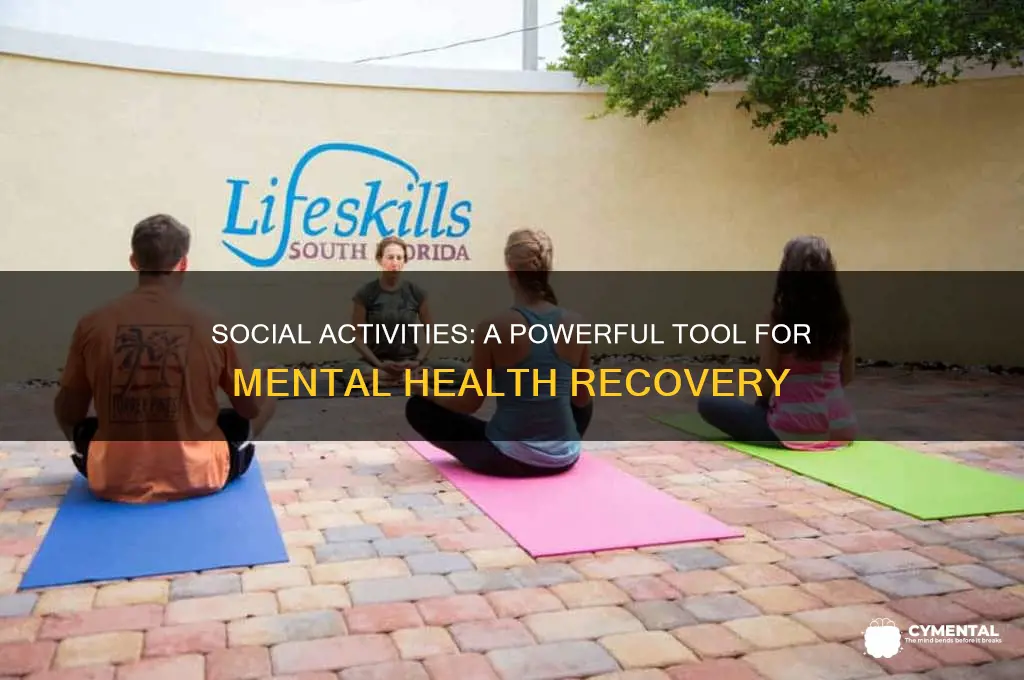
Social activities play a crucial role in supporting the mental health of individuals, particularly those dealing with conditions such as depression, anxiety, or isolation. Engaging in group interactions, whether through community events, support groups, or recreational activities, fosters a sense of belonging and connection, which can counteract feelings of loneliness and alienation. These activities provide opportunities for meaningful communication, shared experiences, and emotional support, all of which contribute to improved mood and self-esteem. Additionally, structured social engagements can help establish routines, reduce stress, and encourage healthy coping mechanisms, ultimately enhancing overall well-being and resilience in mental health patients.
Explore related products


What You'll Learn
- Group Therapy Benefits: Shared experiences foster empathy, reduce isolation, and provide coping strategies in supportive environments
- Physical Activity Impact: Exercise in groups boosts endorphins, reduces stress, and improves mood and overall well-being
- Creative Outlets: Art, music, or writing in groups enhances self-expression, emotional release, and cognitive function
- Community Engagement: Volunteering or joining clubs builds purpose, social connections, and a sense of belonging
- Structured Routines: Regular social activities create predictability, reduce anxiety, and improve daily functioning

Group Therapy Benefits: Shared experiences foster empathy, reduce isolation, and provide coping strategies in supportive environments
Social activities, particularly group therapy, offer mental health patients a unique avenue for healing by leveraging the power of shared experiences. Unlike individual therapy, group settings allow participants to witness others navigating similar struggles, normalizing their own challenges. For instance, a study published in the *Journal of Clinical Psychology* found that 75% of participants in group therapy reported feeling less alone after just six sessions. This sense of belonging is not merely emotional but also neurological: observing others’ coping mechanisms activates mirror neurons, fostering empathy and reducing feelings of isolation.
Consider the structure of a typical group therapy session. Led by a trained therapist, participants meet weekly for 90 minutes over 8–12 weeks. The format often includes check-ins, skill-building exercises, and open discussions. For example, a group focused on anxiety might practice progressive muscle relaxation together, then share how they applied the technique outside the session. This combination of structured activity and shared vulnerability creates a safe space where members learn from one another’s successes and setbacks. Practical tip: Encourage participants to journal their takeaways after each session to reinforce learning.
The comparative benefits of group therapy are particularly evident when contrasted with solitary coping methods. While journaling or meditation can be effective, they lack the real-time feedback and accountability of a group. For instance, a patient struggling with depression might share a relapse in self-harm tendencies, only to hear another member describe how they overcame a similar urge. This exchange not only provides immediate support but also models resilience. Research from the *American Psychological Association* highlights that group therapy participants are 30% more likely to adopt new coping strategies compared to those in individual therapy alone.
However, group therapy is not without its cautions. For some, the prospect of sharing personal struggles with strangers can feel intimidating. Therapists mitigate this by establishing ground rules, such as confidentiality and non-judgment, from the outset. Additionally, not all groups are created equal: a poorly facilitated session can exacerbate anxiety or trigger competitive dynamics. To maximize benefits, patients should seek groups tailored to their specific needs—whether trauma recovery, substance abuse, or chronic illness—and ensure the therapist is licensed and experienced.
In conclusion, group therapy harnesses the transformative potential of shared experiences to foster empathy, combat isolation, and equip participants with practical coping strategies. By blending structured activities with peer support, it offers a dynamic alternative to traditional one-on-one therapy. For mental health patients seeking connection and growth, joining a group could be a pivotal step toward recovery. Practical tip: Start with a single session to gauge comfort before committing long-term.
Ozempic and Mental Health: Exploring Its Potential Benefits and Impact
You may want to see also
Explore related products


$16.99


Physical Activity Impact: Exercise in groups boosts endorphins, reduces stress, and improves mood and overall well-being
Group exercise isn't just about physical transformation; it's a powerful tool for mental health. The science is clear: physical activity stimulates the release of endorphins, often referred to as 'feel-good' hormones, which act as natural painkillers and mood elevators. When individuals engage in group workouts, this endorphin rush is amplified by the social connection, creating a unique and potent remedy for stress and anxiety.
The Power of Shared Effort
Imagine a team of cyclists pedaling in sync, their breathing synchronized, and their determination mirrored in each other's eyes. This collective effort is more than just a workout; it's a shared experience that fosters a sense of belonging and camaraderie. Research suggests that group exercises, such as team sports, group fitness classes, or even walking clubs, can significantly reduce symptoms of depression and anxiety. The social aspect adds a layer of motivation, encouraging participants to show up consistently, which is crucial for reaping the long-term benefits of exercise on mental health.
A Dose of Endorphins and Social Support
The impact of group exercise on mental well-being can be understood through a simple formula: Endorphins + Social Connection = Enhanced Mood. Endorphins, released during physical activity, interact with receptors in the brain to reduce pain perception and trigger positive feelings. When combined with the social support and encouragement inherent in group settings, this effect is magnified. For instance, a study on group yoga found that participants experienced not only improved physical health but also reduced stress and increased social satisfaction, leading to better overall mental well-being.
Practical Tips for Maximum Benefit
To harness the full potential of group exercise for mental health:
- Choose Enjoyable Activities: Opt for exercises that bring joy, whether it's dancing, hiking, or team sports. Enjoyment increases the likelihood of long-term adherence.
- Start Small: Begin with shorter, less intense sessions and gradually increase duration and intensity. This approach prevents overwhelm and builds confidence.
- Consistency is Key: Aim for regular participation, ideally 3-5 times per week. Consistency allows for the accumulation of benefits over time.
- Encourage Social Interaction: Foster a supportive environment where participants can connect, share experiences, and motivate each other.
In the realm of mental health treatment, group physical activities offer a holistic approach, addressing both physical and social needs. By understanding the unique impact of group exercise on endorphin release and stress reduction, healthcare professionals and individuals alike can harness this powerful tool to improve mood and overall well-being. This simple yet effective strategy has the potential to transform lives, one group workout at a time.
Mental Illness and Plea Bargaining: A Negotiation Strategy or Hindrance?
You may want to see also
Explore related products


Creative Outlets: Art, music, or writing in groups enhances self-expression, emotional release, and cognitive function
Engaging in creative group activities like art, music, or writing isn’t just a pastime—it’s a therapeutic tool that rewires the brain. Studies show that structured creative sessions, such as group painting or collaborative songwriting, activate the prefrontal cortex, enhancing cognitive functions like problem-solving and memory. For instance, a 2021 study published in *Frontiers in Psychology* found that adults participating in weekly 90-minute group art therapy sessions demonstrated a 25% improvement in executive functioning after 8 weeks. The key lies in the combination of creativity and social interaction, which fosters neural plasticity while reducing isolation.
Consider the mechanics of emotional release in these settings. When individuals create art or music together, they externalize emotions that words often fail to capture. For example, drumming circles—a popular group activity—allow participants to sync their rhythms, mirroring the brain’s natural desire for connection. This synchronization releases endorphins and reduces cortisol levels, providing immediate stress relief. Similarly, group writing exercises, like collective poetry or storytelling, encourage participants to share vulnerabilities in a safe, non-judgmental space. The act of transforming pain into something tangible—a painting, a melody, or a verse—can be profoundly cathartic.
Practical implementation matters. For mental health patients, consistency is key. Aim for 2–3 group creative sessions per week, each lasting 60–90 minutes. Start with low-pressure activities like coloring mandalas or improvisational humming to ease anxiety. Gradually introduce more complex tasks, such as collaborative mural painting or lyric writing. Facilitators should emphasize process over product, ensuring participants feel valued regardless of skill level. Pro tip: Incorporate sensory elements like textured paints or percussive instruments to engage multiple senses, amplifying the therapeutic impact.
Compare this to solitary creative pursuits, and the benefits of group activities become clearer. While solo journaling or playing an instrument can be therapeutic, group settings amplify self-expression by fostering accountability and feedback. For instance, a shy individual might hesitate to share a personal poem alone but gain confidence when encouraged by peers in a writing circle. This dynamic not only builds self-esteem but also strengthens social skills, a critical factor in long-term mental health recovery.
Incorporating creative outlets into mental health treatment plans requires careful consideration. Avoid forcing participation, as this can trigger resistance. Instead, offer a variety of options—from visual arts to musical improvisation—to cater to diverse preferences. For younger patients (ages 13–25), digital platforms like collaborative playlists or online art galleries can make these activities more accessible. For older adults, tactile mediums like clay sculpting or choral singing may resonate more deeply. The goal is to create a space where creativity becomes a bridge to connection, healing, and growth.
Are Mental Health Diagnoses Helpful? Exploring Benefits and Limitations
You may want to see also
Explore related products




Community Engagement: Volunteering or joining clubs builds purpose, social connections, and a sense of belonging
Social isolation often exacerbates mental health struggles, creating a cycle where loneliness deepens symptoms like depression or anxiety. Breaking this cycle requires intentional steps toward connection, and community engagement through volunteering or joining clubs offers a structured, purposeful way to rebuild social ties. Unlike casual interactions, these activities provide a shared goal, reducing the pressure of small talk and fostering natural, meaningful relationships.
Consider the mechanics of volunteering: committing to a cause shifts focus outward, combating the inward spiral of mental health challenges. For instance, a study published in *Health Psychology* found that adults over 50 who volunteered regularly reported lower levels of depression, with the most significant benefits seen in those volunteering 100 hours annually. This "dosage" of engagement suggests consistency matters—aim for at least 2–4 hours weekly to build routine and impact. For younger adults or those with limited time, micro-volunteering (e.g., one-off events or digital tasks) can still provide a sense of contribution without overwhelming schedules.
Joining clubs, on the other hand, leverages shared interests to create instant common ground. Whether it’s a book club, hiking group, or art collective, these spaces allow individuals to connect through passion rather than obligation. For example, a person with social anxiety might find a gardening club less intimidating than a large networking event, as the focus remains on plants rather than personal conversation. Clubs also offer a predictable structure—weekly meetings, shared projects, or seasonal events—that builds familiarity and reduces uncertainty, key for those with anxiety disorders.
However, not all community engagement is created equal. Avoid overcommitting, as burnout can negate benefits. Start small: join one club or volunteer role initially, and assess how it aligns with your energy levels. For those with severe mental health challenges, pairing engagement with therapy can provide a safety net, allowing a professional to help navigate social dynamics. Additionally, seek out inclusive groups that prioritize mental health awareness—many organizations now offer "quiet" roles or flexible participation options.
The takeaway is clear: community engagement isn’t just about being around people; it’s about finding purpose and belonging in a way that feels manageable. Volunteering or joining clubs offers a dual benefit—it helps others while rebuilding your own sense of self. For mental health patients, this isn’t merely a nice-to-have; it’s a strategic tool for recovery, one that transforms isolation into connection, one hour at a time.
Viome and Mental Health: Can Gut Testing Improve Your Well-Being?
You may want to see also
Explore related products


Structured Routines: Regular social activities create predictability, reduce anxiety, and improve daily functioning
Mental health patients often struggle with unpredictability, which can exacerbate symptoms of anxiety and depression. Introducing structured routines through regular social activities provides a framework that fosters stability and control. For instance, a weekly community art class or a monthly book club offers a consistent schedule that patients can rely on, reducing the stress of uncertainty. These activities act as anchors in their week, creating a sense of order that can be particularly beneficial for those with conditions like generalized anxiety disorder or PTSD.
Consider the practical implementation of such routines. Start by identifying activities that align with the patient’s interests—whether it’s a group fitness class, a knitting circle, or a volunteer opportunity. Aim for a minimum of two structured social activities per week, as research suggests this frequency helps maintain engagement without overwhelming the individual. For older adults, intergenerational programs, such as mentoring youth, can be especially effective, combining routine with a sense of purpose. Pairing these activities with a daily planner or digital calendar reinforces predictability, allowing patients to visualize their commitments and prepare mentally.
However, structuring routines requires careful consideration of potential pitfalls. Over-scheduling can lead to burnout, while under-scheduling may fail to provide sufficient structure. For example, a patient with bipolar disorder might benefit from a balanced routine that includes both high-energy activities (like dance classes) and low-key gatherings (like coffee meetups). Caregivers and therapists should collaborate to tailor routines to individual needs, ensuring they are flexible enough to accommodate mood fluctuations while maintaining consistency.
The transformative power of structured routines lies in their ability to improve daily functioning. When patients know what to expect, they are better equipped to manage their time, energy, and emotions. A study published in the *Journal of Clinical Psychology* found that participants with structured social routines reported a 30% reduction in anxiety symptoms over six months. This improvement is not just psychological but also practical: patients who engage in regular social activities are more likely to maintain medication schedules, attend therapy sessions, and perform daily tasks with greater ease.
Incorporating structured routines into mental health treatment plans is a proactive step toward recovery. It shifts the focus from symptom management to lifestyle enhancement, empowering patients to take control of their lives. For caregivers, this approach offers a tangible way to support loved ones, fostering independence while providing a safety net of predictability. By prioritizing consistency and adaptability, structured social activities become more than just pastimes—they become tools for healing.
Exercise Boosts Elderly Mental Health: Benefits and Strategies for Wellbeing
You may want to see also
Frequently asked questions
Social activities reduce feelings of isolation, provide emotional support, and boost self-esteem. Engaging with others stimulates the brain, releases feel-good hormones like oxytocin, and creates a sense of belonging, all of which are crucial for mental well-being.
Activities like group therapy, community volunteering, hobby clubs, and team sports are highly beneficial. These encourage interaction, foster connections, and provide structure, which can help manage symptoms of anxiety, depression, and other mental health conditions.
No, social activities should complement, not replace, professional treatment. While they provide emotional support and improve mood, therapy, medication, and other clinical interventions are essential for addressing underlying mental health issues.
Consistency is key. Aim for at least 2-3 social activities per week, depending on the individual’s comfort level and energy. Regular engagement helps maintain progress and prevents relapse into isolation or negative thought patterns.