Lucas Bennett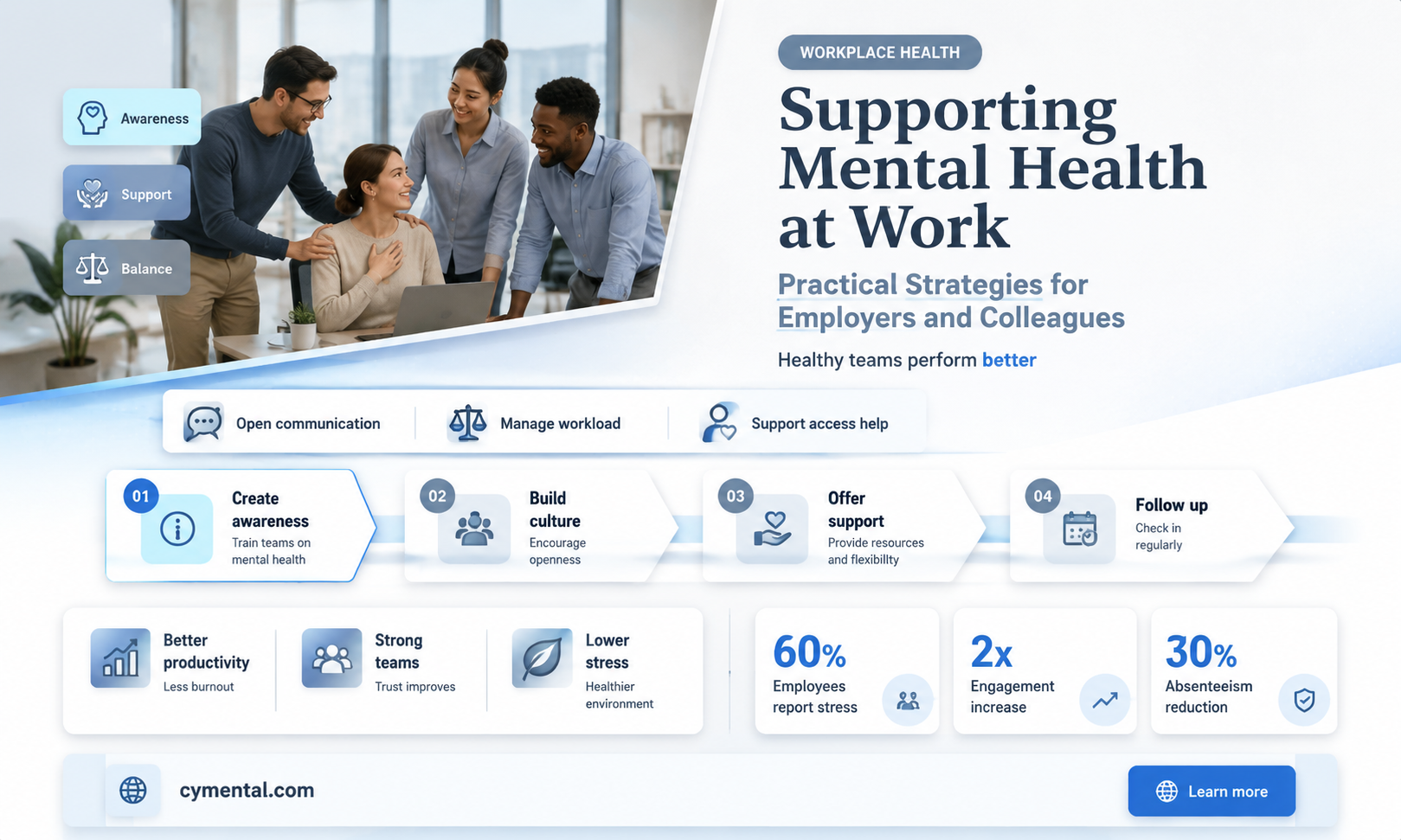
Supporting mental health in the workplace is essential for fostering a productive, inclusive, and compassionate environment. Employers and colleagues can play a pivotal role by creating a culture of openness, where employees feel safe discussing their mental health without fear of stigma or judgment. Practical steps include offering flexible work arrangements, providing access to mental health resources such as counseling services or Employee Assistance Programs (EAPs), and promoting regular check-ins to address stressors. Training managers to recognize signs of mental health struggles and respond empathetically can also make a significant difference. Additionally, encouraging work-life balance, reducing unnecessary workloads, and celebrating achievements can help reduce burnout and boost morale. By prioritizing mental well-being, organizations not only support their employees but also enhance overall productivity and job satisfaction.
| Characteristics | Values |
|---|---|
| Promote Open Communication | Encourage employees to discuss mental health openly without fear of stigma or judgment. |
| Provide Mental Health Training | Offer training for managers and employees to recognize signs of mental health issues. |
| Flexible Work Arrangements | Allow flexible hours, remote work, or adjusted schedules to reduce stress. |
| Access to Mental Health Resources | Provide access to counseling services, EAPs (Employee Assistance Programs), or therapy apps. |
| Regular Check-Ins | Conduct regular one-on-one meetings to discuss well-being and workload. |
| Reduce Workload and Set Boundaries | Ensure manageable workloads and encourage work-life balance. |
| Create a Supportive Environment | Foster a culture of empathy, respect, and inclusivity. |
| Mental Health Policies | Implement clear policies supporting mental health and outlining available resources. |
| Peer Support Programs | Establish peer support groups or mentorship programs for employees. |
| Stress Management Initiatives | Offer mindfulness sessions, yoga, or wellness programs to manage stress. |
| Confidentiality and Privacy | Ensure all mental health discussions and support remain confidential. |
| Leadership Commitment | Demonstrate leadership commitment to mental health through actions and advocacy. |
| Regular Feedback Mechanisms | Provide platforms for employees to share feedback on workplace mental health support. |
| Awareness Campaigns | Run campaigns to raise awareness about mental health and reduce stigma. |
| Physical Workspace Design | Create a comfortable and calming workspace to promote mental well-being. |
| Recognition and Appreciation | Regularly acknowledge and appreciate employees' efforts to boost morale. |
Explore related products


What You'll Learn
- Promote Open Conversations: Encourage employees to discuss mental health without fear of judgment or stigma
- Provide Resources: Offer access to counseling, EAPs, and mental health apps for support
- Flexible Work Arrangements: Allow remote work, flexible hours, and mental health days as needed
- Train Managers: Equip leaders to recognize signs of distress and provide appropriate support
- Foster Work-Life Balance: Encourage breaks, set boundaries, and discourage excessive overtime

Promote Open Conversations: Encourage employees to discuss mental health without fear of judgment or stigma
Silence breeds stigma. When employees feel they cannot openly discuss mental health struggles, they suffer in isolation, productivity plummets, and workplace culture deteriorates. A 2021 Mind survey found that 56% of UK employees would not disclose mental health issues to their manager for fear of negative consequences. This statistic underscores the urgent need to dismantle barriers to open dialogue.
Start with leadership modeling. Leaders must lead by example, sharing their own experiences or vulnerabilities when appropriate. For instance, a manager might openly discuss their use of therapy or stress management techniques during team meetings. This normalizes the conversation and signals that mental health is a shared human experience, not a sign of weakness. Pair this with concrete actions: allocate dedicated time in meetings for wellness check-ins, or share anonymized stories of colleagues who’ve benefited from support programs.
Create safe, structured spaces. Implement regular, optional forums for employees to discuss mental health, such as monthly "Wellness Circles" facilitated by trained moderators. Ensure these sessions are confidential and free from judgment. For remote teams, use platforms like Slack or Microsoft Teams to create dedicated mental health channels where employees can share resources or seek peer support. Pair these initiatives with clear policies outlining how disclosures will (or won’t) impact job security or advancement.
Train managers to listen, not fix. Equip managers with active listening skills and a toolkit for responding empathetically. For example, instead of offering unsolicited advice, they should use phrases like, "How can I support you right now?" or "What resources would be helpful?" Avoid overstepping boundaries by emphasizing that their role is to connect employees to professional support, not to act as therapists. Provide managers with a list of local and national mental health resources to share discreetly when needed.
Measure progress, not perfection. Track the success of open conversation initiatives through anonymous surveys, focus groups, or turnover rates. Look for indicators like increased use of mental health benefits, reduced sick days related to stress, or qualitative feedback about feeling more supported. Celebrate small wins publicly—such as an employee thanking a colleague for a supportive conversation—to reinforce the culture shift. Remember, fostering openness is an ongoing process, not a one-time fix.
By embedding these practices into the workplace fabric, organizations can transform mental health from a taboo topic into a natural part of everyday dialogue. The result? A workforce that feels seen, heard, and valued—and performs better because of it.
Finding Mental Health Support: Where to Go for Help and Healing
You may want to see also
Explore related products





Provide Resources: Offer access to counseling, EAPs, and mental health apps for support
Workplace stress and burnout are significant contributors to mental health challenges, with 83% of US workers reporting emotional exhaustion in 2022. To combat this, organizations must move beyond awareness campaigns and provide tangible, accessible resources. One of the most effective strategies is to offer a range of support options, including counseling services, Employee Assistance Programs (EAPs), and mental health apps. These resources cater to diverse needs, preferences, and comfort levels, ensuring employees can access help in a way that suits them best.
Step 1: Implement an EAP with Comprehensive Coverage
Start by partnering with an EAP that offers confidential counseling sessions, crisis support, and referrals to mental health professionals. Ensure the program covers at least 6–10 sessions per issue, as this aligns with evidence-based therapy models like Cognitive Behavioral Therapy (CBT). For example, a study by the Journal of Occupational Health Psychology found that employees who used EAP counseling reported a 30% reduction in stress levels within 3 months. Communicate the EAP’s availability through multiple channels—email, intranet, and team meetings—and emphasize its confidentiality to reduce stigma.
Step 2: Subsidize or Provide Mental Health Apps
Complement traditional counseling with access to mental health apps like Headspace, Calm, or Sanvello. These tools offer guided meditations, mood tracking, and CBT exercises, making them ideal for employees seeking self-paced support. Negotiate corporate discounts or fully subsidize subscriptions to remove financial barriers. A 2021 survey by the American Psychological Association revealed that 67% of employees are more likely to use mental health resources if they’re free or low-cost. Pair app access with a monthly wellness challenge, such as a 30-day mindfulness streak, to encourage engagement.
Cautions and Considerations
While providing resources is critical, avoid a one-size-fits-all approach. Some employees may prefer face-to-face counseling, while others might find apps intrusive. Additionally, ensure managers are trained to recognize signs of distress and guide employees toward appropriate resources without overstepping boundaries. Beware of apps that lack clinical validation—stick to platforms backed by peer-reviewed research, such as Woebot or Moodpath.
Regularly assess the utilization and effectiveness of these resources through anonymous surveys and feedback sessions. For instance, track EAP usage rates and app engagement metrics to identify gaps. If counseling sessions are underutilized, consider hosting workshops on how to initiate a first appointment. By continuously refining your offerings, you create a supportive ecosystem that addresses mental health proactively, fostering a culture of resilience and well-being.
Supporting Asian Mental Health: A Christian Guide to Compassionate Care
You may want to see also
Explore related products


Flexible Work Arrangements: Allow remote work, flexible hours, and mental health days as needed
Workplace stress and burnout are significant contributors to mental health issues, with rigid schedules and commuting often exacerbating the problem. Offering flexible work arrangements can be a powerful antidote, providing employees with the autonomy to manage their time and environment in ways that support their mental well-being. For instance, remote work eliminates the stress of daily commutes, while flexible hours allow individuals to align their work with their most productive times or personal responsibilities. Mental health days, when used thoughtfully, can prevent small issues from escalating into larger crises.
Consider the case of a software developer who thrives in the quiet of early mornings but struggles with afternoon fatigue. A flexible schedule lets them start at 6 a.m. and finish by 3 p.m., maximizing productivity while avoiding burnout. Similarly, a parent juggling childcare responsibilities might benefit from remote work, reducing the anxiety of coordinating pickups and drop-offs. These arrangements aren’t one-size-fits-all; they require collaboration between employers and employees to identify what works best for each individual. For example, a mental health day might be scheduled proactively before a stressful project deadline, rather than as a reactive measure after burnout occurs.
Implementing flexible work arrangements requires clear guidelines to ensure fairness and productivity. Start by defining eligibility criteria—perhaps based on tenure, role, or performance—and establish a process for requesting changes. For instance, employees could submit a proposal outlining their preferred schedule and how they’ll meet their responsibilities. Managers should be trained to recognize signs of mental health struggles and respond with empathy, not judgment. Tools like project management software can help track progress and maintain accountability, even when teams are dispersed.
Critics often argue that flexibility leads to decreased productivity, but studies show the opposite: remote workers, for example, are 13% more productive than their in-office counterparts, according to a Stanford study. The key is trust—trust that employees will use these arrangements responsibly and trust that the system is designed to support, not exploit, their well-being. Employers should also monitor the impact of these policies, gathering feedback to refine them over time. For instance, a monthly check-in can help identify if an employee’s flexible schedule is truly alleviating stress or if adjustments are needed.
Ultimately, flexible work arrangements are an investment in both employee mental health and organizational success. They signal to staff that their well-being is a priority, fostering loyalty and reducing turnover. For employers, the benefits include a more engaged, resilient workforce capable of navigating challenges with greater ease. By embracing flexibility, companies can create a culture that values balance, autonomy, and mental health—a win-win for everyone involved. Practical tips include starting small (e.g., offering one mental health day per quarter) and gradually expanding options as trust and systems strengthen.
Empowering Strategies to Navigate and Overcome Mental Health Challenges
You may want to see also
Explore related products


Train Managers: Equip leaders to recognize signs of distress and provide appropriate support
Managers often serve as the first line of defense in identifying and addressing mental health issues in the workplace. Yet, many lack the training to recognize subtle signs of distress or respond effectively. A 2021 study by Mind found that 56% of managers feel ill-equipped to support employees with mental health problems, highlighting a critical gap in organizational preparedness. This isn’t merely a skills issue—it’s a barrier to fostering a culture of trust and safety. Without proper training, managers may inadvertently exacerbate stress through insensitive remarks, misplaced expectations, or failure to intervene early.
To bridge this gap, organizations must implement structured training programs that go beyond surface-level awareness. Start with Mental Health First Aid (MHFA) courses, which teach managers to identify signs of distress such as persistent absenteeism, sudden changes in behavior, or decreased productivity. These courses also equip leaders with frameworks like the ALGEE model (Assess for risk of suicide or harm, Listen nonjudgmentally, Give reassurance and information, Encourage appropriate professional help, Encourage self-help and other support strategies). For example, a manager trained in MHFA might notice an employee withdrawing from team meetings and initiate a private conversation using open-ended questions like, “I’ve noticed you seem quieter lately—how are you doing?”
However, training shouldn’t stop at recognition. Managers need guidance on how to respond without overstepping boundaries. Role-playing scenarios can be particularly effective here. For instance, practice conversations where an employee discloses anxiety about workload. A trained manager would avoid dismissive phrases like “Just focus on one task at a time” and instead offer concrete support, such as, “Let’s prioritize your tasks together and see if we can adjust deadlines.” Additionally, emphasize the importance of confidentiality and signposting to professional resources, such as Employee Assistance Programs (EAPs) or external counseling services.
A common pitfall is treating manager training as a one-time event. Mental health literacy requires ongoing reinforcement. Quarterly refresher sessions, access to digital resources, and peer support networks can help managers stay informed and confident. For example, Deloitte’s “Mental Health Champions” program pairs trained managers with employees to provide informal support, creating a layered safety net. Organizations should also measure the impact of training through feedback mechanisms, such as anonymous employee surveys or tracking EAP utilization rates post-training.
Finally, consider the organizational culture that training operates within. Managers can only act on their knowledge if leadership prioritizes mental health openly. For instance, a tech company that introduced mandatory MHFA training for all leaders saw a 30% increase in employees reporting feeling supported within six months. Pairing training with policies like flexible work arrangements or mental health days amplifies its effectiveness. Ultimately, equipping managers isn’t just about skill-building—it’s about embedding empathy and proactive care into the fabric of workplace leadership.
Sex and Mental Health: Exploring the Surprising Benefits and Connections
You may want to see also
Explore related products


Foster Work-Life Balance: Encourage breaks, set boundaries, and discourage excessive overtime
Burnout is a real and growing concern in today's fast-paced work environment. It's not just about feeling tired; it's a state of emotional, physical, and mental exhaustion that can lead to reduced productivity, increased absenteeism, and even serious health issues. One of the most effective ways to combat burnout is to foster a healthy work-life balance, which involves encouraging breaks, setting clear boundaries, and discouraging excessive overtime.
Consider the following scenario: an employee who consistently works long hours without taking breaks is more likely to experience stress, anxiety, and depression. According to a study by the World Health Organization (WHO), working more than 55 hours per week is associated with a 35% higher risk of stroke and a 17% higher risk of dying from ischemic heart disease. To prevent this, employers can implement policies that limit overtime, such as capping weekly hours at 45-50, and encourage employees to take regular breaks throughout the day. A good rule of thumb is to follow the "20-20-20 rule": every 20 minutes, take a 20-second break to look at something 20 feet away, and take a 5-10 minute break every 90-120 minutes.
Setting boundaries is also crucial in maintaining a healthy work-life balance. This means establishing clear expectations around response times, availability, and workload. For instance, employers can encourage employees to turn off notifications outside of work hours, or to set an automatic reply message indicating when they'll be available again. Additionally, managers can model healthy behavior by avoiding sending emails or messages outside of work hours, unless it's an emergency. A study by the American Psychological Association found that employees who felt their managers supported their work-life balance were more engaged, productive, and satisfied with their jobs.
To effectively discourage excessive overtime, employers can take a multi-faceted approach. This might include: (1) monitoring and tracking overtime hours to identify patterns and hotspots; (2) providing training and resources to help employees manage their workload more efficiently; and (3) recognizing and rewarding employees who maintain a healthy work-life balance, rather than those who consistently work long hours. It's also essential to address the underlying causes of overtime, such as unrealistic deadlines, poor time management, or inadequate staffing levels. By taking a proactive approach, employers can create a culture that values balance, well-being, and sustainability.
In practice, fostering work-life balance requires a combination of policy changes, cultural shifts, and individual actions. For example, a company might introduce a "meeting-free Friday" policy, where employees are encouraged to focus on deep work and avoid scheduling meetings. Alternatively, they might offer flexible work arrangements, such as compressed workweeks or remote work options, to help employees better manage their personal and professional responsibilities. By prioritizing work-life balance, employers can not only improve their employees' mental health and well-being but also drive better business outcomes, including increased productivity, reduced turnover, and enhanced reputation. Ultimately, creating a culture that values and supports work-life balance is not just a nice-to-have – it's a strategic imperative for any organization that wants to thrive in today's competitive landscape.
Culture's Impact: Shaping Mental Health Attitudes and Help-Seeking Behaviors
You may want to see also
Frequently asked questions
Employers can foster a supportive environment by promoting open communication, providing mental health resources (e.g., EAPs, counseling services), offering flexible work arrangements, and training managers to recognize and address mental health concerns empathetically.
Practical ways include encouraging work-life balance, setting realistic deadlines, providing regular breaks, offering wellness programs (e.g., yoga, mindfulness sessions), and fostering a culture of collaboration rather than competition.
Coworkers can offer support by actively listening without judgment, checking in regularly, avoiding stigmatizing language, and encouraging the colleague to seek professional help if needed, while respecting their privacy.
Leadership plays a critical role by setting an example of prioritizing mental health, implementing policies that support well-being, ensuring access to resources, and creating a stigma-free culture where employees feel safe discussing their mental health.