Lucas Bennett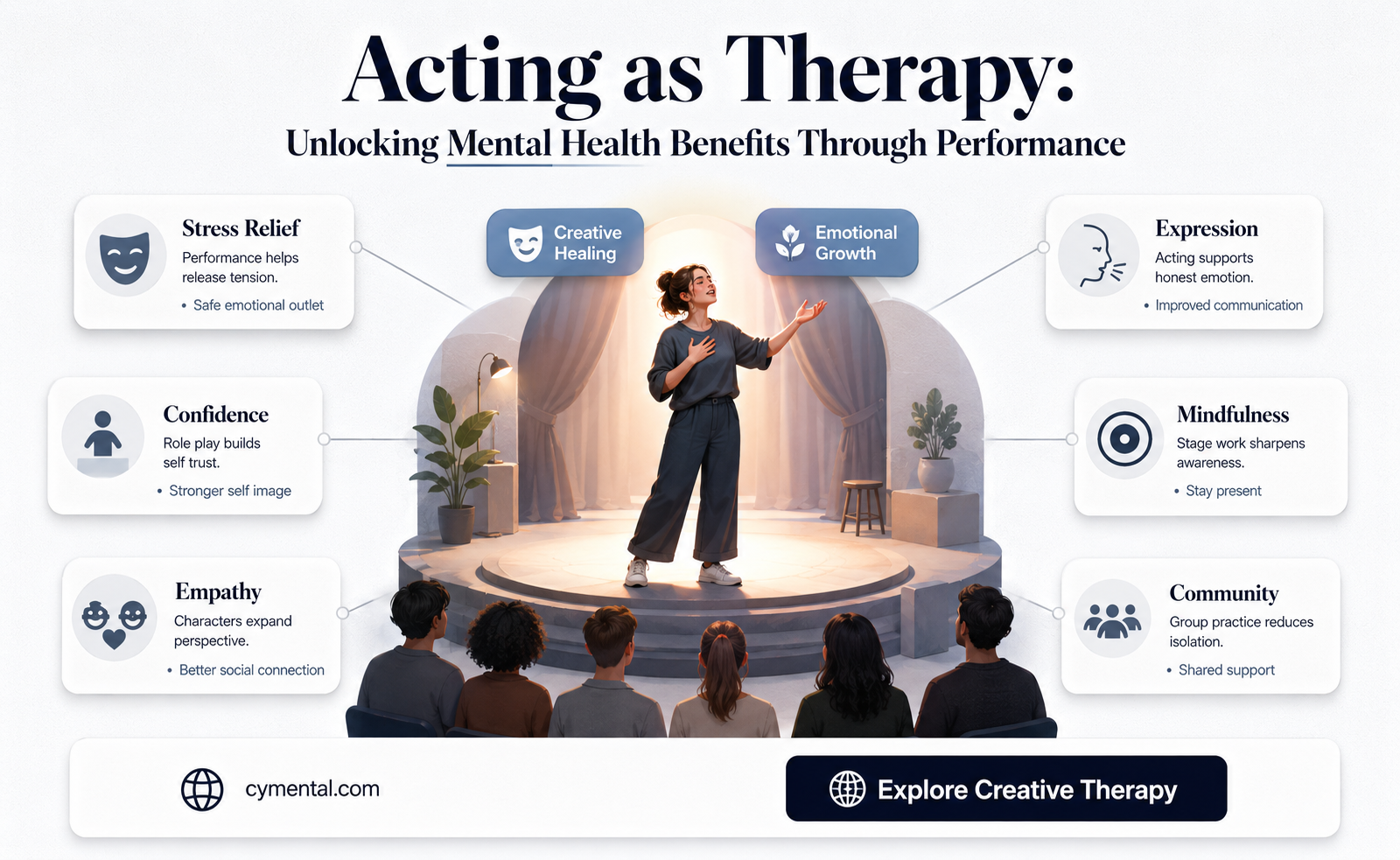
Acting can be a powerful therapeutic tool for individuals struggling with mental illness, offering a unique avenue for self-expression, emotional release, and personal growth. Through the process of embodying characters and exploring diverse emotions, acting allows people to confront and process their own feelings in a safe and controlled environment, fostering self-awareness and catharsis. It encourages creativity, builds confidence, and provides a sense of accomplishment, which can be particularly beneficial for those dealing with depression, anxiety, or trauma. Additionally, the collaborative nature of theater and acting classes promotes social connection, reducing feelings of isolation and fostering a supportive community. By stepping into different roles, individuals can gain new perspectives, develop coping mechanisms, and ultimately find a healthier relationship with their mental health challenges.
| Characteristics | Values |
|---|---|
| Emotional Expression | Acting provides a safe outlet for individuals to express and process complex emotions. |
| Self-Confidence | Performing roles can boost self-esteem and self-worth through achievement and validation. |
| Social Interaction | Encourages collaboration, communication, and connection with others, reducing isolation. |
| Cognitive Stimulation | Improves focus, memory, and problem-solving skills through script memorization and analysis. |
| Role Exploration | Allows individuals to explore different identities, fostering self-discovery and empathy. |
| Stress Reduction | Engaging in creative activities like acting can lower cortisol levels and reduce anxiety. |
| Coping Mechanism | Provides a healthy distraction from negative thoughts and symptoms of mental illness. |
| Empowerment | Helps individuals regain control and agency over their lives through creative expression. |
| Therapeutic Outlet | Acting therapy (drama therapy) is recognized as a complementary treatment for mental health. |
| Mindfulness and Presence | Encourages being present in the moment, reducing rumination and improving mental clarity. |
| Non-Verbal Communication | Enhances body language and facial expression skills, aiding in emotional regulation. |
| Community Building | Joining theater groups or classes fosters a sense of belonging and support. |
| Goal Setting | Preparing for performances provides structure and achievable goals, promoting motivation. |
| Resilience | Overcoming challenges in acting builds emotional resilience and adaptability. |
| Creative Freedom | Allows individuals to explore and express their creativity without judgment. |
Explore related products


$13.97 $14.99


What You'll Learn
- Improves Emotional Expression: Acting provides a safe space to express and process complex emotions effectively
- Boosts Confidence: Performing builds self-esteem and reduces social anxiety through positive reinforcement
- Encourages Mindfulness: Focus on characters and scenes promotes present-moment awareness, reducing rumination
- Fosters Connection: Group activities combat isolation, creating supportive relationships and a sense of belonging
- Develops Coping Skills: Role-playing helps practice real-life scenarios, enhancing problem-solving and resilience

Improves Emotional Expression: Acting provides a safe space to express and process complex emotions effectively
Emotional suppression is a common coping mechanism for individuals with mental illness, often leading to internalized stress and exacerbated symptoms. Acting offers a unique solution by creating a structured environment where expressing these bottled-up emotions is not only permitted but encouraged. Through scripted scenes or improvisational exercises, participants can externalize feelings like anger, grief, or joy without fear of judgment or real-world consequences. This process acts as a pressure valve, releasing pent-up emotional tension in a controlled and therapeutic manner.
Consider the case of a person struggling with depression who finds it difficult to articulate their sadness. In an acting class, they might be assigned a monologue from a character experiencing loss. By embodying this role, they can vocalize and physically manifest their own unspoken sorrow, often leading to a cathartic release. Research in drama therapy supports this, showing that such exercises can reduce symptoms of depression and anxiety by providing a safe outlet for emotional expression. For optimal results, engaging in acting exercises 2-3 times per week, each session lasting 45-60 minutes, can help individuals gradually build emotional resilience.
However, it’s crucial to approach this practice with caution. Not all emotional exploration is inherently therapeutic; without proper guidance, it can retraumatize or overwhelm. Working with a trained drama therapist or participating in structured acting workshops ensures that the experience remains supportive. Beginners should start with simple exercises, like mirroring emotions or role-playing everyday scenarios, before tackling more intense material. Pairing acting with mindfulness techniques, such as deep breathing or grounding exercises, can further enhance emotional regulation during and after sessions.
The takeaway is clear: acting is not just about performing; it’s about transforming. By stepping into someone else’s shoes, individuals can gain perspective on their own emotions, making them easier to understand and manage. This process doesn’t require professional acting skills—it’s about using the tools of the craft to foster self-awareness and healing. Whether through community theater, online classes, or therapeutic groups, acting provides a powerful avenue for those seeking to navigate their mental health journey with creativity and courage.
Exploring the Role of Medication in Mental Health Treatment
You may want to see also
Explore related products


Boosts Confidence: Performing builds self-esteem and reduces social anxiety through positive reinforcement
Acting as a therapeutic tool has shown remarkable potential in helping individuals with mental illness, particularly in the realm of confidence-building. One of the key mechanisms behind this is the concept of positive reinforcement, which occurs when a person receives encouragement, praise, or recognition for their efforts. In the context of acting, this can translate to applause, constructive feedback, or simply the sense of accomplishment that comes from mastering a scene or character. For individuals struggling with low self-esteem or social anxiety, these small victories can be transformative, gradually reshaping their self-perception and reducing their fear of judgment.
Consider the process of preparing for and performing a role. It requires stepping out of one’s comfort zone, embodying someone else’s experiences, and presenting that character to an audience. This act of vulnerability, when met with positive reinforcement, can dismantle the barriers of self-doubt. For instance, a study published in the *Journal of Applied Arts and Health* found that participants in drama therapy sessions reported significant improvements in self-esteem after just 8 weeks of consistent engagement. The structure of these sessions often includes exercises like improvisation, character analysis, and group performances, which provide multiple opportunities for positive feedback and self-discovery.
To maximize the confidence-boosting benefits of acting, it’s essential to create a supportive environment. For beginners, starting with small, low-pressure settings—such as community theater workshops or online acting classes—can be ideal. These spaces often emphasize collaboration over competition, allowing individuals to focus on personal growth rather than perfection. Additionally, setting realistic goals, such as mastering a monologue or participating in a short scene, can provide tangible milestones to celebrate. For those with social anxiety, pairing acting with cognitive-behavioral techniques, like gradual exposure to larger audiences, can enhance the therapeutic effects.
A practical tip for integrating acting into mental health routines is to incorporate role-playing exercises into daily life. For example, practicing assertive communication through scripted dialogues can help individuals build confidence in real-life interactions. Similarly, journaling about the emotions and insights gained from acting exercises can deepen self-awareness and reinforce positive experiences. For younger individuals, aged 12–18, school-based drama programs or summer camps can provide a structured yet creative outlet, fostering both confidence and social skills.
Ultimately, the power of acting to boost confidence lies in its ability to reframe failure as a learning opportunity and to celebrate progress, no matter how small. By engaging in this art form, individuals with mental illness can gradually rebuild their sense of self-worth, reduce social anxiety, and develop resilience. The key is consistency and a willingness to embrace vulnerability, knowing that each step on stage—or even in rehearsal—is a step toward healing.
Revitalize Your Mind: Strategies to Overcome Mental Exhaustion Effectively
You may want to see also
Explore related products


Encourages Mindfulness: Focus on characters and scenes promotes present-moment awareness, reducing rumination
Acting demands an intense focus on the here and now. When stepping into a character, the actor must inhabit their thoughts, emotions, and physicality in the present moment. This immersion in the fictional world of the play or scene naturally cultivates mindfulness, a mental state characterized by heightened awareness and acceptance of the present experience.
For individuals struggling with mental illness, rumination – the repetitive, often negative, dwelling on past events or future worries – can be a debilitating symptom. Acting offers a powerful antidote. The very act of embodying a character requires a complete shift in focus, pulling the actor out of their own head and into the immediate demands of the scene.
Consider a person battling anxiety. Their mind might constantly race with worries about potential future scenarios. In an acting class, they are tasked with portraying a character experiencing joy at a surprise birthday party. To convincingly convey this emotion, they must fully engage with the sensory details of the scene: the smell of cake, the sound of laughter, the feel of a hug. This sensory grounding anchors them in the present, temporarily silencing the anxious chatter in their mind.
Over time, this practice of present-moment awareness through acting can translate into daily life. The skills learned on stage – focusing on sensory details, embodying emotions, and responding to the immediate environment – become tools for managing rumination and fostering a more mindful approach to living.
It's important to note that acting as a therapeutic tool should be approached with guidance. While the benefits are significant, the intensity of emotional exploration can be triggering for some individuals. Working with a qualified drama therapist or participating in supportive acting groups can ensure a safe and beneficial experience.
Helping Others: A Powerful Path to Enhancing Mental Well-Being
You may want to see also
Explore related products

$12.23 $14.39


Fosters Connection: Group activities combat isolation, creating supportive relationships and a sense of belonging
Isolation often exacerbates mental health struggles, creating a cycle where individuals withdraw further from social interactions. Acting, particularly in group settings, disrupts this cycle by forcing participants into shared spaces, both physically and emotionally. Unlike solitary activities, group acting exercises require collaboration, communication, and mutual reliance, making it nearly impossible to remain detached. For instance, improvisational scenes demand that actors listen, respond, and adapt to one another in real-time, fostering a sense of interconnectedness that counters the loneliness often associated with mental illness.
Consider the structure of a typical acting workshop: warm-up exercises, scene work, and feedback sessions. Each phase is designed to build trust and camaraderie. Warm-ups, such as mirror exercises or group movement activities, break down initial barriers by encouraging participants to synchronize their actions with others. Scene work deepens this connection, as actors must step into each other’s emotional worlds to portray shared narratives. Feedback sessions, when conducted constructively, reinforce the idea that everyone’s voice matters, creating a supportive environment where vulnerability is met with encouragement rather than judgment.
Practical implementation of these group activities requires careful consideration. For adults with anxiety or depression, starting with small groups of 4–6 participants can reduce overwhelm. Workshops should be led by facilitators trained in mental health awareness, ensuring that exercises are inclusive and sensitive to individual needs. For younger participants, such as teenagers, incorporating games and role-playing scenarios can make the experience more engaging while still fostering connection. Consistency is key; weekly sessions over 8–12 weeks have been shown to yield measurable improvements in social engagement and self-esteem.
The power of acting to combat isolation lies in its ability to create a microcosm of community. Participants are not just learning lines or blocking scenes; they are learning to rely on one another, to celebrate each other’s successes, and to navigate challenges together. This shared experience builds a sense of belonging that extends beyond the rehearsal room. For many, the relationships formed through acting become a lifeline, offering ongoing support and a reminder that they are not alone in their struggles.
Incorporating acting into mental health treatment plans can be a transformative step, but it’s essential to approach it with intention. Group activities should be tailored to the specific needs of participants, whether they are dealing with trauma, social anxiety, or chronic depression. For example, trauma-informed practices, such as avoiding pressured participation and providing clear boundaries, ensure that the experience remains safe and empowering. By fostering connection through acting, individuals not only gain a creative outlet but also a community that understands and accepts them, breaking the chains of isolation one scene at a time.
Unlocking Wellness: How a Mental Health Counselor Can Transform Your Life
You may want to see also
Explore related products


Develops Coping Skills: Role-playing helps practice real-life scenarios, enhancing problem-solving and resilience
Role-playing in acting isn’t just about memorizing lines or embodying characters—it’s a powerful tool for rehearsing life itself. By stepping into fictional scenarios, individuals with mental illness can safely confront challenges they might avoid in reality. For instance, someone struggling with social anxiety might practice initiating a conversation in a controlled setting, reducing the fear associated with real-life interactions. This methodical exposure builds confidence, turning abstract fears into manageable tasks.
Consider the structure of a role-playing session: it begins with a scenario, progresses through conflict, and ends with resolution. This mirrors the problem-solving process in daily life. Therapists often use this technique to help clients navigate specific stressors, such as workplace conflicts or family disagreements. For example, a patient with depression might role-play setting boundaries with a demanding colleague, allowing them to experiment with responses without real-world consequences. Over time, this practice strengthens decision-making skills and fosters a sense of control.
However, the effectiveness of role-playing depends on its implementation. Sessions should be tailored to the individual’s needs, starting with low-stakes scenarios and gradually increasing complexity. For adolescents, this might involve practicing peer pressure situations; for adults, it could focus on managing panic attacks in public. Consistency is key—weekly 30-minute sessions over 8–12 weeks have shown measurable improvements in coping mechanisms, according to studies in drama therapy. Pairing role-playing with cognitive-behavioral techniques amplifies its impact, as it combines emotional expression with structured problem-solving.
One caution: role-playing must be guided by a trained professional to avoid retraumatization. Unstructured or overly intense scenarios can overwhelm participants, particularly those with PTSD or acute anxiety. Therapists should debrief after each session, helping clients process emotions and integrate lessons into their lives. Additionally, incorporating physical techniques, like deep breathing or grounding exercises, can enhance emotional regulation during role-play.
Ultimately, role-playing in acting transforms coping from a theoretical concept into a tangible skill. It bridges the gap between knowing what to do and actually doing it, offering a safe space to fail, learn, and grow. For those with mental illness, this practice isn’t just about surviving real-life challenges—it’s about reclaiming agency and building resilience, one scenario at a time.
Medicare Mental Health Support: Coverage and Benefits Explained
You may want to see also
Frequently asked questions
Acting provides a creative outlet for emotional expression, allowing individuals to explore and release pent-up feelings in a safe and structured environment. It also fosters self-confidence and social interaction, which can alleviate symptoms of anxiety and depression.
Yes, acting involves role-playing and improvisation, which enhance verbal and nonverbal communication skills. This can help individuals express themselves more effectively and build stronger relationships.
Acting can be therapeutic for trauma survivors by helping them reenact and reframe traumatic experiences in a controlled setting. This process can promote emotional healing and reduce the intensity of traumatic memories.
Through mastering roles and receiving positive feedback, acting helps individuals develop a sense of accomplishment and self-worth. It encourages them to step out of their comfort zones and embrace their strengths.
Yes, acting is often used alongside traditional therapies like CBT or talk therapy. It complements these approaches by addressing emotional, social, and cognitive aspects of mental health in a creative and engaging way.