Madison Cole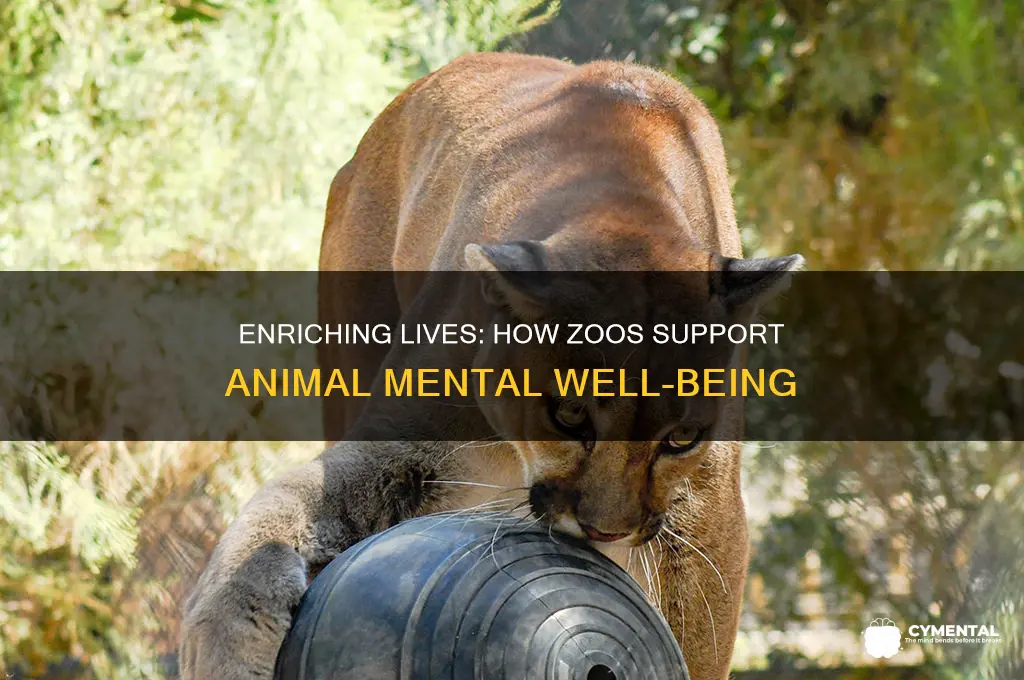
Zoos play a crucial role in supporting the mental health of animals by providing enriched environments that mimic their natural habitats, offering opportunities for social interaction, and implementing behavioral enrichment programs. Through carefully designed enclosures, zoos aim to stimulate natural behaviors, such as foraging, climbing, and exploring, which are essential for an animal’s psychological well-being. Additionally, zoos often employ trained professionals to monitor and address behavioral issues, ensuring animals receive mental health care tailored to their species-specific needs. By fostering social connections, reducing stress, and promoting cognitive engagement, zoos contribute significantly to the emotional and mental resilience of the animals in their care.
Explore related products




What You'll Learn
- Enrichment activities stimulate natural behaviors, reducing stress and boredom in captive animals
- Social grouping mimics wild dynamics, fostering companionship and emotional well-being
- Training programs provide mental engagement, enhancing problem-solving skills and confidence
- Habitat design replicates natural environments, promoting comfort and reduced anxiety
- Veterinary care includes behavioral therapy, addressing psychological issues effectively

Enrichment activities stimulate natural behaviors, reducing stress and boredom in captive animals
Captive animals often face challenges that their wild counterparts do not, including limited space, reduced social interaction, and a lack of opportunities to engage in natural behaviors. Enrichment activities emerge as a critical tool to mitigate these issues, offering mental and physical stimulation that can significantly improve an animal’s quality of life. By replicating elements of their natural environment and encouraging instinctual actions, such as foraging, hunting, or problem-solving, zoos can reduce stress, prevent boredom, and foster a sense of purpose in their residents.
Consider the case of big cats in zoos, whose natural hunting instincts are often stifled by captivity. Enrichment programs introduce puzzle feeders or hidden food sources, requiring the animals to stalk, pounce, and strategize to obtain their meals. For example, a lion might be presented with a suspended carcass that mimics a prey animal caught in a tree, engaging both physical agility and cognitive skills. Such activities not only provide exercise but also reduce stereotypical behaviors like pacing, which are indicators of distress. Studies show that animals engaging in regular enrichment exhibit lower cortisol levels, a key stress hormone, highlighting the physiological benefits of these practices.
Designing effective enrichment requires careful consideration of an animal’s species, age, and individual preferences. For primates, social enrichment is paramount. Introducing novel objects like mirrors, scented toys, or interactive structures encourages exploration and social bonding. For instance, orangutans have been observed using iPads in some zoos, engaging in cognitive games that stimulate problem-solving skills. Younger animals, such as juvenile elephants, benefit from tactile enrichment like sand pits or mud baths, which mimic natural wallowing behaviors and provide sensory stimulation. Conversely, older animals may require gentler activities tailored to their mobility and energy levels.
While enrichment is undeniably beneficial, its implementation is not without challenges. Zookeepers must balance creativity with safety, ensuring that enrichment items do not pose risks like ingestion or entanglement. For example, a toy designed for a bear must be durable enough to withstand strong jaws but not so hard that it causes dental damage. Additionally, enrichment should be rotated regularly to maintain novelty; an activity that captivates an animal one week may lose its appeal if overused. Practical tips include using natural materials like logs, leaves, or rocks, which are cost-effective and environmentally friendly, and involving keepers in training programs to understand animal behavior better.
Ultimately, enrichment activities are not just a luxury but a necessity for captive animals. By stimulating natural behaviors, they address the root causes of stress and boredom, promoting both mental and physical well-being. Zoos that prioritize enrichment demonstrate a commitment to ethical animal care, moving beyond basic survival needs to enhance the lives of their residents. As research continues to uncover the complexities of animal cognition and emotion, enrichment programs will evolve, ensuring that even in captivity, animals can experience a life worth living.
Supporting Your Partner’s Mental Health: Practical Ways to Show Love and Care
You may want to see also
Explore related products





Social grouping mimics wild dynamics, fostering companionship and emotional well-being
In the wild, animals thrive in complex social structures, from the hierarchical troops of primates to the cooperative packs of wolves. Zoos, recognizing this innate need, meticulously recreate these dynamics through strategic social grouping. For instance, meerkats, naturally gregarious creatures, are housed in colonies that mirror their wild family units, allowing them to engage in sentinel behavior, grooming, and communal pup-rearing. This replication of natural social roles not only reduces stress but also encourages species-specific behaviors, such as the intricate communication systems of dolphins or the synchronized movements of schooling fish. By observing these groups, zookeepers can fine-tune enclosures and routines to better support these interactions, ensuring that animals experience a sense of belonging and purpose.
Consider the African elephant, a highly social species that relies on tight-knit family herds for emotional and physical support. In captivity, zoos often group elephants with individuals of varying ages, mimicking the multi-generational herds found in the wild. Younger elephants learn critical survival skills from older matriarchs, while the presence of peers fosters play and bonding. Studies show that elephants in well-structured social groups exhibit lower levels of cortisol, a stress hormone, and engage in more positive behaviors like trunk touching and gentle sparring. To maintain these benefits, zoos must prioritize compatibility, introducing new members gradually and monitoring group dynamics to prevent aggression or exclusion.
However, not all species thrive in large groups, and zoos must tailor their approach to individual needs. For example, solitary big cats like tigers or leopards require careful consideration when housed near others. While they may not form bonds, the presence of conspecifics in adjacent enclosures can provide visual and olfactory stimulation without forcing interaction. This balance is crucial, as forced socialization can lead to stress or territorial conflicts. Zookeepers often use mesh barriers or staggered schedules to allow these animals to observe and scent-mark, satisfying their social curiosity without compromising their independence.
A key takeaway for zoos is the importance of flexibility and observation. Social grouping is not a one-size-fits-all solution but a dynamic process that requires constant monitoring and adjustment. For instance, if a group of gibbons begins to show signs of tension, such as increased vocalizations or reduced grooming, zookeepers might rearrange the group or provide additional enrichment to alleviate stress. Similarly, introducing new individuals should follow a gradual process, starting with visual and olfactory contact before allowing physical interaction. This phased approach minimizes aggression and allows animals to establish a hierarchy naturally, much like they would in the wild.
Ultimately, the goal of social grouping in zoos is to create an environment where animals can express their natural behaviors and form meaningful connections. By studying wild dynamics and adapting them to captive settings, zoos not only enhance the mental well-being of their residents but also contribute to conservation efforts by maintaining healthy, reproductively viable populations. Whether through the playful interactions of otters or the protective instincts of wolves, these social structures remind us that companionship is a cornerstone of animal happiness, both in the wild and in captivity.
Can Psychiatrists Effectively Address and Resolve My Mental Health Issues?
You may want to see also
Explore related products


Training programs provide mental engagement, enhancing problem-solving skills and confidence
Mental stimulation is as vital for animals in zoos as it is for their physical health. Training programs, often overlooked, serve as a cornerstone for cognitive enrichment, offering a structured yet dynamic way to engage animals’ minds. These programs are not merely about teaching tricks; they are designed to mimic natural behaviors, such as foraging or hunting, which challenge animals to think, adapt, and solve problems. For instance, a sea lion might be trained to identify shapes or colors, a task that requires concentration and memory, thereby keeping their minds sharp and active.
Consider the implementation of training sessions as a daily ritual, much like a mental workout. For primates, puzzles that require them to manipulate objects to access food can be introduced. These activities not only provide immediate gratification but also foster a sense of accomplishment. Similarly, birds of prey can be trained to fly to specific targets, a task that hones their precision and decision-making skills. The key is to tailor these programs to the species’ natural abilities and instincts, ensuring the challenges are neither too easy nor too daunting.
One of the most compelling aspects of training programs is their ability to build confidence. Animals that successfully complete tasks often exhibit increased self-assurance, which can positively impact their overall behavior and social interactions. For example, a shy or anxious animal might become more engaged with its environment and peers after mastering a series of training exercises. This boost in confidence can even extend to medical procedures, as trained animals are more likely to cooperate during health checks or treatments, reducing stress for both the animal and the caretaker.
However, it’s crucial to approach these programs with caution and care. Overloading animals with too many tasks or pushing them beyond their comfort levels can have the opposite effect, leading to frustration or disengagement. Trainers must observe subtle cues, such as changes in body language or responsiveness, to ensure the experience remains positive. Additionally, variety is key; rotating different types of challenges prevents monotony and keeps the animals motivated. For instance, a training schedule might alternate between food-based puzzles, scent-detection tasks, and physical exercises to maintain interest.
In conclusion, training programs are a powerful tool for enhancing animal mental health in zoos, offering both cognitive stimulation and emotional benefits. By focusing on problem-solving and confidence-building, these programs not only improve the animals’ quality of life but also provide visitors with a deeper understanding of their intelligence and capabilities. When executed thoughtfully, training becomes more than just a routine—it becomes a pathway to empowerment and well-being.
Mental Health Models: Empowering Communities Through Support and Awareness
You may want to see also
Explore related products


Habitat design replicates natural environments, promoting comfort and reduced anxiety
Animals in zoos often face the challenge of adapting to confined spaces, which can lead to stress and anxiety. To mitigate this, modern zoos prioritize habitat design that replicates natural environments, ensuring animals feel secure and comfortable. For instance, big cats like lions and tigers thrive in enclosures that mimic savannas or forests, complete with tall grasses, shaded areas, and elevated platforms. These features not only provide physical stimulation but also reduce anxiety by allowing animals to exhibit natural behaviors, such as climbing or hiding.
Designing habitats that replicate natural environments involves careful consideration of an animal’s ecological niche. For aquatic species, this means creating water bodies with varying depths, currents, and substrates to mimic rivers or oceans. Penguins, for example, benefit from habitats with both land and water areas, allowing them to swim, dive, and socialize as they would in the wild. Similarly, primates require multi-level enclosures with trees, ropes, and hammocks to encourage climbing and foraging, which are essential for their mental well-being.
One practical approach to habitat design is the use of enrichment elements that blend seamlessly into the environment. For elephants, this could include mud wallows, sand pits, and large logs for scratching, all of which are found in their natural habitats. These elements not only provide physical benefits but also engage the animals’ senses, reducing boredom and anxiety. Research shows that animals in enriched, naturalistic habitats exhibit fewer stereotypic behaviors, such as pacing or self-mutilation, which are indicators of stress.
Comparing traditional enclosures to modern, naturalistic habitats highlights the impact of design on animal mental health. In the past, animals were often housed in barren, concrete spaces that lacked stimulation. Today, zoos invest in landscapes that incorporate native plants, rocks, and water features, creating a sense of familiarity for the animals. For instance, a panda habitat might include bamboo groves and rocky outcrops, mirroring their native Chinese forests. This attention to detail fosters a sense of comfort, allowing animals to relax and thrive.
To implement such designs effectively, zoos must collaborate with biologists, architects, and animal behaviorists. They should also consider the specific needs of each species, such as temperature, humidity, and social structure. For example, social animals like meerkats require open spaces for group interaction, while solitary species like snow leopards need secluded areas for privacy. By tailoring habitats to these needs, zoos can significantly improve animal mental health, ensuring they lead fulfilling lives in captivity.
Understanding Mental Health Assessments: Benefits, Process, and Impact on Well-being
You may want to see also
Explore related products






Veterinary care includes behavioral therapy, addressing psychological issues effectively
Zoos have evolved beyond mere exhibition spaces, becoming sanctuaries where veterinary care extends into the realm of behavioral therapy to address the psychological well-being of animals. This holistic approach recognizes that physical health and mental health are inextricably linked, particularly in captive environments where animals may face stressors unique to their surroundings. Behavioral therapy, integrated into veterinary care, provides a structured framework to identify, treat, and prevent psychological issues, ensuring animals thrive both physically and mentally.
One of the cornerstone techniques in this field is positive reinforcement training, a method that encourages desired behaviors through rewards rather than punishment. For instance, a primate exhibiting anxiety-related behaviors, such as pacing or self-harm, might be trained to engage in calming activities, like foraging or puzzle-solving, in exchange for treats or praise. This not only redirects their focus but also empowers them with a sense of control over their environment. Studies have shown that animals undergoing such training exhibit reduced stress hormones, such as cortisol, and increased engagement in natural behaviors, highlighting the efficacy of this approach.
Another critical aspect of behavioral therapy in zoos is environmental enrichment, which involves modifying the animal’s habitat to stimulate natural behaviors and reduce boredom. For example, a big cat suffering from depression due to lack of stimulation might be provided with scent markers, elevated platforms, or rotating toys to mimic hunting scenarios. This not only alleviates psychological distress but also enhances physical health by encouraging movement and exploration. Zookeepers often collaborate with veterinarians to tailor enrichment plans, ensuring they meet the specific needs of each species and individual.
Pharmacological interventions also play a role in addressing severe psychological issues, though they are used judiciously and in conjunction with behavioral therapies. Anti-anxiety medications, such as benzodiazepines or selective serotonin reuptake inhibitors (SSRIs), may be prescribed for animals with chronic stress or trauma. Dosages are carefully calibrated based on the animal’s weight, age, and medical history, with regular monitoring to assess efficacy and side effects. For example, an elderly elephant with a history of trauma might receive a low dose of an SSRI alongside daily training sessions to rebuild trust and reduce aggression.
The success of behavioral therapy in veterinary care hinges on interdisciplinary collaboration. Veterinarians, animal behaviorists, zookeepers, and researchers work together to design comprehensive care plans that address both the physical and psychological needs of the animal. This team-based approach ensures that interventions are evidence-based, ethical, and tailored to the individual. For instance, a penguin with obsessive behaviors might undergo a combination of habitat redesign, social group adjustments, and targeted training, all overseen by a multidisciplinary team.
In conclusion, behavioral therapy within veterinary care is a vital component of modern zoo practices, offering a nuanced and effective way to address psychological issues in captive animals. By combining positive reinforcement, environmental enrichment, pharmacological interventions, and collaborative expertise, zoos can significantly improve the mental health of their residents. This not only enhances the animals’ quality of life but also fosters a deeper connection between humans and wildlife, reinforcing the ethical responsibility of conservation efforts.
Boost Your Mental Health: The Role of B Vitamins Explained
You may want to see also
Frequently asked questions
Zoos employ enrichment programs that stimulate natural behaviors, such as foraging, hunting, and problem-solving, which help reduce stress and boredom, promoting better mental health.
Many zoo animals are social species, and zoos carefully manage group dynamics to ensure they can interact naturally with their own kind, which is crucial for their emotional and psychological well-being.
Zoos use behavioral observations, training programs, and veterinary care to monitor mental health. They also provide tailored environments and activities to address specific needs, ensuring animals remain mentally stimulated and content.
Yes, zoos often rehabilitate animals by offering structured care, specialized diets, and gradual socialization, helping them recover from trauma or stress before potential reintroduction to the wild or long-term care in a supportive environment.