Lucas Bennett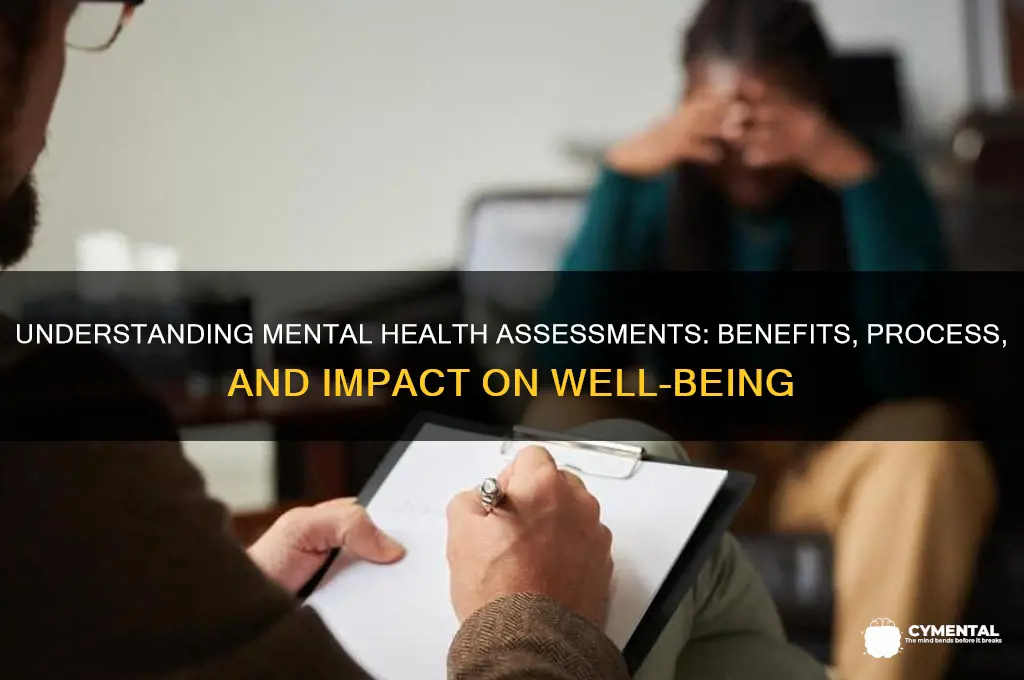
Mental health assessments are vital tools that provide a comprehensive understanding of an individual's emotional, psychological, and social well-being. By employing structured evaluations, these assessments help identify specific mental health conditions, such as depression, anxiety, or bipolar disorder, and gauge their severity. They also offer insights into a person's coping mechanisms, strengths, and areas needing support, enabling tailored treatment plans. Additionally, mental health assessments facilitate early intervention, reducing the risk of long-term complications and improving overall quality of life. For professionals, they serve as a foundation for accurate diagnosis and effective care, while for individuals, they foster self-awareness and empowerment in managing their mental health.
| Characteristics | Values |
|---|---|
| Early Detection | Identifies mental health issues before they worsen, enabling timely intervention. |
| Personalized Treatment Plans | Tailors treatment based on individual needs, improving effectiveness. |
| Risk Assessment | Evaluates risk of self-harm, suicide, or harm to others, ensuring safety. |
| Monitoring Progress | Tracks changes in mental health over time, adjusting treatment as needed. |
| Diagnostic Clarity | Provides accurate diagnosis, distinguishing between conditions with similar symptoms. |
| Access to Resources | Connects individuals to appropriate support services, therapies, or medications. |
| Awareness and Education | Increases understanding of mental health, reducing stigma and promoting self-care. |
| Legal and Ethical Compliance | Ensures assessments meet legal standards for treatment, guardianship, or disability claims. |
| Improved Communication | Facilitates better communication between patients, caregivers, and healthcare providers. |
| Prevention of Complications | Reduces the likelihood of co-occurring disorders or physical health issues. |
| Cost-Effectiveness | Early intervention reduces long-term healthcare costs associated with untreated mental health issues. |
| Support for Families and Caregivers | Provides guidance and resources for those supporting individuals with mental health conditions. |
Explore related products


What You'll Learn

Early detection of mental health issues through assessments
Mental health assessments serve as a critical tool in identifying potential issues before they escalate, often acting as the first line of defense in preventive care. By systematically evaluating emotional, psychological, and behavioral patterns, these assessments can uncover subtle signs of disorders such as anxiety, depression, or bipolar disorder in their nascent stages. For instance, a standardized questionnaire like the PHQ-9 (Patient Health Questionnaire) can detect mild depressive symptoms in individuals who may not yet recognize their own distress. Early detection through such tools allows for timely intervention, reducing the risk of chronic conditions and improving long-term outcomes.
Consider the process of early detection as a diagnostic roadmap, akin to routine physical check-ups but tailored for the mind. Assessments often involve a combination of self-report measures, clinical interviews, and observational data, providing a multi-faceted view of an individual’s mental state. For children and adolescents, tools like the Strengths and Difficulties Questionnaire (SDQ) can flag developmental concerns, such as emerging anxiety or conduct disorders, during critical growth periods. For adults, periodic screenings in primary care settings can identify stressors or trauma responses that might otherwise go unnoticed. The key lies in consistency—regular assessments ensure that deviations from baseline mental health are caught early, much like monitoring blood pressure for physical health.
One practical example of early detection in action is the integration of mental health screenings in school systems. Adolescents aged 12–18 are particularly vulnerable to emerging mental health issues, with 50% of lifelong mental illnesses beginning by age 14. Schools implementing annual assessments using tools like the Columbia Suicide Severity Rating Scale (C-SSRS) have reported higher rates of early intervention, reducing the severity of conditions like major depressive disorder. Similarly, workplace wellness programs incorporating mental health assessments have shown a 30% decrease in absenteeism and improved productivity by addressing stress-related issues proactively. These settings demonstrate how targeted assessments can create supportive environments, fostering resilience and early treatment.
However, early detection through assessments is not without challenges. Stigma surrounding mental health can deter individuals from participating in screenings or disclosing accurate information. Additionally, misinterpretation of results or over-reliance on self-report measures may lead to false positives or negatives. To mitigate these risks, assessments should be administered by trained professionals who can contextualize findings and provide follow-up support. Pairing screenings with psychoeducation—explaining the purpose and benefits of assessments—can also encourage participation and reduce anxiety. Ultimately, the goal is to normalize mental health checks as a routine aspect of overall well-being, much like dental or vision exams.
In conclusion, early detection of mental health issues through assessments is a proactive strategy that transforms passive observation into active care. By leveraging validated tools and integrating screenings into everyday settings, individuals can receive support before symptoms become debilitating. Whether in schools, workplaces, or healthcare facilities, these assessments empower both providers and individuals to address mental health with the same urgency and precision as physical ailments. The takeaway is clear: early detection is not just a preventive measure—it’s a pathway to a healthier, more resilient life.
Do Psychologists Truly Heal Minds? Exploring Mental Health Support
You may want to see also
Explore related products


$44.9 $67


$43.66 $61.99


Personalized treatment plans based on assessment results
Mental health assessments are the cornerstone of effective, tailored care, providing a detailed roadmap for clinicians to navigate the complexities of individual needs. By evaluating symptoms, behaviors, and underlying factors, these assessments ensure that treatment plans are not one-size-fits-all but instead address the unique challenges each person faces. For instance, a 35-year-old with generalized anxiety disorder might require a combination of cognitive-behavioral therapy (CBT) and a low-dose SSRI (e.g., 10mg of escitalopram), while a teenager with ADHD may benefit more from stimulant medication (e.g., 10mg of methylphenidate) paired with behavioral interventions. This precision is only possible when assessments reveal the specific nuances of each case.
Consider the process as a diagnostic puzzle: assessments identify not just the primary diagnosis but also co-occurring conditions, trauma history, and social determinants of health. For example, a patient presenting with depression might also struggle with insomnia and financial stress. A personalized plan could integrate sleep hygiene techniques, a referral to a financial counselor, and a moderate dose of sertraline (50mg) to address all contributing factors simultaneously. Without such a comprehensive assessment, these interconnected issues might be overlooked, leading to incomplete or ineffective treatment.
The power of personalized plans lies in their adaptability. Assessments often include baseline measurements (e.g., PHQ-9 scores for depression) that allow clinicians to track progress and adjust strategies as needed. For a 25-year-old with PTSD, an initial plan might focus on exposure therapy and mindfulness techniques. If progress stalls after six weeks, the assessment data provides a clear rationale for introducing EMDR therapy or adjusting medication dosages. This iterative approach ensures treatment remains responsive to the individual’s evolving needs.
Critics might argue that assessments are time-consuming or rigid, but their value outweighs these concerns. For instance, a 45-minute intake assessment can save months of trial-and-error treatment. Practical tips for maximizing their utility include ensuring patients understand the purpose of the assessment, using validated tools (e.g., GAD-7 for anxiety), and involving patients in interpreting results. For children and adolescents, involving caregivers in the assessment process can provide critical insights into behavioral patterns at home and school.
In conclusion, personalized treatment plans based on assessment results are not just beneficial—they are essential for meaningful recovery. By combining clinical expertise with patient-specific data, these plans address the root causes of mental health challenges, optimize resource allocation, and foster a collaborative therapeutic relationship. Whether for a 60-year-old with bipolar disorder or a college student with panic attacks, the assessment-driven approach ensures care is as unique as the individual receiving it.
Music as Therapy: How Curating Playlists Boosts Mental Well-Being
You may want to see also
Explore related products


$71.97 $89.99


Monitoring progress and adjusting care effectively
Mental health assessments serve as a compass in the complex journey of treatment, offering a structured way to measure progress and refine care strategies. By establishing a baseline through initial evaluations—whether via standardized tools like the PHQ-9 for depression or clinician-administered interviews—providers can quantify symptoms and functional impairments. Subsequent reassessments at regular intervals (e.g., monthly for acute cases, quarterly for stable patients) allow for objective tracking of changes. For instance, a 50% reduction in PHQ-9 scores over 12 weeks might indicate significant improvement, while stagnation could signal the need for intervention. This data-driven approach ensures care remains responsive to the patient’s evolving needs.
Consider a 28-year-old with generalized anxiety disorder who begins cognitive-behavioral therapy (CBT) alongside a low-dose SSRI (e.g., sertraline 50 mg/day). Weekly self-reported anxiety scales and biweekly clinical check-ins reveal minimal progress after six weeks. Here, the assessment data prompts a care adjustment: increasing the SSRI dosage to 100 mg/day and introducing mindfulness techniques. This iterative process, informed by ongoing assessments, prevents treatment inertia and fosters collaboration between patient and provider. Without such monitoring, ineffective strategies might persist, delaying recovery.
Effective progress monitoring also requires balancing quantitative data with qualitative insights. While symptom scales provide objectivity, open-ended discussions about daily functioning, relationships, and subjective well-being offer context. For example, a teenager’s GAD-7 score might improve, but if they report increased school absences, the care plan could integrate vocational support or family therapy. This dual approach ensures adjustments address the full spectrum of a patient’s experience, not just measurable symptoms.
However, monitoring progress isn’t without challenges. Patients may underreport symptoms due to stigma or fear of treatment changes, while clinicians might misinterpret data without proper training. To mitigate this, providers should use validated tools, involve caregivers when appropriate (especially for pediatric or geriatric populations), and maintain transparency about the purpose of assessments. For instance, explaining that a PHQ-9 score of 20 warrants immediate attention can empower patients to report accurately.
Ultimately, monitoring progress and adjusting care effectively transforms mental health treatment from a static protocol into a dynamic, personalized process. By leveraging assessments as both a diagnostic and navigational tool, clinicians can ensure interventions remain aligned with patient goals and clinical outcomes. This proactive approach not only accelerates recovery but also builds trust, as patients see their care evolve in real time. In a field where one-size-fits-all solutions rarely suffice, such adaptability is indispensable.
Staying Active: How Keeping Busy Boosts Mental Health and Well-being
You may want to see also
Explore related products


Identifying risk factors for self-harm or harm to others
Mental health assessments serve as a critical tool in identifying risk factors for self-harm or harm to others, often acting as the first line of defense in preventing potential crises. By systematically evaluating an individual’s thoughts, behaviors, and environmental stressors, these assessments uncover subtle indicators that might otherwise go unnoticed. For instance, a person may exhibit seemingly minor changes in sleep patterns, social withdrawal, or increased irritability—all of which can signal underlying distress. Without a structured assessment, these signs could be dismissed as temporary mood fluctuations, delaying intervention until the risk escalates.
Consider the process of risk identification as a detective’s investigation, where each piece of information is a clue. Assessments often include standardized tools like the Columbia-Suicide Severity Rating Scale (C-SSRS) or the Historical, Clinical, Risk Management-20 (HCR-20), which are designed to probe for specific risk factors such as a history of self-harm, access to lethal means, or expressions of violent ideation. For adolescents, who are particularly vulnerable, questions about peer pressure, cyberbullying, or academic stress are essential. For older adults, factors like chronic illness, loss of independence, or social isolation may be more relevant. Tailoring the assessment to the individual’s age, background, and circumstances increases its effectiveness in pinpointing risks.
However, identifying risk factors is only the first step; interpreting them requires skill and nuance. A person expressing suicidal thoughts, for example, is not automatically at high risk—the severity, frequency, and specificity of those thoughts matter. Similarly, a history of aggression does not guarantee future violence unless accompanied by current triggers, such as substance abuse or a recent traumatic event. Mental health professionals must weigh these factors against protective factors, like a strong support system or engagement in therapy, to gauge the overall level of risk. Misinterpretation can lead to either unnecessary alarm or dangerous oversight, underscoring the need for thoroughness and expertise.
Practical strategies for risk mitigation often emerge directly from the assessment process. If a teenager discloses self-harm behaviors during an evaluation, immediate steps might include removing sharp objects from their environment, connecting them with a crisis hotline (e.g., 988 in the U.S.), and involving caregivers in a safety plan. For someone at risk of harming others, interventions could involve restricting access to weapons, establishing clear boundaries, and initiating anger management therapy. Assessments also provide a baseline for monitoring progress, allowing clinicians to adjust strategies as risks evolve. Without this structured approach, interventions might lack focus or fail to address the root causes of the behavior.
Ultimately, the value of mental health assessments lies in their ability to transform vague concerns into actionable insights. By identifying risk factors for self-harm or harm to others, these assessments empower individuals, families, and clinicians to take proactive steps toward safety. They bridge the gap between observation and intervention, ensuring that risks are not just recognized but effectively managed. In a field where early detection can save lives, the role of these assessments cannot be overstated—they are not merely diagnostic tools but lifelines.
Mental Imagery: Accelerating Recovery and Performance for Injured Athletes
You may want to see also
Explore related products




Improving access to appropriate mental health resources
Mental health assessments serve as a critical gateway to tailored care, yet their effectiveness hinges on whether individuals can access the resources identified as necessary. One of the most significant barriers to mental health care is the lack of availability of appropriate services, particularly in underserved communities. For instance, rural areas often face shortages of mental health professionals, with only 13% of psychiatrists practicing outside urban centers. To address this, telehealth platforms have emerged as a viable solution, offering real-time therapy sessions and psychiatric consultations to individuals who might otherwise travel hours for care. However, this approach requires robust internet infrastructure and digital literacy, highlighting the need for concurrent investments in technology and education.
Another strategy for improving access involves integrating mental health services into primary care settings. Approximately 60% of mental health care in the U.S. is already provided by primary care physicians, but these providers often lack the specialized tools to conduct comprehensive assessments. Implementing standardized screening tools, such as the PHQ-9 for depression or GAD-7 for anxiety, can empower primary care teams to identify mental health issues early and refer patients to appropriate specialists. Additionally, collaborative care models, where primary care providers work alongside mental health professionals, have shown promising outcomes, reducing symptoms by 40% in some studies.
Financial constraints often exacerbate access issues, as mental health services can be prohibitively expensive. Expanding insurance coverage to include a broader range of mental health treatments, including therapy and medication management, is essential. For example, the Mental Health Parity and Addiction Equity Act requires insurers to cover mental health services at parity with physical health care, yet enforcement remains inconsistent. Policymakers must prioritize audits and penalties for non-compliant insurers while also exploring sliding-scale fee structures for uninsured individuals. Furthermore, public funding for community mental health centers can bridge gaps, ensuring that low-income populations receive care without financial burden.
Finally, cultural competency in mental health assessments and resource allocation cannot be overlooked. Minority and immigrant communities often face unique barriers, including language differences and stigma surrounding mental health. Tailoring resources to meet these needs—such as offering bilingual assessments, culturally sensitive therapy, and community-based outreach programs—can significantly improve engagement. For example, the National Alliance on Mental Illness (NAMI) has developed culturally specific programs that have increased service utilization among Hispanic and African American populations by 25%. By addressing these cultural dimensions, mental health assessments can become more inclusive and effective, ultimately fostering better access to care for all.
Breaking the Silence: Why Men Resist Seeking Mental Health Support
You may want to see also
Frequently asked questions
Mental health assessments help identify underlying issues by systematically evaluating symptoms, behaviors, and emotional states. They use standardized tools and clinical interviews to uncover conditions like depression, anxiety, or trauma that may not be immediately apparent, enabling targeted treatment.
Mental health assessments provide a comprehensive understanding of an individual’s needs, strengths, and challenges. This information guides professionals in tailoring interventions, such as therapy, medication, or lifestyle changes, to address specific concerns and improve outcomes.
Assessments establish a baseline for an individual’s mental health status, allowing professionals to track changes and measure the effectiveness of treatment. Regular reassessments help adjust strategies as needed and ensure ongoing support.
Mental health assessments normalize discussions about emotional well-being and validate individuals’ experiences. By framing mental health as a measurable and treatable aspect of overall health, they encourage early intervention and reduce societal stigma.