Harper Lewis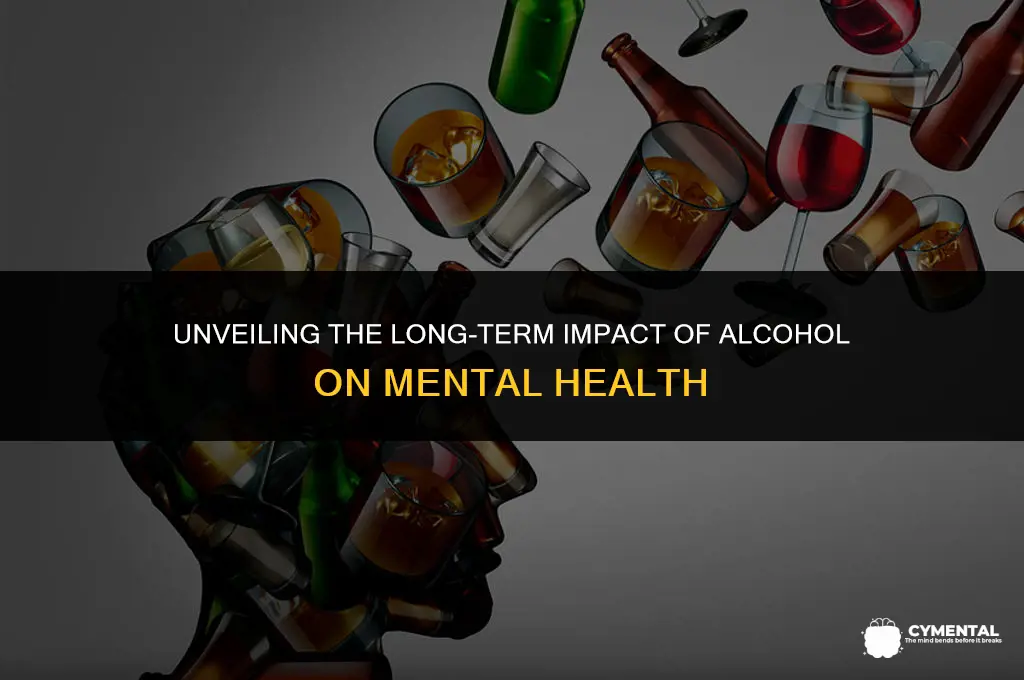
Alcohol consumption has a profound impact on mental health, with long-term effects that can be both debilitating and far-reaching. Chronic alcohol use has been linked to a range of mental health issues, including depression, anxiety, and cognitive impairment. The brain's delicate balance of neurotransmitters is disrupted by alcohol, leading to changes in mood, behavior, and thought patterns. Over time, this can result in the development of mental health disorders, as well as exacerbate existing conditions. Furthermore, alcohol dependence can lead to a cycle of addiction, where the individual becomes increasingly reliant on alcohol to cope with the negative emotions and symptoms of their mental health issues. Understanding the complex relationship between alcohol and mental health is crucial for developing effective treatment strategies and promoting overall well-being.
| Characteristics | Values |
|---|---|
| Increased Risk of Depression | Long-term alcohol use can lead to an increased risk of developing depression. |
| Anxiety Disorders | Chronic alcohol consumption may contribute to the development of anxiety disorders. |
| Psychosis | Heavy alcohol use can induce psychotic symptoms, including hallucinations and delusions. |
| Cognitive Impairment | Long-term alcohol abuse can result in cognitive impairment, affecting memory, attention, and decision-making. |
| Mood Swings | Alcohol can cause significant mood swings, leading to emotional instability. |
| Sleep Disturbances | Regular alcohol intake can disrupt sleep patterns, leading to insomnia or other sleep disorders. |
| Personality Changes | Prolonged alcohol use may lead to changes in personality, such as increased aggression or paranoia. |
| Social Isolation | Alcohol dependence can result in social isolation as individuals may withdraw from friends and family. |
| Suicidal Thoughts | Chronic alcohol abuse is associated with an increased risk of suicidal thoughts and behaviors. |
| Neurological Damage | Long-term alcohol use can cause damage to the brain, leading to conditions like Wernicke's encephalopathy. |
Explore related products


What You'll Learn
- Neurological Damage: Long-term alcohol use can lead to brain damage, affecting cognitive functions and emotional regulation
- Depression and Anxiety: Chronic alcohol consumption is linked to increased symptoms of depression and anxiety disorders
- Memory Impairment: Excessive drinking over time can cause memory loss and difficulties in learning new information
- Psychosis Risk: Heavy alcohol use may increase the risk of developing psychotic disorders, such as schizophrenia
- Social and Relationship Issues: Long-term alcohol abuse can strain relationships and lead to social isolation and loneliness

Neurological Damage: Long-term alcohol use can lead to brain damage, affecting cognitive functions and emotional regulation
Long-term alcohol use has been linked to significant neurological damage, impacting various cognitive functions and emotional regulation. This damage can manifest in several ways, including impaired memory, reduced attention span, and altered decision-making abilities. Chronic alcohol consumption can also lead to changes in brain structure, such as shrinkage of the hippocampus and prefrontal cortex, which are crucial for memory formation and executive functions.
One of the primary mechanisms by which alcohol causes neurological damage is through its effects on neurotransmitters. Alcohol can disrupt the balance of neurotransmitters like GABA, glutamate, and dopamine, leading to changes in brain function and behavior. For example, alcohol can increase the activity of GABA, an inhibitory neurotransmitter, which can result in sedation and impaired cognitive function. Conversely, it can decrease the activity of glutamate, an excitatory neurotransmitter, leading to reduced brain activity and cognitive impairment.
Alcohol-related neurological damage can also affect emotional regulation, leading to increased anxiety, depression, and mood swings. This is partly due to alcohol's impact on the brain's stress response system, which can become dysregulated with chronic use. Additionally, alcohol can impair the function of the amygdala, a brain region involved in processing emotions, leading to difficulties in managing emotional responses.
The severity of neurological damage caused by long-term alcohol use can vary depending on several factors, including the amount and duration of alcohol consumption, age, and genetic predisposition. Early intervention and cessation of alcohol use can help mitigate some of the damage, but in some cases, the effects may be irreversible.
In conclusion, the neurological damage caused by long-term alcohol use is a complex and multifaceted issue, involving changes in brain structure, neurotransmitter function, and emotional regulation. Understanding these effects is crucial for developing effective prevention and treatment strategies for alcohol-related mental health disorders.
Boosting Mental Health: The Positive Power of Social Media
You may want to see also
Explore related products


$13.93 $14.95


Depression and Anxiety: Chronic alcohol consumption is linked to increased symptoms of depression and anxiety disorders
Chronic alcohol consumption has been extensively studied for its impact on mental health, particularly its association with depression and anxiety disorders. Research indicates that long-term alcohol use can exacerbate symptoms of these conditions, leading to a detrimental cycle where increased drinking may be used as a coping mechanism, further worsening mental health outcomes.
One of the key mechanisms by which alcohol affects mental health is through its impact on neurotransmitters in the brain. Alcohol can disrupt the balance of chemicals such as serotonin, dopamine, and GABA, which play crucial roles in regulating mood and anxiety levels. Over time, this disruption can lead to increased feelings of sadness, hopelessness, and anxiety, characteristic of depression and anxiety disorders.
Moreover, chronic alcohol consumption can lead to physical health problems that may contribute to mental health issues. For instance, liver damage, cardiovascular diseases, and neurological impairments resulting from prolonged alcohol use can create additional stress and anxiety, further compounding the mental health challenges faced by individuals.
It is also important to consider the social and environmental factors that may influence the relationship between alcohol consumption and mental health. Social isolation, financial problems, and strained relationships can all be both consequences and contributors to increased drinking and worsened mental health outcomes.
Breaking the cycle of chronic alcohol consumption and its impact on mental health requires a multifaceted approach. This may include seeking professional help, such as therapy or counseling, to address underlying mental health issues. Additionally, lifestyle changes, such as improving diet, increasing physical activity, and developing healthier coping mechanisms, can play a significant role in reducing alcohol consumption and improving overall well-being.
In conclusion, the link between chronic alcohol consumption and increased symptoms of depression and anxiety disorders is well-established. Addressing this issue requires a comprehensive understanding of the biological, psychological, and social factors involved, as well as a commitment to making positive lifestyle changes and seeking appropriate support.
The Emotional Toll: How Cheating Impacts a Woman's Mental Health
You may want to see also
Explore related products


![Long Term Effects of SUFFERING [Explicit]](https://m.media-amazon.com/images/I/813+a-1ck1S._AC_UY218_.jpg)


Memory Impairment: Excessive drinking over time can cause memory loss and difficulties in learning new information
Excessive alcohol consumption has a profound impact on cognitive functions, particularly memory. Over time, heavy drinking can lead to significant memory impairment, making it difficult for individuals to recall past events and learn new information. This is due to the toxic effects of alcohol on the brain, which can damage brain cells and disrupt the normal functioning of neurotransmitters.
One of the key areas affected by alcohol-related memory impairment is the hippocampus, a region of the brain crucial for the formation of new memories. Chronic alcohol exposure can lead to the degeneration of hippocampal neurons, resulting in difficulties with memory consolidation and retrieval. This can manifest as forgetfulness, confusion, and an inability to remember recent events or conversations.
Furthermore, alcohol can interfere with the process of neurogenesis, the growth and development of new neurons. This impairment can hinder the brain's ability to adapt and learn, making it challenging for individuals to acquire new skills or knowledge. The cumulative effect of these cognitive impairments can significantly impact an individual's daily life, relationships, and overall mental health.
It is essential to note that the extent of memory impairment can vary depending on factors such as the duration and intensity of alcohol consumption, age, and individual susceptibility. Early intervention and cessation of excessive drinking can potentially mitigate some of the cognitive damage caused by alcohol. Seeking professional help and support is crucial for individuals struggling with alcohol-related memory issues, as it can provide them with the necessary tools and resources to address their condition and improve their cognitive functioning.
The Impact of Beauty Standards on Mental Health: A Comprehensive Look
You may want to see also
Explore related products


Psychosis Risk: Heavy alcohol use may increase the risk of developing psychotic disorders, such as schizophrenia
Heavy alcohol consumption has been linked to an increased risk of developing psychotic disorders, such as schizophrenia. This correlation is particularly concerning given the prevalence of alcohol use worldwide. Research suggests that individuals who engage in chronic heavy drinking may experience changes in brain chemistry and structure, which can contribute to the onset of psychotic symptoms.
One study found that people who consumed more than 30 grams of alcohol per day had a significantly higher risk of developing schizophrenia compared to those who drank less. This risk was even more pronounced in individuals with a family history of psychotic disorders. Another study showed that heavy alcohol use in adolescence and early adulthood may increase the likelihood of developing schizophrenia later in life.
The exact mechanisms by which heavy alcohol use contributes to psychosis risk are not fully understood, but several theories have been proposed. One possibility is that chronic alcohol consumption leads to neurotoxic effects, damaging brain cells and disrupting normal brain function. Another theory suggests that heavy drinking may exacerbate underlying genetic predispositions to psychotic disorders.
It is important to note that while heavy alcohol use may increase the risk of developing psychotic disorders, it is not a direct cause. Many individuals who consume large amounts of alcohol do not develop schizophrenia or other psychotic conditions. However, the potential risks associated with heavy drinking should not be overlooked, especially in individuals with a family history of mental illness or those who are already experiencing early signs of psychosis.
In conclusion, the relationship between heavy alcohol use and psychosis risk is a complex one that warrants further investigation. While the exact mechanisms underlying this correlation are still being studied, it is clear that excessive alcohol consumption can have serious implications for mental health. Individuals who are concerned about their alcohol use or their risk of developing psychotic disorders should consult with a healthcare professional for guidance and support.
Navigating Choices: The Impact of Stress and Mental Health on Decision-Making
You may want to see also
Explore related products


Social and Relationship Issues: Long-term alcohol abuse can strain relationships and lead to social isolation and loneliness
Long-term alcohol abuse can have a profound impact on an individual's social and relational well-being. One of the most significant consequences is the strain it places on relationships with family, friends, and colleagues. As alcohol consumption becomes a central focus in a person's life, they may neglect their responsibilities and commitments, leading to feelings of resentment and mistrust among their loved ones. This can result in a breakdown of communication and a widening emotional distance, ultimately leading to social isolation and loneliness.
The effects of long-term alcohol abuse on relationships are multifaceted. In addition to neglecting responsibilities, individuals may also exhibit erratic and unpredictable behavior, which can be frightening and confusing for those around them. This can lead to a loss of trust and a reluctance to engage in social activities, further exacerbating feelings of isolation. Moreover, the physical and mental health consequences of alcohol abuse can also impact relationships, as loved ones may struggle to cope with the emotional toll of watching someone they care about deteriorate.
Social isolation and loneliness can have a devastating impact on mental health, particularly for those struggling with alcohol abuse. Without a strong support network, individuals may feel overwhelmed and helpless, which can worsen their alcohol consumption and lead to a vicious cycle of abuse and isolation. This can also increase the risk of developing other mental health issues, such as depression and anxiety, which can further compound the negative effects on relationships and social well-being.
Breaking the cycle of alcohol abuse and social isolation requires a multifaceted approach. In addition to seeking professional help for alcohol addiction, individuals can also benefit from reconnecting with their loved ones and rebuilding their social support network. This may involve attending support groups, engaging in therapy, or participating in social activities that do not involve alcohol. By addressing the root causes of alcohol abuse and fostering healthy relationships, individuals can begin to overcome the social and relational consequences of long-term alcohol abuse.
In conclusion, the social and relational issues stemming from long-term alcohol abuse are complex and far-reaching. By understanding the impact of alcohol on relationships and social well-being, individuals can take the necessary steps to seek help and rebuild their lives. With the right support and resources, it is possible to overcome the negative effects of alcohol abuse and foster healthy, fulfilling relationships.
Exploring the Complex Link Between Abortion and Mental Health
You may want to see also
Frequently asked questions
Yes, chronic alcohol consumption can significantly impact mental health, leading to issues such as depression, anxiety, and cognitive impairment.
Long-term alcohol abuse is linked to conditions like alcoholic dementia, Wernicke-Korsakoff syndrome, and increased risk of suicide. It can also exacerbate existing mental health disorders.
Alcohol interferes with the balance of neurotransmitters like serotonin, dopamine, and GABA. Over time, this disruption can lead to mood disorders, anxiety, and impaired cognitive function.
Heavy alcohol use has been associated with an increased risk of developing psychotic disorders, particularly in individuals with a predisposition to such conditions. Chronic alcohol consumption can also worsen the symptoms of existing psychotic disorders.