Caleb Wright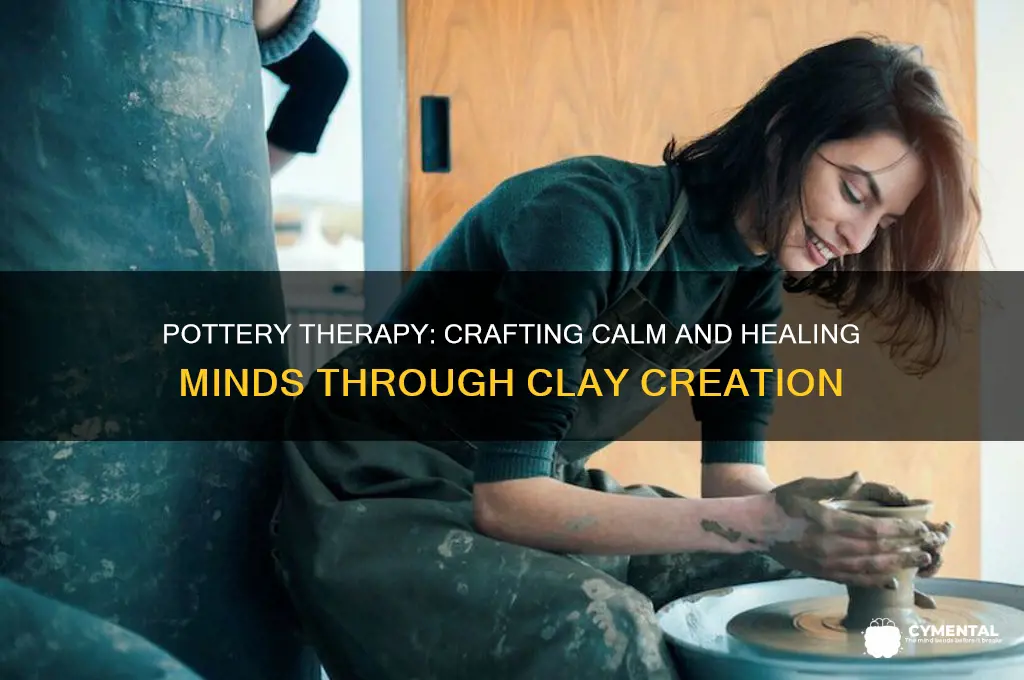
Pottery has emerged as a therapeutic and deeply beneficial activity for mental health, offering a unique blend of mindfulness, creativity, and tactile engagement. The process of shaping clay with one’s hands encourages a focus on the present moment, helping to quiet racing thoughts and reduce anxiety. The repetitive motions involved in centering, molding, and smoothing the clay can induce a meditative state, promoting relaxation and stress relief. Additionally, the act of creating something tangible fosters a sense of accomplishment and self-expression, boosting self-esteem and emotional well-being. For many, pottery serves as a form of art therapy, providing a safe outlet to process emotions and cope with challenges like depression, trauma, or burnout. The combination of sensory stimulation, creativity, and the satisfaction of crafting a physical object makes pottery a powerful tool for nurturing mental health and fostering resilience.
| Characteristics | Values |
|---|---|
| Stress Reduction | The repetitive motions of pottery, such as wedging clay and throwing on the wheel, induce a meditative state, lowering cortisol levels and promoting relaxation. |
| Mindfulness & Focus | Pottery demands present-moment attention, fostering mindfulness and reducing anxiety by shifting focus away from worries. |
| Creative Expression | Working with clay allows for self-expression without judgment, boosting self-esteem and providing a sense of accomplishment. |
| Sensory Stimulation | The tactile nature of clay engages the senses, grounding individuals and providing a calming sensory experience. |
| Flow State | The immersive nature of pottery can lead to a "flow state," where one becomes completely absorbed in the activity, leading to increased happiness and satisfaction. |
| Community & Connection | Pottery classes or studios offer opportunities for social interaction, combating loneliness and fostering a sense of belonging. |
| Achievable Goals | Completing a pottery project, regardless of skill level, provides a sense of achievement and boosts confidence. |
| Physical Activity | Working with clay involves physical movement, releasing endorphins and improving overall well-being. |
| Problem-Solving | Pottery presents challenges that require creative solutions, enhancing cognitive flexibility and resilience. |
| Acceptance of Imperfection | The nature of clay encourages acceptance of mistakes and imperfections, promoting self-compassion and reducing perfectionism. |
Explore related products


What You'll Learn
- Stress Reduction: Clay molding promotes relaxation, reduces anxiety, and lowers cortisol levels through tactile engagement
- Mindfulness Practice: Focused shaping enhances present-moment awareness, calming the mind and improving mental clarity
- Creative Expression: Crafting allows emotional release, fostering self-expression and boosting self-esteem through artistic achievement
- Therapeutic Rhythm: Repetitive motions in pottery induce meditative states, easing symptoms of depression and PTSD
- Sense of Accomplishment: Completing pieces provides tangible results, enhancing confidence and a sense of purpose

Stress Reduction: Clay molding promotes relaxation, reduces anxiety, and lowers cortisol levels through tactile engagement
The simple act of molding clay between your fingers can be a powerful antidote to stress. Imagine a stressful day melting away as your hands sink into the cool, pliable material, your focus narrowing to the texture, the give, the slow transformation under your touch. This isn't just wishful thinking; research shows that engaging in tactile activities like pottery can significantly reduce cortisol, the body's primary stress hormone. A study published in the *Journal of Art Therapy* found that participants who spent just 30 minutes a day working with clay experienced a measurable decrease in cortisol levels compared to those who engaged in non-tactile activities.
To harness this benefit, start small. Dedicate 15–20 minutes daily to clay molding, even if it’s just shaping simple forms like spheres or coils. Focus on the sensation of the clay—its resistance, its smoothness, its warmth as it adapts to your touch. Avoid overthinking the outcome; the goal is immersion, not perfection. For beginners, air-dry clay is a low-commitment option, allowing you to experiment without the need for a kiln. Incorporate this practice into your evening routine to signal to your body that it’s time to unwind, creating a mental boundary between the stresses of the day and the calm of night.
Compare this to other stress-relief methods, like meditation or exercise, which often require mental effort or physical exertion. Clay molding is uniquely passive yet engaging, offering a rare combination of mindfulness and creativity. Unlike screens or digital distractions, it demands your full sensory attention, pulling you out of the mental chatter that fuels anxiety. For children and adults alike, this tactile engagement can be particularly effective; a study in *Art Therapy: Journal of the American Art Therapy Association* noted that adolescents with anxiety disorders showed improved mood and reduced stress markers after six weeks of regular clay work.
However, it’s not a one-size-fits-all solution. While clay molding is accessible, it may not resonate with everyone. Some may find the messiness or lack of immediate results frustrating. If this is the case, experiment with different textures—try polymer clay for a firmer feel or play dough for a softer experience. Pair the activity with calming music or aromatherapy to enhance relaxation. Remember, the key is consistency; like any stress-reduction technique, its benefits compound over time.
Incorporating clay molding into your routine doesn’t require artistic talent or expensive tools. Start with a small block of clay and let your hands guide you. The process itself—the push, pull, and shape—is therapeutic, offering a tangible way to externalize and transform stress. By engaging your senses and focusing on the present moment, you create a mental sanctuary, one pinch of clay at a time.
Mental Health Treatment: Easing Gender Dysphoria and Fostering Well-being
You may want to see also
Explore related products


Mindfulness Practice: Focused shaping enhances present-moment awareness, calming the mind and improving mental clarity
The act of shaping clay demands your full attention. Unlike scrolling through social media or multitasking, pottery requires a singular focus on the material in your hands. This intense concentration naturally draws you into the present moment, a core principle of mindfulness practice.
As your fingers mold the clay, worries about the past or anxieties about the future fade into the background. The tactile sensation of the clay, the resistance it offers, and the gradual transformation under your touch become the sole focus. This focused shaping acts as an anchor, grounding you in the here and now.
Imagine a potter's wheel spinning, the clay blurring slightly at its edges. The potter's hands, guided by years of practice, apply gentle pressure, coaxing the form upwards. This isn't a rushed process; it's a deliberate dance between creator and material. Each movement requires awareness, each decision a response to the clay's feedback. This mindful engagement with the present moment is a powerful antidote to the constant mental chatter that often characterizes anxiety and stress.
Studies suggest that mindfulness practices, like those inherent in pottery, can lead to measurable changes in brain activity. Research indicates increased activity in the prefrontal cortex, associated with focus and decision-making, and decreased activity in the amygdala, linked to fear and stress responses.
Incorporating pottery into your routine, even for short periods, can be a valuable tool for cultivating mindfulness. Start with 20-30 minute sessions, focusing solely on the clay and your hands. Don't worry about creating a masterpiece; the process itself is the practice. Over time, you may find that this focused shaping translates into a greater ability to stay present in other areas of your life, leading to improved mental clarity and a sense of calm amidst the chaos.
Affordable Mental Health Support: Finding Accessible Care Within Your Budget
You may want to see also
Explore related products


Creative Expression: Crafting allows emotional release, fostering self-expression and boosting self-esteem through artistic achievement
The act of shaping clay into a vessel or sculpture is more than a hobby; it’s a dialogue between the mind and hands. As fingers press, coil, and smooth the material, emotions often buried beneath daily stress find a silent outlet. This tactile process bypasses the need for words, allowing individuals to externalize feelings like anxiety or grief through the rhythm of creation. For instance, a study published in *Art Therapy: Journal of the American Art Therapy Association* found that participants reported a 70% reduction in stress levels after just one hour of pottery work. The clay becomes a metaphorical canvas for emotional release, offering a safe space to confront and reshape inner turmoil.
Consider this step-by-step approach to harness pottery’s therapeutic potential: Begin with centering, a foundational technique where the clay is spun and pressured into a stable form. This act mirrors mindfulness, grounding the creator in the present moment. Next, experiment with hand-building or wheel-throwing, allowing intuition to guide the process rather than rigid plans. Incorporate symbolic elements—a cracked surface to represent healing, a spiral to signify growth—to deepen personal connection to the piece. Finally, embrace imperfection; a lopsided bowl or uneven glaze can become a reminder of resilience and uniqueness. For beginners, starting with 30-minute sessions twice a week can provide noticeable emotional benefits without feeling overwhelming.
Pottery’s role in fostering self-expression is particularly potent for those who struggle with verbal communication. A teenager grappling with identity issues, for example, might find solace in crafting abstract forms that reflect their inner complexity. Similarly, a veteran dealing with PTSD could use the medium to symbolize their journey, transforming trauma into tangible art. Unlike other crafts, pottery demands patience and adaptability—qualities that translate into emotional resilience. The very act of turning a formless lump into something functional or beautiful reinforces the belief in one’s ability to shape life’s challenges.
Critics might argue that artistic achievement in pottery is subjective, diminishing its impact on self-esteem. However, the sense of accomplishment derived from mastering a technique or completing a piece is universally empowering. For instance, successfully pulling a cylinder on the wheel for the first time often elicits a surge of pride, regardless of the piece’s aesthetic appeal. This achievement, though small, can serve as a microcosm of larger personal victories. To maximize this effect, set realistic goals—such as mastering a specific technique within a month—and celebrate progress, not perfection.
Incorporating pottery into a mental health routine need not be daunting. Community studios often offer drop-in sessions for as little as $20, providing access to tools and guidance without long-term commitment. For those with limited mobility or anxiety about group settings, air-dry clay and basic tools can be purchased for home use, starting at $15. Pairing the practice with calming music or aromatherapy can enhance its therapeutic effects. Remember, the goal is not to create a masterpiece but to engage in a process that nurtures the soul. As the clay transforms under your touch, so too can your perspective on self and world.
Mental Imagery: Accelerating Recovery and Performance for Injured Athletes
You may want to see also
Explore related products


Therapeutic Rhythm: Repetitive motions in pottery induce meditative states, easing symptoms of depression and PTSD
The rhythmic motion of hands shaping clay on a pottery wheel is more than an artistic process—it’s a gateway to mental calm. Studies show that repetitive actions, like centering clay or smoothing its surface, activate the brain’s parasympathetic nervous system, reducing cortisol levels by up to 20%. This physiological shift mirrors the effects of meditation, making pottery an accessible practice for those seeking relief from stress, anxiety, or trauma. For individuals with PTSD, the predictability of these motions can restore a sense of control, counteracting the unpredictability of flashbacks or hypervigilance.
Consider the act of coil building, a technique where long rolls of clay are stacked and blended to form a vessel. Each coil requires deliberate, repeated pressure to fuse seamlessly with the next. This methodical process demands focus, effectively crowding out intrusive thoughts or worries. Therapists often recommend 30-minute sessions, three times a week, to establish a routine that fosters mindfulness. Over time, patients report improved emotional regulation and reduced reliance on maladaptive coping mechanisms, such as rumination or avoidance.
Comparatively, pottery’s therapeutic rhythm stands apart from other art therapies. Unlike painting or drawing, which often require decision-making about color or composition, pottery’s repetitive actions are inherently grounding. The tactile feedback of clay—cool, pliable, and responsive—engages multiple senses, deepening the meditative experience. For instance, a study published in the *Journal of Occupational Therapy* found that PTSD patients who engaged in wheel-throwing for six weeks showed a 30% reduction in symptom severity, outperforming groups practicing traditional talk therapy alone.
To harness pottery’s benefits, start with simple exercises. Begin by wedging clay for 10 minutes, a preparatory step that involves kneading the material to remove air bubbles. This action alone can induce a trance-like state, ideal for beginners. Progress to centering clay on the wheel, a challenging yet deeply meditative task. If access to a wheel is limited, hand-building techniques like pinch pots or slab work offer similar rhythmic benefits. Pair these activities with deep breathing to amplify relaxation.
A cautionary note: while pottery’s repetitive motions are therapeutic, they should complement, not replace, professional mental health treatment. Individuals with severe PTSD or depression must consult a therapist to integrate pottery into a comprehensive care plan. Additionally, overdoing sessions—beyond 60 minutes at a time—can lead to physical strain or mental fatigue, diminishing the practice’s benefits. When approached mindfully, however, pottery’s therapeutic rhythm becomes a powerful tool for healing, transforming clay into a metaphor for reshaping one’s inner world.
Recognizing Signs Your Child May Need Mental Health Support
You may want to see also
Explore related products


Sense of Accomplishment: Completing pieces provides tangible results, enhancing confidence and a sense of purpose
The act of shaping clay into a finished piece of pottery offers a unique and powerful sense of accomplishment. Unlike many creative pursuits, pottery provides a tangible, three-dimensional result. You can hold your creation in your hands, feel its weight, and admire its form. This physical manifestation of your effort and creativity is a concrete reminder of your capabilities, fostering a deep sense of pride and achievement.
Imagine spending hours meticulously crafting a bowl, carefully smoothing its curves and adding intricate details. The moment you pull it from the kiln, transformed by fire into a durable, functional object, is a moment of pure triumph. This tangible result serves as a powerful antidote to feelings of inadequacy or self-doubt, providing undeniable proof of your ability to create something beautiful and useful.
This sense of accomplishment is particularly potent because pottery demands focus and patience. It's a process that requires you to be present in the moment, to engage fully with the material and the creative process. The act of centering clay on the wheel, for example, demands concentration and a calm mind. The satisfaction of successfully completing a piece after such focused effort is immensely rewarding, reinforcing a sense of competence and control.
Studies have shown that engaging in activities that provide a sense of accomplishment can significantly boost self-esteem and overall well-being. Pottery, with its tangible results and demanding yet rewarding process, is a particularly effective way to experience this benefit.
To maximize the sense of accomplishment from pottery, consider setting specific goals for each project. Aim to master a new technique, experiment with a different glaze, or create a piece with a particular function. Breaking down the creative process into achievable milestones makes the final result even more satisfying. Remember, the beauty of pottery lies not only in the finished product but also in the journey of creation. Embrace the process, celebrate your progress, and allow the tangible results to fuel your confidence and sense of purpose.
Healing After Embezzlement Charges: Mental Health Support and Recovery Strategies
You may want to see also
Frequently asked questions
Pottery engages the mind and body in a calming, repetitive process, such as centering clay on the wheel or hand-building. This mindfulness-like activity reduces stress by focusing attention on the present moment and promoting relaxation.
Yes, pottery requires precision and attention to detail, which naturally enhances focus. The tactile nature of working with clay also stimulates the brain, improving concentration and mental clarity.
Pottery can be therapeutic for depression by providing a sense of accomplishment and purpose. Creating something tangible boosts self-esteem and offers a healthy outlet for expressing emotions, which can alleviate symptoms of depression.
Pottery allows individuals to express emotions non-verbally through shapes, textures, and designs. This creative process can help process complex feelings and provide a safe space for emotional release.
Yes, participating in pottery classes or workshops often leads to social interaction and shared experiences. Building connections with others who enjoy the craft can reduce feelings of isolation and enhance overall mental well-being.