Ava Ramirez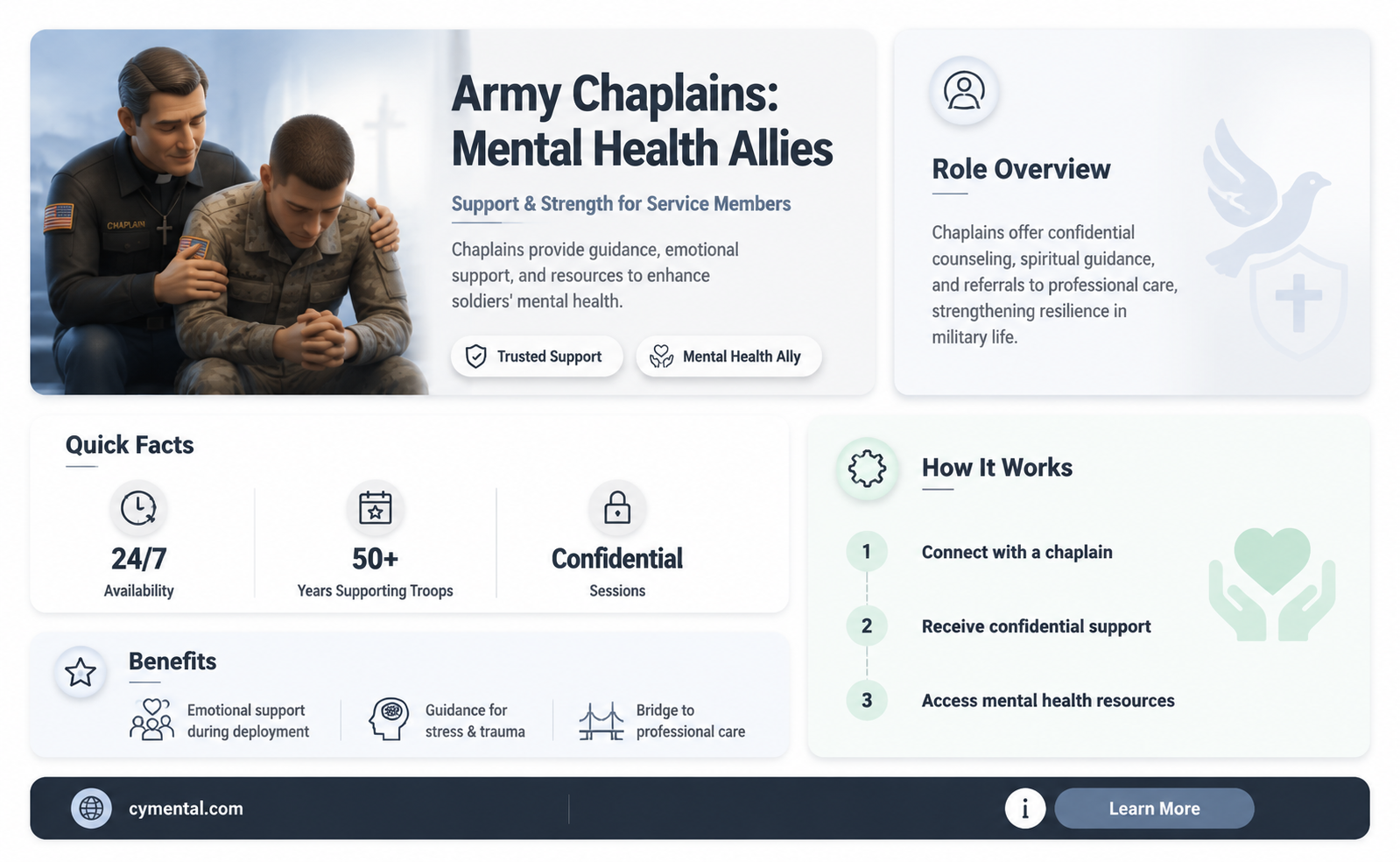
Chaplains in the army play a multifaceted role that extends beyond spiritual guidance, often serving as a critical resource for mental health support. Positioned uniquely outside the military chain of command, chaplains offer a confidential and non-judgmental space for service members to discuss their struggles, fears, and emotional burdens. While not trained as mental health professionals, they provide compassionate listening, moral support, and coping strategies rooted in faith or personal values, which can be instrumental in alleviating stress, anxiety, and trauma. Their presence fosters resilience and a sense of community, often bridging the gap between formal mental health services and the immediate needs of soldiers. By addressing spiritual and emotional well-being, chaplains contribute significantly to the overall mental health of military personnel, particularly in high-stress environments.
Explore related products


What You'll Learn
- Chaplain's role in providing emotional support and counseling to soldiers
- Spiritual guidance and its impact on mental well-being in the military
- Confidentiality and trust: How chaplains create safe spaces for troops
- Addressing trauma and PTSD through chaplain-led interventions and rituals
- Collaboration with mental health professionals for comprehensive soldier care

Chaplain's role in providing emotional support and counseling to soldiers
Chaplains in the army serve as a critical bridge between spiritual guidance and mental health support, offering soldiers a unique form of counseling that integrates emotional, moral, and psychological care. Unlike traditional mental health professionals, chaplains are not bound by clinical diagnoses or treatment protocols, allowing them to provide flexible, personalized support tailored to individual needs. Their role is particularly vital in high-stress environments where soldiers face trauma, loss, and existential crises. By fostering trust through confidentiality and a non-judgmental approach, chaplains create a safe space for soldiers to express vulnerabilities they might otherwise suppress.
Consider the practical steps chaplains take to address mental health challenges. They often conduct one-on-one counseling sessions, group discussions, and resilience-building workshops, focusing on themes like coping with stress, grief, and moral injury. For instance, a chaplain might guide a soldier through a structured reflection exercise to process combat-related guilt, using spiritual or secular frameworks depending on the individual’s preference. Additionally, chaplains collaborate with mental health professionals to identify soldiers at risk of severe mental health issues, ensuring they receive specialized care when needed. This dual role as both spiritual advisor and emotional counselor makes chaplains uniquely equipped to address the multifaceted struggles of military life.
A comparative analysis highlights the distinct advantages of chaplains in mental health support. While psychologists and psychiatrists focus on evidence-based therapies and medication, chaplains emphasize holistic well-being, often incorporating faith, purpose, and community into their approach. For example, a chaplain might organize a memorial service for a fallen comrade, providing collective grief support that complements individual therapy. This complementary role ensures soldiers receive comprehensive care that addresses both their psychological and existential needs. Studies show that soldiers who engage with chaplains report higher levels of emotional resilience and a greater sense of belonging, underscoring the value of this integrated approach.
To maximize the effectiveness of chaplain support, soldiers should proactively engage with these resources. Practical tips include attending chaplain-led programs, seeking individual counseling for personal struggles, and leveraging chaplains as a neutral party for conflict resolution within units. Commanders can also play a role by normalizing chaplain interactions, ensuring soldiers understand that seeking emotional support is a sign of strength, not weakness. By integrating chaplains into the broader mental health ecosystem, the military can foster a culture of resilience and care that benefits both individual soldiers and unit cohesion.
Furry Fandom and Mental Health: Exploring Emotional Benefits and Support
You may want to see also
Explore related products



$19.81


Spiritual guidance and its impact on mental well-being in the military
Military chaplains serve as a unique bridge between spiritual support and mental health care, offering a confidential, non-clinical space for service members to process their experiences. Unlike mental health professionals, chaplains are not bound by mandatory reporting requirements for issues like suicidal ideation, which can encourage soldiers to open up more freely. This confidentiality fosters trust, allowing individuals to explore their fears, doubts, and traumas without fear of career repercussions. For example, a chaplain might help a soldier reconcile their faith with the moral dilemmas of combat, reducing cognitive dissonance and alleviating guilt-related stress. This spiritual dialogue often complements clinical therapy, providing a holistic approach to mental well-being.
The impact of spiritual guidance on mental health in the military is particularly evident in high-stress environments. Deployed service members often face existential crises, questioning the purpose of their mission or the value of their sacrifices. Chaplains address these concerns by facilitating discussions about meaning, resilience, and hope, drawing from religious or philosophical frameworks. Research shows that individuals who find purpose in their struggles report higher levels of psychological resilience. For instance, a chaplain might use scripture, meditation, or prayer to help a soldier reframe their suffering as part of a larger narrative, reducing feelings of isolation and despair. This reframing can be as effective as cognitive-behavioral techniques in mitigating symptoms of anxiety and depression.
However, the effectiveness of spiritual guidance depends on the chaplain’s ability to meet service members where they are, regardless of their religious beliefs. Non-denominational chaplains, for example, focus on universal themes like compassion, forgiveness, and inner peace, making their support accessible to atheists, agnostics, and those of diverse faiths. Practical tools, such as mindfulness exercises rooted in spiritual traditions, can be particularly beneficial. A chaplain might teach a 10-minute guided meditation based on Christian contemplative prayer or Buddhist mindfulness, helping soldiers manage acute stress responses. These techniques, when practiced daily, have been shown to lower cortisol levels and improve emotional regulation.
One often-overlooked aspect of chaplains’ role is their ability to foster community, which is critical for mental health in the isolating military environment. Chaplains organize religious services, memorial ceremonies, and informal gatherings that strengthen social bonds, reducing feelings of loneliness and alienation. For younger service members (ages 18–25), who are at higher risk for mental health issues, these communal activities provide a sense of belonging and shared purpose. Additionally, chaplains often collaborate with mental health providers to identify at-risk individuals, ensuring they receive appropriate care. This dual approach—spiritual support and community building—creates a safety net that clinical services alone cannot provide.
In conclusion, spiritual guidance in the military is not a replacement for professional mental health care but a complementary force multiplier. By addressing existential, emotional, and social needs, chaplains help service members build resilience, find meaning, and maintain hope in the face of adversity. For maximum effectiveness, chaplains should integrate evidence-based practices like mindfulness and purposeful storytelling into their spiritual counsel, tailoring their approach to the diverse needs of the military population. Commanders and policymakers, meanwhile, should recognize the unique value of chaplains in fostering mental well-being and ensure their services remain accessible to all service members, regardless of rank or belief system.
Microadenoma Removal: A Potential Boost for Mental Health?
You may want to see also
Explore related products


Confidentiality and trust: How chaplains create safe spaces for troops
Chaplains in the military are bound by strict confidentiality rules, often more stringent than those of civilian counselors. This unique privilege ensures that conversations between troops and chaplains remain private, even from command structures. For example, a soldier struggling with PTSD can openly discuss their fears and traumas without worrying that their unit leader will be informed. This level of confidentiality fosters trust, allowing service members to seek help without fear of career repercussions or stigma.
Creating a safe space goes beyond legal protections; it requires chaplains to embody empathy and non-judgment. Unlike therapists who may focus on clinical diagnoses, chaplains often integrate spiritual or existential perspectives, offering a holistic approach to mental health. A chaplain might help a troop reconcile their combat experiences with their faith, providing a framework for understanding trauma that traditional therapy might not address. This dual role as spiritual advisor and confidant makes chaplains uniquely positioned to support troops in ways that build deep, lasting trust.
Practical steps chaplains take to ensure confidentiality include holding meetings in private, secure locations and avoiding documentation that could compromise a troop’s anonymity. For instance, chaplains typically do not keep detailed case notes, reducing the risk of information leaks. They also undergo specialized training to navigate ethical dilemmas, such as when a troop discloses suicidal thoughts. In such cases, chaplains are trained to balance confidentiality with the duty to prevent harm, often by encouraging the individual to seek additional medical help while maintaining their trust.
The impact of this trust is measurable. Studies show that troops who engage with chaplains report higher levels of emotional resilience and lower rates of untreated mental health issues. For example, a 2019 survey of U.S. Army personnel found that those who consulted chaplains were 30% more likely to seek further mental health support compared to those who did not. This highlights how chaplains serve as a critical bridge between troops and professional care, leveraging their trusted role to encourage broader engagement with mental health resources.
Ultimately, the confidentiality and trust chaplains cultivate are not just about keeping secrets—they are about saving lives. By providing a judgment-free, private space, chaplains empower troops to confront their mental health challenges head-on. This unique position within the military structure makes chaplains indispensable allies in the fight against the invisible wounds of war.
Stuffed Animals: Surprising Mental Health Benefits and Comfort They Offer
You may want to see also
Explore related products


Addressing trauma and PTSD through chaplain-led interventions and rituals
Military chaplains play a pivotal role in addressing trauma and PTSD by integrating spiritual and emotional support through structured interventions and rituals. These practices are not merely symbolic; they are designed to create safe spaces for service members to process their experiences. For instance, chaplains often lead memorial services or remembrance ceremonies that allow individuals to grieve openly, a critical step in trauma recovery. Such rituals provide a communal framework for acknowledging loss and pain, reducing the isolating effects of PTSD. By fostering a sense of connection, chaplains help service members reframe their trauma within a larger narrative of resilience and hope.
One effective chaplain-led intervention is the use of guided prayer or meditation sessions tailored to those struggling with PTSD. These sessions often incorporate mindfulness techniques, encouraging participants to focus on the present moment and reduce hypervigilance. For example, a chaplain might lead a group in a "body scan" meditation, where individuals systematically release tension from each part of their body while repeating calming phrases. Research suggests that such practices can lower cortisol levels, a key stress hormone, by up to 20% after consistent use. This approach not only addresses spiritual needs but also complements clinical treatments like cognitive-behavioral therapy.
Rituals such as confession or spiritual counseling offer another avenue for trauma processing. Chaplains provide a non-judgmental space for service members to articulate their guilt, anger, or fear, often tied to combat experiences. For instance, a chaplain might guide a soldier through a structured "release ritual," where they symbolically let go of burdens by writing them down and burning the paper. This act can provide tangible relief, as it externalizes internal struggles. Studies indicate that such rituals can enhance emotional regulation, a critical factor in managing PTSD symptoms.
However, chaplains must navigate the delicate balance between spiritual support and clinical intervention. While rituals and interventions are powerful tools, they are not substitutes for professional mental health treatment. Chaplains should collaborate with mental health providers to ensure a holistic approach, particularly for severe cases. For example, a chaplain might refer a service member to a therapist while continuing to offer spiritual guidance. This dual approach maximizes support, addressing both the soul and the mind.
In conclusion, chaplain-led interventions and rituals offer unique pathways to healing for those grappling with trauma and PTSD. By combining spiritual practices with evidence-based techniques, chaplains create environments where service members can confront and process their pain. Whether through communal rituals, guided meditations, or personalized counseling, these efforts underscore the chaplain’s role as a vital resource in military mental health care. Their work reminds us that healing often requires both the clinical and the sacred.
Playing Piano: A Therapeutic Key to Enhancing Mental Well-Being
You may want to see also
Explore related products


Collaboration with mental health professionals for comprehensive soldier care
Chaplains in the army often serve as a critical first point of contact for soldiers grappling with mental health challenges. Their role, however, is not to replace mental health professionals but to complement their expertise. Effective collaboration between chaplains and mental health providers ensures soldiers receive holistic care that addresses both spiritual and psychological needs. For instance, a chaplain might offer immediate emotional support during a crisis, then refer the soldier to a psychologist for evidence-based therapies like cognitive-behavioral therapy (CBT) or trauma-focused interventions. This dual approach fosters trust and continuity of care, as soldiers often feel more comfortable discussing sensitive issues with a chaplain before engaging with clinical professionals.
To maximize the benefits of this collaboration, clear communication protocols must be established. Chaplains should receive training on recognizing signs of severe mental health conditions, such as suicidal ideation or PTSD, and know when to involve a mental health professional. Conversely, mental health providers should understand the chaplain’s role in providing spiritual guidance and emotional solace. Regular interdisciplinary meetings can facilitate this understanding, ensuring both parties align on the soldier’s care plan. For example, a chaplain might share insights from a soldier’s spiritual struggles, which could inform a therapist’s treatment strategy, while the therapist could educate the chaplain on coping mechanisms to reinforce during pastoral sessions.
One practical example of this collaboration is the integration of chaplains into behavioral health units within military installations. In these settings, chaplains participate in multidisciplinary teams alongside psychiatrists, social workers, and counselors. They contribute by leading group discussions on resilience, conducting one-on-one spiritual counseling, and organizing faith-based activities that complement clinical treatments. For instance, a chaplain might facilitate a mindfulness session rooted in religious practices, which can enhance the effectiveness of a soldier’s PTSD treatment. This collaborative model ensures soldiers receive care that respects their spiritual beliefs while addressing their mental health needs.
Despite its benefits, this collaborative approach requires careful navigation of ethical and professional boundaries. Chaplains must avoid overstepping into clinical roles, such as diagnosing mental health conditions or prescribing treatments. Similarly, mental health professionals should respect the chaplain’s spiritual authority and not undermine their guidance. Establishing a memorandum of understanding (MOU) between chaplains and mental health departments can clarify these boundaries and ensure mutual respect. For example, an MOU might outline that chaplains will focus on spiritual and emotional support, while mental health providers handle diagnosis and pharmacological interventions.
Ultimately, the collaboration between chaplains and mental health professionals creates a safety net for soldiers, ensuring no aspect of their well-being is overlooked. By combining spiritual care with evidence-based mental health treatments, this partnership addresses the complex needs of military personnel. For soldiers, this means access to a comprehensive support system that honors their faith while providing proven therapeutic interventions. As military organizations continue to prioritize mental health, fostering such collaborations will be essential to building resilient, healthy forces.
Police Assistance for Mentally Ill Neighbors: Options and Limitations
You may want to see also
Frequently asked questions
Yes, chaplains offer pastoral counseling, which can address mental health concerns, though they are not licensed therapists. They focus on spiritual, emotional, and moral support.
Absolutely. Chaplains are available to support soldiers dealing with PTSD, anxiety, and other mental health challenges, providing a confidential and non-judgmental space to talk.
Chaplains receive training in crisis intervention and basic mental health support, but they often collaborate with mental health professionals for more severe cases.
Yes, conversations with a chaplain are confidential, except in cases where there is an immediate threat to safety or as required by military regulations.
Yes, chaplains can refer soldiers to mental health specialists, such as psychologists or counselors, if additional professional support is required.