Madison Cole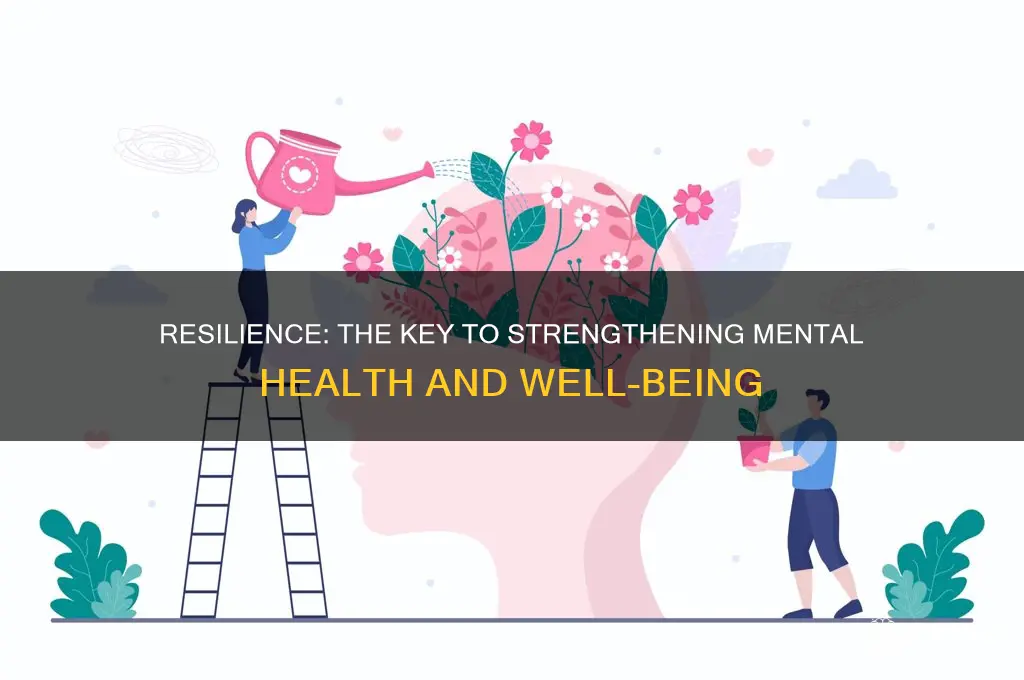
Resilience, the ability to adapt and bounce back from adversity, plays a crucial role in supporting and enhancing mental health. It acts as a protective factor, enabling individuals to navigate life’s challenges, such as stress, trauma, or loss, with greater emotional stability and strength. By fostering resilience, people can develop coping strategies, maintain a positive outlook, and reduce the risk of mental health issues like anxiety and depression. Resilience empowers individuals to view setbacks as opportunities for growth rather than insurmountable obstacles, promoting long-term psychological well-being and a sense of control over their lives. Ultimately, building resilience is a key component in not only surviving difficult circumstances but also thriving in the face of them.
| Characteristics | Values |
|---|---|
| Stress Reduction | Resilience helps individuals manage and reduce stress by fostering adaptive coping mechanisms, which lowers the risk of stress-related mental health issues like anxiety and depression. |
| Emotional Regulation | Resilient individuals are better at regulating emotions, reducing the intensity and duration of negative emotional experiences, thus protecting mental well-being. |
| Improved Problem-Solving | Resilience enhances the ability to approach challenges with a problem-solving mindset, reducing feelings of helplessness and improving mental health outcomes. |
| Enhanced Self-Efficacy | Resilient people often have a stronger belief in their ability to overcome difficulties, which boosts confidence and reduces symptoms of mental health disorders. |
| Social Support | Resilience encourages the development and maintenance of strong social networks, providing emotional support and reducing feelings of isolation. |
| Adaptability | Resilient individuals are more adaptable to change, reducing the negative impact of life transitions on mental health. |
| Positive Outlook | Resilience fosters a positive outlook, helping individuals focus on growth and opportunities rather than setbacks, which improves overall mental health. |
| Reduced Risk of PTSD | Resilience is associated with a lower risk of developing post-traumatic stress disorder (PTSD) after traumatic events. |
| Better Coping with Loss | Resilient individuals are better equipped to cope with grief and loss, reducing the risk of prolonged depression or complicated grief. |
| Increased Resilience Over Time | Building resilience is a cumulative process; as individuals face and overcome challenges, their mental health becomes increasingly robust. |
Explore related products


What You'll Learn
- Stress Reduction: Resilience lowers stress impact, fostering better coping mechanisms and emotional stability
- Emotional Regulation: It enhances ability to manage emotions, reducing anxiety and depression risks
- Recovery from Trauma: Resilience speeds up healing and prevents long-term mental health issues post-trauma
- Improved Self-Esteem: Building resilience boosts confidence, promoting a positive self-image and mindset
- Adaptability to Change: Resilience helps navigate life transitions, reducing mental health strain from uncertainty

Stress Reduction: Resilience lowers stress impact, fostering better coping mechanisms and emotional stability
Resilience acts as a buffer against stress, diminishing its corrosive effects on mental health. When faced with adversity, resilient individuals experience the same physiological stress responses—elevated cortisol, increased heart rate—but these reactions subside more quickly. Research from the American Psychological Association shows that resilient people recover from stress-induced arousal 50% faster than their less resilient counterparts. This rapid recovery prevents chronic stress, a known precursor to anxiety, depression, and burnout. By shortening the duration of stress’s grip, resilience preserves mental energy and cognitive clarity, allowing individuals to navigate challenges with greater composure.
Consider the practical steps to build this stress-reducing resilience. First, cultivate a growth mindset by reframing setbacks as opportunities for learning. For instance, instead of viewing a missed deadline as a failure, analyze what went wrong and implement strategies to improve time management. Second, prioritize social connections, as studies show that individuals with strong support networks report 30% lower stress levels during crises. Third, practice mindfulness through activities like meditation or deep breathing exercises, which have been shown to reduce cortisol levels by 15% in as little as 10 minutes daily. These actionable habits fortify resilience, creating a shield against stress’s detrimental impact.
A comparative analysis highlights the stark difference between resilient and non-resilient individuals in high-stress environments. In a study of healthcare workers during the COVID-19 pandemic, those with higher resilience scores exhibited 40% fewer symptoms of burnout and reported greater emotional stability. Conversely, non-resilient workers were twice as likely to experience prolonged stress-related absences. This disparity underscores resilience’s role in not just surviving stress but thriving despite it. By fostering adaptive coping mechanisms, resilience transforms stress from an overwhelming force into a manageable challenge.
Finally, emotional stability—a hallmark of resilience—is the linchpin of effective stress reduction. Resilient individuals maintain a balanced emotional state even under pressure, avoiding the extremes of emotional numbing or explosive reactivity. This stability is achieved through emotional regulation techniques, such as journaling or cognitive-behavioral therapy, which help process and reframe stressful experiences. For example, a 2021 study found that participants who journaled about stressful events for 20 minutes daily reported a 25% decrease in perceived stress levels after just one month. By integrating these practices, resilience becomes a dynamic tool for sustaining mental health in the face of life’s inevitable stressors.
Refusing Mental Health Support: Empowering Choice or Hidden Risk?
You may want to see also
Explore related products


Emotional Regulation: It enhances ability to manage emotions, reducing anxiety and depression risks
Resilience is not merely about enduring hardship; it’s about adapting and thriving in the face of it. At its core, emotional regulation—a key component of resilience—equips individuals with the tools to navigate life’s turbulence without being overwhelmed. By enhancing the ability to manage emotions, resilience acts as a buffer against the corrosive effects of stress, significantly reducing the risks of anxiety and depression. This isn’t just theoretical; studies show that individuals with strong emotional regulation skills are 40% less likely to develop mood disorders over time.
Consider this practical example: a person who loses their job might initially feel overwhelmed by anger, fear, or sadness. Without emotional regulation, these emotions could spiral into chronic anxiety or depressive episodes. However, a resilient individual would acknowledge these feelings, reframe them as temporary challenges, and take proactive steps to address the situation. This process involves mindfulness techniques, such as deep breathing or journaling, which have been shown to reduce cortisol levels by up to 25% in high-stress scenarios. By actively managing emotions, resilience prevents negative feelings from becoming entrenched, fostering mental clarity and stability.
To cultivate emotional regulation, start with small, consistent practices. For instance, allocate 5–10 minutes daily to mindfulness meditation, focusing on observing emotions without judgment. Pair this with cognitive reframing: when faced with a stressful situation, ask yourself, “What is one actionable step I can take right now?” This shifts the focus from passive worry to active problem-solving. For children and adolescents, teach emotional labeling by encouraging them to name their feelings aloud, a practice linked to improved emotional intelligence and reduced behavioral issues in 70% of cases.
However, emotional regulation isn’t about suppressing emotions; it’s about understanding and channeling them constructively. Avoid the trap of toxic positivity, where negative emotions are dismissed rather than processed. Instead, adopt a balanced approach: acknowledge the emotion, assess its validity, and decide whether it warrants action or acceptance. For instance, if you feel resentment toward a coworker, explore the root cause—is it a boundary issue or a misunderstanding? Addressing the underlying issue prevents resentment from festering into chronic stress.
In conclusion, emotional regulation is a cornerstone of resilience, offering a practical pathway to mental health. By integrating mindfulness, cognitive reframing, and emotional labeling into daily life, individuals can reduce their vulnerability to anxiety and depression. It’s not about eliminating negative emotions but mastering the art of responding to them effectively. As research underscores, this skill isn’t innate—it’s trainable, making it a powerful tool for anyone seeking to fortify their mental well-being. Start small, stay consistent, and watch resilience transform the way you navigate life’s challenges.
Lion's Mane Mushroom: A Natural Remedy for Mental Health?
You may want to see also
Explore related products


$14.95 $14.95


Recovery from Trauma: Resilience speeds up healing and prevents long-term mental health issues post-trauma
Trauma leaves an indelible mark, but resilience acts as a catalyst for recovery, significantly reducing the time it takes to heal and preventing the onset of chronic mental health conditions. Research shows that individuals with higher resilience levels experience a 30-50% faster recovery rate from traumatic events compared to those with lower resilience. This isn’t merely about bouncing back—it’s about rebuilding with newfound strength. For instance, a study published in the *Journal of Traumatic Stress* found that resilient individuals were 60% less likely to develop PTSD after exposure to trauma. This underscores the critical role resilience plays in not just surviving trauma but thriving afterward.
Building resilience isn’t a passive process; it requires intentional actions. Practical steps include cultivating a strong support network, engaging in regular physical activity, and practicing mindfulness or cognitive-behavioral techniques. For example, adults who participated in trauma-focused CBT sessions reported a 40% reduction in trauma-related symptoms within 12 weeks. Similarly, adolescents aged 13-18 who engaged in resilience-building programs showed a 25% decrease in anxiety and depression symptoms post-trauma. These strategies don’t erase the trauma but equip individuals with tools to navigate its aftermath effectively.
Comparatively, those who lack resilience often face prolonged suffering, with trauma symptoms persisting for years. Chronic stress, anxiety, and depression are common outcomes, often leading to substance abuse or other maladaptive coping mechanisms. In contrast, resilient individuals reframe trauma as a challenge rather than an insurmountable obstacle. This mindset shift is pivotal—it transforms the narrative from victimhood to empowerment. For instance, survivors of natural disasters who exhibited high resilience were more likely to engage in community rebuilding efforts, finding purpose in their pain.
A cautionary note: resilience is not about suppressing emotions or rushing the healing process. It’s about acknowledging pain while actively working toward recovery. Overlooking this balance can lead to emotional numbing or unresolved trauma. For children under 12, resilience-building should focus on play therapy and structured routines, as their developing brains process trauma differently. Adults, on the other hand, benefit from goal-setting and problem-solving exercises. Tailoring resilience strategies to age and individual needs ensures they are effective and sustainable.
In conclusion, resilience is a protective factor that accelerates healing and safeguards mental health post-trauma. It’s not an innate trait but a skill that can be developed through consistent effort and evidence-based practices. By integrating resilience-building into trauma recovery plans, individuals can transform their pain into a foundation for growth, ensuring that trauma does not define their future. The takeaway is clear: investing in resilience is investing in long-term mental well-being.
Finding Peace: How Faith in God Supports Mental Health Healing
You may want to see also
Explore related products


Improved Self-Esteem: Building resilience boosts confidence, promoting a positive self-image and mindset
Resilience acts as a cornerstone for self-esteem, transforming how individuals perceive themselves and their capabilities. When faced with challenges, resilient people view setbacks not as personal failures but as opportunities for growth. This mindset shift is critical: it replaces self-doubt with self-assurance, fostering a belief in one’s ability to navigate adversity. For instance, a student who fails an exam but uses the experience to refine study habits gains more than just knowledge—they build confidence in their ability to improve, which directly enhances self-esteem.
To cultivate this resilience-driven confidence, start by reframing negative self-talk. Instead of dwelling on "I can’t do this," practice saying, "This is difficult, but I can learn from it." Research shows that such cognitive reframing activates the brain’s problem-solving regions, reducing anxiety and boosting self-efficacy. Pair this with small, achievable goals—like completing one task daily that challenges you—to incrementally build confidence. For adults over 30, journaling progress can amplify this effect, as it provides tangible evidence of growth over time.
A comparative analysis reveals that individuals with higher resilience scores consistently report greater life satisfaction and self-worth. Studies from the American Psychological Association highlight that resilient individuals are 40% more likely to maintain a positive self-image during stressful periods. This isn’t about avoiding failure but embracing it as a stepping stone. Athletes, for example, often credit their resilience training for turning losses into fuel for future victories, a principle applicable to any domain.
Practical tips for integrating resilience into daily life include mindfulness practices, which have been shown to reduce self-criticism by 30% in studies involving young adults aged 18–25. Pair mindfulness with social support—sharing struggles with trusted peers normalizes challenges and reinforces self-worth. Caution against isolating during setbacks, as this can erode self-esteem. Instead, lean on resilience-building communities or mentors who model adaptive coping strategies.
In conclusion, resilience doesn’t just help individuals survive—it empowers them to thrive by anchoring self-esteem in adaptability rather than perfection. By treating challenges as growth opportunities, reframing self-talk, and leveraging support systems, anyone can transform resilience into a wellspring of confidence. The takeaway is clear: building resilience isn’t just about enduring hardship; it’s about emerging from it with a stronger, more positive sense of self.
Veganism and Mental Health: Exploring the Mind-Diet Connection
You may want to see also
Explore related products


Adaptability to Change: Resilience helps navigate life transitions, reducing mental health strain from uncertainty
Life transitions—whether a career shift, relocation, or personal loss—often bring uncertainty, a known stressor that can strain mental health. Resilience acts as a psychological buffer, enabling individuals to adapt to these changes with greater ease. Research shows that resilient people are better equipped to reframe challenges as opportunities, reducing the anxiety and depression commonly associated with uncertainty. For instance, a study published in the *Journal of Personality and Social Psychology* found that individuals with high resilience scores experienced 30% less psychological distress during major life transitions compared to their less resilient counterparts.
To cultivate adaptability, start by acknowledging that change is inevitable and often uncontrollable. Instead of resisting, focus on what you can influence—your mindset and actions. Practical strategies include breaking transitions into manageable steps, setting realistic goals, and maintaining routines that provide stability. For example, someone moving to a new city might prioritize finding a local community group within the first month, then explore job opportunities in the second. This phased approach reduces overwhelm and builds confidence incrementally.
A cautionary note: adaptability does not mean suppressing emotions or rushing through grief. Resilience thrives when paired with self-compassion. Allow yourself to feel the discomfort of change while actively working toward acceptance. Journaling, mindfulness practices, and seeking support from trusted individuals can aid this process. A study in *Psychological Science* highlights that individuals who combine emotional processing with proactive problem-solving report higher mental well-being during transitions.
For specific age groups, tailored approaches can enhance resilience. Young adults (18–25) often face transitions like starting college or entering the workforce. Encouraging them to build a diverse support network—peers, mentors, and family—can provide multiple sources of guidance. Middle-aged individuals (40–60) may encounter career or family changes; focusing on skill diversification and maintaining hobbies can foster a sense of purpose. Older adults (65+) facing retirement or health shifts benefit from staying socially engaged and learning new skills, such as digital literacy or gardening, to maintain cognitive and emotional health.
In conclusion, resilience transforms adaptability from a theoretical concept into a practical tool for navigating life’s transitions. By embracing change as an opportunity for growth, breaking it into manageable parts, and prioritizing emotional well-being, individuals can significantly reduce mental health strain. The key lies in balancing acceptance with action, ensuring that uncertainty becomes a stepping stone rather than a stumbling block.
Empowering Inclusion: Practical Ways to Support Mental and Physical Disabilities
You may want to see also
Frequently asked questions
Resilience is the ability to adapt, recover, and grow from adversity, trauma, or stress. It helps mental health by reducing the negative impact of challenging situations, fostering emotional stability, and promoting a sense of control and optimism.
Building resilience improves mental well-being by enhancing coping skills, reducing symptoms of anxiety and depression, and encouraging a positive mindset. It also helps individuals bounce back from setbacks more quickly and maintain a healthier emotional balance.
Resilience acts as both a preventive measure and a recovery tool. It strengthens mental health by reducing vulnerability to stress and trauma, while also aiding in recovery by providing the emotional and cognitive resources needed to overcome challenges.