Noah Parker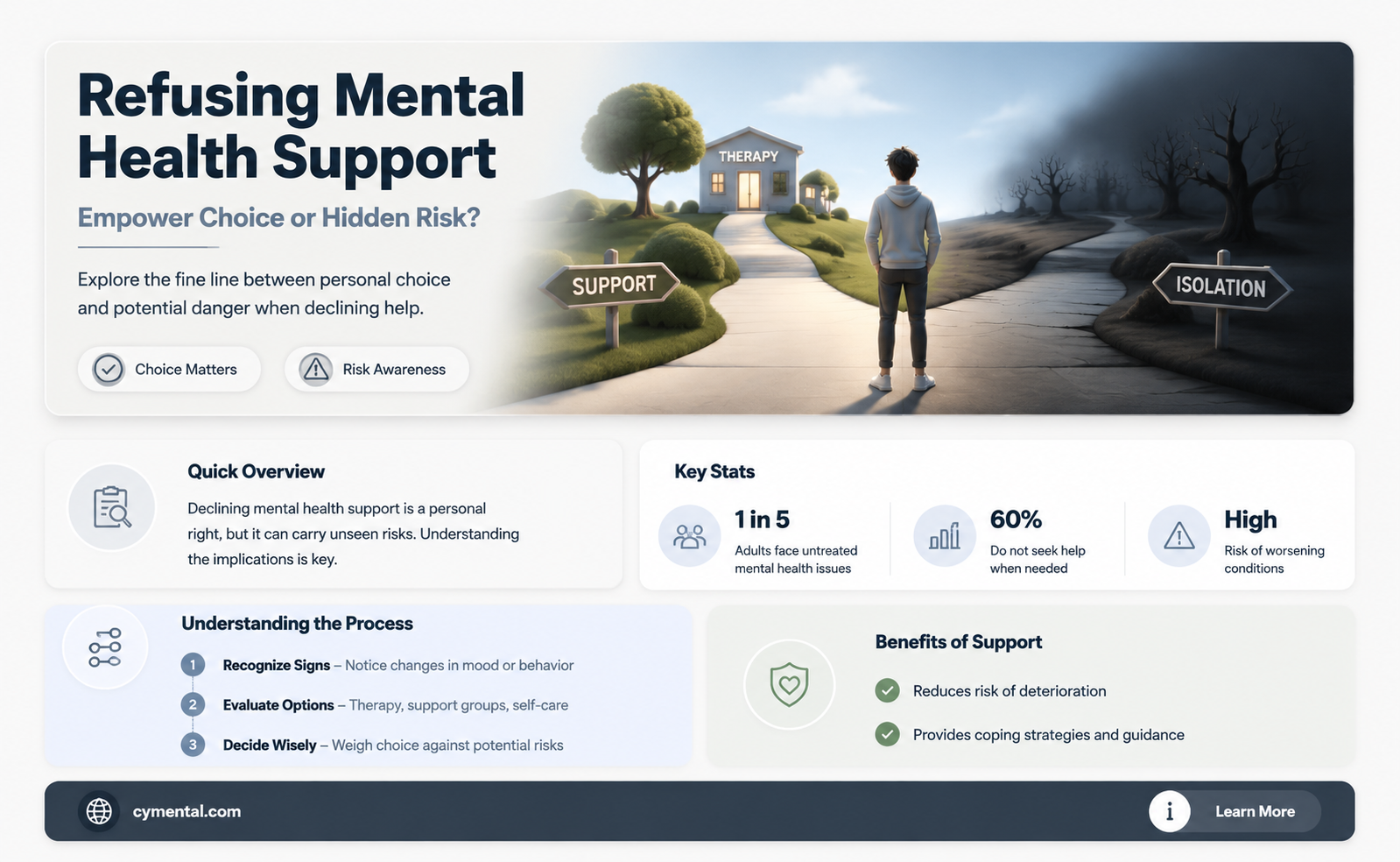
Refusing help for mental health is a complex and deeply personal decision that often stems from a variety of factors, including stigma, fear of judgment, or a desire to handle challenges independently. While autonomy and self-reliance are important, untreated mental health issues can escalate, leading to severe consequences for an individual’s well-being and relationships. The question of whether one can refuse help raises ethical and practical considerations, particularly when the person’s safety or ability to make informed decisions is compromised. Balancing respect for personal choice with the responsibility to ensure care can be challenging, especially in cases where intervention may be necessary. Ultimately, fostering open dialogue, reducing stigma, and providing accessible, non-judgmental support are crucial in encouraging individuals to seek help when needed.
| Characteristics | Values |
|---|---|
| Legal Right to Refuse Treatment | In most jurisdictions, individuals have the legal right to refuse mental health treatment, provided they are deemed competent to make such decisions. This is protected under laws like the Mental Health Act (UK) or the Americans with Disabilities Act (USA). |
| Capacity to Consent | Refusal is valid if the individual has the mental capacity to understand the nature, purpose, and consequences of the treatment. Assessments may be conducted to determine capacity. |
| Involuntary Treatment Criteria | Refusal can be overridden in cases of severe mental illness where the individual poses a risk to themselves or others, as determined by legal and medical authorities. |
| Emergency Situations | In emergencies, such as suicidal behavior or severe psychosis, involuntary treatment may be administered without consent, even if the individual refuses. |
| Advance Directives | Some regions allow individuals to create advance directives (e.g., psychiatric advance directives) to specify their treatment preferences in case they become incapacitated. |
| Cultural and Ethical Considerations | Refusal may be influenced by cultural beliefs, personal values, or mistrust of the mental health system, which must be respected unless legal criteria for involuntary treatment are met. |
| Supportive Alternatives | Even if formal treatment is refused, individuals may be offered supportive interventions, such as counseling, peer support, or crisis hotlines. |
| Revocation of Refusal | Individuals can change their minds and accept treatment at any time, even after initially refusing it. |
| Minor Consent | Minors may have limited rights to refuse treatment, depending on age, maturity, and jurisdiction, often requiring parental or guardian consent. |
| Documentation of Refusal | Refusals are typically documented in medical records to ensure transparency and legal compliance. |
Explore related products


What You'll Learn
- Legal Rights to Refuse Treatment: Understanding laws and rights regarding refusal of mental health interventions
- Capacity to Make Decisions: Assessing if an individual is mentally capable of refusing help
- Ethical Considerations: Balancing autonomy with duty of care in mental health refusals
- Consequences of Refusal: Potential risks and outcomes when declining mental health support
- Alternatives to Forced Treatment: Exploring voluntary options when help is initially refused

Legal Rights to Refuse Treatment: Understanding laws and rights regarding refusal of mental health interventions
Informed consent is a cornerstone of medical ethics, and mental health treatment is no exception. Individuals generally have the legal right to refuse interventions, even if those interventions are deemed medically necessary by professionals. This right is protected under laws like the Americans with Disabilities Act (ADA) and the Health Insurance Portability and Accountability Act (HIPAA) in the United States, and similar legislation exists in many other countries. However, this right is not absolute. Certain circumstances, such as imminent danger to self or others, may override an individual's refusal, leading to involuntary treatment.
Consider the case of a 28-year-old diagnosed with severe depression who refuses medication. Under normal conditions, their decision must be respected, provided they are deemed competent to make such a choice. Competency assessments typically evaluate the individual's understanding of their condition, the proposed treatment, and the potential consequences of refusal. For instance, if the individual clearly articulates their reasons for refusal—such as concerns about side effects or a preference for therapy—their autonomy should be upheld. However, if they lack this understanding or their refusal is based on delusional beliefs, their competency may be questioned, potentially leading to court-ordered treatment.
Refusing treatment can have significant legal and practical implications. For example, in some jurisdictions, individuals who refuse treatment may be denied certain privileges, such as unsupervised leave from a psychiatric facility. Additionally, refusal can impact insurance coverage, as some policies may not cover alternative treatments if standard interventions are declined. To navigate these complexities, individuals should document their decisions clearly and, if possible, work with an attorney or advocate who specializes in mental health law. Practical tips include keeping a journal of symptoms, treatment discussions, and reasons for refusal, which can provide evidence of informed decision-making if legal challenges arise.
Comparatively, laws regarding refusal of treatment vary widely across countries. In the UK, the Mental Health Act 1983 allows for involuntary treatment under specific conditions, while in Germany, the Patient Rights Act emphasizes patient autonomy but permits exceptions in emergencies. Understanding these differences is crucial for individuals seeking treatment abroad or for those whose cases may involve international law. For instance, a dual citizen refusing treatment in one country might face different legal consequences than in another, depending on the jurisdiction's approach to mental health rights.
Ultimately, the right to refuse mental health treatment is a critical aspect of patient autonomy, but it operates within a complex legal framework. Individuals must balance their personal preferences with the potential risks and consequences of refusal. By staying informed about relevant laws, seeking competent legal advice, and maintaining clear documentation, individuals can better protect their rights while making decisions that align with their values and needs. This proactive approach ensures that refusal is not just a legal right but a meaningful exercise of personal agency.
Mental Health History: Boosting Temporary Insanity Claims in Court?
You may want to see also
Explore related products


Capacity to Make Decisions: Assessing if an individual is mentally capable of refusing help
In mental health care, the principle of autonomy often clashes with the duty to protect vulnerable individuals from harm. Assessing an individual’s capacity to refuse help is a delicate balance, requiring both clinical expertise and ethical consideration. Capacity evaluations hinge on four key criteria: understanding relevant information, retaining it long enough to make a decision, weighing pros and cons logically, and communicating a choice. For instance, a 28-year-old with severe depression may intellectually grasp treatment options but lack the emotional clarity to weigh risks rationally, raising questions about their decisional capacity.
Consider the case of a 45-year-old with schizophrenia who refuses antipsychotic medication, claiming it’s part of a government conspiracy. While their refusal is adamant, their delusional beliefs distort their ability to understand the medication’s purpose (e.g., 10mg of olanzapine daily to manage psychosis). Here, a structured capacity assessment—such as the MacArthur Competence Assessment Tool for Treatment (MacCAT-T)—can systematically evaluate their comprehension, reasoning, and appreciation of their condition. If deficits in these areas are evident, their refusal may not be deemed valid, necessitating intervention under legal frameworks like involuntary commitment.
However, capacity is not static; it can fluctuate with symptom severity or environmental factors. A teenager with anorexia nervosa, for example, may lack capacity during acute malnutrition but regain it after refeeding and stabilization. Practitioners must monitor these shifts, reassessing capacity periodically rather than making a one-time judgment. Practical tips include involving a multidisciplinary team (psychiatrists, social workers, and ethicists) to reduce bias and documenting all assessment steps meticulously to justify decisions in potential legal challenges.
Persuasively, respecting refusals of treatment—even when capacity is questionable—can sometimes foster trust and engagement. A 32-year-old with bipolar disorder who refuses mood stabilizers might agree to psychoeducation or a less invasive intervention like bright light therapy. This approach acknowledges their autonomy while mitigating risks. Yet, clinicians must remain vigilant for red flags, such as active suicidal ideation or inability to care for basic needs, which may override autonomy in favor of protection.
Comparatively, legal standards for capacity vary by jurisdiction. In the UK, the Mental Capacity Act 2005 presumes capacity unless proven otherwise, while in the US, state-specific laws often prioritize individual rights until imminent danger is demonstrated. Clinicians must navigate these frameworks while prioritizing patient welfare. For instance, a 60-year-old with dementia refusing hydration may be treated differently under US vs. UK law, highlighting the need for localized knowledge. Ultimately, assessing capacity is both a science and an art, demanding empathy, rigor, and a commitment to balancing rights with responsibilities.
Mental Health and Child Custody: Can Conditions Impact Parental Rights?
You may want to see also
Explore related products




Ethical Considerations: Balancing autonomy with duty of care in mental health refusals
In mental health care, the tension between respecting a patient’s autonomy and fulfilling the duty of care is a delicate ethical tightrope. Patients often retain the legal right to refuse treatment, even when their condition poses a risk to themselves or others. For instance, in jurisdictions like the United States, the *Tarasoff v. Regents of the University of California* case established that professionals must warn potential victims if a patient poses a serious threat, but it does not override the patient’s right to refuse intervention unless they meet criteria for involuntary commitment. This legal framework underscores the complexity of balancing individual freedom with societal protection.
Consider the case of a 28-year-old with severe depression who declines antidepressants due to fears of side effects. While their autonomy must be respected, clinicians face a dilemma: how to honor their choice without neglecting the duty of care. One practical approach is shared decision-making, where the clinician educates the patient on evidence-based options, such as starting with a low dose (e.g., 10 mg of escitalopram) to minimize side effects, while monitoring progress. This method empowers the patient while ensuring the clinician remains actively involved in their care.
However, autonomy becomes less absolute when a patient’s capacity to make informed decisions is compromised. For example, a 45-year-old in a psychotic episode may refuse hospitalization, believing they are not ill. Here, the duty of care may necessitate invoking involuntary treatment laws, but this must be a last resort. Clinicians should first attempt to restore decision-making capacity through de-escalation techniques or involving trusted family members. The ethical takeaway is that autonomy is not absolute; it must be weighed against the potential harm to the patient or others.
A comparative analysis of global practices reveals varying approaches. In the UK, the Mental Health Act allows for involuntary treatment under specific conditions, while in Japan, family consent often plays a larger role in mental health decisions. These differences highlight the cultural and legal nuances in balancing autonomy and duty of care. Practitioners must navigate these contexts with sensitivity, ensuring that interventions respect both local norms and universal ethical principles.
Ultimately, the key to ethical practice lies in continuous reassessment and communication. Clinicians should regularly evaluate whether a patient’s refusal stems from informed choice or lack of understanding, adjusting their approach accordingly. For instance, using visual aids or simplified language can improve comprehension for patients with cognitive impairments. By prioritizing dialogue and adaptability, mental health professionals can uphold autonomy while fulfilling their duty of care, ensuring that refusals are respected but not at the expense of patient well-being.
How Mental Health Case Managers Assist in Securing SSI Benefits
You may want to see also
Explore related products


![Premium We Are Pleased To Provide Assistance Label Decal Signs [Pack of 3] - Vinyl Handicap Accessible Sticker Ideal for Wheelchair Person [6 x 6 Inches]](https://m.media-amazon.com/images/I/71XUdB9L5IL._AC_UL320_.jpg)


Consequences of Refusal: Potential risks and outcomes when declining mental health support
Refusing mental health support can exacerbate symptoms, turning manageable conditions into crises. For instance, untreated anxiety or depression often intensifies over time, leading to physical health issues like chronic pain or cardiovascular problems. A study published in *JAMA Psychiatry* found that individuals who declined therapy or medication for major depressive disorder were 50% more likely to experience severe relapse within two years. Without intervention, the brain’s stress response system remains hyperactive, eroding resilience and increasing vulnerability to future stressors. This isn’t merely a theoretical risk—it’s a documented outcome with measurable consequences.
Consider the ripple effects on relationships and daily functioning. Untreated mental health issues can strain interpersonal connections, as irritability, withdrawal, or emotional volatility become the norm. For example, a person refusing help for borderline personality disorder might struggle with emotional regulation, leading to frequent conflicts with loved ones. Similarly, untreated ADHD can result in missed deadlines, job instability, or financial strain, as executive dysfunction disrupts productivity. These outcomes aren’t inevitable, but they’re significantly more likely without targeted support. Practical steps, like setting boundaries or seeking couples therapy, can mitigate some damage, but they’re no substitute for professional treatment.
From a societal perspective, declining mental health support contributes to broader economic and public health burdens. The World Health Organization estimates that untreated mental illness costs the global economy $1 trillion annually in lost productivity. Emergency room visits for psychiatric crises are also more frequent among those who forgo preventive care. For instance, a 2021 study in *The Lancet* highlighted that individuals with schizophrenia who refused medication were three times more likely to require hospitalization within six months. These statistics underscore the collective impact of individual refusals, challenging the notion that declining help is a purely personal decision.
Finally, the long-term risks of refusal include irreversible damage to cognitive and emotional functioning. Prolonged exposure to untreated conditions like PTSD or bipolar disorder can lead to neuroplastic changes, making recovery more difficult over time. For adolescents, this is particularly critical—the brain’s developmental plasticity means early intervention is key to preventing chronic issues. A practical tip for those hesitant to seek help: start small, with low-commitment options like online therapy or support groups. While not a replacement for comprehensive care, these steps can build momentum toward more structured treatment. The takeaway is clear: refusing help isn’t just a matter of personal choice—it’s a decision with far-reaching, often preventable consequences.
Yoga and Mental Health: Unlocking Inner Peace and Resilience
You may want to see also
Explore related products


Alternatives to Forced Treatment: Exploring voluntary options when help is initially refused
In the realm of mental health, the question of autonomy versus intervention is a delicate balance. While forced treatment may seem like a necessary measure in extreme cases, it often overlooks the potential for voluntary engagement. The key lies in understanding the underlying reasons for refusal and tailoring approaches that respect individual agency while fostering a supportive environment. For instance, a person might refuse help due to stigma, fear of medication side effects, or a lack of trust in the system. Addressing these concerns directly can open doors to alternatives that feel less coercive and more collaborative.
Consider the stepped-care model, a structured approach that begins with low-intensity interventions and escalates only as needed. For someone hesitant to seek help, starting with self-guided resources like mental health apps (e.g., Calm, Headspace) or online therapy platforms (e.g., BetterHelp) can be a non-threatening entry point. If these prove insufficient, the next step might involve peer support groups, where individuals connect with others facing similar challenges. For example, organizations like the National Alliance on Mental Illness (NAMI) offer peer-led programs that foster a sense of community and shared understanding. This gradual progression respects the individual’s pace while keeping professional support within reach.
Another effective strategy is motivational interviewing (MI), a counseling method designed to enhance motivation for change. MI focuses on exploring ambivalence and helping individuals articulate their own reasons for seeking help. For a 25-year-old refusing treatment for anxiety, an MI session might involve the therapist asking open-ended questions like, “What would need to change for you to feel ready to try therapy?” or “How might your life improve if you addressed this anxiety?” By shifting the focus from external pressure to internal desire, MI empowers individuals to make voluntary decisions about their care.
For families or caregivers, crisis prevention planning can be a proactive tool. This involves identifying early warning signs of mental health deterioration and establishing a mutually agreed-upon plan for intervention. For example, a family might notice that their loved one becomes withdrawn and stops attending social activities when depressed. The plan could include steps like scheduling a check-in call, encouraging a walk together, or contacting a trusted therapist. By involving the individual in creating the plan, it becomes a collaborative effort rather than a forced response.
Finally, psychoeducation plays a critical role in reducing resistance to treatment. Many individuals refuse help due to misconceptions about mental health care, such as believing therapy is only for “severe” cases or that medication will change their personality. Providing accurate, accessible information can dispel these myths. For instance, explaining that cognitive-behavioral therapy (CBT) is a short-term, goal-oriented approach with proven efficacy for mild to moderate depression might make it more appealing. Similarly, discussing the low starting dosages of medications (e.g., 10 mg of escitalopram for anxiety) and their reversible nature can alleviate fears of long-term commitment.
In conclusion, forced treatment should be the last resort, not the first response. By leveraging voluntary options like stepped care, motivational interviewing, crisis prevention planning, and psychoeducation, we can create pathways to support that honor autonomy and build trust. These alternatives not only respect the individual’s right to choose but also increase the likelihood of sustained engagement and recovery.
AI's Role in Mental Health: Support, Challenges, and Future Possibilities
You may want to see also
Frequently asked questions
Yes, you have the right to refuse mental health treatment if you believe you can manage your condition independently. However, it’s important to assess whether your decision is based on accurate self-awareness or avoidance of addressing the issue.
Generally, adults cannot be forced into mental health treatment unless they pose an immediate danger to themselves or others. Involuntary treatment requires legal intervention and varies by jurisdiction.
If your mental health deteriorates, you may face increased challenges in daily life, relationships, or work. It’s advisable to reconsider seeking help or explore alternative support options before the situation escalates.
There are typically no legal consequences for refusing treatment unless your actions endanger yourself or others. However, certain professions or legal situations may require compliance with mental health recommendations.