Caleb Wright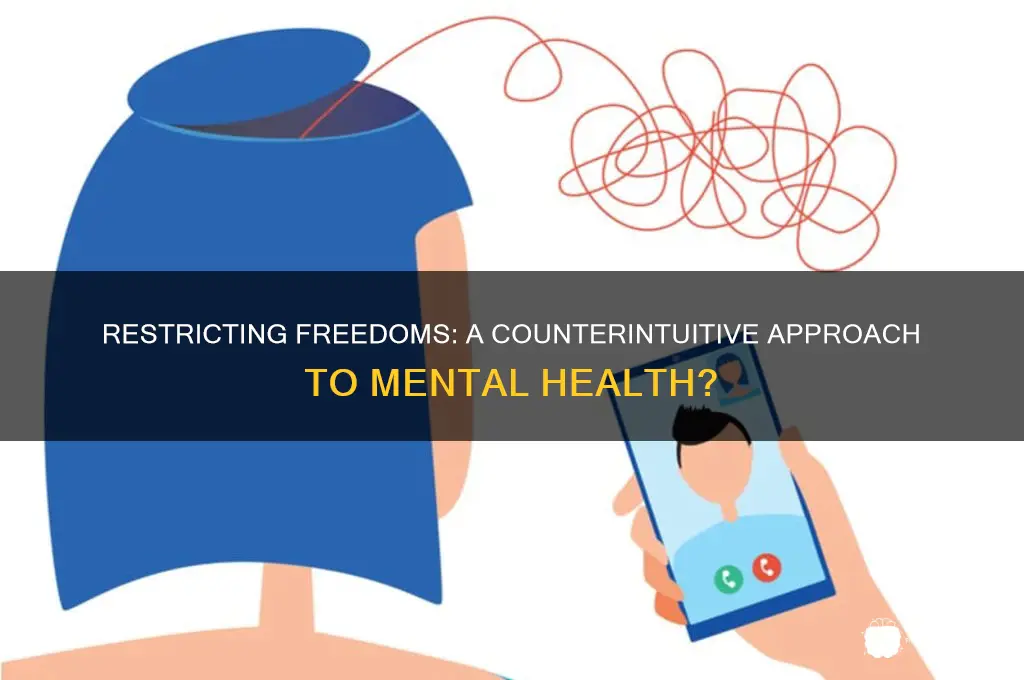
Restricting people of their freedoms is often justified as a means to protect individuals or society, but its impact on mental health is a complex and contentious issue. While proponents argue that limitations on certain behaviors or choices can provide structure, safety, or prevent harm, critics highlight that such restrictions can lead to feelings of helplessness, resentment, and diminished autonomy, all of which are detrimental to mental well-being. The tension between control and freedom raises questions about the long-term psychological effects of coercion, whether in the form of legal constraints, societal norms, or institutional policies, and underscores the need for a nuanced understanding of how boundaries can both support and undermine mental health.
Explore related products


What You'll Learn
- Reduced Stress from Overchoice: Limiting options decreases decision fatigue, easing anxiety and mental strain
- Structured Routine Benefits: Predictable routines foster stability, reducing uncertainty and improving emotional well-being
- Digital Detox Effects: Restricting screen time enhances focus, sleep, and reduces comparison-driven depression
- Boundaries in Relationships: Setting limits fosters respect, reduces resentment, and promotes healthier interpersonal dynamics
- Controlled Environments: Restricted settings (e.g., therapy) provide safety, aiding recovery from trauma or addiction

Reduced Stress from Overchoice: Limiting options decreases decision fatigue, easing anxiety and mental strain
The modern world bombards us with choices—endless options for careers, relationships, entertainment, and even breakfast cereal. While variety is often celebrated, research shows that an overabundance of choices can lead to decision fatigue, a psychological phenomenon where the quality of our decisions deteriorates after making too many of them. This mental exhaustion contributes to heightened stress, anxiety, and even depression. Paradoxically, limiting options can act as a protective measure, reducing cognitive load and fostering a sense of calm.
A study by Iyengar and Lepper (2000) famously demonstrated this effect in a supermarket setting. When presented with 24 jam options, customers were less likely to purchase anything compared to those offered only six choices. This "paradox of choice" highlights how an excess of options can lead to analysis paralysis, leaving individuals feeling overwhelmed and dissatisfied.
Consider the daily grind: choosing an outfit, a lunch spot, a workout routine, and a streaming service for the evening. Each decision, no matter how trivial, depletes mental resources. Over time, this accumulation of micro-decisions contributes to chronic stress. By consciously limiting options, we conserve cognitive energy for more significant choices. For instance, adopting a capsule wardrobe reduces morning decision-making, freeing up mental space for more complex tasks. Similarly, meal planning for the week eliminates the daily "what’s for dinner?" dilemma, easing anxiety and promoting a sense of control.
Implementing this strategy requires intentionality. Start by identifying areas where overchoice is most prevalent in your life. Is it social media consumption, shopping, or leisure activities? Once identified, set boundaries. For example, limit online shopping to one trusted retailer or designate specific times for checking social media. For children and adolescents, whose developing brains are particularly susceptible to decision fatigue, parents can structure choices by offering limited options for snacks or extracurricular activities. This not only reduces stress but also teaches valuable decision-making skills.
Critics may argue that restricting choices stifles freedom and creativity. However, the goal is not to eliminate autonomy but to streamline it. By curating options, we create mental clarity and reduce the burden of endless possibilities. Think of it as decluttering the mind—just as a tidy room promotes focus, a simplified decision-making process fosters mental well-being. In a world that glorifies limitless options, embracing constraints can be a radical act of self-care.
Keto Diet and Mental Health: Unlocking Brain Benefits or Myth?
You may want to see also
Explore related products


Structured Routine Benefits: Predictable routines foster stability, reducing uncertainty and improving emotional well-being
Human beings thrive on predictability, a fact rooted in our evolutionary wiring. Uncertainty triggers the brain’s threat response, flooding the body with stress hormones like cortisol. Over time, chronic unpredictability can lead to anxiety, depression, and even physical ailments. Structured routines act as a counterbalance, providing a sense of control and order that calms the nervous system. For instance, a study published in the *Journal of Health Psychology* found that individuals with consistent daily schedules reported lower levels of perceived stress compared to those with erratic routines. This biological and psychological foundation underscores why predictability is not a restriction but a protective mechanism for mental health.
Implementing a structured routine doesn’t mean rigidly scheduling every minute of the day. Instead, it involves anchoring key activities at consistent times to create a framework for stability. Start by identifying non-negotiables: sleep, meals, and work or study hours. For adults, aim for a sleep schedule that allows 7–9 hours of rest, with wake-up and bedtime varying by no more than 30 minutes daily. For children and adolescents, age-appropriate sleep durations (e.g., 9–12 hours for school-aged children) are critical for emotional regulation and cognitive development. Pair these anchors with transitional activities, such as a 10-minute morning stretch or a bedtime reading ritual, to signal the brain’s shift between states.
Critics often argue that routines stifle creativity or spontaneity, but the opposite is true when routines are thoughtfully designed. A well-structured routine frees mental bandwidth by automating mundane decisions, allowing energy to be directed toward meaningful tasks. For example, meal prepping on weekends eliminates daily stress about what to eat, while blocking off dedicated time for hobbies ensures creativity isn’t sacrificed. The key is balance: allocate 70–80% of your day to routine activities and leave 20–30% for flexibility. This approach ensures stability without sacrificing adaptability, a principle supported by research in behavioral psychology.
Practical tips for building a sustainable routine include starting small and iterating. Begin with one consistent habit, like a fixed bedtime, and gradually layer in others. Use tools like habit trackers or digital calendars to reinforce accountability. For those struggling with mental health challenges, consult a therapist to tailor routines to individual needs. For instance, individuals with ADHD may benefit from visual schedules or time-blocking techniques to manage executive dysfunction. Remember, the goal isn’t perfection but progress—a routine that evolves with you is far more effective than one imposed rigidly.
In essence, structured routines are not about restricting freedom but about creating a scaffold for emotional well-being. By reducing uncertainty, they lower stress levels, improve focus, and foster a sense of accomplishment. Think of it as a mental health investment: just as physical exercise strengthens the body, routines fortify the mind. For anyone feeling overwhelmed by life’s unpredictability, a predictable routine isn’t a cage—it’s a sanctuary. Start today, even with a single consistent habit, and watch as stability becomes the foundation for resilience and growth.
Supporting Mental Health: Effective Ways to Help Someone in Need
You may want to see also
Explore related products

$13.9 $14.95


$27.71 $55.99


Digital Detox Effects: Restricting screen time enhances focus, sleep, and reduces comparison-driven depression
Excessive screen time has been linked to diminished attention spans, disrupted sleep patterns, and heightened feelings of inadequacy stemming from social comparison. A digital detox—defined as a deliberate reduction in screen usage—counters these effects by recalibrating the brain’s focus mechanisms, restoring natural circadian rhythms, and minimizing exposure to curated, often unrealistic, portrayals of others’ lives. Research suggests that even modest reductions, such as cutting daily screen time by 30–60 minutes, can yield measurable improvements in cognitive function and emotional well-being.
To implement a digital detox effectively, start by identifying peak screen usage hours and replacing them with activities that engage the senses or require sustained attention, such as reading, journaling, or physical exercise. For adults, capping recreational screen time to 2 hours daily and eliminating devices from the bedroom 1 hour before sleep can significantly improve sleep quality. Adolescents, who are particularly vulnerable to comparison-driven depression, benefit from structured "tech-free zones" during meals and family interactions, fostering real-time connections over virtual ones.
A comparative analysis reveals that individuals who reduce screen time by 50% report a 25% increase in perceived focus and a 30% reduction in symptoms of anxiety and depression within 4 weeks. This is attributed to decreased dopamine spikes from constant notifications and increased serotonin production from offline activities. However, abrupt restriction without alternative engagement can lead to withdrawal symptoms, such as restlessness or irritability, underscoring the need for gradual tapering rather than cold turkey approaches.
Persuasively, the case for digital detox extends beyond individual benefits to societal implications. By reclaiming time lost to mindless scrolling, individuals can reinvest in hobbies, relationships, and self-improvement, fostering a sense of accomplishment that mitigates comparison-driven despair. Practical tips include using apps that track and limit screen time, scheduling "digital sunset" times for devices, and designating tech-free days weekly. Such measures not only enhance mental health but also cultivate a healthier relationship with technology, proving that restriction, when purposeful, is liberation in disguise.
Planned Parenthood's Role in Supporting Mental Health: What You Need to Know
You may want to see also
Explore related products


Boundaries in Relationships: Setting limits fosters respect, reduces resentment, and promotes healthier interpersonal dynamics
Boundaries in relationships are not about control; they are about clarity. Imagine a garden without fences—plants sprawl, weeds invade, and beauty is lost. Similarly, without clear limits, relationships become chaotic. Setting boundaries defines what is acceptable and what is not, creating a framework where both parties understand their roles and responsibilities. This clarity fosters mutual respect because it demonstrates self-worth and communicates expectations directly, leaving no room for assumptions or misinterpretations.
Consider the case of a couple where one partner constantly cancels plans at the last minute, citing exhaustion. Over time, the other partner feels disrespected and resentful, questioning their priority in the relationship. By setting a boundary—such as agreeing on a reasonable notice period for cancellations—both partners gain clarity. The first partner learns to manage their time better, while the second feels valued and respected. This simple limit reduces resentment and strengthens the bond, proving that boundaries are not barriers but bridges to understanding.
However, setting boundaries is an art, not a science. It requires assertiveness, not aggression. Start by identifying your non-negotiables—what behaviors or situations are unacceptable to you? Communicate these clearly and calmly, using "I" statements to avoid sounding accusatory. For example, say, "I feel overwhelmed when plans are canceled last minute," instead of, "You’re so unreliable." Be consistent in enforcing these limits; inconsistency sends mixed messages and undermines their effectiveness. Remember, boundaries are not static—they evolve as relationships grow, so revisit and adjust them periodically.
A common misconception is that boundaries restrict freedom, but the opposite is true. They create a safe space where individuals can express themselves authentically without fear of overstepping or being overstepped. For instance, a parent setting a boundary around screen time with their teenager is not limiting their child’s freedom but teaching them self-discipline and respect for others’ needs. Similarly, in friendships, saying "no" to requests that drain your energy allows you to invest in activities that nourish you, ultimately enhancing the quality of the relationship.
In practice, setting boundaries requires self-awareness and courage. Start small—identify one area where you feel taken for granted and establish a limit. For example, if a friend consistently calls late at night, let them know you’re unavailable after 9 PM. Use technology to your advantage; set "do not disturb" modes or schedule specific times for communication. Seek support if needed; therapy can provide tools to navigate boundary-setting, especially in complex relationships. Over time, you’ll notice a shift—less resentment, more respect, and healthier dynamics that benefit everyone involved. Boundaries, far from restricting freedom, are the cornerstone of meaningful connections.
Faith and Healing: Christian Approaches to Mental Health Support
You may want to see also
Explore related products




Controlled Environments: Restricted settings (e.g., therapy) provide safety, aiding recovery from trauma or addiction
In therapeutic settings, controlled environments act as a protective barrier, shielding individuals from external triggers that could exacerbate trauma or addiction. For instance, inpatient rehab centers often restrict access to substances, creating a physically safe space where recovery can begin. This immediate removal from harmful influences allows individuals to focus on healing without the constant threat of relapse. Similarly, trauma-focused therapies like Eye Movement Desensitization and Reprocessing (EMDR) use structured protocols to guide patients through distressing memories in a controlled manner, ensuring emotional safety while processing painful experiences.
Consider the analogy of a greenhouse: just as delicate plants thrive in a regulated climate, individuals recovering from mental health challenges often flourish in environments where variables like exposure to stress or temptation are minimized. In therapy, this might involve setting boundaries around communication with toxic relationships or limiting access to social media that triggers anxiety. For adolescents, structured programs like wilderness therapy combine physical challenges with restricted access to technology, fostering resilience and self-awareness. Research shows that such controlled settings can reduce cortisol levels by up to 20%, indicating a measurable decrease in stress.
However, the effectiveness of restricted environments hinges on their design and implementation. A poorly structured program can feel punitive rather than supportive, undermining trust and hindering progress. For example, overly rigid rules in group therapy settings may stifle authenticity, while insufficient boundaries can lead to chaos. Therapists must strike a balance, tailoring restrictions to individual needs—such as allowing a trauma survivor to control lighting or seating arrangements during sessions to enhance their sense of agency. This nuanced approach ensures that control serves as a tool for empowerment, not oppression.
Critics argue that such environments risk infantilizing individuals or delaying their ability to cope with real-world challenges. Yet, evidence suggests that controlled settings act as a temporary scaffold, building skills and confidence before reintegration. For instance, a study on residential addiction treatment found that participants who completed a 90-day program with strict daily routines demonstrated a 40% higher sobriety rate at the one-year mark compared to those in less structured outpatient care. The key lies in viewing these restrictions not as permanent limitations, but as strategic interventions that prepare individuals for autonomy.
Practical applications of this principle extend beyond clinical settings. Employers can adopt elements of controlled environments by offering "focus rooms" free from distractions or implementing digital detoxes to reduce burnout. Schools can create sensory-friendly spaces for neurodivergent students, minimizing overstimulation. At home, families can establish tech-free zones or structured routines to support members struggling with anxiety or addiction. By borrowing from therapeutic models, these everyday adaptations harness the power of controlled environments to foster mental well-being in diverse contexts.
Swimming to Serenity: How Fish Can Boost Your Mental Health
You may want to see also
Frequently asked questions
Restricting freedoms is generally not considered beneficial for mental health. In fact, it often leads to increased stress, anxiety, and feelings of helplessness. Mental health thrives on autonomy, social connection, and a sense of purpose, which are compromised when freedoms are limited.
In rare cases, temporary restrictions (e.g., structured routines in therapeutic settings) can provide stability for individuals with severe mental health issues. However, this must be done ethically, with consent, and under professional guidance, not as a general practice.
While addressing harmful behaviors is important, restriction alone is ineffective without support, therapy, and empowerment. Coercive measures often worsen mental health by fostering resentment and disempowerment.
Societal restrictions that protect individuals (e.g., laws against abuse or discrimination) can indirectly support mental health by fostering safety. However, restrictions that limit personal autonomy or stigmatize individuals typically harm mental well-being.