Noah Parker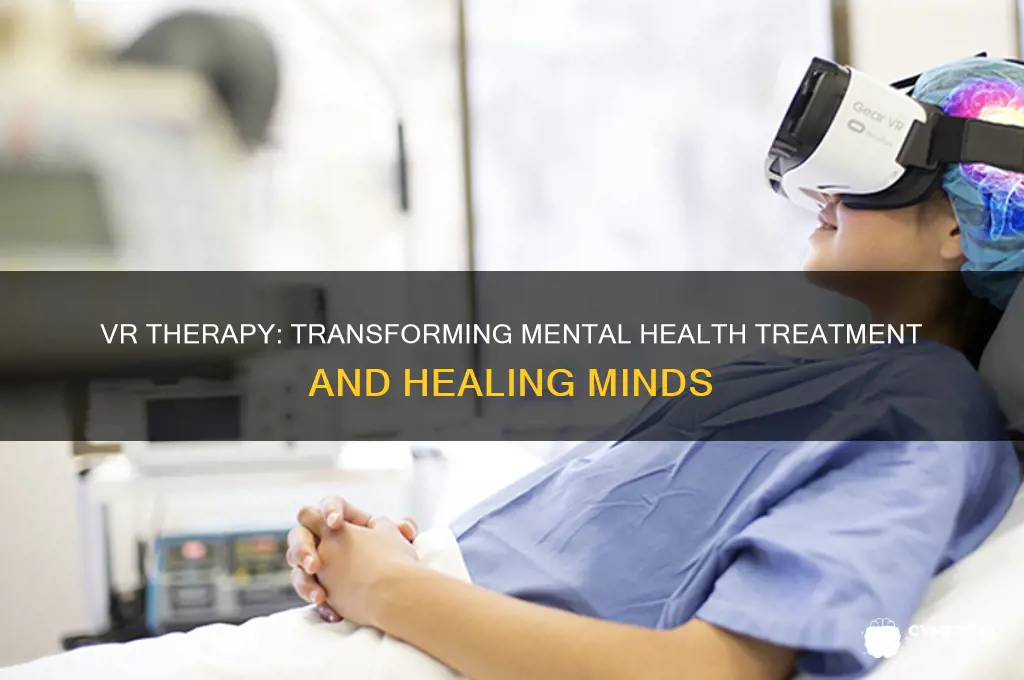
Virtual Reality (VR) has emerged as a groundbreaking tool in addressing mental health issues by creating immersive, controlled environments that facilitate therapeutic interventions. Through VR, individuals can confront and manage conditions such as anxiety, PTSD, phobias, and depression in a safe and supportive setting. For instance, exposure therapy in VR allows users to gradually face fear-inducing scenarios, helping them build resilience and reduce anxiety. Additionally, VR mindfulness and relaxation programs provide calming experiences that alleviate stress and improve emotional well-being. Its ability to simulate real-life situations while offering immediate feedback and guidance from therapists makes VR a versatile and effective complement to traditional mental health treatments, offering hope and healing to those struggling with psychological challenges.
Explore related products


What You'll Learn
- VR Exposure Therapy: Simulates anxiety triggers in a safe space, aiding gradual desensitization and fear reduction
- Stress Relief Environments: Calm, immersive settings reduce stress through relaxation techniques and mindfulness practices
- Social Skills Training: Virtual interactions help individuals practice communication and build confidence in social scenarios
- PTSD Treatment: Recreates traumatic events in a controlled way to process and overcome past experiences
- Cognitive Behavioral Therapy: VR tools enhance CBT by visualizing thoughts and behaviors for better self-awareness

VR Exposure Therapy: Simulates anxiety triggers in a safe space, aiding gradual desensitization and fear reduction
Virtual reality exposure therapy (VRET) is a groundbreaking approach that leverages immersive technology to treat anxiety disorders by simulating real-world triggers in a controlled environment. Unlike traditional exposure therapy, which relies on imagination or real-life scenarios, VRET allows therapists to precisely tailor and adjust the intensity of stimuli, making it particularly effective for conditions like phobias, PTSD, and social anxiety. For instance, a patient with a fear of flying can experience a virtual airplane cabin, complete with takeoff sounds and turbulence, without leaving the therapist’s office. This method ensures safety and repeatability, critical for gradual desensitization.
The process begins with an assessment to identify specific triggers and their severity. Therapists then design a VR program that recreates these scenarios, starting at a low intensity and progressively increasing exposure as the patient builds tolerance. For example, someone with agoraphobia might start in a small, quiet virtual street before advancing to a bustling city square. Sessions typically last 30–60 minutes, with 8–12 sessions recommended for optimal results, though this varies based on the individual’s needs. Studies show that VRET can reduce anxiety symptoms by up to 50% in patients with specific phobias, making it a powerful tool for long-term fear reduction.
One of the key advantages of VRET is its ability to provide a safe, private space for patients to confront their fears without real-world consequences. This is especially beneficial for individuals with social anxiety, who may struggle with role-playing or in-vivo exposure. VR allows them to practice social interactions—such as public speaking or initiating conversations—in a low-stakes environment. Therapists can even adjust variables like the number of virtual avatars or their responses to simulate different levels of challenge. Practical tips include encouraging patients to use deep breathing techniques during sessions and reminding them that they can pause or exit the simulation at any time, reinforcing a sense of control.
However, VRET is not without limitations. Some patients may experience cybersickness, a form of motion sickness caused by VR headsets, which can disrupt therapy. Additionally, the cost and accessibility of VR technology remain barriers for widespread adoption. Therapists must also be trained to use the software effectively and monitor patients for signs of distress. Despite these challenges, VRET’s potential to revolutionize mental health treatment is undeniable, offering a scalable, evidence-based solution for millions struggling with anxiety disorders. For those considering this approach, starting with a consultation to discuss suitability and expectations is essential.
Empowering Lives: The Impact of Mental Health Resources on Well-being
You may want to see also
Explore related products


$39.99 $59.99



Stress Relief Environments: Calm, immersive settings reduce stress through relaxation techniques and mindfulness practices
Virtual reality (VR) offers a unique avenue for stress relief by transporting users to serene, immersive environments designed to promote relaxation and mindfulness. These digital spaces, ranging from tranquil beaches to peaceful forests, leverage the technology’s ability to engage multiple senses, creating a deeply calming experience. Studies show that just 20–30 minutes in such VR settings can significantly lower cortisol levels, the body’s primary stress hormone, making it an accessible tool for immediate relief.
To maximize the benefits, users should combine VR with guided relaxation techniques. For instance, a VR session might include a virtual yoga instructor leading a gentle practice or a mindfulness coach walking users through deep breathing exercises. These interactive elements ensure the experience is not just passive but actively engages the mind in stress-reducing practices. For beginners, starting with shorter 10-minute sessions and gradually increasing duration can help build comfort and effectiveness.
One standout example is the use of VR in corporate wellness programs, where employees access stress relief environments during breaks. Companies like Google and Microsoft have reported improved productivity and reduced burnout rates after implementing such initiatives. Similarly, healthcare providers are incorporating VR into therapy sessions for patients with anxiety disorders, offering a safe space to practice coping strategies.
However, it’s crucial to balance VR use with real-world mindfulness practices. Over-reliance on technology can diminish the long-term benefits of stress management. Users should pair VR sessions with offline activities like journaling, walking, or meditation to reinforce relaxation habits. Additionally, ensuring a comfortable VR setup—proper headset fit, adequate lighting, and a quiet space—enhances the experience and prevents discomfort.
In conclusion, VR stress relief environments are a powerful tool for reducing anxiety and promoting mental well-being. By combining immersive visuals, guided techniques, and practical tips, users can harness this technology to create a personalized sanctuary for relaxation. Whether for occasional use or as part of a structured wellness plan, VR offers a versatile and effective solution for managing stress in today’s fast-paced world.
Naturopathic Approaches to Mental Health: Effective Support or Alternative?
You may want to see also
Explore related products


Social Skills Training: Virtual interactions help individuals practice communication and build confidence in social scenarios
Virtual reality (VR) offers a controlled, consequence-free environment where individuals can practice social interactions, making it an ideal tool for social skills training. Unlike real-world scenarios, VR allows users to rehearse conversations, body language, and emotional responses without the fear of judgment or failure. This is particularly beneficial for those with social anxiety, autism spectrum disorder, or other conditions that impair social functioning. For instance, a study published in the *Journal of Autism and Developmental Disorders* found that VR-based social skills training significantly improved eye contact and conversational abilities in adolescents with autism. The immersive nature of VR ensures that practice feels realistic, bridging the gap between theory and real-life application.
To implement VR social skills training effectively, start with structured scenarios tailored to the individual’s needs. For example, a person with generalized anxiety might begin with simple interactions like ordering coffee, while someone with more specific phobias could practice public speaking in a virtual auditorium. Each session should last 20–30 minutes, with a focus on gradual exposure to increasingly complex situations. Incorporate real-time feedback from therapists or AI-driven systems to highlight areas for improvement, such as tone of voice or facial expressions. Consistency is key—aim for 2–3 sessions per week over a period of 8–12 weeks to see measurable progress.
One of the most compelling advantages of VR in this context is its ability to simulate high-stakes social situations without real-world risks. For example, a teenager struggling with peer interactions can practice responding to bullying or initiating conversations in a virtual school setting. This repeated exposure helps desensitize individuals to anxiety triggers, fostering confidence and reducing avoidance behaviors. Additionally, VR can be customized to include diverse characters and cultural contexts, ensuring that users develop skills relevant to their specific social environments. This adaptability makes VR a versatile tool for a wide range of populations, from children to adults.
Despite its promise, VR social skills training is not without challenges. Users may experience discomfort or "cybersickness," particularly during prolonged sessions, so it’s essential to monitor for signs of dizziness or nausea. Moreover, VR should complement, not replace, traditional therapy methods. For optimal results, combine VR practice with role-playing exercises in real-life settings and cognitive-behavioral techniques to address underlying thought patterns. Finally, ensure that the technology is accessible and user-friendly, as complexity can deter engagement. With careful planning and integration, VR can become a transformative tool for building social competence and emotional resilience.
Self-Control and Mental Health: A Powerful Tool for Disorder Management
You may want to see also
Explore related products

$135.99 $169.99



PTSD Treatment: Recreates traumatic events in a controlled way to process and overcome past experiences
Virtual reality (VR) therapy for PTSD involves gradually exposing patients to simulated environments that resemble their traumatic experiences. This controlled exposure allows individuals to confront and process their fears in a safe, therapeutic setting. For instance, a veteran with combat-related PTSD might enter a VR scenario that recreates a battlefield, complete with sounds, visuals, and even simulated interactions. The therapist adjusts the intensity of the experience, starting with less triggering elements and progressively increasing the realism as the patient builds resilience. This method, known as prolonged exposure therapy, has shown significant success in reducing PTSD symptoms, with studies indicating a 50-70% improvement rate in patients who complete the program.
The effectiveness of VR in PTSD treatment lies in its ability to engage multiple senses simultaneously, creating a more immersive and impactful experience than traditional talk therapy alone. Unlike imagining or discussing the trauma, VR places the individual in a lifelike simulation, triggering emotional and physiological responses that can be addressed in real-time. For example, a survivor of a car accident might relive the moments leading up to the crash, allowing them to reframe their reactions and develop healthier coping mechanisms. Therapists often use biofeedback tools to monitor heart rate, skin conductance, and other physiological markers, ensuring the experience remains within a manageable emotional range.
Implementing VR therapy requires careful planning and collaboration between the patient and therapist. Sessions typically last 45-60 minutes and are conducted 1-2 times per week over 8-12 weeks. Patients are encouraged to practice relaxation techniques, such as deep breathing or mindfulness, before and during sessions to manage anxiety. It’s crucial to tailor the VR scenarios to the individual’s specific trauma, avoiding generic environments that might not resonate. For instance, a firefighter with PTSD might benefit from a VR simulation of a burning building, while a survivor of sexual assault would require a completely different setting. Age and technological familiarity should also be considered; younger patients often adapt more quickly to VR, while older individuals may need additional support to navigate the technology.
Despite its promise, VR therapy for PTSD is not without challenges. The cost of equipment and specialized software can be a barrier, though prices have decreased in recent years, making it more accessible. Additionally, some patients may experience cybersickness—a form of motion sickness caused by VR—which can disrupt sessions. Therapists must also be trained to handle intense emotional reactions, as the immersive nature of VR can sometimes overwhelm patients. However, when used correctly, VR offers a unique opportunity to rewrite traumatic memories, providing a pathway to healing that traditional methods often cannot achieve. For those struggling with PTSD, this innovative approach could be a game-changer, offering hope and a tangible way to reclaim their lives.
Smiling's Power: Boosting Mental Health and Emotional Well-Being
You may want to see also
Explore related products

$39.99 $59.99

$14.99


$80.37 $89.97


Cognitive Behavioral Therapy: VR tools enhance CBT by visualizing thoughts and behaviors for better self-awareness
Virtual reality (VR) is revolutionizing the way we approach Cognitive Behavioral Therapy (CBT), a widely-used treatment for mental health issues. By immersing patients in interactive, computer-generated environments, VR tools enable therapists to visualize abstract thoughts and behaviors, fostering a deeper understanding of the connection between cognition and emotion. This innovative approach allows individuals to confront and reframe negative thought patterns in a safe, controlled setting, promoting self-awareness and emotional regulation.
Consider a patient struggling with social anxiety disorder. In a traditional CBT session, the therapist might ask the patient to imagine a stressful social situation, such as giving a presentation. However, with VR, the patient can actually experience a simulated presentation scenario, complete with virtual audience members and environmental cues. By gradually exposing the patient to this feared situation, the therapist can help them identify and challenge irrational thoughts, such as "I will fail" or "Everyone will judge me." A 2020 study published in the Journal of Anxiety Disorders found that VR-enhanced CBT led to significant reductions in social anxiety symptoms, with effects lasting up to 6 months post-treatment.
To implement VR-enhanced CBT effectively, therapists should follow a structured protocol. First, assess the patient's suitability for VR exposure, considering factors like age (typically 12+), physical abilities, and severity of symptoms. Next, select a VR scenario tailored to the patient's specific needs, such as a virtual airplane flight for fear of flying or a crowded shopping mall for agoraphobia. During the session, guide the patient through the experience, encouraging them to verbalize their thoughts and emotions. After the simulation, facilitate a debriefing discussion to process the experience and identify cognitive distortions. Repeat this process over multiple sessions, gradually increasing the intensity of the VR exposure as the patient builds resilience.
One of the key advantages of VR-enhanced CBT is its ability to provide a highly personalized and immersive experience. For instance, a patient with generalized anxiety disorder might benefit from a VR relaxation exercise, where they can practice deep breathing and mindfulness techniques in a serene virtual environment, such as a beach or forest. By combining this with real-time biofeedback, such as heart rate monitoring, therapists can help patients develop a greater awareness of the mind-body connection. A 2019 study in the Journal of Medical Internet Research found that VR-based mindfulness training significantly reduced anxiety and depression symptoms in adults aged 18-65, with participants reporting high levels of engagement and satisfaction.
Despite its promise, VR-enhanced CBT is not without limitations. The cost of VR equipment and software can be prohibitive for some clinics and patients. Additionally, excessive VR use may lead to side effects like cybersickness or eye strain, particularly in individuals under 16 or those with pre-existing visual impairments. To mitigate these risks, therapists should adhere to recommended guidelines, such as limiting VR sessions to 20-30 minutes and ensuring proper calibration of the equipment. By balancing the benefits and challenges of VR technology, mental health professionals can harness its potential to enhance CBT outcomes and improve patient well-being.
Exploring Hallucinogens: Potential Benefits for Mental Health Treatment?
You may want to see also
Frequently asked questions
VR provides immersive environments that simulate calming scenarios, such as beaches or forests, which can trigger relaxation responses. It also offers controlled exposure therapy for phobias and anxiety disorders, allowing users to gradually face fears in a safe, virtual setting.
Yes, VR is increasingly used in PTSD treatment through exposure therapy. Patients relive traumatic events in a controlled virtual environment, helping them process and desensitize to triggers under professional guidance, reducing symptoms over time.
VR can combat social isolation by creating virtual social spaces where users interact with others. It also offers therapeutic activities, like mindfulness exercises or virtual group sessions, which can improve mood and provide a sense of connection.


![VR Headset + Math Games [Multiplication Subtraction etc] Virtual Games: Gift for Boys & Girls. Cool Educational Toys for Kids 5 6 7 8… Years Old. Virtual Reality Learning Resources Grade 1 2 3 4…8](https://m.media-amazon.com/images/I/810S6OcvXBL._AC_UY218_.jpg)