Harper Lewis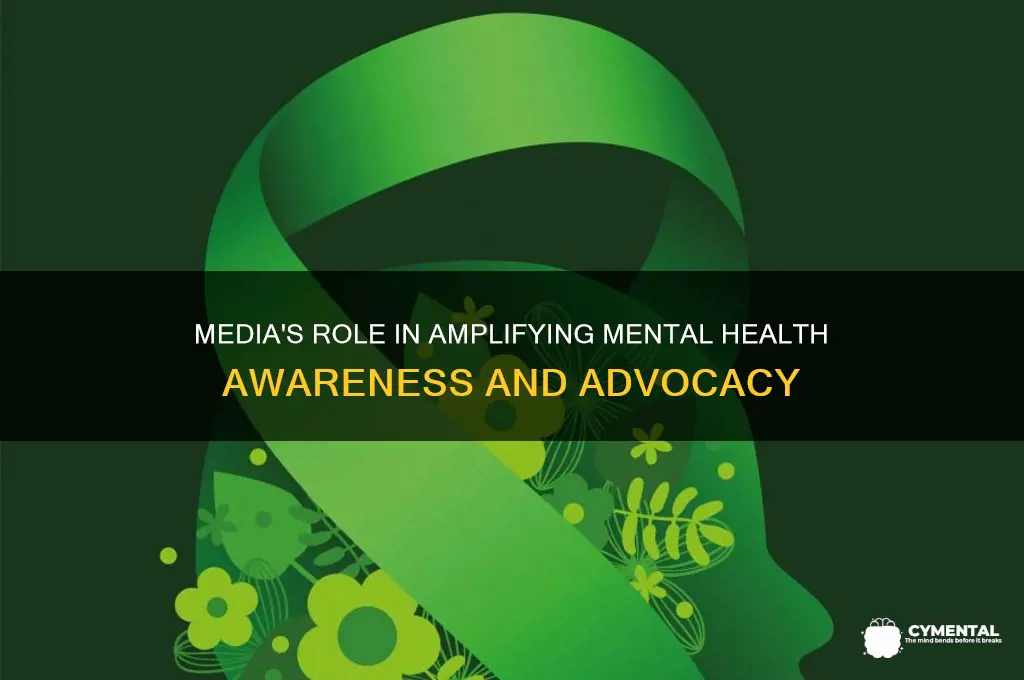
The media plays a pivotal role in spreading awareness about mental illness by amplifying voices, challenging stigmas, and fostering understanding. Through documentaries, news articles, social media campaigns, and fictional portrayals, media platforms highlight personal stories, expert insights, and evidence-based information, making mental health issues more relatable and accessible to a global audience. By normalizing conversations around conditions like depression, anxiety, and PTSD, the media helps reduce societal taboos and encourages individuals to seek help. Additionally, it educates the public on recognizing symptoms, available resources, and the importance of empathy, ultimately contributing to a more informed and supportive society. However, the media’s impact depends on responsible reporting and accurate representation to avoid perpetuating stereotypes or misinformation.
| Characteristics | Values |
|---|---|
| Education & Information | Provides factual information about mental illnesses, symptoms, and treatment options, reducing stigma and misconceptions. (Source: NAMI) |
| Personal Stories | Shares firsthand accounts of individuals living with mental illness, fostering empathy and understanding. (Source: Mental Health America) |
| Celebrity Advocacy | Leverages the influence of public figures to amplify awareness and encourage conversations about mental health. (Source: Time Magazine) |
| Campaigns & Initiatives | Launches targeted campaigns (e.g., Bell Let’s Talk, Mental Health Awareness Month) to reach wide audiences and raise funds. (Source: Bell Let’s Talk) |
| Social Media Engagement | Uses platforms like Instagram, Twitter, and TikTok to share resources, hashtags (#MentalHealthAwareness), and viral content. (Source: Pew Research Center) |
| Destigmatization | Challenges stereotypes and normalizes discussions about mental health through inclusive narratives. (Source: WHO) |
| Access to Resources | Directs audiences to helplines, therapy services, and support groups, increasing accessibility to care. (Source: SAMHSA) |
| Policy Advocacy | Highlights mental health issues to influence legislation and funding for mental health services. (Source: The Hill) |
| Global Reach | Transcends geographical boundaries to address mental health on a global scale. (Source: UN) |
| Continuous Dialogue | Keeps mental health in the public eye through regular coverage, reducing its invisibility. (Source: The Guardian) |
Explore related products


What You'll Learn
- Media Representation: Portraying mental health struggles accurately in TV, films, and news reduces stigma
- Celebrity Advocacy: Public figures sharing their mental health stories inspires conversations and empathy
- Social Media Campaigns: Hashtags and viral posts amplify awareness and connect affected individuals
- Documentaries & Podcasts: In-depth storytelling humanizes mental illness, fostering understanding and support
- News Coverage: Highlighting mental health policies, research, and resources educates the public effectively

Media Representation: Portraying mental health struggles accurately in TV, films, and news reduces stigma
Accurate media representation of mental health struggles is a powerful tool for dismantling stigma. When TV shows, films, and news outlets portray characters with mental illness as complex, relatable individuals rather than caricatures or villains, they humanize these conditions for audiences. For instance, the Netflix series *BoJack Horseman* depicts the protagonist’s depression and self-destructive tendencies with raw honesty, avoiding oversimplification. Such portrayals challenge stereotypes, fostering empathy and understanding among viewers who may have little direct experience with mental health issues. By showing characters in therapy, taking medication, or navigating daily challenges, media can normalize these experiences, making them less taboo.
However, accuracy in representation requires careful consideration. Missteps, such as sensationalizing mental illness or relying on clichés, can reinforce harmful myths. For example, the trope of the "violent schizophrenic" in crime dramas perpetuates fear and misunderstanding. To avoid this, creators must consult mental health professionals and individuals with lived experience. The film *Silver Linings Playbook* is often praised for its nuanced portrayal of bipolar disorder, but even it faced criticism for romanticizing certain aspects of the condition. Balancing authenticity with storytelling demands intentionality and research, ensuring that mental health struggles are depicted with both sensitivity and realism.
One practical way media can reduce stigma is by showcasing diverse experiences across age, gender, and cultural backgrounds. Mental illness does not discriminate, yet media often defaults to young, white, middle-class characters. The British series *This Is Going to Hurt* includes a storyline about postpartum depression in a male nurse, challenging the notion that mental health issues are solely a female concern. Similarly, the film *The Farewell* explores grief and cultural attitudes toward mental health within a Chinese-American family. By broadening representation, media can highlight the universality of mental health struggles while acknowledging the unique barriers different groups face.
News outlets also play a critical role in shaping public perception. Sensational headlines or decontextualized stories about mental illness can fuel stigma, but responsible reporting can educate and inform. For example, articles that include resources like crisis hotline numbers or interviews with mental health experts provide actionable support for readers. The New York Times’ series *The Outbreak: Mental Health in a Time of Crisis* examined the pandemic’s impact on mental health, combining personal stories with data-driven analysis. Such approaches not only raise awareness but also encourage readers to view mental health as a societal issue deserving of attention and resources.
Ultimately, the media’s influence on mental health stigma is a double-edged sword—it can either perpetuate misconceptions or drive meaningful change. Creators and journalists must prioritize accuracy, diversity, and empathy in their work. Audiences, too, can advocate for better representation by supporting media that gets it right and calling out harmful portrayals. When mental health struggles are depicted with honesty and care, the media becomes a catalyst for reducing stigma, fostering a more compassionate and informed society.
Mental Health Apps: Effective Tools or Just Digital Placebos?
You may want to see also
Explore related products




Celebrity Advocacy: Public figures sharing their mental health stories inspires conversations and empathy
Celebrities wield immense influence, and when they share their mental health struggles, the impact is profound. Consider Lady Gaga’s open dialogue about her PTSD and fibromyalgia, or Dwayne “The Rock” Johnson’s candid discussions about depression. These public figures, often seen as invincible, humanize mental illness by revealing their vulnerabilities. Their stories, amplified through media platforms like social media, interviews, and documentaries, reach millions, breaking down stigma and encouraging others to seek help. This visibility transforms abstract statistics into relatable narratives, fostering empathy and understanding on a global scale.
The mechanics of celebrity advocacy are straightforward yet powerful. When a public figure shares their mental health journey, it normalizes the conversation. For instance, Prince Harry’s revelations about therapy after his mother’s death not only shed light on grief but also modeled healthy coping mechanisms. Media outlets, hungry for such stories, amplify these messages, ensuring they penetrate diverse audiences. Studies show that such disclosures increase helpline calls and online searches for mental health resources, proving their tangible impact. However, the effectiveness hinges on authenticity; audiences can discern when a narrative feels forced or promotional.
While celebrity advocacy is a double-edged sword, its benefits outweigh the risks when handled responsibly. On one hand, it can oversimplify complex issues, as seen in some portrayals of anxiety or depression as fleeting struggles. On the other, it can inspire systemic change. For example, Selena Gomez’s advocacy for mental health led to partnerships with organizations like the Rare Impact Fund, which provides mental health services to underserved communities. To maximize impact, celebrities should collaborate with mental health professionals to ensure accuracy and avoid perpetuating myths. Audiences, too, must critically engage with these narratives, using them as springboards for deeper conversations rather than endpoints.
Practical steps can enhance the effectiveness of celebrity advocacy. First, public figures should share actionable resources alongside their stories, such as crisis hotline numbers or therapy platforms. Second, media outlets must contextualize these narratives, providing expert commentary to balance emotional appeal with factual information. Finally, audiences can contribute by sharing verified resources within their networks and advocating for mental health policies. When executed thoughtfully, celebrity advocacy becomes more than a trend—it becomes a catalyst for lasting change, turning personal struggles into collective progress.
Metabolic Screening: A New Tool for Mental Health Diagnosis?
You may want to see also
Explore related products




Social Media Campaigns: Hashtags and viral posts amplify awareness and connect affected individuals
Social media campaigns have become a powerful tool in the fight against the stigma surrounding mental illness, leveraging hashtags and viral posts to reach millions instantly. These campaigns not only amplify awareness but also create safe spaces for affected individuals to connect, share experiences, and seek support. For instance, the #BellLetsTalk campaign in Canada encourages users to share stories and facts about mental health, with each post triggering a donation to mental health initiatives. This dual approach of fundraising and awareness has raised over $100 million since its inception, demonstrating the tangible impact of such efforts.
Crafting an effective social media campaign requires strategic planning. Start by choosing a concise, memorable hashtag that resonates with your audience—think #MentalHealthMatters or #EndTheStigma. Pair this with visually compelling content, such as infographics, personal testimonials, or short videos, to increase engagement. For example, the #IWillListen campaign used simple graphics with actionable steps for supporting loved ones, making it easy for users to share and participate. Consistency is key; schedule posts regularly to maintain momentum and ensure your message reaches a wider audience.
While hashtags and viral posts can spark conversations, they also come with challenges. Misinformation can spread as quickly as accurate content, so fact-check rigorously and cite reputable sources like the World Health Organization or National Alliance on Mental Illness. Additionally, be mindful of the tone—avoid sensationalism or oversimplification, as these can trivialize complex issues. For instance, the #13ReasonsWhyBacklash highlighted how poorly executed campaigns can inadvertently harm vulnerable audiences by romanticizing mental health struggles.
One of the most profound impacts of these campaigns is their ability to foster community. Platforms like Twitter and Instagram have become virtual support groups, where individuals use hashtags like #YouAreNotAlone to find others who understand their experiences. For teens and young adults, who often turn to social media for emotional support, campaigns like #CheckOnYourFriends provide practical ways to help peers. However, it’s crucial to complement online efforts with offline resources—include helpline numbers, therapy platforms, or local support groups in your posts to guide users toward professional help.
In conclusion, social media campaigns are a double-edged sword—when executed thoughtfully, they can dismantle stigma, educate the public, and build solidarity. By combining creativity, authenticity, and a commitment to accuracy, these initiatives can transform the way society perceives and addresses mental health. Whether you’re an advocate, organization, or individual, your voice, paired with the right hashtag, has the potential to make a lasting difference.
Social Media's Impact: Breaking Mental Health Stigma or Amplifying Struggles?
You may want to see also
Explore related products






Documentaries & Podcasts: In-depth storytelling humanizes mental illness, fostering understanding and support
Documentaries and podcasts have emerged as powerful tools in the fight against mental health stigma, offering an intimate lens into the lives of those affected. Through in-depth storytelling, these mediums humanize complex conditions, transforming abstract diagnoses into relatable narratives. Consider *The Mind, Explained* on Netflix, which dedicates an episode to anxiety and depression, blending scientific insights with personal testimonies. Similarly, podcasts like *The Hilarious World of Depression* use humor and candid conversations to demystify mental illness, making it accessible to a broader audience. These platforms don’t just inform—they connect, inviting listeners and viewers to empathize rather than judge.
To maximize their impact, creators must balance authenticity with sensitivity. A well-crafted documentary or podcast episode should avoid sensationalism, focusing instead on the lived experience of individuals. For instance, *The Psychiatrist* podcast features hour-long interviews with mental health professionals and patients, offering nuanced perspectives without oversimplifying struggles. Practical tips for creators include conducting thorough research, collaborating with mental health experts, and providing resources at the end of each episode, such as helpline numbers or support groups. This ensures the content is both informative and actionable.
The power of these mediums lies in their ability to foster a sense of community. Documentaries like *Crazywise* explore alternative perspectives on mental illness, sparking conversations that challenge societal norms. Podcasts, with their episodic nature, can build long-term engagement, as seen in *Terrible, Thanks for Asking*, which follows individuals navigating grief and trauma. For listeners, engaging with these stories can be a form of self-care, offering validation and reducing feelings of isolation. A study by the American Psychological Association found that media portrayals of mental illness can significantly influence public attitudes, making empathetic storytelling a critical tool for advocacy.
However, caution is necessary. While storytelling can humanize mental illness, it can also perpetuate stereotypes if not handled thoughtfully. Creators should avoid tokenism, ensuring diverse voices are represented across age, gender, and cultural backgrounds. For example, *Mental* on PBS features stories from Indigenous communities, highlighting how cultural context shapes mental health experiences. Additionally, age-appropriate content is essential; podcasts like *What’s Up?* cater specifically to children and teens, using language and themes tailored to younger audiences. By addressing these nuances, documentaries and podcasts can serve as both mirrors and windows, reflecting individual experiences while broadening societal understanding.
In conclusion, documentaries and podcasts are not just entertainment—they are catalysts for change. By weaving personal narratives into broader conversations, these mediums dismantle stigma one story at a time. For audiences, engaging with this content is a step toward empathy and advocacy. For creators, it’s a responsibility to tell these stories with care, accuracy, and inclusivity. Together, they transform passive viewers and listeners into active participants in the global dialogue on mental health.
Running for Mental Health: How Lacing Up Boosts Your Mind
You may want to see also
Explore related products


News Coverage: Highlighting mental health policies, research, and resources educates the public effectively
News coverage plays a pivotal role in shaping public understanding of mental health by spotlighting policies, research, and resources that might otherwise remain obscure. When media outlets dedicate airtime or column inches to legislative changes—such as expanded access to telehealth services or increased funding for crisis hotlines—they demystify complex systems for viewers and readers. For instance, a 2022 report by *The New York Times* on the Mental Health Parity and Addiction Equity Act not only explained the law’s provisions but also included interviews with individuals whose lives had improved due to better insurance coverage. This dual approach—combining policy details with human stories—makes abstract concepts tangible and actionable.
Effective news coverage also amplifies groundbreaking research, translating scientific jargon into digestible insights that resonate with diverse audiences. Consider the *BBC*’s 2021 series on the link between gut health and depression, which broke down complex studies into simple visuals and relatable anecdotes. By highlighting such research, media outlets empower individuals to recognize symptoms, seek help, and advocate for evidence-based treatments. However, journalists must tread carefully to avoid oversimplification or sensationalism, ensuring that findings are presented accurately and ethically.
Resource dissemination is another critical function of news coverage in mental health awareness. Local news stations, for example, often feature segments on community-based programs, such as free therapy clinics for teens or peer support groups for veterans. These stories not only inform but also reduce stigma by normalizing the use of mental health services. A *USA Today* article on the 988 Suicide & Crisis Lifeline included a step-by-step guide on how to use the service, complete with testimonials from callers who credited it with saving their lives. Such practical, solution-oriented reporting transforms passive awareness into active engagement.
Yet, the impact of news coverage hinges on its ability to reach underserved populations. Rural residents, racial minorities, and low-income individuals often face barriers to mental health care, but targeted media campaigns can bridge these gaps. For example, Spanish-language outlets like *Univision* have run series on culturally sensitive therapy options, while podcasts like *Therapy for Black Girls* have been spotlighted in mainstream media to address specific community needs. By tailoring content to diverse demographics, news coverage ensures that awareness translates into accessibility.
In conclusion, news coverage serves as a vital conduit for mental health education, but its effectiveness depends on strategic storytelling and inclusivity. By weaving together policy updates, research insights, and resource guides, media outlets can inform, inspire, and equip audiences to take meaningful action. The challenge lies in maintaining accuracy, empathy, and relevance—a balance that, when achieved, can transform public discourse and save lives.
Nourish Your Mind: How Healthy Eating Boosts Mental Well-Being
You may want to see also
Frequently asked questions
The media plays a crucial role in spreading awareness by sharing stories, statistics, and expert opinions about mental health, helping to educate the public and reduce stigma.
Social media, television, and online platforms are highly effective due to their wide reach and ability to engage diverse audiences through relatable content and campaigns.
Yes, accurate and empathetic portrayals can foster understanding and compassion, while stereotypes or misinformation can perpetuate stigma and misconceptions.
Campaigns often include resources, hotlines, and personal testimonials, normalizing the conversation around mental health and empowering individuals to take action.
Celebrities sharing their own experiences can amplify the message, making mental health struggles more relatable and encouraging others to speak openly and seek support.