Noah Parker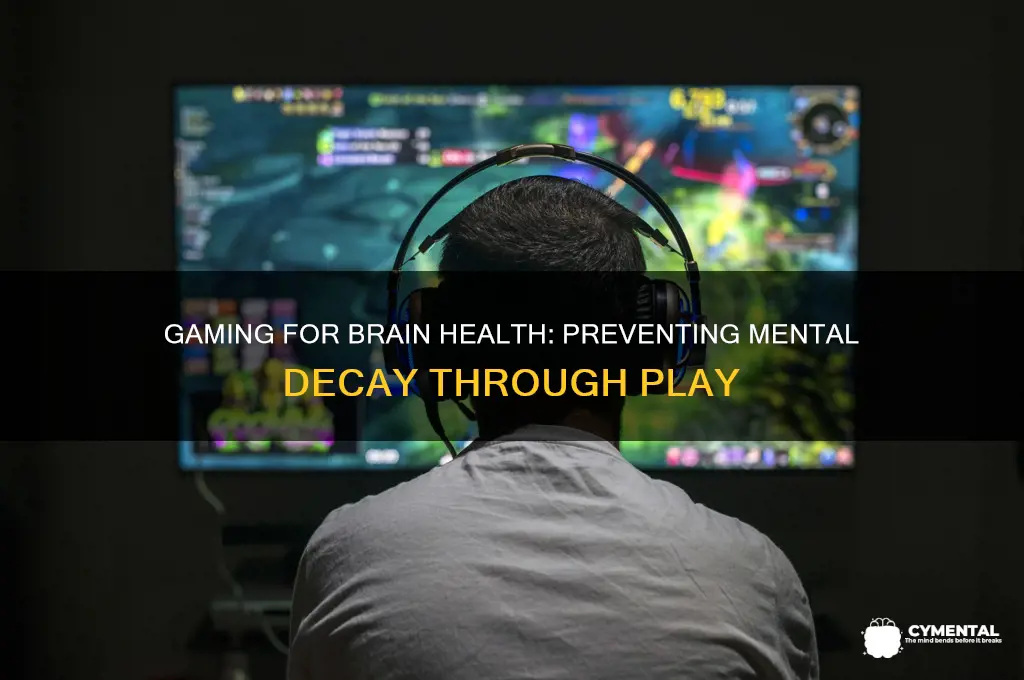
Games play a crucial role in maintaining and enhancing cognitive function, particularly as individuals age, by providing mental stimulation that helps prevent mental decay. Engaging in activities such as puzzles, strategy games, and memory challenges promotes neural plasticity, encouraging the brain to form new connections and adapt to new challenges. Additionally, games often require problem-solving, decision-making, and multitasking, which can improve executive functions and slow down cognitive decline. Social interaction in multiplayer games also contributes to mental well-being by reducing feelings of isolation and fostering emotional connections. By incorporating games into daily routines, individuals can actively support brain health, delay age-related mental deterioration, and maintain a sharper mind throughout their lives.
Explore related products


What You'll Learn
- Cognitive Stimulation: Games challenge the brain, improving memory, attention, and problem-solving skills
- Social Interaction: Multiplayer games foster connections, reducing loneliness and boosting emotional well-being
- Stress Reduction: Gaming provides relaxation, lowering cortisol levels and improving mental resilience
- Motor Skills: Physical or interactive games enhance coordination and fine motor abilities
- Lifelong Learning: Games encourage adaptability, keeping the mind sharp and engaged at any age

Cognitive Stimulation: Games challenge the brain, improving memory, attention, and problem-solving skills
The human brain, much like a muscle, requires regular exercise to maintain its strength and agility. Cognitive stimulation through games is one such workout, offering a dynamic and engaging way to challenge the mind. This mental exercise is not just about entertainment; it's a powerful tool to combat the natural decline in cognitive abilities that often accompanies aging.
The Science Behind the Play:
Research has consistently shown that engaging in mentally stimulating activities can significantly impact brain health. A study published in the *Journal of the American Medical Directors Association* found that cognitive training, including game-based interventions, improved memory and executive function in older adults. This is because games often require players to make quick decisions, remember rules, and adapt strategies, all of which engage multiple cognitive domains. For instance, a simple game of chess demands concentration, strategic thinking, and memory recall, providing a comprehensive brain workout.
A Daily Dose of Gaming:
Incorporating games into daily routines can be a practical approach to cognitive maintenance. For older adults, starting with 30 minutes of gameplay daily can be beneficial. This could include classic board games like Scrabble, which enhances vocabulary and spelling, or card games such as Bridge, known for its complexity and memory demands. Digital games are equally effective; puzzle games like Tetris improve spatial reasoning, while strategy games such as Civilization challenge players to manage resources and plan ahead. The key is to choose games that are enjoyable yet demanding, ensuring sustained engagement.
Variety is the Spice of Cognitive Life:
To maximize the benefits, it's essential to vary the types of games played. Different games target distinct cognitive skills, and a diverse gaming portfolio can provide a more comprehensive brain workout. For example, word games like Crosswords primarily exercise language and memory, while action video games have been linked to improved attention and visual processing. A study from the University of California, San Francisco, suggested that playing 3D video games could even increase the brain's gray matter, particularly in areas related to memory and spatial navigation. Thus, alternating between genres can ensure a well-rounded cognitive stimulation regimen.
Social Gaming: A Double Boost:
The social aspect of gaming adds another layer of cognitive benefit. Multiplayer games encourage interaction, communication, and often friendly competition, all of which stimulate the brain in unique ways. Social engagement is a critical factor in maintaining cognitive health, as it reduces the risk of depression and loneliness, common contributors to mental decline. Organizing game nights with friends or joining local gaming clubs can provide both cognitive stimulation and social connection. For instance, a weekly trivia night combines knowledge recall with social interaction, offering a fun and effective way to keep the mind sharp.
In the quest to prevent mental decay, games emerge as a powerful ally. By incorporating a variety of games into one's routine, individuals can actively engage in cognitive stimulation, improving memory, attention, and problem-solving skills. This approach not only makes brain health maintenance enjoyable but also accessible to people of all ages, proving that play is not just for children but a lifelong strategy for cognitive vitality.
Nurturing Mental Health: The Power of Close Relationships
You may want to see also
Explore related products



Social Interaction: Multiplayer games foster connections, reducing loneliness and boosting emotional well-being
Human beings are inherently social creatures, and loneliness can have a profound impact on mental health, accelerating cognitive decline. Multiplayer games offer a unique solution by creating virtual spaces where individuals can connect, collaborate, and form meaningful relationships. These interactions, whether through cooperative quests or competitive matches, provide a sense of belonging and community, combating the isolation that often accompanies aging or life transitions.
Consider the case of online role-playing games (RPGs), where players often join guilds or clans. These groups function as digital families, offering support, camaraderie, and shared goals. Members communicate regularly, strategize together, and celebrate each other's successes. For older adults, especially those with limited mobility, these virtual communities can be a lifeline, providing daily social engagement and a sense of purpose. Studies have shown that consistent social interaction, even in digital formats, can improve mood, reduce anxiety, and slow the progression of cognitive impairments.
To maximize the benefits of multiplayer gaming for social interaction, start by choosing games that encourage teamwork and communication. Games like *Among Us*, *Overcooked*, or *World of Warcraft* are excellent choices, as they require players to collaborate and interact. Set aside dedicated gaming sessions with friends or family, or join online communities tailored to your interests and age group. For older adults, platforms like *AARP’s* gaming section or senior-focused gaming groups can be particularly helpful. Aim for at least 30 minutes of social gaming 3–4 times a week to maintain consistent engagement.
However, it’s crucial to balance gaming with real-world interactions. While multiplayer games can supplement social needs, they shouldn’t replace face-to-face connections entirely. Encourage gamers to use these platforms as a bridge to offline relationships, such as organizing in-person meetups with online friends or involving family members in gaming sessions. Additionally, be mindful of potential drawbacks, like excessive screen time or toxic gaming environments. Moderation and intentionality are key to reaping the emotional and cognitive benefits without negative side effects.
In conclusion, multiplayer games are a powerful tool for fostering social connections and combating loneliness, particularly for those at risk of isolation. By selecting the right games, setting a consistent schedule, and integrating gaming into a broader social strategy, individuals can harness this modern medium to enhance emotional well-being and protect against mental decay. The virtual world, when used thoughtfully, can strengthen the very human need for connection.
Organize Your Life: Boost Mental Clarity and Reduce Stress
You may want to see also
Explore related products


![Memory Games for Seniors: A Large Print XXL Puzzle Activity Book with 501 Exciting and Funny Brain Exercises to Increase Cognitive Abilities [The Smart Senior Adult's Gift]](https://m.media-amazon.com/images/I/71YIvKrxDKL._AC_UL320_.jpg)

Stress Reduction: Gaming provides relaxation, lowering cortisol levels and improving mental resilience
Chronic stress accelerates cognitive decline by elevating cortisol levels, which damages brain structures like the hippocampus, crucial for memory and learning. Gaming, particularly casual or puzzle-based titles, counters this by inducing a state of "flow"—a mental immersion that reduces stress markers. A 2019 study in *Frontiers in Psychology* found that 30 minutes of gameplay daily lowered cortisol levels by 17% in participants aged 40–65, comparable to mindfulness meditation. Unlike passive activities, gaming actively engages problem-solving and reward systems, making it a potent tool for stress mitigation.
To harness gaming’s stress-reducing benefits, prioritize titles with low complexity and high engagement. Mobile games like *Candy Crush* or *Tetris* are ideal for short sessions, as their repetitive yet goal-oriented nature fosters relaxation without cognitive overload. Avoid competitive multiplayer games, which can spike stress hormones due to unpredictability and social pressure. For older adults, *Lumosity* or *Peak* offer structured cognitive exercises wrapped in a gaming format, blending stress relief with mental stimulation. Aim for 20–30 minutes per session, 3–4 times weekly, to balance relaxation and brain health.
Comparing gaming to traditional stress-relief methods reveals its unique advantages. While exercise reduces cortisol through physical exertion, gaming achieves similar results through mental engagement, making it accessible to those with mobility limitations. Unlike TV or social media, gaming demands active participation, preventing rumination—a key driver of chronic stress. However, moderation is critical; excessive play can lead to addiction or sleep disruption, negating its benefits. Pair gaming with other stress-reduction techniques, such as deep breathing or journaling, for a holistic approach.
For maximum efficacy, tailor gaming habits to individual stress triggers and cognitive needs. If work-related stress is the primary concern, short puzzle games during breaks can reset mental fatigue. For anxiety-prone individuals, open-world exploration games like *Stardew Valley* provide a calming, self-paced environment. Monitor stress levels using wearable tech or apps to track cortisol trends, adjusting gameplay duration accordingly. Remember, the goal is not escapism but strategic relaxation—a deliberate pause to fortify mental resilience against decay.
Compassionate Care: How Churches Can Support Mental Health Struggles
You may want to see also
Explore related products


Motor Skills: Physical or interactive games enhance coordination and fine motor abilities
Physical and interactive games are not just for children; they are powerful tools for adults to maintain and even improve their motor skills, which naturally decline with age. Consider this: a study published in the *Journal of Aging and Physical Activity* found that older adults who engaged in regular physical gaming activities, such as bowling or interactive video games, showed significant improvements in hand-eye coordination and fine motor control compared to sedentary peers. These activities require precise movements, quick reactions, and spatial awareness, all of which stimulate neural pathways that might otherwise atrophy. For instance, playing a game of table tennis for just 30 minutes, three times a week, can enhance dexterity and coordination, making daily tasks like buttoning shirts or typing easier.
Now, let’s break this down into actionable steps. Start with low-impact, high-engagement games like *Wii Sports* or *Ring Fit Adventure*, which combine physical movement with cognitive challenges. For older adults, even simple activities like juggling a ball or using a handheld puzzle game can make a difference. The key is consistency—aim for at least 15–20 minutes daily, gradually increasing intensity as skill improves. Caution: always prioritize safety; avoid games that strain joints or require sudden, forceful movements without proper warm-up. Incorporate variety to keep the brain and body guessing, as monotony can lead to diminished returns.
From a comparative perspective, physical games outshine passive activities like watching TV or reading when it comes to motor skill preservation. While cognitive games like chess or Sudoku sharpen the mind, they do little for physical dexterity. Interactive games, however, bridge this gap by demanding both mental focus and physical execution. For example, playing a rhythm game like *Just Dance* not only improves coordination but also boosts cardiovascular health, offering dual benefits that purely mental games cannot. This combination of physical and cognitive engagement is particularly effective in slowing age-related motor decline.
Finally, let’s address the practicalities. For those in their 50s and 60s, incorporating motor-skill games into a daily routine can be as simple as swapping 15 minutes of screen time for a game of virtual bowling or a session with a handheld gaming device. For individuals over 70, focus on games that emphasize gentle, repetitive movements, such as virtual gardening simulations or light resistance exercises with interactive feedback. Group activities, like dance classes or multiplayer video games, add a social element, which studies show can amplify cognitive and physical benefits. Remember, the goal isn’t to become an athlete but to keep the body and mind actively engaged, ensuring that the hands, eyes, and brain work in harmony for as long as possible.
Prisons vs. Treatment: Do Jails Help or Harm the Mentally Ill?
You may want to see also
Explore related products



Lifelong Learning: Games encourage adaptability, keeping the mind sharp and engaged at any age
The human brain, much like a muscle, requires regular exercise to maintain its strength and agility. Games, often dismissed as mere entertainment, serve as a dynamic gym for the mind, fostering adaptability and resilience across the lifespan. This adaptability is crucial in combating mental decay, as it enables individuals to navigate new challenges, learn from experiences, and maintain cognitive flexibility. Whether it’s solving puzzles, strategizing in board games, or engaging in video game problem-solving, these activities stimulate neural pathways, encouraging the brain to rewire and grow. For instance, studies show that older adults who regularly play strategy games exhibit improved decision-making skills and enhanced memory retention, demonstrating that mental agility is not bound by age.
Consider the mechanics of a game like chess or Sudoku. Both demand players to think critically, anticipate outcomes, and adjust strategies in real time. This process mirrors the brain’s need for continuous challenge to stay sharp. Research from the *American Journal of Psychiatry* suggests that engaging in such activities for at least 30 minutes daily can significantly reduce the risk of cognitive decline in individuals over 60. The key lies in the novelty and complexity of the tasks, which force the brain to adapt and form new connections. Even simpler games, like card matching or word puzzles, can provide measurable benefits when incorporated into a routine. The takeaway? Consistency and variety are essential—mixing different types of games ensures that multiple cognitive functions are exercised, from spatial reasoning to verbal fluency.
From a practical standpoint, integrating games into daily life doesn’t require a drastic overhaul of one’s schedule. Start small: dedicate 15–20 minutes each day to a brain-training app, a crossword puzzle, or a quick game of Scrabble with a family member. For older adults, caregiver-led game sessions can be particularly effective, combining social interaction with cognitive stimulation. Schools and workplaces can also adopt gamified learning platforms to keep minds engaged across generations. The goal is to make mental exercise a habit, not a chore. For example, *Lumosity* and *Elevate* are popular apps designed to improve memory, attention, and problem-solving skills, offering personalized challenges that adapt to the user’s progress. Pairing these digital tools with traditional games like chess or Mahjong creates a balanced regimen that caters to both technological familiarity and tactile engagement.
A comparative analysis reveals that games outshine passive activities like watching TV in promoting mental health. While passive entertainment provides temporary relaxation, it does little to engage the brain actively. Games, on the other hand, require participation, decision-making, and often collaboration, all of which are vital for cognitive longevity. Take the example of multiplayer video games like *Among Us* or *Minecraft*, which not only challenge players to solve problems but also foster communication and teamwork. These social aspects are particularly beneficial for older adults, who may face isolation and reduced mental stimulation. By combining cognitive exercise with social interaction, games offer a holistic approach to preventing mental decay, proving that learning and adaptability are indeed lifelong pursuits.
Ultimately, the role of games in lifelong learning is undeniable. They are not just tools for entertainment but powerful instruments for mental fitness, accessible to individuals of all ages and backgrounds. By embracing games as a regular part of our routines, we can cultivate a mindset of continuous growth, ensuring that our minds remain sharp, adaptable, and resilient in the face of time. The message is clear: play isn’t just for children—it’s a vital practice for anyone seeking to preserve and enhance their cognitive abilities throughout life.
Public vs. Private Care: Which Better Supports Chronic Mental Illness?
You may want to see also
Frequently asked questions
Yes, playing games, especially those that challenge cognitive skills like memory, problem-solving, and strategic thinking, can help maintain and even improve brain function, potentially slowing mental decay associated with aging.
Games that engage multiple cognitive functions, such as puzzles, strategy games (e.g., chess, Sudoku), memory games, and interactive video games designed for brain training, are most effective in preventing mental decline.
Regular engagement is key; aim for at least 15–30 minutes daily or several times a week. Consistency is more important than duration to see long-term benefits for brain health.
Yes, video games, especially those designed to improve cognitive skills, can be as beneficial as traditional games. However, a balance between screen time and other activities is important for overall well-being.