Caleb Wright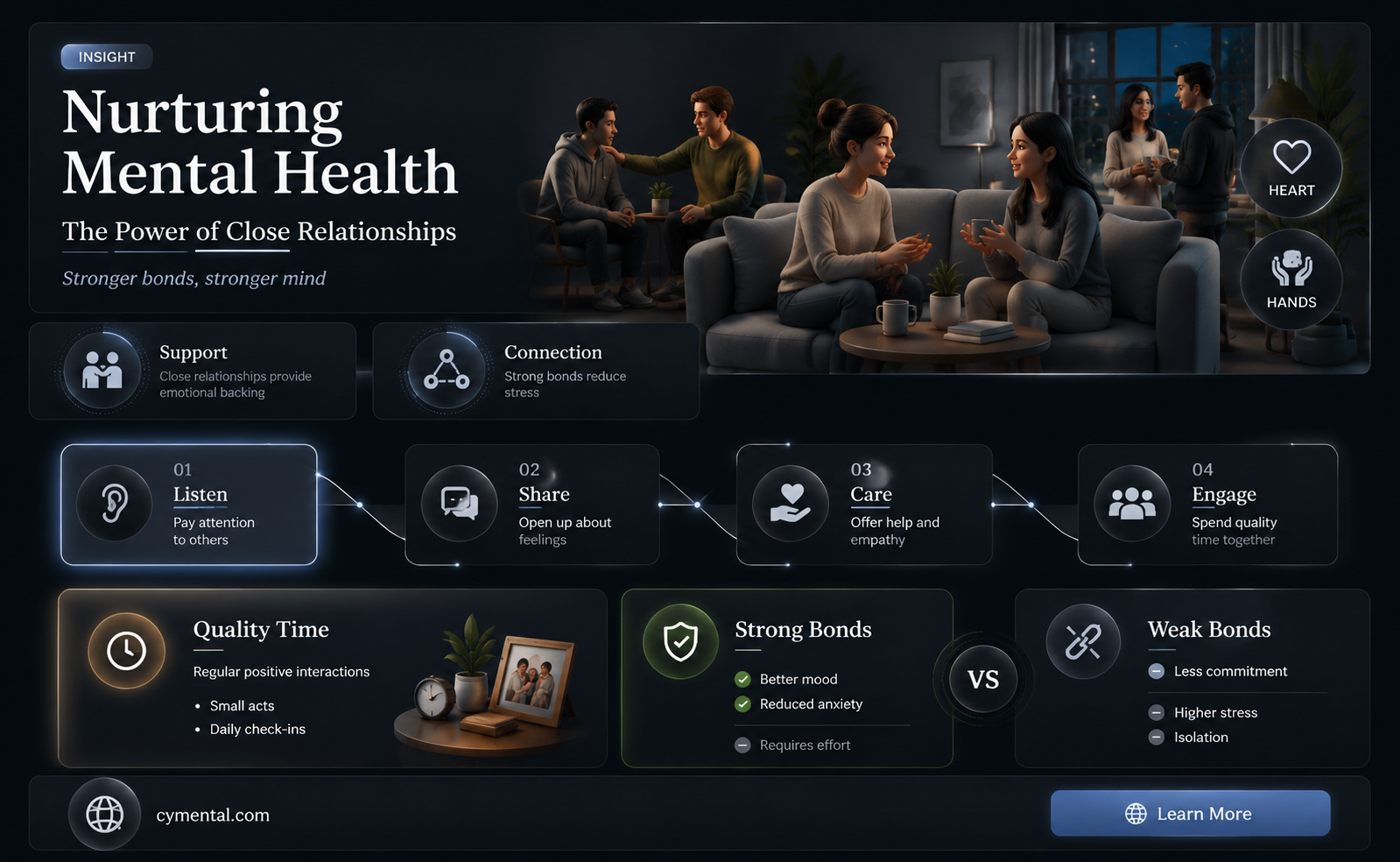
Having close relationships plays a pivotal role in maintaining mental health by providing emotional support, reducing stress, and fostering a sense of belonging. Strong connections with family, friends, or partners offer a safe space to share feelings, seek advice, and receive validation, which can alleviate feelings of loneliness and anxiety. These relationships also encourage healthy behaviors, such as accountability and motivation, while buffering against life’s challenges by offering practical and emotional assistance. Additionally, the release of oxytocin, often referred to as the love hormone, during social interactions promotes feelings of trust and well-being, further enhancing mental resilience. Ultimately, nurturing close relationships can act as a protective factor against mental health issues, contributing to overall emotional stability and happiness.
| Characteristics | Values |
|---|---|
| Emotional Support | Provides a sense of security, comfort, and validation, reducing feelings of loneliness. |
| Stress Reduction | Close relationships act as a buffer against stress by offering coping mechanisms and support. |
| Increased Self-Esteem | Positive relationships foster self-worth and confidence through affirmation and encouragement. |
| Improved Mental Resilience | Helps individuals bounce back from adversity and trauma more effectively. |
| Healthy Behaviors | Encourages healthier lifestyle choices, such as regular exercise and better sleep patterns. |
| Reduced Risk of Depression | Social connections lower the likelihood of developing depression and anxiety disorders. |
| Enhanced Cognitive Function | Meaningful relationships stimulate the brain, improving memory and cognitive abilities. |
| Sense of Purpose | Provides meaning and motivation, contributing to overall mental well-being. |
| Conflict Resolution Skills | Teaches effective communication and problem-solving, reducing mental strain. |
| Physical Health Benefits | Linked to lower blood pressure, reduced inflammation, and longer lifespan. |
| Social Engagement | Promotes participation in social activities, reducing isolation and improving mood. |
| Trust and Safety | Creates a safe environment for emotional expression and vulnerability. |
| Shared Experiences | Builds a sense of belonging and shared identity, enhancing emotional connection. |
| Reduced Anxiety | Provides reassurance and stability, lowering anxiety levels. |
| Longevity | Studies show people with strong social ties live longer and healthier lives. |
Explore related products

$16.98 $30


What You'll Learn
- Emotional Support: Close relationships provide a safe space for sharing feelings, reducing stress and anxiety
- Sense of Belonging: Feeling connected fosters self-worth, combats loneliness, and enhances overall mental well-being
- Stress Reduction: Social support lowers cortisol levels, promoting relaxation and emotional stability
- Positive Influence: Healthy relationships encourage positive behaviors and discourage harmful habits
- Shared Experiences: Bonding through activities boosts happiness, creates purpose, and strengthens mental resilience

Emotional Support: Close relationships provide a safe space for sharing feelings, reducing stress and anxiety
Human beings are inherently social creatures, and our emotional well-being is deeply intertwined with the quality of our relationships. Close relationships, in particular, serve as a cornerstone of mental health by providing a unique form of emotional support. This support creates a safe space where individuals can freely express their feelings, which is crucial for managing stress and anxiety. When we share our emotions with someone we trust, the act of verbalizing our thoughts can help us process them more effectively, reducing the mental burden that often accompanies unresolved feelings.
Consider the physiological impact of emotional sharing. Studies have shown that talking about distressing experiences can lower cortisol levels, the hormone associated with stress. For instance, a 2015 study published in *Social Cognitive and Affective Neuroscience* found that sharing emotions with a supportive listener activates the parasympathetic nervous system, promoting relaxation. Practically, this means that spending just 15–20 minutes a day discussing your feelings with a close friend or partner can significantly reduce daily stress. The key is consistency; regular emotional check-ins foster a sense of security and predictability, which are essential for long-term mental health.
However, not all emotional support is created equal. The quality of the relationship matters more than the quantity of interactions. A close relationship characterized by trust, empathy, and non-judgmental listening is far more effective in reducing anxiety than superficial connections. For example, a partner who actively listens without interrupting or offering unsolicited advice creates an environment where vulnerability feels safe. To cultivate this, practice active listening yourself: repeat back what the other person has said to confirm understanding, and avoid jumping to solutions unless asked. This simple technique strengthens emotional bonds and encourages reciprocal support.
Age and life stage also play a role in how emotional support is experienced and utilized. Younger adults, aged 18–25, often rely on peers for emotional validation, while older adults, aged 50 and above, may find deeper solace in long-term partnerships or family ties. Regardless of age, the principle remains the same: emotional support thrives in relationships where both parties feel heard and valued. For those struggling to find such connections, joining support groups or seeking therapy can provide a structured environment for emotional sharing, mimicking the safety of a close relationship.
In conclusion, emotional support in close relationships is a powerful tool for maintaining mental health. By creating a safe space for sharing feelings, these relationships reduce stress and anxiety through both psychological and physiological mechanisms. To maximize this benefit, prioritize consistent, high-quality interactions over infrequent or superficial ones. Whether through active listening, regular check-ins, or seeking external support, nurturing these connections can lead to a more resilient and emotionally balanced life.
Reflexology and Mental Health: Unlocking Natural Stress Relief and Wellness
You may want to see also
Explore related products




Sense of Belonging: Feeling connected fosters self-worth, combats loneliness, and enhances overall mental well-being
Human beings are inherently social creatures, and our need for connection is as vital as our need for food and shelter. A sense of belonging, fostered through close relationships, acts as a powerful buffer against the detrimental effects of loneliness, a silent epidemic affecting millions worldwide. Studies show that chronic loneliness can increase the risk of depression, anxiety, and even physical ailments like heart disease. Conversely, individuals with strong social connections report higher levels of happiness, resilience, and overall life satisfaction.
Consider the example of group therapy sessions for individuals struggling with mental health issues. These sessions provide a safe space for participants to share their experiences, receive support, and feel understood. The act of connecting with others who face similar challenges validates their struggles, reduces feelings of isolation, and fosters a sense of "we're in this together." This shared experience not only combats loneliness but also empowers individuals to develop coping mechanisms and build self-worth through mutual support.
A 2019 study published in the *Journal of Consulting and Clinical Psychology* found that group therapy participants reported significant reductions in symptoms of depression and anxiety, attributing their progress to the sense of belonging and understanding cultivated within the group.
Cultivating a sense of belonging requires intentional effort. Joining community groups, volunteering, or simply reaching out to a friend for a coffee date can be powerful steps. Even small acts of connection, like a genuine conversation with a neighbor or a heartfelt text message, contribute to building a network of support. Remember, quality trumps quantity; a few deep, meaningful relationships are more beneficial than numerous superficial ones.
Neurologists and Mental Health: Unlocking Treatment Options for Illness
You may want to see also
Explore related products

$13.93 $14.95


Stress Reduction: Social support lowers cortisol levels, promoting relaxation and emotional stability
Cortisol, often dubbed the "stress hormone," surges in response to pressure, triggering a cascade of physiological reactions. Chronically elevated cortisol levels contribute to anxiety, depression, and even physical ailments like heart disease. However, research reveals a powerful antidote: social support. Studies show that individuals with strong social connections exhibit lower cortisol levels, particularly during stressful situations. A 2018 study published in the journal *Psychoneuroendocrinology* found that participants who received emotional support from a partner during a stressful task had significantly lower cortisol responses compared to those facing the challenge alone.
This highlights the profound impact of close relationships on our biological stress response.
Imagine facing a daunting work presentation. Your heart races, palms sweat, and cortisol floods your system. Now, picture having a trusted friend who listens empathetically, offers encouragement, and reminds you of your past successes. This simple act of social support acts as a buffer, dampening the cortisol surge and fostering a sense of calm. This example illustrates how close relationships provide a tangible, physiological shield against stress, allowing us to navigate challenging situations with greater resilience.
Incorporating this knowledge into our daily lives is crucial. Prioritize nurturing close relationships through regular communication, shared activities, and genuine emotional support.
While the benefits are clear, it's important to acknowledge that not all social interactions are created equal. Toxic relationships can actually exacerbate stress. Seek out relationships characterized by mutual respect, trust, and understanding. Remember, quality trumps quantity. Even a small circle of supportive individuals can significantly contribute to stress reduction.
By understanding the link between social support and cortisol regulation, we empower ourselves to cultivate relationships that serve as a powerful tool for managing stress and promoting mental well-being.
Dance Your Way to Mental Wellness: Unlocking Emotional and Cognitive Benefits
You may want to see also
Explore related products

$7.84 $14.99


Positive Influence: Healthy relationships encourage positive behaviors and discourage harmful habits
Healthy relationships act as mirrors, reflecting our behaviors and choices back to us. When we surround ourselves with individuals who prioritize well-being, their habits and attitudes subtly shape our own. For instance, a friend who consistently chooses nutritious meals over fast food may inspire you to adopt similar dietary habits. This phenomenon, known as social contagion, highlights how positive behaviors spread through social networks. Research shows that individuals with health-conscious peers are 50% more likely to engage in regular exercise and 35% more likely to maintain a balanced diet. By aligning ourselves with those who embody the behaviors we aspire to, we create an environment that fosters growth and self-improvement.
Encouraging positive behaviors is only one side of the coin; healthy relationships also act as a safeguard against harmful habits. Accountability plays a crucial role here. When we share our goals and struggles with trusted individuals, we create a support system that holds us responsible for our actions. For example, someone trying to quit smoking is 60% more likely to succeed if they have a supportive partner or friend who actively discourages relapse. This dynamic extends beyond physical habits to mental health practices, such as mindfulness or therapy. A study published in the *Journal of Social and Clinical Psychology* found that individuals with supportive relationships were 40% less likely to engage in self-sabotaging behaviors during stressful periods. By fostering an environment of mutual encouragement, healthy relationships provide a buffer against the temptations and triggers that lead to harmful habits.
Consider the role of constructive feedback in shaping behavior. In a healthy relationship, feedback is delivered with empathy and intention, focusing on growth rather than criticism. For instance, a friend might gently point out that your tendency to overwork is affecting your well-being, offering suggestions for setting boundaries instead. This type of feedback, when received in a trusting relationship, is 70% more likely to lead to positive change than unsolicited advice from acquaintances. To leverage this dynamic, establish clear communication norms with your close relationships. Start by sharing specific behaviors you’d like to improve and invite honest, non-judgmental feedback in return. Over time, this practice not only strengthens the relationship but also reinforces a culture of continuous self-improvement.
Finally, the power of shared activities cannot be overstated. Engaging in positive, joint behaviors—such as hiking, cooking healthy meals, or practicing yoga—amplifies their impact. When these activities become rituals within a relationship, they create a sense of shared purpose and accountability. For example, couples who exercise together report higher levels of relationship satisfaction and are 45% more likely to maintain their fitness routines long-term. To integrate this into your life, identify one or two activities that align with your wellness goals and invite a close friend or partner to join you weekly. Consistency is key; even small, regular efforts compound over time, transforming individual habits into collective strengths. By intertwining positive behaviors with the fabric of your relationships, you create a sustainable foundation for mental and emotional health.
Biotin's Role in Mental Health: Potential Benefits and Limitations Explored
You may want to see also
Explore related products




Shared Experiences: Bonding through activities boosts happiness, creates purpose, and strengthens mental resilience
Engaging in shared activities with close relationships isn’t just about passing time—it’s a powerful tool for mental health. Research shows that participating in meaningful experiences with others releases oxytocin, the "bonding hormone," which reduces stress and increases feelings of trust and connection. Whether it’s cooking a meal together, hiking a trail, or attending a concert, these moments create a sense of unity that directly combats loneliness and anxiety. The key lies in the combination of social interaction and purposeful action, which together amplify emotional well-being.
Consider the structure of these shared experiences. Start with activities that align with both parties’ interests to ensure genuine enjoyment. For instance, a weekly book club for literature lovers or a monthly volunteer day for those passionate about giving back. Consistency matters—aim for at least one shared activity per week, as studies suggest regular social engagement is more effective than sporadic outings. Be mindful of the intensity: low-pressure activities like walking or crafting are ideal for fostering relaxed conversation, while more challenging tasks, such as rock climbing or learning a new skill, can build resilience and shared accomplishment.
Contrast this with solitary activities, which, while valuable, lack the emotional reinforcement of shared experiences. For example, running alone improves physical health but doesn’t provide the same mental health benefits as joining a running group. The latter not only boosts endorphins but also creates opportunities for encouragement and camaraderie. This comparative advantage highlights why shared activities are uniquely effective in strengthening mental resilience—they combine personal growth with social support.
Practical tips can make these experiences even more impactful. First, alternate who chooses the activity to keep things fresh and inclusive. Second, incorporate reflection afterward—a simple "What did you enjoy most?" can deepen the connection. For families, involve all age groups by selecting adaptable activities like board games or nature walks. Finally, document these moments through photos or journals; revisiting them later reinforces positive memories and a sense of purpose.
The takeaway is clear: shared experiences are not just enjoyable—they’re essential for mental health. By fostering happiness, creating purpose, and building resilience, these activities transform relationships into pillars of emotional strength. Start small, stay consistent, and watch how bonding through activities becomes a cornerstone of your mental well-being.
Psychedelics as Treatment: Healing Drug-Induced Mental Illness?
You may want to see also
Frequently asked questions
Close relationships provide emotional support, reduce stress, and foster a sense of belonging, which are essential for maintaining mental well-being.
Yes, close relationships combat loneliness by offering companionship, understanding, and a sense of connection, which are vital for mental health.
Close relationships provide a safe space to share worries, receive encouragement, and gain perspective, which can lower stress levels and improve mental resilience.
Yes, positive close relationships often boost self-esteem through validation, encouragement, and unconditional support, contributing to better mental health.
Yes, strong social connections in close relationships can act as a protective factor against depression by providing emotional support and reducing feelings of isolation.