Noah Parker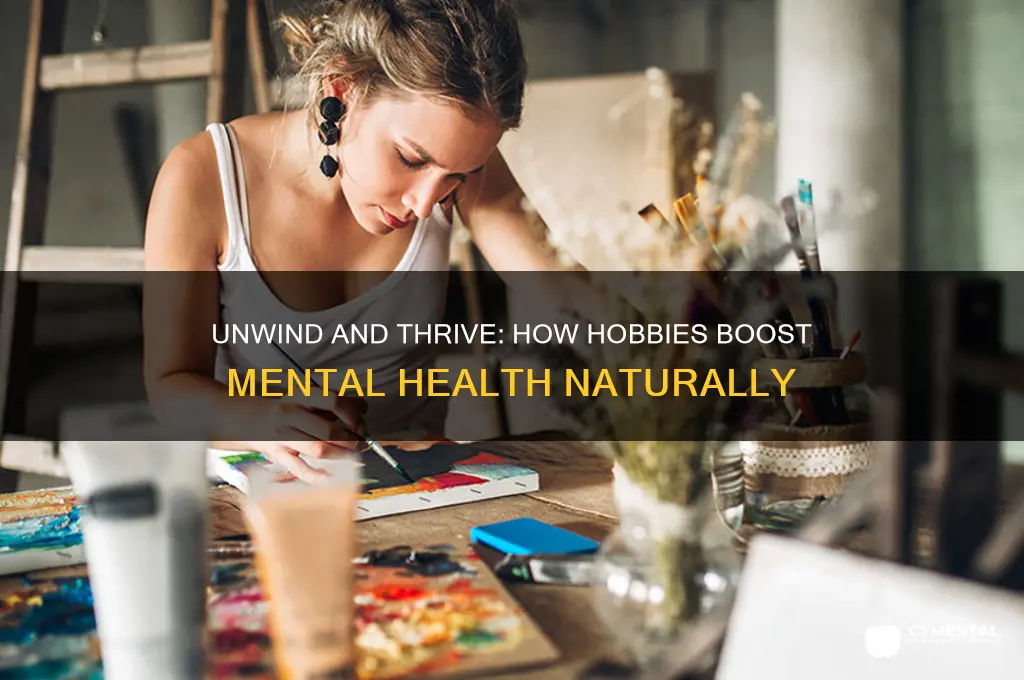
Engaging in hobbies can significantly enhance mental health by providing a sense of purpose, reducing stress, and fostering creativity. Whether it’s painting, gardening, playing music, or hiking, hobbies offer a break from daily pressures, allowing individuals to focus on activities they enjoy. This shift in attention can lower anxiety and depression symptoms, as it promotes mindfulness and relaxation. Additionally, hobbies often involve learning new skills, which boosts self-esteem and confidence. Social hobbies, like joining a book club or sports team, combat loneliness by building connections with like-minded people. Overall, hobbies serve as a therapeutic outlet, helping individuals maintain emotional balance and improve their overall well-being.
Explore related products


What You'll Learn
- Stress Relief: Engaging in hobbies reduces stress by shifting focus and promoting relaxation
- Emotional Outlet: Hobbies provide a healthy way to express and process emotions effectively
- Sense of Purpose: Pursuing hobbies fosters accomplishment, boosting self-esteem and life satisfaction
- Social Connection: Group hobbies combat loneliness by building meaningful relationships and community ties
- Mindfulness Practice: Creative or physical hobbies encourage present-moment awareness, reducing anxiety and overthinking

Stress Relief: Engaging in hobbies reduces stress by shifting focus and promoting relaxation
Stress is an inevitable part of life, but its management is where hobbies step in as unsung heroes. When you immerse yourself in an activity you love, your brain undergoes a subtle yet powerful shift. Neurological studies show that engaging in hobbies activates the parasympathetic nervous system, which counteracts the fight-or-flight response triggered by stress. For instance, knitting or playing an instrument requires focus, effectively diverting attention from stressors and inducing a state of flow. This mental redirection isn’t just a distraction—it’s a scientifically backed method to lower cortisol levels, the hormone associated with stress.
Consider the act of gardening, a hobby often praised for its therapeutic benefits. Digging into soil, pruning plants, and watching them grow demands mindfulness, forcing you to be present in the moment. Research suggests that just 30 minutes of gardening daily can reduce cortisol levels by up to 15%. Similarly, hobbies like painting or journaling encourage self-expression, allowing pent-up emotions to flow onto paper or canvas instead of festering internally. These activities don’t require mastery; the mere act of participation is enough to trigger relaxation.
Not all hobbies are created equal in stress relief, though. High-pressure activities like competitive gaming or deadline-driven crafts might exacerbate stress for some. The key is to choose hobbies that align with your temperament and offer a sense of calm. For example, adults aged 25–40 often find solace in low-stakes, repetitive tasks like crossword puzzles or model building, which provide structure without overwhelming demands. Conversely, younger individuals might prefer dynamic hobbies like dancing or skateboarding, which combine physical activity with creative expression, releasing endorphins and reducing tension.
Practical implementation is simpler than you think. Start by carving out 20–30 minutes daily for your hobby, even if it means sacrificing screen time. Keep supplies accessible—a sketchpad on the coffee table, a guitar by the couch—to eliminate barriers to engagement. If you’re unsure where to begin, revisit childhood interests or try something new through online tutorials or local classes. Remember, the goal isn’t perfection but participation. Over time, this consistent practice will rewire your brain to associate leisure with stress relief, making it a natural coping mechanism.
In a world where stress feels omnipresent, hobbies offer a sanctuary of control and joy. They remind us that relaxation isn’t a luxury but a necessity for mental well-being. By shifting focus and fostering mindfulness, these activities don’t just manage stress—they transform it into an opportunity for growth and self-discovery. So, pick up that paintbrush, lace up those hiking boots, or dust off that cookbook. Your mind will thank you.
Nami's Impact: Empowering Mental Health Support and Awareness
You may want to see also
Explore related products


Emotional Outlet: Hobbies provide a healthy way to express and process emotions effectively
Emotions, when bottled up, can fester into anxiety, depression, or even physical ailments. Hobbies act as pressure valves, releasing pent-up feelings in constructive ways. Consider journaling: a 2018 study found that expressive writing for 15-20 minutes daily reduced symptoms of depression and anxiety in adults aged 18-65. The act of putting emotions into words, whether through poetry, prose, or even bullet points, helps externalize and objectify them, making them less overwhelming. This isn’t limited to writing—painting, dancing, or playing music can similarly translate abstract feelings into tangible forms, offering clarity and relief.
Take photography, for instance. Framing a shot requires focus, forcing the mind to shift from internal turmoil to external details—the play of light, the texture of leaves, the curve of a smile. This mindful engagement acts as a form of emotional triage, temporarily halting the cycle of rumination. For teenagers struggling with emotional regulation, a hobby like photography can be particularly effective; it combines creativity with technical skill, providing both distraction and a sense of accomplishment. Pairing this with a daily 10-minute reflection on the emotions behind each photo can deepen its therapeutic impact.
Not all hobbies are created equal in this regard. Passive activities like scrolling social media often exacerbate negative emotions by fostering comparison or isolation. Active hobbies, however, demand presence. Gardening, for example, requires patience and care, mirroring the process of tending to one’s emotional health. A 2021 study revealed that participants who spent 30 minutes daily gardening reported lower stress levels and improved mood. The tactile experience of soil, the satisfaction of nurturing life, and the visual reward of blooming plants create a multisensory outlet for processing emotions.
For those who thrive on structure, consider martial arts. The discipline of learning forms (kata) or sparring techniques channels aggression or frustration into controlled movements. A 2019 study found that adults practicing martial arts twice weekly for 8 weeks showed significant reductions in anger and improved emotional resilience. The physical exertion releases endorphins, while the mental focus fosters mindfulness. This combination makes it an ideal hobby for individuals seeking both emotional release and self-improvement.
Ultimately, the key lies in consistency and personalization. A hobby that feels forced or unengaging won’t serve as an effective emotional outlet. Start small: dedicate 15 minutes daily to an activity that resonates with you. Track your emotional state before and after to gauge its impact. Over time, this practice can transform a hobby from a pastime into a vital tool for emotional well-being, proving that sometimes, the best way to process feelings isn’t to think, but to create.
School Counselors and Mental Health: Effective Support or Overburdened Role?
You may want to see also
Explore related products


Sense of Purpose: Pursuing hobbies fosters accomplishment, boosting self-esteem and life satisfaction
Engaging in hobbies isn’t just a way to pass time—it’s a deliberate act of self-investment that rewires the brain for purpose. When you dedicate hours to mastering a craft, whether it’s woodworking, painting, or coding, your mind shifts from passive consumption to active creation. This shift triggers the release of dopamine, the brain’s reward chemical, which reinforces the behavior and fosters a sense of accomplishment. Studies show that individuals who spend at least 4 hours per week on a hobby report higher levels of life satisfaction compared to those who don’t. The key lies in the structured pursuit: setting goals, overcoming challenges, and witnessing tangible progress. This process mirrors the psychological benefits of achieving milestones in professional or academic settings but with the added freedom of personal choice.
Consider the case of a 45-year-old accountant who took up pottery after feeling stagnant in her career. Initially, her creations were rudimentary, but over six months, she honed her skills, eventually selling her work at local markets. This hobby didn’t just provide an outlet for creativity—it redefined her identity beyond her 9-to-5 role. Research from the *Journal of Occupational Science* supports this, noting that hobbies that require skill development and problem-solving elevate self-efficacy, a critical component of self-esteem. The takeaway? Choose hobbies that demand growth, not just enjoyment. For instance, learning a musical instrument or gardening involves measurable progress, making them ideal for cultivating a sense of purpose.
Critics might argue that not all hobbies lead to tangible outcomes, but even seemingly passive activities can be structured for accomplishment. Take reading, often dismissed as a solitary escape. By setting a goal of 12 books per year and tracking progress through platforms like Goodreads, readers experience a sense of achievement akin to completing a project. The act of selecting books, analyzing themes, and discussing them with others transforms reading into a purposeful endeavor. For younger adults (ages 18–30), this approach can counteract the aimlessness often associated with early adulthood, providing a sense of direction outside of career or academic pressures.
Practical implementation is key. Start by identifying hobbies that align with your interests but also challenge you. For example, if you love nature, hiking can evolve into trail mapping or photography. Allocate dedicated time—even 30 minutes daily—and track your progress using journals or apps. Celebrate small wins, like finishing a sketch or running a mile, to reinforce the connection between effort and accomplishment. Caution: avoid overloading yourself with too many hobbies, as this can dilute the sense of purpose. Instead, focus on 1–2 activities that allow for deep engagement and measurable growth.
Ultimately, hobbies serve as a microcosm of life’s larger purpose: to strive, create, and evolve. By framing them as intentional practices rather than mere distractions, you unlock their potential to boost self-esteem and life satisfaction. The next time you pick up a paintbrush or lace up your running shoes, remember—you’re not just filling time; you’re building a legacy, one accomplishment at a time.
Unleash Your Mind: Creative Outlets for Mental Health Healing
You may want to see also
Explore related products


$9.79 $17.99

$14.99 $19.99


Social Connection: Group hobbies combat loneliness by building meaningful relationships and community ties
Loneliness isn’t just a fleeting feeling—it’s a public health concern linked to increased risks of depression, anxiety, and even cardiovascular disease. Group hobbies offer a powerful antidote by embedding individuals in supportive networks where shared interests foster natural, low-pressure interactions. Consider book clubs, for instance. Meeting weekly to discuss a novel not only sharpens critical thinking but also creates a predictable social anchor. Members bond over characters, themes, and personal interpretations, forming connections that often extend beyond the pages of the book. This structured yet casual environment is particularly beneficial for introverts or those hesitant to initiate social contact, as the hobby itself provides a built-in conversation starter.
To maximize the mental health benefits of group hobbies, consistency is key. Aim for at least one group activity per week, as research suggests regular social engagement reduces feelings of isolation more effectively than sporadic interactions. For older adults, community gardening clubs combine physical activity with social interaction, promoting both mental and physical well-being. Younger demographics might gravitate toward team sports or gaming groups, where camaraderie is forged through shared challenges and victories. Regardless of age, the act of showing up—physically or virtually—reinforces a sense of belonging and accountability, counteracting the withdrawal tendencies often associated with loneliness.
Not all group hobbies are created equal, however. Avoid overly competitive environments that may trigger stress or exclusion. Instead, opt for activities that emphasize collaboration over comparison, such as cooking classes or volunteer groups. For example, a community soup kitchen project not only feeds those in need but also nurtures empathy and teamwork among participants. Similarly, choir groups or art workshops encourage collective creativity, where individual contributions blend into a unified whole. These settings naturally cultivate empathy and mutual respect, essential ingredients for meaningful relationships.
Practical tips can enhance the experience: Start small by joining a local meetup or online forum related to your interest. If anxiety looms, bring a friend for initial sessions. For those with limited mobility or time, virtual hobby groups—like language exchanges or knitting circles—offer flexibility without sacrificing connection. Finally, track your mood over time; noticing improvements can reinforce the habit. By weaving group hobbies into your routine, you’re not just filling time—you’re stitching a safety net of relationships that fortify mental resilience against loneliness.
Motor Reproduction: Boosting Mental Resilience and Focus in Athletes
You may want to see also
Explore related products


Mindfulness Practice: Creative or physical hobbies encourage present-moment awareness, reducing anxiety and overthinking
Engaging in creative or physical hobbies naturally fosters mindfulness, anchoring the mind in the present moment. When painting, gardening, or practicing yoga, the focus shifts from ruminating thoughts to the task at hand. This immersion disrupts the cycle of overthinking, a common trigger for anxiety. For instance, a study published in *Art Therapy: Journal of the American Art Therapy Association* found that 45 minutes of creative activity significantly reduced cortisol levels, a biomarker of stress. The key lies in the hobby’s ability to demand attention, leaving no mental bandwidth for worry.
Consider the act of knitting: each stitch requires precision, forcing the mind to concentrate on texture, tension, and pattern. This micro-focus mimics formal mindfulness practices like meditation but feels more accessible to those who struggle with stillness. Similarly, physical hobbies like rock climbing demand immediate awareness of body positioning and environmental cues, leaving no room for mental clutter. Even 20 minutes of such activities daily can create a noticeable shift in mental clarity, as supported by research in *Frontiers in Psychology*. The takeaway? Hobbies act as a gateway to mindfulness, offering a structured way to practice being present without the pressure of traditional techniques.
However, not all hobbies yield the same results. Passive activities like scrolling through social media or binge-watching TV often exacerbate anxiety by encouraging mindless consumption. The distinction lies in active engagement versus passive reception. To maximize mindfulness benefits, choose hobbies that require hands-on involvement and sensory interaction. For example, woodworking engages sight, touch, and spatial reasoning, while dancing combines rhythm, movement, and coordination. These multi-sensory experiences deepen present-moment awareness, making them particularly effective for anxiety reduction.
Practical implementation is key. Start small—allocate 15–30 minutes daily to a hobby that aligns with your interests. Consistency matters more than duration. If creative pursuits feel daunting, begin with simple activities like doodling or journaling. For physical hobbies, low-impact options like tai chi or walking in nature are ideal for all age groups, including seniors. Pairing these activities with mindful breathing—inhaling for 4 counts, holding for 4, exhaling for 6—amplifies their calming effects. Over time, this routine becomes a mental reset button, reducing the grip of anxiety and fostering a sustained sense of calm.
The beauty of hobby-based mindfulness is its adaptability. Unlike rigid practices, hobbies can evolve with your interests, ensuring long-term engagement. For instance, a photographer might transition from landscapes to portraits, keeping the practice fresh. This flexibility addresses a common critique of mindfulness—that it feels monotonous or forced. By integrating mindfulness into enjoyable activities, you bypass resistance, making it a natural part of daily life. The result? A resilient mind, less prone to anxiety and more attuned to the richness of the present moment.
Occupational Therapy's Role in Mental Health: A Comprehensive Guide
You may want to see also
Frequently asked questions
Hobbies provide a distraction from daily stressors, allowing the mind to focus on enjoyable activities. Engaging in hobbies triggers the release of endorphins, which reduce stress and promote relaxation.
Yes, hobbies can boost mood by providing a sense of accomplishment and purpose. Creative or physical hobbies, in particular, stimulate the brain and increase serotonin levels, which can alleviate depressive symptoms.
Absolutely. Hobbies like mindfulness practices, crafting, or physical activities can act as grounding techniques, helping to calm the mind and reduce anxiety. They also provide a healthy outlet for nervous energy.
Hobbies foster self-expression, build confidence, and create opportunities for social connection. They provide a sense of structure and routine, which is beneficial for mental stability and emotional resilience.