Ava Ramirez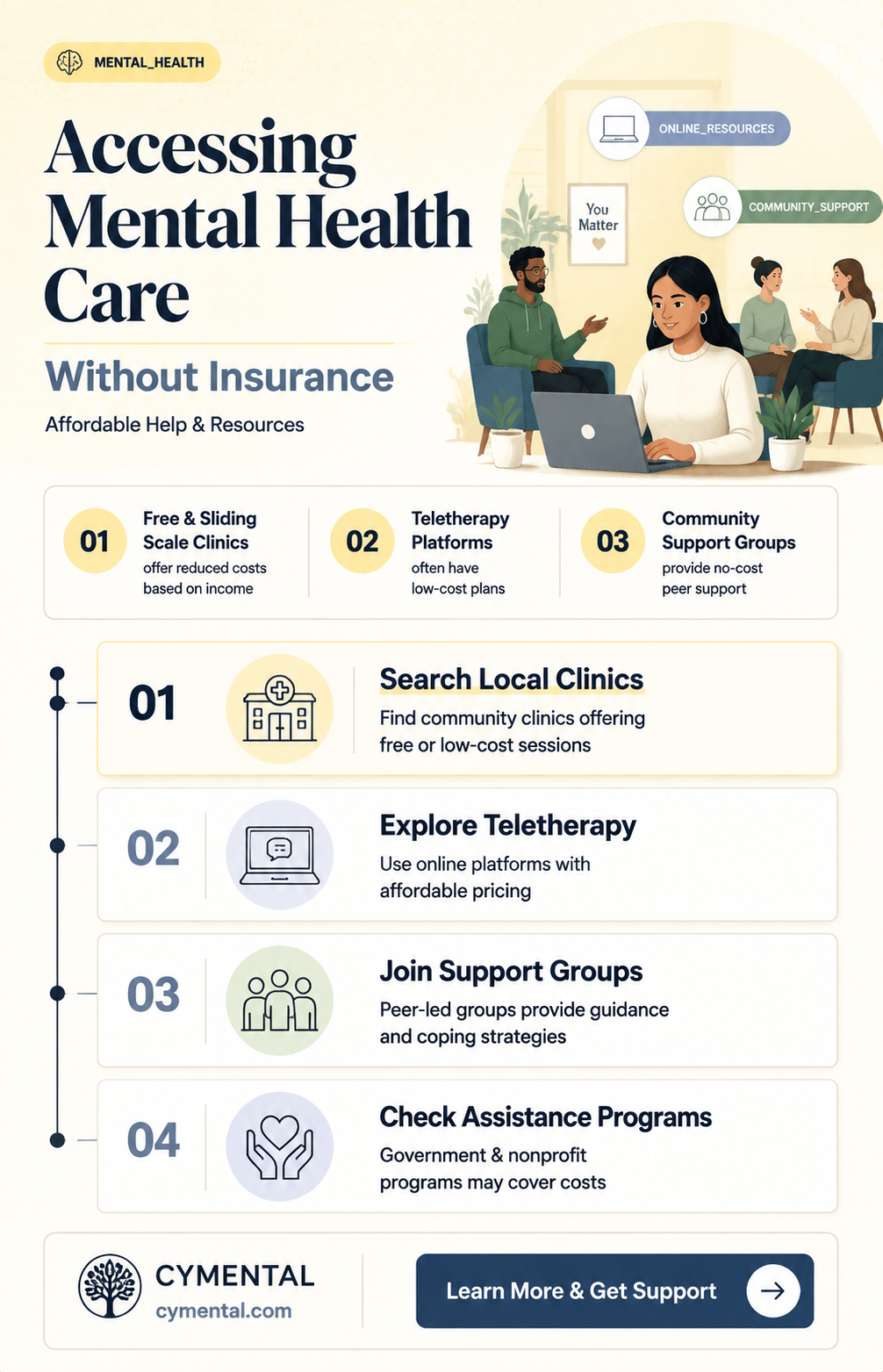
Accessing mental health care without insurance can be challenging, but it’s not impossible. Many community health centers, nonprofit organizations, and government programs offer low-cost or sliding-scale therapy and counseling services based on income. Online platforms and telehealth services also provide affordable options, often with subscription models or pay-as-you-go plans. Additionally, universities with psychology or counseling programs may offer reduced-fee sessions with graduate students under supervision. Support groups, hotlines, and free resources like apps or self-help materials can also provide immediate assistance. While navigating these options requires research and persistence, there are pathways to mental health support even without insurance coverage.
| Characteristics | Values |
|---|---|
| Availability of Free/Low-Cost Clinics | Many community health centers offer sliding-scale fees based on income. |
| Government-Funded Programs | Programs like Medicaid, SAMHSA, and local health departments provide assistance. |
| Non-Profit Organizations | Organizations like NAMI, Mental Health America, and Open Path Collective offer resources. |
| Telehealth Services | Platforms like BetterHelp, Talkspace, and 7 Cups provide affordable or free options. |
| Support Groups | Free peer-led groups (e.g., AA, NA, DBSA) are widely available. |
| University Training Clinics | Psychology and counseling programs often offer low-cost therapy sessions. |
| Employee Assistance Programs (EAPs) | Some employers provide free mental health resources to employees. |
| Online Resources | Free apps (e.g., Calm, Headspace) and websites offer self-help tools. |
| Faith-Based Organizations | Churches, mosques, and temples may offer counseling or support groups. |
| State-Specific Programs | Some states have mental health initiatives for uninsured residents. |
| Crisis Hotlines | Free 24/7 hotlines like 988 (Suicide & Crisis Lifeline) are available. |
| Sliding-Scale Therapists | Some private therapists offer reduced rates for uninsured individuals. |
| Pharmaceutical Assistance Programs | Programs like RxAssist help with medication costs for low-income individuals. |
| Local Community Resources | Libraries, schools, and community centers may host free mental health events. |
| Crowdfunding | Platforms like GoFundMe can help raise funds for mental health treatment. |
Explore related products


What You'll Learn
- Community Mental Health Centers: Low-cost or free services based on income, offering therapy and support
- Sliding Scale Therapists: Providers adjust fees based on financial need, making care affordable
- Online Therapy Platforms: Affordable or subscription-based options for virtual counseling sessions
- Nonprofit Organizations: Free or low-cost mental health resources and support groups
- University Training Clinics: Graduate students provide therapy under supervision at reduced rates

Community Mental Health Centers: Low-cost or free services based on income, offering therapy and support
Access to mental health care is a critical need, yet the cost barrier often leaves many without support. Community Mental Health Centers (CMHCs) emerge as a vital solution, offering low-cost or free services based on income. These centers are designed to bridge the gap for individuals who lack insurance or face financial constraints, ensuring that therapy and support are not luxuries but accessible necessities.
Consider the structure of CMHCs: they operate on a sliding fee scale, adjusting costs according to income level. For instance, a single adult earning below the federal poverty line might pay as little as $10 per session, while someone with a moderate income could be charged $50–$75. This model ensures affordability without compromising the quality of care. Services typically include individual therapy, group counseling, crisis intervention, and medication management, often provided by licensed professionals or supervised trainees.
One practical tip for locating these centers is to use the Substance Abuse and Mental Health Services Administration (SAMHSA) Treatment Locator tool. Simply enter your zip code, and it will list nearby CMHCs along with contact information. When reaching out, be prepared to provide proof of income, such as pay stubs or tax returns, to determine your eligibility for reduced fees. Additionally, inquire about wait times, as demand can be high, and ask if they offer telehealth options for added convenience.
A comparative analysis reveals that CMHCs often provide more holistic care than private practices. While private therapists may focus solely on individual sessions, CMHCs integrate services like case management, peer support, and community resources. This comprehensive approach addresses not just mental health but also social determinants like housing and employment, which are critical for long-term well-being. For example, a CMHC might connect a client with affordable housing programs or job training, fostering stability alongside emotional healing.
In conclusion, Community Mental Health Centers are a cornerstone for those seeking mental health support without insurance. Their income-based pricing, diverse services, and community-focused approach make them an invaluable resource. By leveraging tools like SAMHSA’s locator and understanding their offerings, individuals can access the care they need without financial strain. In a system where cost often dictates access, CMHCs stand as a testament to the belief that mental health care should be a right, not a privilege.
Supporting Friends Through Mental Health Struggles: Compassionate Steps to Take
You may want to see also
Explore related products


Sliding Scale Therapists: Providers adjust fees based on financial need, making care affordable
For those without insurance, the cost of mental health care can be a significant barrier. Sliding scale therapists offer a practical solution by adjusting fees based on income and financial need, ensuring that therapy remains accessible to a broader population. This model operates on the principle of fairness, where individuals pay what they can afford, rather than a fixed rate that may be out of reach. For example, a single parent earning minimum wage might pay $30 per session, while a professional with a higher income could pay $120 for the same service. This flexibility bridges the gap between financial constraints and the need for mental health support.
To find a sliding scale therapist, start by researching local mental health clinics, community health centers, or non-profit organizations that often adopt this payment model. Websites like Open Path Collective and the Good Therapy directory specifically list therapists who offer sliding scale fees. When contacting a provider, be prepared to discuss your financial situation openly, as this transparency is essential for determining an appropriate fee. Some therapists may require proof of income, such as recent pay stubs or tax returns, to ensure fairness in the fee adjustment process.
One of the key advantages of sliding scale therapy is its inclusivity. It removes the stigma of affordability by acknowledging that financial circumstances vary widely. For instance, college students, freelancers, or individuals between jobs can access therapy without the added stress of exorbitant costs. However, it’s important to note that sliding scale slots are often limited, as therapists must balance these reduced fees with their own financial sustainability. Patience and persistence may be required to find an available provider.
While sliding scale therapy is a valuable resource, it’s not without challenges. Therapists offering these services often face financial strain themselves, as reduced fees can limit their income. Clients should approach this arrangement with respect and honesty, ensuring they provide accurate financial information. Additionally, sliding scale therapy may not cover specialized treatments or long-term care, so it’s crucial to clarify the scope of services during the initial consultation. Despite these limitations, this model remains a lifeline for many, proving that mental health care can be both compassionate and financially feasible.
Seeking Support: Exploring Resources to Help Navigate Life's Challenges
You may want to see also
Explore related products





Online Therapy Platforms: Affordable or subscription-based options for virtual counseling sessions
Online therapy platforms have emerged as a lifeline for those seeking mental health support without insurance, offering both affordability and flexibility. These platforms typically operate on subscription-based models, ranging from $60 to $90 per week, which often includes unlimited messaging and one live session. For context, traditional in-person therapy can cost $100 to $200 per session, making online options a more budget-friendly alternative. Many platforms, like BetterHelp and Talkspace, also offer financial aid or sliding scale fees for those with limited income, ensuring accessibility for a broader audience.
One of the key advantages of subscription-based online therapy is its convenience. Users can access licensed therapists from the comfort of their homes, eliminating travel time and reducing barriers like transportation or childcare. Platforms often match individuals with therapists based on their specific needs, whether it’s anxiety, depression, or relationship issues. For instance, Pride Counseling specializes in LGBTQ+ concerns, while Teen Counseling caters to adolescents aged 13–19. This tailored approach ensures that users receive relevant and effective support.
However, it’s essential to evaluate the quality of care provided by these platforms. While many employ licensed professionals, the level of training and experience can vary. Users should research therapist credentials and read reviews before committing. Additionally, online therapy may not be suitable for severe mental health conditions, such as acute psychosis or suicidal ideation, which require in-person intervention. Always assess your needs and consult with a healthcare provider if you’re unsure.
For those on a tight budget, free or low-cost alternatives exist. Apps like 7 Cups offer peer support and limited access to therapists for as little as $150 per month. Nonprofit organizations, such as Open Path Collective, provide sessions with licensed therapists for $30–$60, depending on income. These options, while not as comprehensive as subscription-based platforms, can still offer valuable support for mild to moderate mental health concerns.
In conclusion, online therapy platforms provide a viable and affordable solution for individuals without insurance. By understanding the cost structures, evaluating therapist qualifications, and exploring free alternatives, users can find a service that fits their needs and budget. While not a one-size-fits-all solution, these platforms democratize access to mental health care, making it more attainable for those who might otherwise go without.
Supporting Mental Health: Effective Ways to Help a Loved One in Need
You may want to see also
Explore related products


Nonprofit Organizations: Free or low-cost mental health resources and support groups
Nonprofit organizations often fill critical gaps in mental health care, offering free or low-cost services to those without insurance. These groups operate on donations, grants, and volunteer efforts, making their resources accessible to a broader audience. For instance, the National Alliance on Mental Illness (NAMI) provides free support groups, education programs, and helplines for individuals and families affected by mental illness. Similarly, the Substance Abuse and Mental Health Services Administration (SAMHSA) offers a free, confidential helpline (1-800-662-HELP) that connects callers to treatment centers and support services. These organizations demonstrate how community-driven initiatives can provide vital mental health support without the barrier of insurance.
One practical way to access these resources is by researching local nonprofits in your area. Many cities have community mental health centers or organizations like the Mental Health America (MHA) affiliates, which offer sliding-scale therapy, support groups, and workshops. For example, some MHA chapters provide free peer-led support groups for conditions like depression, anxiety, and bipolar disorder. Additionally, faith-based organizations often partner with mental health nonprofits to offer counseling or support groups at no cost. To find these resources, start by searching online directories like 211.org or contacting your local health department for referrals.
While nonprofit resources are invaluable, it’s important to understand their limitations. Free or low-cost services may have waitlists, limited session availability, or fewer specialized options compared to private therapy. For instance, a nonprofit might offer group therapy but not individual counseling. However, these programs often excel in fostering community and providing peer support, which can be equally therapeutic. To maximize their benefit, consider combining nonprofit resources with self-care practices like mindfulness, exercise, or journaling. This holistic approach can enhance the effectiveness of the support you receive.
For those in crisis, nonprofits like The Trevor Project (for LGBTQ+ youth) or Crisis Text Line offer immediate, free assistance. The Trevor Project provides a 24/7 lifeline (1-866-488-7386) and text/chat support, while Crisis Text Line connects users with trained counselors via text (text HOME to 741741). These services are particularly crucial for individuals without insurance who may not have access to emergency mental health care. By leveraging these resources, you can find timely support during urgent situations without financial strain.
In conclusion, nonprofit organizations are a lifeline for those seeking mental health help without insurance. From free support groups to crisis hotlines, these resources are designed to be inclusive and accessible. While they may not replace long-term therapy, they provide essential support and community connections. By actively seeking out these organizations and understanding their offerings, you can take meaningful steps toward improving your mental well-being, regardless of your financial situation.
Seeking Support: Discovering Accessible Resources for Guidance and Assistance
You may want to see also
Explore related products
![GOQOTOMO Large Electric Heating Pad for Back Pain and Cramps Relief -XL [12"x24"] - Ultra-Soft Heat Pad with Moist & Dry Heat Therapy Options - Auto Shut Off - Hot Heated Pad by-HB003](https://m.media-amazon.com/images/I/61oerP8TzHL._AC_UY218_.jpg)


University Training Clinics: Graduate students provide therapy under supervision at reduced rates
University training clinics offer a practical solution for individuals seeking mental health support without insurance. These clinics, often affiliated with psychology or counseling programs, provide therapy sessions led by graduate students under the close supervision of licensed professionals. The result? Accessible, affordable care at a fraction of the cost of private practice. For example, while a standard therapy session might range from $100 to $200, university clinics typically charge between $10 and $50 per session, making mental health care feasible for those on tight budgets.
To locate a university training clinic, start by researching institutions in your area with psychology, counseling, or social work programs. Most universities list their clinic services online, often under departments like "Psychology Training Clinic" or "Counseling Center." When contacting a clinic, inquire about their intake process, which usually involves an initial assessment to determine the best fit for your needs. Keep in mind that wait times can vary, so it’s beneficial to reach out early. Additionally, some clinics prioritize clients based on financial need, further ensuring accessibility for uninsured individuals.
One common concern is the quality of care provided by graduate students. However, supervision is rigorous and ongoing. Sessions are often recorded (with client consent) for review by supervisors, who provide feedback and ensure ethical and effective practice. This model not only benefits clients but also serves as a critical training ground for future therapists. For instance, a study published in the *Journal of Clinical Psychology* found that therapy outcomes in university clinics are comparable to those in private practice, dispelling myths about reduced efficacy.
Practical tips for maximizing your experience include being open and honest during sessions, as this fosters trust and progress. Also, don’t hesitate to ask about the supervisor’s role—understanding their involvement can alleviate any concerns. Finally, while university clinics are a great short-term solution, they may not offer long-term therapy due to student turnover. Plan ahead by exploring other low-cost options, such as community mental health centers or sliding-scale private practices, once your time at the clinic concludes.
In summary, university training clinics bridge the gap between need and affordability, offering professional-quality therapy at reduced rates. By leveraging this resource, uninsured individuals can access vital mental health support without financial strain. With a bit of research and proactive planning, these clinics can be a stepping stone to sustained well-being.
Social Workers' Role in Mental Health Support: Impact and Challenges
You may want to see also
Frequently asked questions
Yes, there are several options available for individuals without insurance to access mental health services. Many community health centers, non-profit organizations, and government-funded programs offer low-cost or sliding-scale fee structures based on income.
Affordable therapy options include seeking services from training clinics associated with universities, where sessions are conducted by graduate students under supervision, often at reduced rates. Online therapy platforms may also provide more affordable alternatives compared to traditional in-person therapy.
Yes, various free resources exist, such as support groups, hotlines, and online tools. Local community centers, churches, or non-profit organizations often host free support groups. National hotlines like the National Alliance on Mental Illness (NAMI) Helpline and the Substance Abuse and Mental Health Services Administration (SAMHSA) National Helpline offer free, confidential support and treatment referrals.
You can start by contacting your local health department, community mental health centers, or dialing 211, a nationwide service that connects individuals to local resources. Websites like Psychology Today and GoodTherapy also have searchable directories that allow filtering by location and sliding-scale fees.
Yes, telehealth services can be a viable option for uninsured individuals, as they often provide more affordable rates compared to in-person visits. Many telehealth platforms offer sliding-scale fees or subscription models that can make mental health care more accessible. Be sure to check the credentials and licensing of the providers on these platforms.