Madison Cole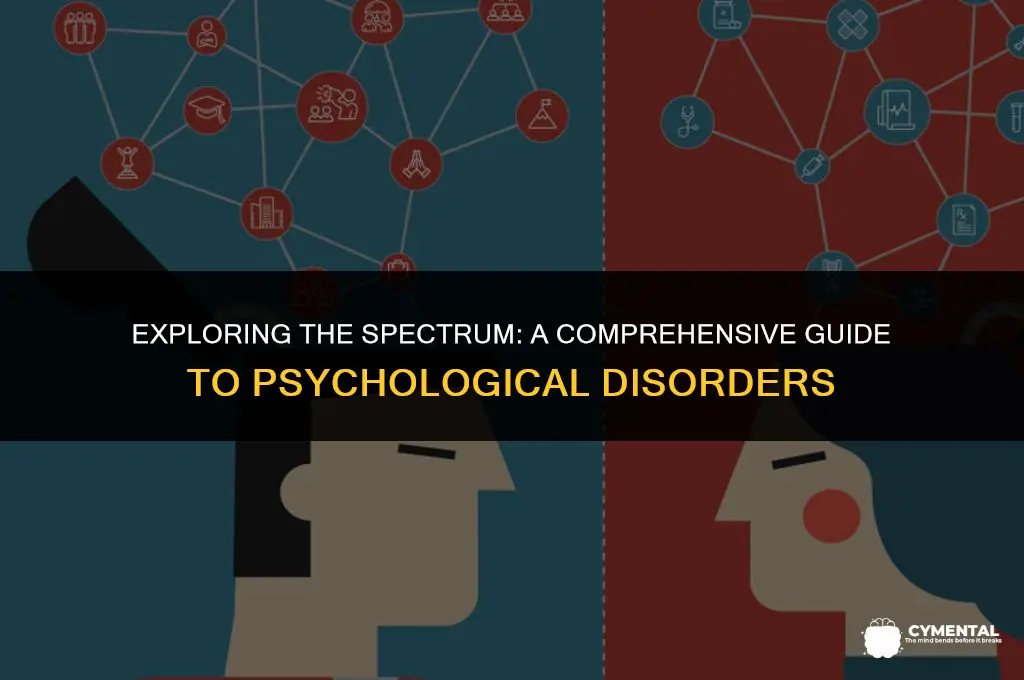
Psychological disorders, also known as mental disorders, encompass a wide range of conditions that affect an individual's thinking, feeling, and behavior. These disorders can vary greatly in terms of their symptoms, severity, and impact on daily life. As of the latest diagnostic manuals, such as the DSM-5 (Diagnostic and Statistical Manual of Mental Disorders, Fifth Edition), there are over 300 recognized psychological disorders. These include, but are not limited to, anxiety disorders, mood disorders, personality disorders, and neurodevelopmental disorders. It's important to note that the classification and understanding of psychological disorders are continually evolving as research advances and societal perspectives shift.
Explore related products


What You'll Learn
- Classification Systems: Explore the different systems used to categorize psychological disorders, such as the DSM-5 and ICD-11
- Prevalence Rates: Discuss the varying prevalence rates of psychological disorders across different populations and demographics
- Comorbidity: Examine the phenomenon of comorbidity, where individuals may experience multiple psychological disorders simultaneously
- Cultural Considerations: Analyze how cultural factors can influence the diagnosis and treatment of psychological disorders
- Emerging Disorders: Investigate newly recognized or emerging psychological disorders, and the challenges in diagnosing and treating them

Classification Systems: Explore the different systems used to categorize psychological disorders, such as the DSM-5 and ICD-11
The classification of psychological disorders is a complex and evolving field, with various systems attempting to categorize and define these conditions. Two of the most prominent classification systems are the Diagnostic and Statistical Manual of Mental Disorders (DSM-5) and the International Classification of Diseases (ICD-11).
The DSM-5, published by the American Psychiatric Association, is widely used in the United States and has a significant influence on global psychiatric practice. It organizes mental disorders into broad categories, such as anxiety disorders, mood disorders, and personality disorders, and provides detailed diagnostic criteria for each condition. The DSM-5 also includes a numerical coding system that allows for easy reference and billing purposes.
In contrast, the ICD-11, published by the World Health Organization, is used internationally and covers a broader range of health conditions, including physical and mental disorders. The ICD-11 uses a alphanumeric coding system and provides a more detailed and nuanced classification of mental disorders, with subcategories and specifiers that allow for greater precision in diagnosis.
One of the challenges in classifying psychological disorders is the subjective nature of diagnosis. Different clinicians may interpret the same symptoms differently, leading to variations in diagnosis and treatment. Additionally, the boundaries between different disorders can be blurry, and some conditions may overlap or share similar symptoms.
Another challenge is the cultural and contextual factors that can influence the expression and interpretation of symptoms. What may be considered a disorder in one culture may not be recognized as such in another. The DSM-5 and ICD-11 both attempt to address these issues by providing culturally sensitive diagnostic criteria and encouraging clinicians to consider the individual's cultural background and context.
In conclusion, the classification of psychological disorders is a complex and multifaceted process, with various systems attempting to provide a framework for understanding and diagnosing these conditions. The DSM-5 and ICD-11 are two of the most prominent classification systems, each with its own strengths and limitations. Ultimately, the goal of these systems is to provide a common language for clinicians to communicate about mental health conditions and to guide effective treatment and intervention strategies.
Unraveling the Puzzle: Understanding Your Mental Health Symptoms
You may want to see also
Explore related products


Prevalence Rates: Discuss the varying prevalence rates of psychological disorders across different populations and demographics
The prevalence rates of psychological disorders exhibit significant variability across different populations and demographics. This variation can be attributed to a multitude of factors, including but not limited to socioeconomic status, cultural background, access to healthcare, and environmental influences. For instance, studies have shown that individuals from lower socioeconomic backgrounds are more likely to experience psychological disorders due to increased stress levels, limited access to mental health services, and higher exposure to traumatic events.
Cultural background also plays a crucial role in the prevalence of psychological disorders. Different cultures may have varying norms and values that influence the expression and perception of mental health issues. For example, some cultures may stigmatize mental illness more heavily, leading to underreporting and reduced access to care. Additionally, cultural differences in communication styles and social support systems can impact the manifestation and treatment of psychological disorders.
Access to healthcare is another critical factor affecting prevalence rates. Populations with limited access to mental health services, such as rural communities or underserved urban areas, may experience higher rates of psychological disorders due to delayed or inadequate treatment. This disparity can be exacerbated by financial constraints, lack of insurance coverage, and shortages of mental health professionals.
Environmental influences, such as exposure to trauma, violence, or natural disasters, can also contribute to the prevalence of psychological disorders. For example, individuals who have experienced combat or lived through a natural disaster may be at increased risk for developing post-traumatic stress disorder (PTSD) or other anxiety-related conditions.
In conclusion, the prevalence rates of psychological disorders are influenced by a complex interplay of factors, including socioeconomic status, cultural background, access to healthcare, and environmental influences. Understanding these variations is crucial for developing targeted interventions and improving mental health outcomes across diverse populations.
Exploring the Thin Line: Delusions and Mental Health Disorders
You may want to see also
Explore related products

![Mental Health and Mental Disorders: An Encyclopedia of Conditions, Treatments, and Well-Being [3 volumes]](https://m.media-amazon.com/images/I/81Rp9ZjDRZL._AC_UY218_.jpg)


Comorbidity: Examine the phenomenon of comorbidity, where individuals may experience multiple psychological disorders simultaneously
Comorbidity in psychological disorders refers to the presence of two or more diagnosable conditions in an individual at the same time. This phenomenon is common and can significantly complicate the clinical picture, making diagnosis and treatment more challenging. For instance, a person might suffer from both depression and anxiety, or from post-traumatic stress disorder (PTSD) and substance abuse disorder. The interplay between these conditions can exacerbate symptoms and impair functioning more than either disorder would alone.
One unique aspect of comorbidity is its impact on treatment outcomes. When multiple disorders are present, it's crucial to address each condition concurrently to achieve optimal results. However, this can be difficult because the symptoms of one disorder may mask or interfere with the treatment of another. For example, treating depression in someone with both depression and anxiety might not be effective if the anxiety is not also addressed, as the persistent anxiety can undermine the therapeutic gains made in treating the depression.
Another important consideration in comorbidity is the potential for synergistic effects between disorders. This means that the combination of two or more disorders can lead to a greater severity of symptoms or a more complex clinical presentation than would be expected from the sum of the individual disorders. For instance, someone with both bipolar disorder and ADHD might experience more severe mood swings and cognitive impairments than someone with either disorder alone.
In terms of prevalence, comorbidity is quite common in psychiatric practice. Studies have shown that a significant proportion of individuals with one psychological disorder also meet criteria for at least one other disorder. This highlights the importance of comprehensive diagnostic assessments that consider the possibility of multiple conditions.
Finally, comorbidity can also have implications for prognosis and long-term outcomes. Individuals with multiple psychological disorders may face a more challenging course of treatment and may be at higher risk for relapse or poor response to therapy. Therefore, it's essential for clinicians to be aware of the potential for comorbidity and to tailor their treatment approaches accordingly to address the complex needs of these patients.
Understanding Epilepsy: Dispelling Myths About Its Classification
You may want to see also
Explore related products

$11.99




Cultural Considerations: Analyze how cultural factors can influence the diagnosis and treatment of psychological disorders
Cultural factors play a significant role in the diagnosis and treatment of psychological disorders. Different cultures have varying perceptions of mental health, which can influence how symptoms are expressed and interpreted. For instance, in some cultures, emotional distress may be more commonly expressed through physical symptoms, while in others, it may be verbalized more directly. This can lead to differences in how disorders are diagnosed, as clinicians must consider the cultural context in which symptoms are presented.
Moreover, cultural beliefs and values can affect the types of treatments that are considered acceptable and effective. In some societies, traditional healing practices may be preferred over Western-style psychotherapy or medication. Even within Western cultures, there can be significant differences in treatment approaches based on factors such as socioeconomic status, ethnicity, and religious beliefs.
Another important consideration is the impact of cultural stigma on mental health. In many cultures, there is a stigma associated with mental illness, which can prevent individuals from seeking help or disclosing their symptoms. This stigma can be particularly pronounced in cultures where mental health is seen as a sign of weakness or a lack of faith.
To provide culturally sensitive care, mental health professionals must be aware of these factors and how they can influence the diagnostic and treatment process. This includes understanding the cultural background of the individual, being aware of potential language barriers, and considering the individual's beliefs and values when developing a treatment plan.
In conclusion, cultural considerations are crucial in the diagnosis and treatment of psychological disorders. By understanding and respecting the cultural context of individuals, mental health professionals can provide more effective and compassionate care.
Unraveling the Mind of a Monster: Jeff Dahmer's Psychological Profile
You may want to see also
Explore related products


Emerging Disorders: Investigate newly recognized or emerging psychological disorders, and the challenges in diagnosing and treating them
The landscape of psychological disorders is constantly evolving, with new conditions being recognized and understood by the medical community. Emerging disorders present unique challenges in diagnosis and treatment, as they often lack established criteria and evidence-based interventions. One such example is the recently identified condition known as "digital addiction," characterized by an excessive and compulsive reliance on digital devices and online activities. This disorder has been linked to a range of negative consequences, including social isolation, sleep disturbances, and decreased productivity.
Another emerging disorder is "climate anxiety," which refers to the fear and worry associated with the threat of climate change. This condition has been observed in individuals of all ages, but is particularly prevalent among younger generations who are more likely to experience the long-term impacts of climate change. Climate anxiety can manifest as a range of symptoms, including depression, anxiety, and post-traumatic stress disorder (PTSD).
The diagnosis of emerging disorders can be challenging, as they often do not fit neatly into existing diagnostic categories. Clinicians may need to rely on a combination of clinical interviews, behavioral observations, and psychological assessments to identify these conditions. Additionally, the lack of established treatment protocols for emerging disorders can make it difficult to determine the most effective interventions.
Despite these challenges, there are a number of strategies that can be employed to address emerging disorders. One approach is to adapt existing treatments to fit the unique needs of these conditions. For example, cognitive-behavioral therapy (CBT) has been shown to be effective in treating a range of psychological disorders, and may be a useful tool in addressing emerging conditions such as digital addiction and climate anxiety. Another strategy is to develop new, innovative treatments that are specifically tailored to these disorders. This may involve incorporating technology, such as virtual reality or mobile apps, into treatment protocols.
In conclusion, emerging psychological disorders present significant challenges in diagnosis and treatment, but there are a number of strategies that can be employed to address these conditions. By staying up-to-date on the latest research and developments in the field, clinicians can better equip themselves to identify and treat these disorders, ultimately improving outcomes for their patients.
Exploring Mental Health: A Guide to Self-Assessment and Seeking Help
You may want to see also
Frequently asked questions
The exact number of psychological disorders is not fixed and can vary depending on the classification system used. As of my last update in June 2024, the Diagnostic and Statistical Manual of Mental Disorders (DSM-5) lists over 300 distinct disorders.
Some common psychological disorders include Major Depressive Disorder, Generalized Anxiety Disorder, Bipolar Disorder, Schizophrenia, and Post-Traumatic Stress Disorder (PTSD). These disorders are characterized by specific symptoms and criteria outlined in diagnostic manuals like the DSM-5.
Psychological disorders are classified using various systems, with the DSM-5 being one of the most widely used. The DSM-5 categorizes disorders into broad categories such as mood disorders, anxiety disorders, personality disorders, and psychotic disorders, among others. Each disorder is then defined by specific diagnostic criteria.
The treatment and prognosis of psychological disorders vary widely. Some disorders can be effectively managed with therapy, medication, or a combination of both, leading to significant improvement in symptoms and quality of life. However, the term "cured" is often not used in the context of mental health, as many disorders are chronic conditions that require ongoing management rather than a one-time cure.