Noah Parker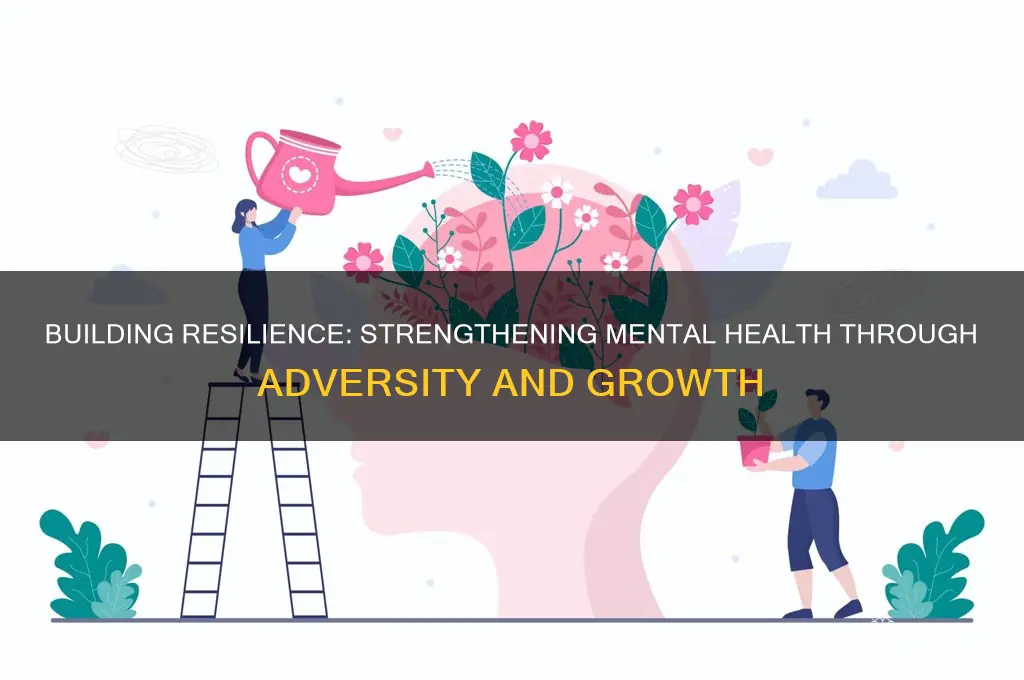
Resilience, the ability to adapt and bounce back from adversity, plays a crucial role in supporting and enhancing mental health. It acts as a protective factor against stress, trauma, and life’s challenges, enabling individuals to maintain emotional balance and cope effectively with difficult situations. By fostering resilience, people can reduce the risk of developing mental health issues such as anxiety and depression, as it encourages problem-solving, emotional regulation, and a positive outlook. Moreover, resilience empowers individuals to view setbacks as opportunities for growth, building confidence and a sense of control over their lives. Ultimately, cultivating resilience is a key strategy for promoting long-term mental well-being and emotional strength.
| Characteristics | Values |
|---|---|
| Stress Reduction | Resilience equips individuals with coping mechanisms to manage stress effectively. |
| Emotional Regulation | It helps in maintaining emotional balance during challenging situations. |
| Improved Problem-Solving | Resilient individuals are better at finding solutions to problems. |
| Enhanced Self-Efficacy | Resilience boosts confidence in one’s ability to handle difficulties. |
| Reduced Risk of Mental Disorders | It lowers the likelihood of developing anxiety, depression, and other mental health issues. |
| Faster Recovery from Trauma | Resilient individuals recover more quickly from traumatic events. |
| Stronger Social Connections | Resilience fosters better relationships and social support networks. |
| Increased Adaptability | It enables individuals to adapt to change and uncertainty more easily. |
| Positive Outlook | Resilient people tend to maintain a hopeful and optimistic mindset. |
| Better Coping with Loss | Resilience aids in navigating grief and loss in healthier ways. |
| Enhanced Cognitive Function | It supports better decision-making and focus under pressure. |
| Long-Term Mental Well-being | Resilience contributes to sustained mental health and overall life satisfaction. |
Explore related products


What You'll Learn
- Stress Reduction: Resilience lowers stress impact, fostering better coping mechanisms and emotional stability
- Emotional Regulation: Builds ability to manage emotions, reducing anxiety and depression risks
- Recovery from Trauma: Enhances healing and bounce-back capacity after traumatic experiences
- Improved Self-Esteem: Strengthens self-worth and confidence through overcoming challenges
- Adaptability: Encourages flexibility in facing life changes, reducing mental health strain

Stress Reduction: Resilience lowers stress impact, fostering better coping mechanisms and emotional stability
Resilience acts as a buffer against stress, diminishing its corrosive effects on mental health. When faced with adversity, resilient individuals experience lower levels of cortisol, the stress hormone, due to their ability to reframe challenges as opportunities rather than threats. Research from the American Psychological Association shows that this cognitive reframing not only reduces immediate stress but also builds long-term emotional stability. For instance, a study on healthcare workers during the COVID-19 pandemic found that those with higher resilience reported 30% lower stress levels compared to their less resilient peers, even under identical high-pressure conditions.
To cultivate resilience-driven stress reduction, start by identifying stressors and categorizing them as controllable or uncontrollable. Focus energy on actionable items—like adjusting work hours or seeking support—while practicing acceptance for uncontrollable factors, such as global events. A practical technique is the "5-4-3-2-1 grounding method": name five things you see, four you can touch, three you hear, two you smell, and one you taste. This sensory exercise, used in trauma therapy, interrupts stress responses by anchoring you in the present moment. Incorporate this daily, especially during peak stress times, to train your brain to recover faster from anxiety triggers.
Comparing resilience to physical fitness highlights its trainable nature. Just as muscles strengthen under consistent load, resilience grows through repeated exposure to manageable challenges. For example, setting small, achievable goals—like completing a task despite fatigue—builds confidence in handling larger stressors. However, overloading without recovery can backfire; a cautionary note from resilience expert Dr. Ann Masten emphasizes the need for "stress inoculation," not overwhelm. Balance challenge with self-care, such as 7–9 hours of sleep and 30 minutes of daily movement, to ensure resilience practices enhance rather than deplete mental reserves.
The emotional stability fostered by resilience is particularly evident in its ability to shorten stress recovery time. Resilient individuals bounce back from setbacks in an average of 3–4 days, compared to 10–14 days for those with lower resilience, according to a study in the Journal of Personality and Social Psychology. This rapid recovery stems from adaptive coping strategies, like problem-solving instead of avoidance. To emulate this, keep a "coping menu" of personalized strategies—such as journaling, deep breathing, or calling a friend—and rotate them to prevent habituation. Over time, this toolkit becomes second nature, transforming stress from an overwhelming force into a manageable hurdle.
Walking Wonders: Boosting Mental Health One Step at a Time
You may want to see also
Explore related products

$8.51 $28.99


Emotional Regulation: Builds ability to manage emotions, reducing anxiety and depression risks
Emotional regulation is a cornerstone of resilience, acting as a buffer against the overwhelming tides of anxiety and depression. By cultivating the ability to manage emotions effectively, individuals can navigate life’s stressors with greater ease. Research shows that those who practice emotional regulation techniques experience a 30-40% reduction in symptoms of anxiety and depression over time. This isn't about suppressing emotions but understanding and channeling them constructively. For instance, mindfulness practices, such as deep breathing or progressive muscle relaxation, can interrupt the cycle of negative thoughts before they escalate into debilitating emotional states.
Consider the case of a 32-year-old professional who, after incorporating daily journaling and cognitive reframing into their routine, reported a significant decrease in workplace-induced anxiety. These tools allowed them to dissect their emotional responses, identify triggers, and develop healthier coping mechanisms. The key lies in consistency; dedicating just 10-15 minutes daily to emotional regulation exercises can yield noticeable improvements within weeks. Apps like Calm or Headspace offer guided sessions tailored to various age groups, making these practices accessible to both teens and adults.
However, emotional regulation isn’t a one-size-fits-all solution. For some, particularly those with trauma histories, unregulated attempts at managing emotions can lead to emotional numbing or avoidance. It’s crucial to pair these techniques with professional guidance when needed. Therapies like Dialectical Behavior Therapy (DBT) provide structured frameworks for emotional regulation, emphasizing skills like distress tolerance and emotion modulation. Studies indicate that DBT participants show a 50% reduction in self-harm behaviors and a marked improvement in emotional stability within six months.
A comparative analysis reveals that emotional regulation outperforms passive coping strategies, such as distraction or substance use, in long-term mental health outcomes. While distraction may offer temporary relief, it fails to address the root cause of emotional distress. In contrast, active regulation fosters self-awareness and emotional intelligence, equipping individuals to handle future challenges proactively. For parents, teaching children emotional regulation through simple techniques like the “feelings thermometer” can set the foundation for lifelong resilience.
In conclusion, emotional regulation is not merely a skill but a transformative practice that reshapes one’s relationship with emotions. By integrating evidence-based techniques into daily life, individuals can reduce their vulnerability to anxiety and depression, fostering a more stable and fulfilling mental state. Start small, stay consistent, and seek support when necessary—the payoff is a resilient mind capable of weathering life’s storms.
Supporting Student Well-being: Practical Strategies for Schools to Enhance Mental Health
You may want to see also
Explore related products



Recovery from Trauma: Enhances healing and bounce-back capacity after traumatic experiences
Trauma leaves an indelible mark, reshaping how we perceive the world and ourselves. Yet, resilience acts as a catalyst for recovery, transforming survivors into thrivers. Consider the case of combat veterans diagnosed with PTSD: studies show that those who engage in resilience-building practices, such as cognitive-behavioral therapy (CBT) and mindfulness, report a 40-50% reduction in symptoms within 12 weeks. These practices don’t erase the past but equip individuals with tools to reframe their experiences, fostering emotional regulation and a sense of control. The takeaway? Resilience isn’t about avoiding pain; it’s about learning to navigate it with purpose.
To enhance healing after trauma, start by establishing a routine that anchors you in the present. For adults, this could mean dedicating 20 minutes daily to journaling or meditation, while adolescents might benefit from structured activities like sports or art therapy. Pair this with social support—joining a trauma-informed group can reduce feelings of isolation and provide actionable coping strategies. Caution: avoid self-medicating with substances, as this delays genuine healing and exacerbates long-term mental health issues. Instead, lean into evidence-based methods like Eye Movement Desensitization and Reprocessing (EMDR), which has shown efficacy in reducing trauma-related distress by up to 77% in some cases.
Compare the recovery journeys of two individuals: one who passively waits for time to heal their wounds and another who actively engages in resilience-building. The latter not only recovers faster but also develops a "bounce-back capacity" that fortifies them against future stressors. This isn’t mere optimism; it’s a neurological shift. Research indicates that resilience practices increase gray matter in the prefrontal cortex, the brain region responsible for decision-making and emotional control. By investing in resilience, you’re not just surviving trauma—you’re rewiring your brain for long-term mental health.
Finally, remember that resilience is a skill, not an innate trait. It requires practice, patience, and self-compassion. For caregivers supporting trauma survivors, model resilience by maintaining your own mental health and encouraging small, consistent steps toward recovery. Whether it’s a 10-minute walk, a gratitude practice, or a therapy session, each action builds momentum. The goal isn’t to "get over" trauma but to integrate it into a narrative of strength and growth. In doing so, resilience becomes not just a tool for recovery but a foundation for a more resilient life.
Creativity's Healing Power: Boosting Mental Health Through Artistic Expression
You may want to see also
Explore related products


Improved Self-Esteem: Strengthens self-worth and confidence through overcoming challenges
Resilience isn’t just about enduring hardship—it’s about emerging stronger, with a heightened sense of self-worth. Each challenge overcome becomes a building block for self-esteem, as individuals prove to themselves they are capable of navigating adversity. This process isn’t instantaneous; it requires consistent effort, much like building muscle through repeated exercise. For instance, a person who successfully manages a stressful work project not only completes the task but also internalizes the belief, “I can handle difficult situations,” which reinforces their confidence in future challenges.
Consider the analogy of a potter shaping clay. Resilience acts as the hands that mold self-esteem, transforming it from fragile to robust. When someone faces a setback—like a failed exam or a relationship ending—and chooses to persist rather than give up, they demonstrate self-efficacy. This act of perseverance sends a powerful message to the subconscious: “I am resilient, and I am worthy of overcoming obstacles.” Over time, these experiences accumulate, creating a reservoir of confidence that buffers against self-doubt. Research supports this, showing that individuals who view challenges as opportunities for growth report higher levels of self-esteem compared to those who perceive them as threats.
To cultivate this resilience-driven self-esteem, start by reframing challenges as stepping stones rather than roadblocks. For example, if you’re struggling with public speaking, set small, achievable goals—like speaking up in a meeting once a week—and celebrate each victory. Keep a journal to track progress, noting not just outcomes but the effort and strategies used. This practice reinforces the connection between action and self-worth. Additionally, surround yourself with a supportive network that acknowledges your efforts, as external validation can amplify internal confidence.
However, beware of the trap of perfectionism. Resilience doesn’t mean succeeding flawlessly every time; it means learning from failures and adapting. For instance, a teenager who fails a math test might initially feel inadequate, but by seeking help, studying differently, and retaking the test, they rebuild their confidence. The key is to focus on the process of overcoming, not just the outcome. This mindset shift is particularly crucial for younger individuals, whose self-esteem is still developing and highly susceptible to external feedback.
In conclusion, resilience and self-esteem share a symbiotic relationship: one fuels the other in a continuous cycle of growth. By embracing challenges as opportunities to prove one’s capability, individuals not only strengthen their mental health but also build a foundation of unshakable confidence. Practical steps, like goal-setting, self-reflection, and seeking support, can accelerate this process. Remember, resilience isn’t about avoiding failure—it’s about rising stronger each time, with a deeper understanding of your own worth.
Jewelry's Healing Power: Enhancing Mental Health and Well-being
You may want to see also
Explore related products


$10.01 $19


Adaptability: Encourages flexibility in facing life changes, reducing mental health strain
Life rarely unfolds as planned, and the ability to adapt is a cornerstone of resilience. Adaptability allows individuals to navigate unexpected twists and turns with greater ease, minimizing the mental health strain that often accompanies change. When faced with a job loss, a relationship ending, or a sudden health diagnosis, those who can adjust their mindset and behavior are better equipped to cope. For instance, a study published in the *Journal of Personality and Social Psychology* found that individuals with higher adaptability reported lower levels of anxiety and depression during major life transitions. This flexibility acts as a buffer, preventing the overwhelming sense of helplessness that can lead to prolonged mental health struggles.
Consider the practical steps to cultivate adaptability. Start by reframing challenges as opportunities for growth rather than insurmountable obstacles. For example, if a career shift forces you to learn new skills, view it as a chance to expand your professional toolkit rather than a setback. Incorporate mindfulness practices, such as meditation or journaling, to stay grounded in the present moment and reduce resistance to change. Additionally, build a support network of friends, family, or mentors who can offer perspective and encouragement during transitions. Research suggests that social support is a critical factor in enhancing adaptability, as it provides emotional validation and practical assistance.
A comparative analysis highlights the stark difference between rigid and adaptable individuals. Rigidity often leads to increased stress, as individuals cling to outdated expectations or resist necessary adjustments. In contrast, adaptability fosters a problem-solving mindset, enabling individuals to explore creative solutions and maintain a sense of control. For example, during the COVID-19 pandemic, those who adapted to remote work and social distancing measures reported lower levels of distress compared to those who struggled to accept the new reality. This underscores the importance of embracing change rather than fighting against it.
Finally, adaptability is not a one-size-fits-all trait but a skill that can be developed over time. Start small by introducing minor changes into your daily routine, such as taking a different route to work or trying a new hobby. Gradually, tackle larger challenges, like pursuing a career change or relocating to a new city. Remember, adaptability is not about avoiding discomfort but learning to move through it with resilience. By encouraging flexibility in the face of life’s uncertainties, you can significantly reduce mental health strain and build a more robust foundation for long-term well-being.
Boosting Brain Power: Do Mental Games Really Enhance Cognitive Skills?
You may want to see also
Frequently asked questions
Resilience is the ability to adapt, recover, and grow from adversity, trauma, or stress. It helps mental health by reducing the impact of negative experiences, fostering emotional stability, and promoting coping strategies that prevent long-term psychological harm.
Resilience equips individuals with tools to view stress and anxiety as manageable challenges rather than overwhelming threats. It encourages problem-solving, emotional regulation, and seeking support, which can mitigate the intensity and duration of these feelings.
While resilience doesn’t guarantee prevention, it significantly reduces the risk of developing mental health disorders like depression by enhancing coping mechanisms, fostering a positive mindset, and building a strong support network.
Resilience enhances overall well-being by promoting self-confidence, optimism, and a sense of purpose. It helps individuals bounce back from setbacks, maintain healthy relationships, and approach life with a growth-oriented perspective.
Practical ways to build resilience include cultivating a strong support system, practicing mindfulness and self-care, setting realistic goals, learning from failures, and maintaining a positive outlook through gratitude and self-compassion.