Madison Cole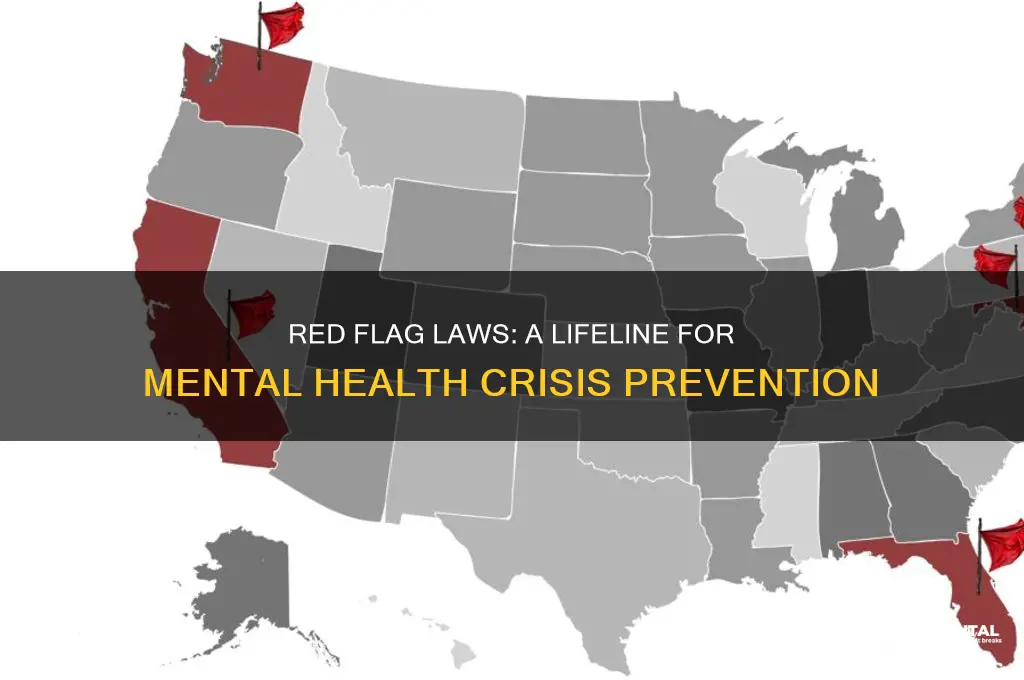
Red flag laws, also known as extreme risk protection orders, are a critical tool in addressing mental health crises by allowing authorities to temporarily remove firearms from individuals who exhibit dangerous behaviors or express intent to harm themselves or others. These laws empower family members, law enforcement, or healthcare professionals to petition a court for intervention, providing a proactive approach to preventing tragedies such as suicides or mass shootings. By focusing on early intervention, red flag laws not only reduce access to lethal means during moments of crisis but also encourage individuals to seek mental health support without fear of stigmatization. This dual focus on safety and mental health care underscores the potential of red flag laws to save lives while fostering a more compassionate and preventive approach to mental health challenges.
| Characteristics | Values |
|---|---|
| Early Intervention | Allows for timely removal of firearms from individuals at risk of self-harm or violence. |
| Suicide Prevention | Reduces access to lethal means, significantly lowering suicide rates. |
| Community Safety | Protects communities by addressing potential threats before they escalate. |
| Mental Health Support | Encourages individuals to seek mental health treatment without fear of immediate punishment. |
| Legal Framework | Provides a structured process for law enforcement and families to act proactively. |
| Evidence-Based Approach | Studies show states with red flag laws have lower firearm suicide rates. |
| Temporary Measure | Firearms are typically returned once the individual is no longer deemed a risk. |
| Due Process | Requires a court hearing to ensure individual rights are protected. |
| Public Awareness | Raises awareness about mental health issues and available resources. |
| Reduction in Mass Shootings | Potentially prevents mass shootings by addressing individuals exhibiting red flags early. |
Explore related products





What You'll Learn
- Early intervention for individuals at risk of self-harm or harm to others
- Reducing access to firearms during mental health crises
- Encouraging community reporting of concerning behaviors for timely support
- Balancing safety with protecting individuals' rights and dignity
- Integrating mental health resources with legal frameworks for holistic care

Early intervention for individuals at risk of self-harm or harm to others
Red flag laws, also known as extreme risk protection orders (ERPOs), serve as a critical tool for early intervention by temporarily removing firearms from individuals exhibiting dangerous behaviors. This immediate action can disrupt the escalation of crises, particularly in cases where self-harm or harm to others is imminent. For instance, in states like California and New York, ERPOs have been used to prevent potential tragedies by addressing threats before they materialize. The key lies in the law’s ability to act swiftly, often based on reports from family members, law enforcement, or mental health professionals, who recognize warning signs such as suicidal ideation, violent threats, or erratic behavior.
Consider the case of a 22-year-old college student in Florida who posted disturbing messages online about harming himself and others. His roommate, alarmed by the severity of the threats, filed an ERPO petition. Within days, law enforcement intervened, temporarily confiscating the student’s firearms and connecting him with mental health resources. This example underscores the importance of a multi-faceted approach: removal of lethal means coupled with immediate access to care. Studies show that reducing access to firearms during a crisis can lower suicide rates by up to 15%, as firearms account for over half of all suicide deaths in the U.S.
However, early intervention under red flag laws is not without challenges. Critics argue that the process can stigmatize individuals with mental health issues or infringe on Second Amendment rights. To mitigate these concerns, jurisdictions must ensure due process, including clear criteria for filing petitions, judicial oversight, and timely hearings. Additionally, interventions should prioritize mental health support rather than solely punitive measures. For example, Maryland’s ERPO law requires a clinical assessment within 72 hours of firearm removal, ensuring individuals receive treatment tailored to their needs.
Practical implementation requires collaboration between law enforcement, healthcare providers, and community organizations. Training programs for identifying risk factors—such as sudden changes in behavior, substance abuse, or withdrawal from social activities—are essential. For families, knowing how to file an ERPO petition and understanding the resources available can make a life-saving difference. A step-by-step guide might include: 1) Documenting concerning behaviors, 2) Contacting local law enforcement or legal aid, 3) Attending a court hearing, and 4) Ensuring follow-up care for the individual.
Ultimately, red flag laws are most effective when viewed as a bridge to long-term solutions. Early intervention must extend beyond temporary firearm removal to include sustained mental health treatment, crisis counseling, and social support systems. By addressing the root causes of distress, these laws can transform moments of crisis into opportunities for healing, reducing the risk of self-harm or violence and fostering safer communities.
Knitting for Calm: How Crafting Boosts Mental Health and Wellness
You may want to see also
Explore related products





Reducing access to firearms during mental health crises
In moments of acute mental health crisis, the presence of firearms can escalate risks exponentially. Red flag laws, formally known as extreme risk protection orders (ERPOs), provide a legal mechanism to temporarily remove firearms from individuals deemed at high risk of harming themselves or others. This intervention is particularly critical during episodes of severe depression, psychosis, or suicidal ideation, where impulsive decisions can have irreversible consequences. For instance, studies show that access to firearms increases the likelihood of suicide by 400%, making timely firearm removal a life-saving measure.
Implementing red flag laws requires a structured process to balance safety and rights. Typically, family members, law enforcement, or healthcare providers petition a court to issue an ERPO. The petitioner must provide evidence of an immediate threat, such as recent threats of self-harm or violent behavior. If granted, the order allows authorities to confiscate firearms and prohibit the individual from purchasing new ones for a specified period, often 1–12 months. This process is not punitive but preventive, aiming to create a window for crisis intervention and mental health treatment.
Critics argue that red flag laws infringe on Second Amendment rights, but their design includes safeguards to prevent abuse. Courts require clear and convincing evidence of danger, and individuals can contest the order in a hearing. Additionally, the temporary nature of ERPOs ensures that firearm access is restored once the crisis subsides. States like California and Florida have reported successful outcomes, with hundreds of lives potentially saved through timely interventions. For example, in Florida, over 5,000 ERPOs were issued between 2018 and 2022, correlating with a reduction in firearm-related suicides.
Practical considerations are essential for maximizing the effectiveness of red flag laws. Public awareness campaigns can educate families and communities about the signs of mental health crises and the steps to initiate an ERPO. Healthcare providers should receive training to identify at-risk individuals and collaborate with legal systems. Pairing firearm removal with mandatory mental health evaluations and treatment referrals can address the root causes of the crisis. For instance, connecting individuals to crisis hotlines (e.g., 988 Suicide & Crisis Lifeline) or outpatient therapy programs can provide immediate support.
Ultimately, red flag laws serve as a vital tool in the intersection of mental health and public safety. By reducing access to firearms during crises, they create a critical buffer zone for intervention and recovery. While not a standalone solution, they complement broader efforts to improve mental health care and reduce gun violence. As more states adopt and refine these laws, their potential to save lives and foster safer communities becomes increasingly evident.
Supporting Through Crisis: Essential Steps to Aid Mental Health Emergencies
You may want to see also
Explore related products





Encouraging community reporting of concerning behaviors for timely support
Red flag laws empower communities to intervene before a mental health crisis escalates into tragedy. By establishing a legal framework for reporting concerning behaviors, these laws shift the focus from reaction to prevention. This proactive approach leverages the collective awareness of neighbors, friends, and family members, who are often the first to notice subtle changes in behavior that could signal a person is struggling.
Early intervention is crucial in mental health. Studies show that timely access to treatment significantly improves outcomes for individuals experiencing mental illness. Red flag laws, by encouraging community reporting, create a vital window of opportunity for intervention before a person reaches a breaking point.
Imagine a scenario where a coworker notices a colleague becoming increasingly withdrawn, expressing hopelessness, and neglecting their appearance. Under a red flag law, this coworker could file a report with law enforcement, triggering a process that could lead to a temporary restriction on the individual's access to firearms and a mandatory mental health evaluation. This intervention, while potentially life-altering, could be the difference between a tragic outcome and a path towards recovery.
It's important to acknowledge potential concerns about misuse or stigmatization. Clear guidelines and safeguards are essential to ensure reports are made in good faith and based on observable behaviors, not prejudice or personal grudges. Training for law enforcement and mental health professionals is crucial to handle these situations with sensitivity and respect for individual rights.
Encouraging community reporting requires a cultural shift. We need to foster an environment where expressing concern for someone's well-being is seen as an act of compassion, not intrusion. Public awareness campaigns can play a vital role in educating people about the signs of mental distress and the resources available for both reporting and seeking help. By working together, communities can become a vital safety net, ensuring that those struggling with mental health issues receive the support they need before it's too late.
Unwind and Thrive: How Hobbies Boost Mental Health Naturally
You may want to see also
Explore related products


Balancing safety with protecting individuals' rights and dignity
Red flag laws, also known as extreme risk protection orders (ERPOs), aim to prevent gun violence by temporarily removing firearms from individuals deemed a threat to themselves or others. While these laws prioritize public safety, their implementation must navigate the delicate balance between protecting communities and upholding individual rights and dignity, especially in the context of mental health.
Striking this balance requires a nuanced approach. Firstly, clear and specific criteria for issuing ERPOs are essential. Vague language or overbroad definitions of "risk" can lead to misuse and stigmatization of individuals with mental health conditions. Laws should focus on observable behaviors and specific threats, not diagnoses alone. For instance, a history of violent threats or recent attempts at self-harm should carry more weight than a general diagnosis of depression.
Secondly, due process safeguards are crucial. Individuals subject to ERPOs deserve a fair hearing, legal representation, and the right to appeal. This ensures that their rights are not arbitrarily infringed upon and fosters trust in the system. Additionally, time limits on firearm removal are necessary. ERPOs should be temporary measures, with regular reviews to assess the individual's ongoing risk. This prevents indefinite deprivation of rights and encourages individuals to seek help without fear of permanent consequences.
Furthermore, coupling ERPOs with mental health resources is vital. Simply removing firearms without addressing underlying mental health issues is a missed opportunity. Connecting individuals with crisis intervention services, therapy, and support groups can help mitigate risk factors and promote long-term well-being. This approach not only protects the individual but also contributes to a safer community.
Finally, public education and awareness are key. Combating stigma surrounding mental health and gun violence is essential for the successful implementation of red flag laws. Educating the public about the purpose and process of ERPOs can encourage responsible reporting and reduce fear-mongering. By fostering a culture of understanding and support, we can create a system that prioritizes both safety and individual dignity.
Weed and Mental Health: Exploring Potential Benefits and Risks
You may want to see also
Explore related products


Integrating mental health resources with legal frameworks for holistic care
Red flag laws, also known as extreme risk protection orders (ERPOs), allow temporary removal of firearms from individuals deemed a threat to themselves or others. While their primary focus is public safety, their intersection with mental health resources presents a unique opportunity for holistic care. By integrating these legal frameworks with mental health services, we can address the root causes of crises rather than solely reacting to their consequences.
For instance, when a red flag law is invoked, it triggers a legal process that temporarily restricts firearm access. This critical intervention buys time for mental health professionals to step in. Imagine a scenario where a concerned family member petitions for an ERPO for a loved one exhibiting suicidal ideation. The court's involvement not only removes immediate access to a lethal means but also mandates a mental health evaluation. This evaluation becomes the gateway to connecting the individual with therapy, medication management, and support groups, potentially preventing a tragedy and fostering long-term recovery.
However, successful integration requires careful consideration. Firstly, establishing clear communication channels between legal entities and mental health providers is paramount. This ensures seamless information sharing while respecting patient confidentiality. Secondly, training legal professionals to recognize mental health red flags and understand available resources is crucial. Judges and law enforcement officers need to be equipped to connect individuals with appropriate services, not just issue orders. Lastly, funding and accessibility of mental health services must be addressed. The effectiveness of this integrated approach hinges on the availability of timely and affordable treatment options.
Without these safeguards, the system risks becoming punitive rather than supportive. Individuals flagged under red flag laws should not face stigma or barriers to accessing care. Instead, the legal framework should serve as a bridge to comprehensive mental health support, promoting healing and preventing future crises.
By weaving mental health resources into the fabric of red flag laws, we move beyond mere crisis intervention. This integrated approach acknowledges the complex interplay between mental health and public safety, offering a more nuanced and effective solution. It's not just about taking away guns; it's about providing the tools and support individuals need to rebuild their lives and thrive.
Nature's Healing Power: Boosting Mental Health Through Outdoor Activities
You may want to see also
Frequently asked questions
A red flag law, also known as an extreme risk protection order (ERPO), allows law enforcement or family members to petition a court to temporarily remove firearms from individuals who exhibit dangerous behaviors or are at risk of harming themselves or others. It directly addresses mental health by providing a legal mechanism to intervene before a crisis escalates, reducing the risk of suicide or violence.
The red flag law helps prevent suicides by temporarily removing access to firearms, which are the most lethal means of self-harm. Studies show that access to firearms significantly increases the risk of suicide. By addressing this risk factor, the law provides an opportunity for individuals in crisis to receive mental health support and treatment.
No, the red flag law does not mandate involuntary mental health treatment. Its primary focus is on firearm removal to reduce immediate risk. However, the process often involves connecting individuals with mental health resources and support, encouraging voluntary treatment to address underlying issues.
Research suggests that red flag laws are effective in reducing firearm-related suicides and violence, which are often linked to mental health crises. By providing a proactive intervention, these laws create a window for individuals to receive help, potentially improving long-term mental health outcomes and saving lives.