Madison Cole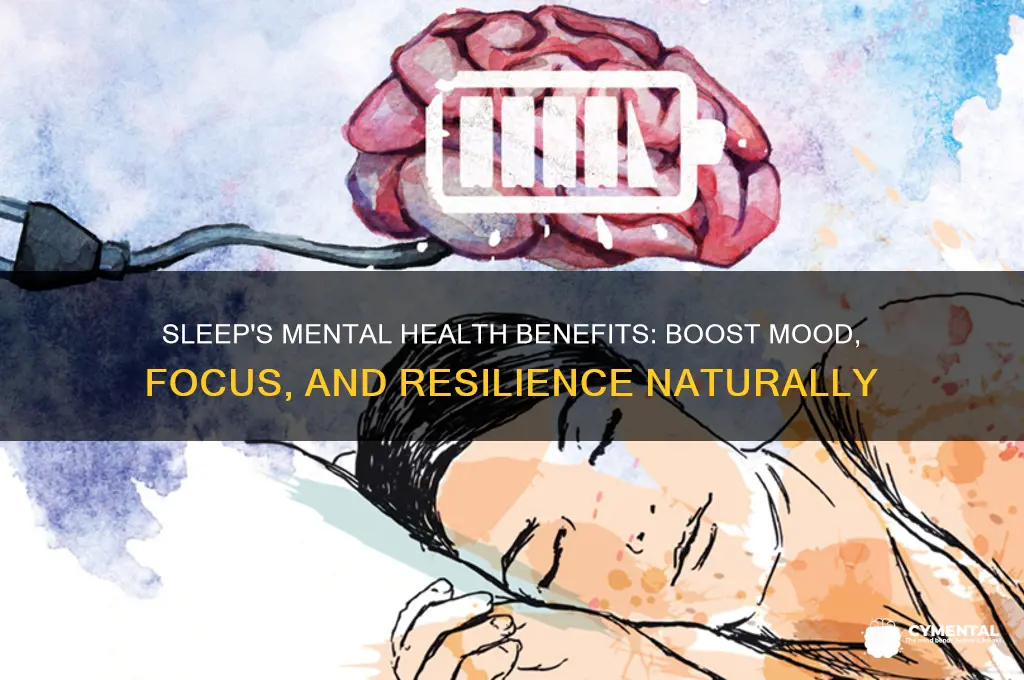
Sleep plays a crucial role in maintaining and enhancing mental health, serving as a foundational pillar for emotional well-being, cognitive function, and stress resilience. During sleep, the brain processes emotions, consolidates memories, and clears out toxins, which helps regulate mood and reduces the risk of anxiety and depression. Adequate rest also improves focus, creativity, and problem-solving abilities, enabling better decision-making and productivity. Furthermore, sleep acts as a buffer against stress by regulating the body’s stress hormone levels, fostering emotional stability, and preventing burnout. Prioritizing quality sleep is therefore essential for nurturing a healthy mind and fostering overall mental resilience.
| Characteristics | Values |
|---|---|
| Improves Mood | Adequate sleep helps regulate emotions, reducing irritability and promoting a positive outlook. Studies show that people who get enough sleep are less likely to experience mood swings. |
| Enhances Memory Consolidation | Sleep plays a crucial role in memory consolidation, helping the brain process and store new information. Deep sleep stages, particularly REM sleep, are essential for this process. |
| Reduces Stress and Anxiety | Quality sleep lowers cortisol levels (the stress hormone) and helps regulate the body’s stress response. Chronic sleep deprivation is linked to increased anxiety and stress. |
| Boosts Cognitive Function | Sleep improves attention, problem-solving, and decision-making abilities. Lack of sleep impairs cognitive performance, similar to the effects of alcohol intoxication. |
| Supports Emotional Resilience | Sleep helps individuals cope with emotional challenges by regulating the amygdala, the brain’s emotional center. Well-rested individuals handle emotional situations more effectively. |
| Prevents Mental Health Disorders | Consistent sleep patterns reduce the risk of developing mental health issues such as depression, anxiety disorders, and bipolar disorder. Sleep disturbances are often early indicators of these conditions. |
| Enhances Creativity | REM sleep, associated with dreaming, fosters creative thinking and problem-solving. Adequate sleep allows the brain to make novel connections and insights. |
| Improves Focus and Productivity | Quality sleep enhances concentration and productivity by ensuring the brain functions optimally. Sleep-deprived individuals experience decreased attention span and performance. |
| Regulates Neurotransmitters | Sleep helps balance neurotransmitters like serotonin and dopamine, which are critical for mood regulation and mental well-being. |
| Supports Brain Detoxification | During sleep, the brain clears out toxins and waste products through the glymphatic system, maintaining brain health and cognitive function. |
Explore related products





What You'll Learn
- Stress Reduction: Sleep lowers cortisol levels, reducing stress and promoting relaxation
- Mood Enhancement: Adequate sleep stabilizes emotions, reducing irritability and anxiety
- Memory Consolidation: Sleep strengthens memory and learning by processing information overnight
- Cognitive Function: Rest improves focus, problem-solving, and decision-making abilities
- Emotional Resilience: Quality sleep helps regulate emotions and cope with challenges

Stress Reduction: Sleep lowers cortisol levels, reducing stress and promoting relaxation
Cortisol, often dubbed the "stress hormone," surges in response to pressure, anxiety, or fear, triggering the body’s fight-or-flight response. While essential in acute situations, chronically elevated cortisol levels wreak havoc on mental health, contributing to irritability, anxiety, and even depression. Sleep acts as a natural regulator, suppressing cortisol production during restorative stages like deep sleep. Research shows that adults who consistently achieve 7–9 hours of sleep per night exhibit cortisol levels up to 20% lower than those who sleep less than 6 hours. This hormonal balance is critical for maintaining emotional equilibrium and resilience in the face of daily stressors.
To harness sleep’s cortisol-lowering benefits, prioritize a consistent sleep schedule. Go to bed and wake up at the same time daily, even on weekends, to reinforce your body’s circadian rhythm. Incorporate a relaxing pre-sleep routine—such as reading, meditation, or gentle stretching—to signal to your brain that it’s time to wind down. Avoid screens at least an hour before bed, as blue light suppresses melatonin, a hormone that counteracts cortisol. For those struggling with stress-induced insomnia, consider magnesium glycinate (400 mg before bed), a mineral shown to reduce cortisol and improve sleep quality in adults over 18.
Compare the effects of sleep deprivation to a pressure cooker without a release valve. Just one night of poor sleep can elevate cortisol by 37%, amplifying stress and impairing decision-making. Conversely, a well-rested mind operates like a well-oiled machine, processing challenges calmly and efficiently. A study published in *Sleep Health* found that individuals who improved their sleep hygiene over 30 days reported a 40% reduction in perceived stress levels. This highlights sleep’s dual role: not only does it lower cortisol, but it also enhances the brain’s ability to cope with stressors proactively.
For maximum stress reduction, aim for 90 minutes of deep sleep per night, the stage when cortisol suppression peaks. Wearable devices like fitness trackers can monitor sleep stages, offering insights into your restorative sleep quality. If deep sleep remains elusive, consult a healthcare provider to rule out conditions like sleep apnea. Additionally, incorporate stress-reducing activities during the day—such as 20 minutes of aerobic exercise or mindfulness practices—to complement sleep’s cortisol-lowering effects. Remember, sleep isn’t a luxury; it’s a non-negotiable tool for mental fortitude.
Wellness Campaigns: Empowering College Campuses for Better Mental Health
You may want to see also
Explore related products


Mood Enhancement: Adequate sleep stabilizes emotions, reducing irritability and anxiety
Ever noticed how a bad night’s sleep turns you into a short-tempered, anxious version of yourself? That’s no coincidence. Sleep deprivation disrupts the brain’s emotional regulation center, the amygdala, making it hyperactive. Simultaneously, the prefrontal cortex, responsible for rational decision-making, gets sluggish. This imbalance amplifies negative emotions while weakening your ability to manage them. Studies show that even one night of poor sleep can increase irritability by 30% and heighten anxiety levels significantly.
To counteract this, aim for 7–9 hours of sleep per night, the sweet spot for most adults. Teens need closer to 8–10 hours, while older adults may function well on 7–8. Consistency is key—irregular sleep patterns can be just as damaging as chronic deprivation. Establish a bedtime routine that signals to your brain it’s time to wind down: dim lights, avoid screens at least an hour before bed, and incorporate calming activities like reading or meditation.
Consider this real-world example: A 2019 study published in *Nature Communications* found that participants who slept less than 6 hours a night reported 50% higher levels of irritability compared to those who slept 7–9 hours. When these sleep-deprived individuals improved their sleep hygiene—by sticking to a consistent schedule and creating a restful environment—their mood stabilized within two weeks. The takeaway? Sleep isn’t a luxury; it’s a non-negotiable tool for emotional resilience.
If you’re struggling with irritability or anxiety, track your sleep patterns for a week. Use a journal or app to note bedtime, wake time, and sleep quality. Identify disruptions—like caffeine after 2 p.m. or late-night screen time—and address them. For persistent issues, consult a healthcare professional; conditions like sleep apnea or insomnia may require targeted treatment. Remember, stabilizing your sleep isn’t just about feeling rested—it’s about reclaiming control over your emotions.
Supporting Your Adult Son: Navigating Mental Illness with Compassion and Care
You may want to see also
Explore related products


Memory Consolidation: Sleep strengthens memory and learning by processing information overnight
Ever wonder why pulling an all-nighter often leaves you foggy and forgetful the next day? Blame it on your brain’s inability to consolidate memories without sleep. During sleep, especially deep sleep, your brain replays and reorganizes information from the day, transferring it from short-term to long-term storage. This process, known as memory consolidation, is essential for retaining what you’ve learned and ensuring it’s readily accessible when needed. Without adequate sleep, this transfer process stalls, leaving you with fragmented memories and a harder time recalling details.
To maximize memory consolidation, aim for 7–9 hours of uninterrupted sleep per night, particularly if you’re studying or learning new skills. Research shows that even a single night of sleep after learning can improve retention by up to 20%. For optimal results, prioritize sleep within 24 hours of acquiring new information. For example, if you’re preparing for an exam, review your notes before bed and ensure a full night’s rest to lock in the material. Avoid caffeine or screens at least an hour before bedtime, as they can disrupt the sleep stages crucial for memory processing.
Compare this to how athletes rely on rest days to build muscle—your brain needs downtime to strengthen neural connections. During the slow-wave sleep stage, the hippocampus (responsible for temporary storage) and the neocortex (long-term storage) work together to solidify memories. Skipping sleep is like trying to save a file to a full hard drive; the information simply won’t stick. Studies on students and professionals alike confirm that consistent sleep schedules correlate with better recall and problem-solving abilities, proving that sleep isn’t just downtime—it’s active brainwork.
Here’s a practical tip: If you’re learning a new language or skill, practice in the evening and then sleep on it. Your brain will process the information overnight, making it easier to recall the next day. For older adults, who often experience sleep disruptions, maintaining a regular sleep routine becomes even more critical for memory retention. Incorporating relaxation techniques like deep breathing or meditation before bed can improve sleep quality, further enhancing memory consolidation.
In short, sleep isn’t a luxury—it’s a necessity for a sharp mind. By understanding and prioritizing the role of sleep in memory consolidation, you can transform how you learn and retain information. Treat your sleep as a tool for cognitive enhancement, and watch as your ability to remember and apply knowledge improves dramatically. After all, a well-rested brain is a high-performing one.
Counseling for Mental Health: Effective Support or Overrated Solution?
You may want to see also
Explore related products


Cognitive Function: Rest improves focus, problem-solving, and decision-making abilities
Sleep is the unsung hero of cognitive performance, sharpening focus, enhancing problem-solving, and refining decision-making abilities. During deep sleep, the brain consolidates memories and clears waste products, priming it for optimal function. Studies show that adults who consistently get 7–9 hours of sleep per night outperform their sleep-deprived counterparts on tasks requiring sustained attention and logical reasoning. Conversely, even a single night of poor sleep can impair cognitive abilities as much as a blood alcohol level of 0.10%, significantly above the legal driving limit.
To harness sleep’s cognitive benefits, prioritize a consistent sleep schedule. Go to bed and wake up at the same time daily, even on weekends. Create a pre-sleep routine that signals to your brain it’s time to wind down—dim lights, avoid screens at least an hour before bed, and engage in calming activities like reading or meditation. For those struggling with focus during the day, a 20-minute power nap can restore alertness without disrupting nighttime sleep. However, avoid napping after 3 p.m. to prevent interference with your circadian rhythm.
Problem-solving thrives when the brain is well-rested. Sleep enhances the brain’s ability to connect disparate ideas, a process known as "remote associative memory." For instance, a study published in *Nature* found that participants who slept between study sessions were twice as likely to solve insight-based puzzles compared to those who stayed awake. To maximize this benefit, tackle complex tasks in the morning when your brain is freshest, and revisit challenging problems after a good night’s sleep.
Decision-making suffers dramatically under sleep deprivation. The prefrontal cortex, responsible for rational thinking, is particularly vulnerable to sleep loss, while the amygdala, which drives emotional responses, becomes hyperactive. This imbalance leads to impulsive decisions and heightened stress reactivity. A practical tip: avoid making important decisions when tired. If unavoidable, take a brief break to rest or consult someone with a fresh perspective.
Incorporating these strategies into your routine can transform sleep from a passive necessity into an active tool for cognitive enhancement. By optimizing rest, you’re not just recharging—you’re upgrading your brain’s ability to focus, solve problems, and make decisions with clarity and precision.
Exercise Boosts Elderly Mental Health: Benefits and Strategies for Wellbeing
You may want to see also
Explore related products


Emotional Resilience: Quality sleep helps regulate emotions and cope with challenges
Sleep isn't just a luxury; it's a cornerstone of emotional resilience. Research shows that during deep sleep, the brain processes and consolidates emotional memories, effectively "cooling down" intense experiences. This nocturnal emotional regulation is why a good night's rest can make the difference between reacting to a stressful situation with calmness versus lashing out. For instance, studies indicate that individuals who get 7-9 hours of sleep are better equipped to manage frustration and anxiety compared to those who consistently sleep less.
Consider this practical scenario: Imagine two colleagues facing the same high-pressure deadline. One has been averaging 6 hours of sleep, while the other consistently gets 8. The well-rested individual is more likely to approach the challenge with clarity, adaptability, and a problem-solving mindset. The sleep-deprived colleague, on the other hand, may become irritable, overwhelmed, and prone to making impulsive decisions. This example underscores how quality sleep acts as a buffer against emotional volatility, enabling better coping mechanisms.
To harness sleep’s emotional benefits, focus on consistency and environment. Aim for a regular sleep schedule, even on weekends, to reinforce your body’s internal clock. Create a sleep-conducive environment by keeping the room cool (60-67°F), dark, and quiet. Limit exposure to screens at least an hour before bed, as blue light disrupts melatonin production, a hormone crucial for sleep. Incorporating relaxation techniques, such as deep breathing or progressive muscle relaxation, can further enhance sleep quality and emotional resilience.
A cautionary note: While improving sleep can significantly bolster emotional resilience, it’s not a standalone solution for severe mental health issues. Chronic insomnia or persistent emotional struggles may require professional intervention. However, for most individuals, prioritizing sleep is a practical, accessible way to strengthen emotional fortitude. Think of it as building a mental shield—one that helps you face life’s challenges with greater composure and clarity.
In conclusion, quality sleep is a powerful tool for emotional resilience. By regulating emotions, enhancing problem-solving abilities, and reducing reactivity, it equips you to navigate life’s ups and downs with grace. Start tonight: commit to a sleep routine that prioritizes duration, consistency, and environment. Your emotional well-being will thank you.
Smiling's Surprising Power: Boosting Mental Health and Well-Being Naturally
You may want to see also
Frequently asked questions
Sleep plays a crucial role in mental health by regulating emotions, reducing stress, and supporting cognitive functions. Lack of sleep can lead to increased anxiety, depression, and irritability.
Yes, quality sleep helps regulate neurotransmitters like serotonin, which are essential for mood stability. Adequate rest can reduce mood swings and enhance emotional resilience.
Absolutely. Sleep consolidates memories and enhances learning by strengthening neural connections. Poor sleep impairs concentration, problem-solving, and decision-making abilities.
Sleep lowers cortisol (the stress hormone) levels and allows the brain to process and recover from stressful events. Chronic sleep deprivation can exacerbate anxiety and stress responses.
Yes, deep sleep stages, such as REM sleep, are linked to enhanced creativity and the ability to solve complex problems. A well-rested mind is better equipped for innovative thinking.