Harper Lewis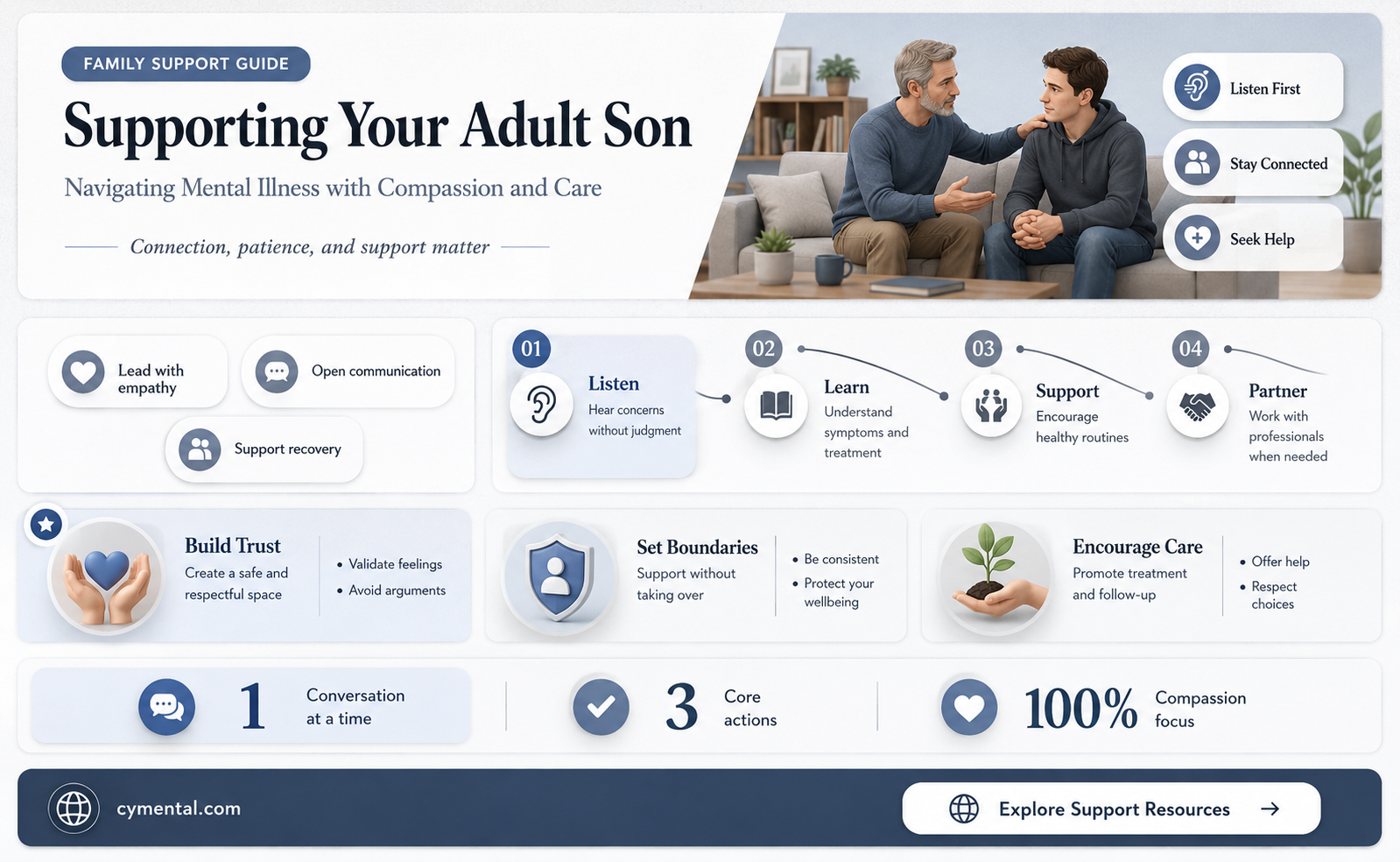
Supporting a mentally ill adult son can be emotionally challenging yet profoundly meaningful. As a parent, it’s natural to want to provide the best care, but it’s essential to approach this with patience, understanding, and a focus on their autonomy. Start by educating yourself about their specific condition to better comprehend their experiences and needs. Encourage open communication, letting them know you’re there to listen without judgment. Help them access professional resources, such as therapy or medication, while respecting their decisions and boundaries. Foster a stable and supportive home environment, but also encourage independence and self-care. Remember to prioritize your own well-being, as caregiving can be demanding, and seek support from family, friends, or support groups to navigate this journey together.
| Characteristics | Values |
|---|---|
| Education & Understanding | Learn about your son’s mental illness (symptoms, triggers, treatments). |
| Open Communication | Create a non-judgmental space for him to express feelings; listen actively. |
| Encourage Professional Help | Support therapy, medication, or treatment plans; accompany him to appointments if needed. |
| Establish Boundaries | Set clear, firm limits to protect your well-being while supporting him. |
| Promote Independence | Encourage self-care, daily routines, and decision-making within his capabilities. |
| Crisis Preparedness | Develop a crisis plan with emergency contacts, coping strategies, and professional resources. |
| Self-Care for Caregivers | Prioritize your mental and physical health; seek support groups or therapy. |
| Patience & Empathy | Understand recovery is non-linear; avoid blame and show compassion. |
| Practical Support | Assist with daily tasks (e.g., finances, appointments) if needed, but avoid over-helping. |
| Reduce Stigma | Advocate for mental health awareness and challenge stereotypes. |
| Celebrate Progress | Acknowledge small achievements to boost his confidence and motivation. |
| Legal & Financial Planning | Consider legal guardianship or financial planning if his condition affects decision-making. |
| Community Involvement | Encourage social activities or support groups to reduce isolation. |
| Avoid Enabling Behaviors | Do not shield him from natural consequences; encourage accountability. |
| Stay Informed | Keep up with latest research, treatments, and resources for mental health. |
Explore related products


What You'll Learn
- Encourage Professional Treatment: Support therapy, medication, and regular check-ups for consistent mental health management
- Educate Yourself: Learn about his condition to better understand and address his needs
- Set Healthy Boundaries: Maintain your well-being while providing necessary support and structure
- Promote Independence: Encourage self-care, daily routines, and decision-making to build confidence
- Offer Emotional Support: Listen without judgment, validate feelings, and show unconditional love and patience

Encourage Professional Treatment: Support therapy, medication, and regular check-ups for consistent mental health management
Professional treatment is the cornerstone of managing mental illness, yet many families struggle to navigate its complexities. For your adult son, this means more than just finding a therapist or prescribing medication—it’s about creating a sustainable framework for long-term care. Start by researching qualified mental health professionals who specialize in his specific condition, whether it’s depression, anxiety, schizophrenia, or another disorder. Look for providers who offer evidence-based therapies like Cognitive Behavioral Therapy (CBT) or Dialectical Behavior Therapy (DBT), which have proven efficacy in treating various mental health issues. If medication is part of the treatment plan, ensure it’s prescribed by a psychiatrist who can monitor side effects and adjust dosages as needed—for example, starting with a low dose of an SSRI (e.g., 20mg of fluoxetine) and gradually increasing under supervision.
Encouraging your son to attend therapy consistently can be challenging, especially if he’s resistant or feels stigmatized. Frame therapy as a tool for empowerment, not a sign of weakness. Offer to accompany him to the first session if it helps ease anxiety, but respect his independence as an adult. Regular check-ups are equally vital; schedule follow-up appointments every 3–6 months, or more frequently if his condition is unstable. Use digital tools like calendar reminders or mental health apps (e.g., Moodpath or Sanvello) to track progress and stay organized. If he’s hesitant to engage, share stories of others who’ve benefited from treatment—real-life examples can be persuasive.
Medication adherence is often a hurdle, particularly for conditions like bipolar disorder or schizophrenia, where symptoms may lead to discontinuation. Implement practical strategies to support consistency: use pill organizers, set daily alarms, or explore long-acting injectable medications if oral pills are a challenge. Educate yourself about potential side effects so you can advocate for adjustments if needed—for instance, akathisia from antipsychotics or weight gain from mood stabilizers. Collaborate with his care team to create a shared treatment plan, ensuring everyone is aligned on goals and expectations.
Finally, recognize that professional treatment isn’t a one-size-fits-all solution. Your son’s needs may evolve over time, requiring flexibility and patience. Celebrate small victories, like attending a therapy session after weeks of avoidance, and address setbacks without judgment. By prioritizing therapy, medication, and regular check-ups, you’re not just managing his illness—you’re fostering resilience and hope for a healthier future.
Meditation's Mental Benefits: Enhancing Mindfulness, Reducing Stress, and Improving Focus
You may want to see also
Explore related products


Educate Yourself: Learn about his condition to better understand and address his needs
Understanding your adult son's mental health condition is the cornerstone of providing effective support. Mental illnesses are complex, often misunderstood, and highly individualized, meaning that what works for one person may not work for another. By educating yourself, you can dispel myths, recognize symptoms, and tailor your approach to his unique needs. Start by researching the specific diagnosis he has received, whether it’s depression, schizophrenia, bipolar disorder, or another condition. Reliable sources like the National Institute of Mental Health (NIMH), the American Psychiatric Association (APA), or peer-reviewed journals provide accurate, up-to-date information. Avoid anecdotal advice or stigmatizing content that can perpetuate misconceptions.
Once you grasp the basics, delve into the nuances of his condition. For example, if he has bipolar disorder, learn the differences between manic and depressive episodes, including triggers and early warning signs. Understanding medication regimens is also crucial. For instance, antipsychotics like olanzapine or mood stabilizers like lithium often require strict adherence to dosage and timing. Side effects, such as weight gain or cognitive dulling, can impact his willingness to continue treatment, so knowing how to address these concerns is vital. Engage with healthcare providers to clarify any doubts and ask how you can support medication management at home.
Comparing mental health conditions can highlight both similarities and differences, helping you avoid oversimplification. For instance, while anxiety and depression often co-occur, their symptoms and treatments differ significantly. Anxiety may manifest as restlessness or panic attacks, whereas depression can lead to lethargy and hopelessness. Recognizing these distinctions ensures you respond appropriately. Similarly, conditions like ADHD and schizophrenia may share symptoms like disorganization, but their underlying causes and interventions vary widely. This comparative understanding prevents misattributing behaviors and fosters more precise support.
Practical tips can bridge the gap between knowledge and action. Attend therapy sessions with him, if he’s open to it, to gain insights from professionals and learn coping strategies. Join support groups for families of mentally ill adults to share experiences and advice. Create a structured daily routine at home, as predictability can reduce stress for conditions like PTSD or OCD. Keep a journal to track his moods, behaviors, and responses to treatment, which can help identify patterns and inform discussions with his care team. Remember, education is an ongoing process; mental health research evolves, and his needs may change over time.
Finally, approach this learning journey with empathy and patience. Mental illness is not a choice, and recovery is rarely linear. By educating yourself, you’re not just gathering facts—you’re demonstrating commitment to his well-being. Avoid overwhelming him with your newfound knowledge; instead, use it to create a safe, supportive environment. Celebrate small victories, acknowledge his struggles, and remind him that you’re in this together. Your informed presence can be one of the most powerful tools in his path to stability and resilience.
Spirituality and Mental Health: Exploring Inner Peace for Well-Being
You may want to see also
Explore related products



Set Healthy Boundaries: Maintain your well-being while providing necessary support and structure
Caring for a mentally ill adult son often blurs the line between support and self-sacrifice. Without clear boundaries, caregivers risk burnout, resentment, and compromised mental health. Establishing limits isn’t neglect—it’s a necessary framework for sustainable caregiving. Think of boundaries as the guardrails on a winding road: they keep both parties from veering into emotional or physical harm while allowing forward progress.
Start by defining what "support" means in practical terms. For instance, if your son relies on you for daily meals, set a boundary around meal preparation times. Communicate that dinner will be ready at 6:00 PM, and if he misses it, he’ll need to prepare his own food. This teaches self-reliance while ensuring you’re not on call indefinitely. Similarly, if financial assistance is part of your support, establish a fixed monthly amount and stick to it. Avoid open-ended commitments like covering all expenses, which can foster dependency and deplete your resources.
Emotional boundaries are equally critical. While empathy is essential, you’re not obligated to absorb your son’s distress as your own. Designate specific times for discussions about his mental health struggles, such as 30 minutes after dinner, and redirect conversations outside these windows. For example, if he calls in a panic at midnight, calmly state, "I’m here for you, but let’s talk about this at our scheduled time tomorrow." This reinforces the boundary while validating his need for support.
Caution: Boundaries must be enforced consistently to be effective. Inconsistency sends mixed messages and undermines their purpose. For instance, if you occasionally break your financial limit "just this once," your son may interpret it as a flexible rule rather than a firm boundary. Similarly, avoid guilt-driven exceptions, like staying up all night to comfort him after setting a bedtime cutoff for emotional discussions.
Ultimately, healthy boundaries create a balanced dynamic where both parties thrive. They allow you to recharge, maintain your identity outside of caregiving, and model self-care for your son. By setting limits, you demonstrate that love doesn’t require limitless sacrifice—it requires mutual respect and sustainability. This approach not only preserves your well-being but also empowers your son to develop coping skills and independence, fostering long-term resilience for both of you.
Traveling and Mental Health: A Case for FMLA Benefits
You may want to see also
Explore related products


Promote Independence: Encourage self-care, daily routines, and decision-making to build confidence
Supporting an adult son with mental illness requires a delicate balance between offering assistance and fostering autonomy. One powerful way to achieve this is by promoting independence through self-care, structured daily routines, and empowered decision-making. These elements work together to build confidence, a cornerstone of resilience and recovery.
Here’s how to approach it:
Start Small, Build Gradually: Begin by identifying manageable self-care tasks your son can handle independently, such as preparing a simple meal, taking medication as prescribed, or engaging in a short mindfulness exercise. Gradually increase the complexity of these tasks as his confidence grows. For instance, if he’s comfortable making breakfast, introduce meal planning for the week, allowing him to make choices within a structured framework. This incremental approach prevents overwhelm while fostering a sense of accomplishment.
Routines as Scaffolding: Daily routines provide predictability and stability, essential for managing mental health symptoms. Work with your son to create a personalized schedule that includes self-care activities, therapy sessions, and leisure time. Use visual aids like charts or apps to make the routine tangible. For example, a morning routine might include waking up at 8 AM, 30 minutes of light exercise, a healthy breakfast, and 15 minutes of journaling. Consistency is key; aim for a routine that’s realistic and adaptable to his energy levels on different days.
Decision-Making as a Skill: Empower your son to make choices, even small ones, to strengthen his decision-making muscles. Offer limited options to avoid decision paralysis. For instance, instead of asking, “What do you want to do today?” try, “Would you like to go for a walk in the park or read a book in the garden?” This structured approach reduces anxiety while still allowing him to exercise autonomy. Over time, expand the scope of decisions, such as choosing between two therapy techniques or deciding on a weekend activity.
Celebrate Progress, Not Perfection: Independence is a journey, not a destination. Acknowledge and celebrate small victories, whether it’s sticking to a routine for a week or making a difficult decision independently. Positive reinforcement boosts motivation and self-esteem. Avoid criticism or comparison; focus on progress rather than setbacks. For example, if he misses a day of his routine, reframe it as an opportunity to problem-solve together: “What can we do differently next time to stay on track?”
Cautions and Considerations: While promoting independence, be mindful of your son’s limitations and avoid pushing too hard. Mental illness can fluctuate, and there may be days when he needs more support. Stay attuned to his cues and adjust expectations accordingly. Additionally, ensure that self-care tasks align with his treatment plan and consult with his mental health provider for guidance. For instance, if he’s prescribed medication, ensure he understands the importance of adherence and has a system in place to manage it independently.
By systematically encouraging self-care, routines, and decision-making, you can help your son build the confidence needed to navigate his mental health challenges. This approach not only fosters independence but also strengthens your relationship, as you transition from caregiver to collaborator in his journey toward recovery.
Vacations and Mental Health: Unwinding for a Healthier Mind
You may want to see also
Explore related products




Offer Emotional Support: Listen without judgment, validate feelings, and show unconditional love and patience
One of the most powerful ways to support a mentally ill adult son is through active, nonjudgmental listening. When he shares his struggles, resist the urge to offer solutions or minimize his experiences. Instead, focus on creating a safe space where he feels heard. Use open-ended questions like, "How does that feel for you?" or "What’s been on your mind lately?" to encourage him to express himself. Avoid phrases like "It could be worse" or "Just think positively," as these can invalidate his emotions and shut down communication. Research shows that feeling understood reduces anxiety and fosters trust, which are critical for long-term support.
Validation is a cornerstone of emotional support, but it requires practice and intentionality. Acknowledge his feelings as real and legitimate, even if they don’t align with your perspective. For example, instead of saying, "You shouldn’t feel that way," try, "It makes sense that you’re feeling overwhelmed given everything you’re going through." Validation doesn’t mean agreeing with every thought or behavior but recognizing the humanity behind his emotions. Studies in psychology highlight that validation strengthens relationships and helps individuals regulate their emotions more effectively.
Unconditional love and patience are non-negotiable in this journey. Mental illness often involves setbacks, unpredictable behavior, and slow progress. Remind your son regularly that your love isn’t tied to his symptoms or achievements. Small gestures, like leaving a note saying, "I’m here for you no matter what," or simply sitting with him in silence, can communicate this message. Be patient with his pace of recovery and with yourself—caregiving is emotionally demanding, and self-compassion is essential to sustain your efforts.
Practical tips can enhance your emotional support. Set aside dedicated time each week for uninterrupted conversations, free from distractions like phones or TV. Learn about his specific condition to better understand his experiences, but avoid playing the role of a therapist. Instead, encourage professional help while reassuring him that seeking support is a sign of strength. Finally, model emotional openness by sharing your own feelings when appropriate, which can normalize vulnerability and deepen your connection. Emotional support isn’t about fixing him—it’s about standing with him through the storm.
Empowering Actions: Simple Ways to Make a Positive Impact Today
You may want to see also
Frequently asked questions
Set clear boundaries while offering emotional support. Encourage independence by helping him access resources like therapy, medication, or vocational programs. Avoid taking over responsibilities he can handle, but be available for guidance and accountability.
Gently express your concerns and offer to assist in finding a provider or program that suits his needs. If he remains resistant, focus on maintaining a supportive relationship while educating yourself about his condition. In crisis situations, consult a mental health professional for guidance on intervention options.
Prioritize self-care by setting aside time for your own physical and emotional well-being. Seek support from friends, family, or support groups for caregivers. Establish personal boundaries to prevent burnout and remember that your health is essential for effectively helping your son.