Noah Parker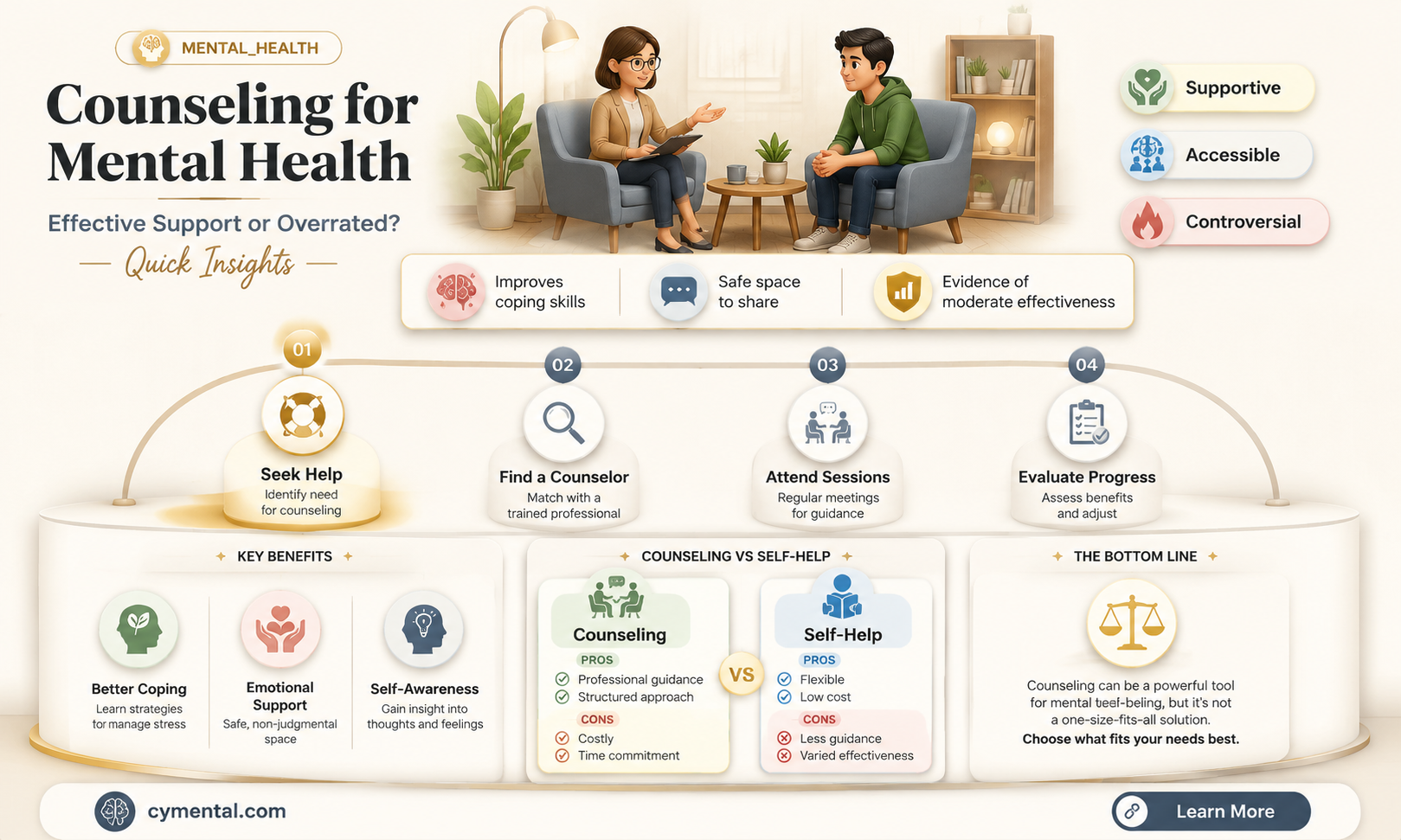
Counseling has long been recognized as a valuable tool in addressing mental health concerns, offering individuals a safe and supportive space to explore their thoughts, emotions, and behaviors. Through evidence-based techniques and a collaborative relationship with a trained therapist, counseling aims to alleviate symptoms of mental health disorders, improve coping strategies, and enhance overall well-being. Research consistently demonstrates its effectiveness in treating conditions such as anxiety, depression, and trauma, while also fostering personal growth and resilience. By providing tailored guidance and insights, counseling empowers individuals to navigate life's challenges, build healthier relationships, and achieve a greater sense of mental clarity and stability.
| Characteristics | Values |
|---|---|
| Effectiveness | Numerous studies show counseling is highly effective for various mental health conditions. Meta-analyses report moderate to large effect sizes for conditions like depression, anxiety, PTSD, and substance abuse. |
| Types of Counseling | Cognitive Behavioral Therapy (CBT), Dialectical Behavior Therapy (DBT), Psychodynamic Therapy, Interpersonal Therapy, and more. Each type targets specific issues and populations. |
| Accessibility | Increasingly accessible through online platforms, community health centers, and private practices. Telehealth has expanded reach, especially in rural areas. |
| Cost | Varies widely; can be covered by insurance, offered on a sliding scale, or free through community programs. Out-of-pocket costs range from $60 to $250 per session. |
| Duration | Typically short-term (8–12 sessions) for specific issues, but can be long-term for chronic conditions. Progress depends on individual needs and treatment goals. |
| Success Rates | 70–90% of individuals report symptom improvement. Success depends on therapist-client rapport, treatment adherence, and condition severity. |
| Stigma Reduction | Growing societal acceptance of counseling as a normal part of self-care. Public figures and campaigns have helped reduce stigma. |
| Preventive Benefits | Counseling can prevent mental health issues from worsening and improve coping skills, resilience, and overall well-being. |
| Client Commitment | Requires active participation and willingness to engage in self-reflection and behavior change for optimal outcomes. |
| Evidence-Based | Supported by extensive research, with ongoing studies refining techniques and identifying best practices for different populations. |
Explore related products


What You'll Learn
- Effectiveness of Therapy Types: Comparing CBT, DBT, and psychodynamic approaches for mental health improvement
- Long-Term Benefits: How counseling impacts sustained mental well-being and relapse prevention over time
- Accessibility Issues: Barriers to counseling, including cost, stigma, and availability in underserved areas
- Client-Therapist Relationship: The role of trust and rapport in enhancing counseling outcomes
- Evidence-Based Outcomes: Research supporting counseling as a proven method for mental health treatment

Effectiveness of Therapy Types: Comparing CBT, DBT, and psychodynamic approaches for mental health improvement
Counseling, in its myriad forms, has been a cornerstone of mental health treatment for decades. Among the most widely studied and applied therapeutic approaches are Cognitive Behavioral Therapy (CBT), Dialectical Behavior Therapy (DBT), and psychodynamic therapy. Each of these modalities offers distinct mechanisms for addressing mental health challenges, but their effectiveness varies depending on the condition, individual needs, and therapeutic context. Understanding their unique strengths and limitations is crucial for both clinicians and clients seeking the most appropriate intervention.
CBT: Structured and Goal-Oriented
CBT is renowned for its structured, time-limited approach, typically delivered in 12 to 20 sessions. It focuses on identifying and modifying maladaptive thought patterns and behaviors, making it highly effective for conditions like anxiety, depression, and PTSD. For instance, a meta-analysis in *JAMA Psychiatry* found that CBT reduces symptoms of depression by 50% in 50–60% of patients. Its practicality lies in its emphasis on actionable strategies, such as thought records and behavioral experiments. However, CBT may fall short for individuals with deeply rooted emotional issues or those who struggle with emotional regulation, as it prioritizes cognition over affect.
DBT: Skills-Based and Emotionally Focused
Originally developed for borderline personality disorder, DBT has expanded to treat conditions like self-harm, eating disorders, and chronic suicidality. Unlike CBT, DBT integrates mindfulness and emotional regulation skills, often delivered in a group setting alongside individual therapy. A study in *Behavior Therapy* reported that DBT reduces self-harm behaviors by 50% in 77% of participants over 12 months. Its effectiveness stems from its dual focus on acceptance and change, making it ideal for individuals with high emotional dysregulation. However, its intensive format—requiring weekly individual sessions, group skills training, and phone coaching—can be resource-intensive and less accessible.
Psychodynamic Therapy: Insight-Oriented and Exploratory
Psychodynamic therapy delves into unconscious processes and early life experiences to foster self-awareness and emotional healing. Unlike CBT and DBT, it is less structured and often open-ended, with treatment lasting months to years. Research in *Psychotherapy and Psychosomatics* suggests it is particularly effective for complex trauma and personality disorders, with 50% of patients showing significant improvement after 20 sessions. Its strength lies in its ability to address deep-seated issues, but its lack of standardized protocols and longer duration may deter those seeking quick relief or measurable outcomes.
Comparative Takeaways and Practical Considerations
Choosing the right therapy depends on the individual’s needs, condition severity, and treatment goals. CBT is ideal for those seeking short-term, symptom-focused relief, while DBT excels for individuals with emotional dysregulation or self-destructive behaviors. Psychodynamic therapy is best suited for those willing to invest time in exploring underlying issues. Clinicians should consider combining elements of these approaches—for example, integrating DBT skills into CBT for anxiety patients with emotional regulation difficulties. Clients, meanwhile, should discuss their preferences for structure, duration, and focus with their therapist to ensure alignment with their therapeutic goals.
In conclusion, while all three therapies demonstrate efficacy, their effectiveness hinges on matching the modality to the individual’s unique profile. By understanding their distinct mechanisms and applications, mental health professionals and clients can make informed decisions to optimize outcomes.
Beyond Reach: Can Some Minds Resist Mental Health Treatment?
You may want to see also
Explore related products

$22.24 $34.99


![NCMHCE Exam Study Cards: NCMHCE Test Prep 2025 and 2026 for the National Clinical Mental Health Counseling Examination [Full Color Cards]](https://m.media-amazon.com/images/I/61Vg-0Wk9RL._AC_UL320_.jpg)


Long-Term Benefits: How counseling impacts sustained mental well-being and relapse prevention over time
Counseling isn’t just a short-term fix for mental health struggles; it’s a foundation for long-term resilience. Research consistently shows that individuals who engage in consistent therapy sessions over 6 to 12 months report significant improvements in symptom management, emotional regulation, and overall life satisfaction. For instance, a 2020 study published in *JAMA Psychiatry* found that patients with depression who completed at least 12 sessions of cognitive-behavioral therapy (CBT) were 40% less likely to relapse within two years compared to those who stopped after six sessions. This highlights the importance of viewing counseling as a sustained commitment rather than a quick solution.
One of the key mechanisms through which counseling fosters long-term mental well-being is by rewiring neural pathways. Therapies like CBT and mindfulness-based stress reduction (MBSR) teach individuals to reframe negative thought patterns and develop healthier coping strategies. Over time, these practices become habitual, reducing the brain’s default tendency to revert to anxiety or depression. For example, a 2018 study in *Psychotherapy and Psychosomatics* demonstrated that after 16 weeks of MBSR, participants showed increased activity in the prefrontal cortex—the brain region responsible for emotional regulation—and decreased activity in the amygdala, which drives fear responses. This neurological shift underscores why counseling’s benefits compound over time.
Relapse prevention is another critical area where counseling proves its long-term value. For individuals with conditions like substance use disorder or anxiety, therapy equips them with tools to anticipate triggers and manage cravings. A practical tip for maintaining progress is to create a "relapse prevention plan" during therapy, which includes identifying early warning signs, listing coping strategies, and establishing a support network. For instance, a 30-year-old recovering from alcohol addiction might include daily journaling, attending weekly support group meetings, and having a trusted friend on speed dial as part of their plan. Such structured approaches, developed in counseling, significantly reduce the likelihood of relapse.
However, sustaining these benefits requires ongoing effort. After completing formal therapy, individuals can maintain progress through "booster sessions"—periodic check-ins with a therapist to reinforce skills and address emerging challenges. These sessions, typically scheduled every 3 to 6 months, act as a safeguard against slipping back into old patterns. Additionally, integrating self-care practices like regular exercise, adequate sleep, and social connection amplifies counseling’s long-term impact. For example, a 2019 study in *The Lancet Psychiatry* found that individuals who combined therapy with consistent physical activity were 50% less likely to experience a mental health relapse over five years.
In conclusion, counseling’s long-term benefits are not just theoretical—they’re measurable and transformative. By committing to sustained therapy, individuals can rewire their brains, develop robust relapse prevention strategies, and cultivate a resilient mindset. Whether through structured plans, booster sessions, or lifestyle changes, the tools gained in counseling become lifelong assets for mental well-being. The key is consistency: just as physical health requires ongoing care, mental health thrives with continued attention and support.
Seeking Support: Where to Find Help and Guidance in Life
You may want to see also
Explore related products


Accessibility Issues: Barriers to counseling, including cost, stigma, and availability in underserved areas
Counseling has proven to be a transformative tool for mental health, yet its benefits remain out of reach for many due to significant accessibility barriers. Cost stands as the most immediate hurdle, with therapy sessions averaging $75 to $150 per hour in the U.S., often uninsured or partially covered. For individuals earning minimum wage, this equates to nearly a full day’s pay for a single session, making long-term treatment financially unsustainable. Even in countries with universal healthcare, specialized services like psychotherapy may require lengthy waitlists or out-of-pocket expenses, further limiting access.
Stigma compounds this issue, particularly in underserved communities where mental health is often misunderstood or dismissed. Cultural norms may label seeking help as a sign of weakness, discouraging individuals from pursuing counseling. For example, in some rural or immigrant communities, mental health struggles are internalized as personal failures rather than treatable conditions. This stigma is not merely social but systemic, as it influences policy decisions that underfund mental health services in these areas. The result is a vicious cycle: stigma reduces demand, which justifies limited resources, perpetuating inaccessibility.
Availability of counseling services in underserved areas presents another critical barrier. Rural regions in the U.S. have 30% fewer mental health providers per capita compared to urban areas, forcing residents to travel long distances or forgo care entirely. Globally, low-income countries allocate less than 1% of their health budgets to mental health, leaving vast populations without access to trained professionals. Teletherapy has emerged as a partial solution, but it requires reliable internet and digital literacy, which remain luxuries in many underserved communities.
Addressing these barriers requires multifaceted solutions. Policymakers must prioritize funding for mental health services in underserved areas, incentivizing providers to practice in these regions through loan forgiveness or salary supplements. Insurance reforms should mandate comprehensive mental health coverage, capping out-of-pocket costs to make counseling affordable for all. Community-based initiatives can combat stigma through education campaigns, normalizing mental health conversations and encouraging help-seeking behaviors. Finally, technology can bridge gaps in availability, but only if paired with infrastructure investments to ensure equitable access to digital tools. Without these steps, counseling will remain a privilege rather than a universal right.
Empowering Change: Simple Ways You Can Make a Difference Today
You may want to see also
Explore related products
$105.84 $156


$7.76 $18.99


Client-Therapist Relationship: The role of trust and rapport in enhancing counseling outcomes
Trust is the cornerstone of any effective therapeutic relationship. Without it, clients are unlikely to share the intimate details necessary for therapists to understand and address their mental health struggles. Research consistently shows that a strong client-therapist alliance, built on trust and rapport, predicts better treatment outcomes across various modalities, from cognitive-behavioral therapy to psychodynamic approaches. A study published in the *Journal of Consulting and Clinical Psychology* found that clients who reported higher levels of trust in their therapists experienced greater symptom reduction and improved overall well-being. This trust allows clients to feel safe, understood, and validated, creating a foundation for meaningful progress.
Building rapport, however, is not a passive process. Therapists must actively cultivate it through empathy, active listening, and consistent reliability. For instance, mirroring a client’s communication style or acknowledging their emotions can signal understanding and foster connection. Practical tips include maintaining eye contact (when culturally appropriate), using the client’s name, and summarizing their thoughts to ensure clarity. For younger clients, such as adolescents aged 13–18, incorporating humor or shared interests can bridge generational gaps and strengthen rapport. Conversely, therapists should avoid overly formal language or clinical jargon, which can alienate clients and hinder trust-building.
A critical aspect of trust is the therapist’s ability to maintain boundaries while remaining approachable. Clients need to know their therapist is committed to their confidentiality and well-being, but also that the relationship is professional, not personal. For example, therapists should clearly outline session expectations, such as duration (typically 45–60 minutes) and frequency (weekly or biweekly), to establish structure. Breaching boundaries, even unintentionally, can erode trust and derail progress. A therapist who cancels sessions repeatedly or shares personal details inappropriately risks damaging the therapeutic alliance.
The impact of trust and rapport extends beyond individual sessions. Clients who feel supported by their therapist are more likely to adhere to treatment plans, complete homework assignments, and attend sessions regularly. For instance, a client with anxiety may be more willing to practice exposure exercises outside of therapy if they trust their therapist’s guidance. Similarly, a client in couples counseling may feel safer addressing conflict if they believe the therapist is impartial and invested in their relationship. This collaborative dynamic amplifies the effectiveness of counseling, turning it from a passive experience into an active partnership.
Ultimately, the client-therapist relationship is not just a backdrop for counseling—it is an active ingredient in the healing process. Therapists who prioritize building trust and rapport create an environment where clients feel empowered to confront their challenges. For clients, recognizing the importance of this relationship can shift their perspective from viewing therapy as a service to seeing it as a collaborative journey. By nurturing trust and rapport, both parties can maximize the potential of counseling to improve mental health outcomes.
Supporting Mental Health: Practical Ways to Make a Positive Impact
You may want to see also
Explore related products

![NCMHCE Secrets Study Guide - Exam Review and NCMHCE Practice Test for the National Clinical Mental Health Counseling Examination: [2nd Edition]](https://m.media-amazon.com/images/I/61st2jwaFIL._AC_UL320_.jpg)


Evidence-Based Outcomes: Research supporting counseling as a proven method for mental health treatment
Extensive research underscores counseling as a cornerstone of effective mental health treatment, with evidence-based outcomes demonstrating its efficacy across diverse populations and conditions. Meta-analyses, such as those published in the *Journal of Consulting and Clinical Psychology*, reveal that psychotherapy—encompassing cognitive-behavioral therapy (CBT), dialectical behavior therapy (DBT), and interpersonal therapy (IPT)—yields significant improvements in symptoms for disorders like depression, anxiety, and PTSD. For instance, CBT has been shown to reduce symptoms of depression by 50% in 12 to 16 sessions, with effects comparable to medication but with longer-lasting benefits. These findings highlight counseling’s role as a first-line treatment, supported by robust clinical trials and longitudinal studies.
Consider the practical application of counseling in real-world settings. A study in *Psychotherapy Research* found that adolescents aged 13–18 receiving school-based counseling for anxiety showed a 60% reduction in symptoms after 10 sessions, with improvements sustained at a 6-month follow-up. This demonstrates counseling’s adaptability to different environments and age groups, making it accessible and effective for younger populations. Similarly, group counseling has proven particularly beneficial for trauma survivors, with a randomized controlled trial in *JAMA Psychiatry* showing that 12 weeks of group therapy significantly reduced PTSD symptoms compared to waitlist controls. These examples illustrate how tailored counseling interventions can address specific needs with measurable outcomes.
Critics often question the longevity of counseling’s effects, but research dispels this skepticism. A landmark study in *The Lancet* tracked individuals with chronic depression over five years, finding that those who received counseling had a 40% lower relapse rate compared to those treated with medication alone. This suggests that counseling not only alleviates immediate symptoms but also equips individuals with coping strategies for long-term resilience. Furthermore, neuroimaging studies have shown that psychotherapy alters brain activity in regions associated with mood regulation, providing biological evidence of its transformative impact. Such findings reinforce counseling’s status as a proven, evidence-based intervention.
To maximize counseling’s effectiveness, adherence to evidence-based protocols is critical. For example, CBT for generalized anxiety disorder is most effective when delivered in 12–20 sessions, with weekly 50-minute sessions being the standard dosage. Therapists must also prioritize alliance-building, as a strong therapeutic relationship has been consistently linked to better outcomes. For those seeking counseling, practical tips include setting clear goals, maintaining open communication with the therapist, and integrating learned skills into daily life. By combining structured approaches with personalized care, counseling emerges as a powerful tool for mental health treatment, backed by a wealth of empirical evidence.
Reading for Resilience: How Books Boost Mental Health and Well-Being
You may want to see also
Frequently asked questions
Yes, counseling is a proven and effective way to address mental health issues. It provides a safe space to explore thoughts, emotions, and behaviors, and equips individuals with coping strategies and tools to manage challenges.
The duration varies depending on the individual and the nature of their concerns. Some people notice improvements after a few sessions, while others may benefit from longer-term therapy. Consistency and active participation are key.
Absolutely. Counseling, particularly evidence-based approaches like cognitive-behavioral therapy (CBT), is highly effective for conditions like depression, anxiety, and PTSD. It often works in conjunction with medication for comprehensive treatment.
It’s normal to feel hesitant at first. A skilled counselor will create a non-judgmental environment and work at your pace. Over time, many people find it easier to open up and benefit from the process.