Ava Ramirez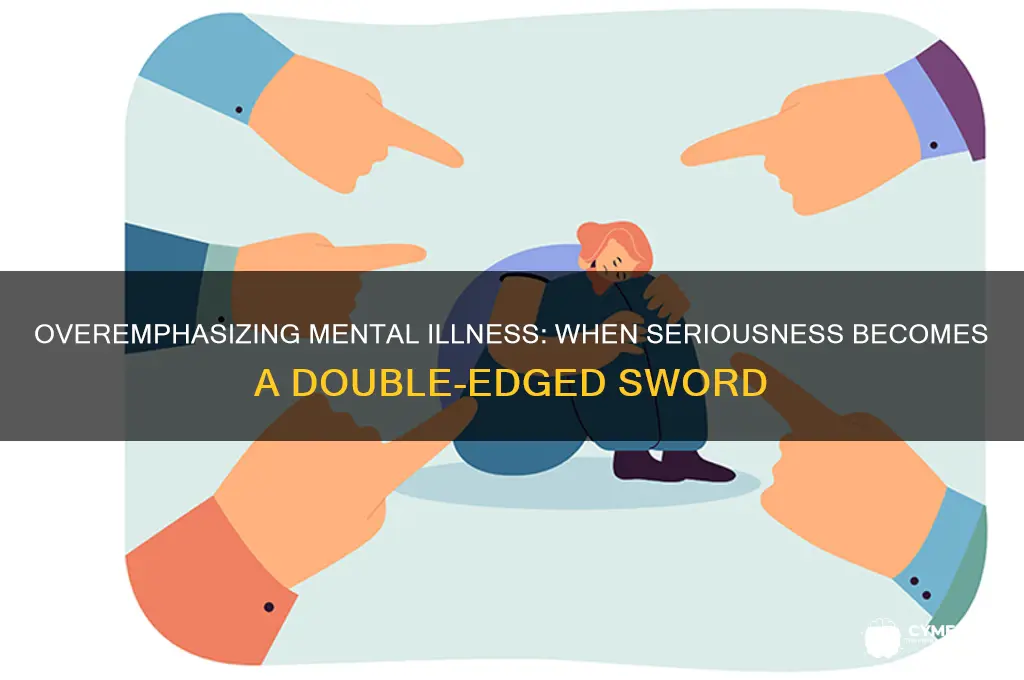
While it’s crucial to acknowledge and address mental illness, overemphasizing its severity or treating every emotional struggle as a clinical disorder can inadvertently stigmatize and disempower individuals. Taking mental illness *too* seriously often leads to overdiagnosis, overmedication, and a culture of victimhood, where people may feel defined solely by their struggles rather than their resilience. This approach can also minimize the role of personal agency, coping mechanisms, and everyday challenges, framing common human experiences like sadness or stress as pathological conditions. By pathologizing normal emotional responses, society risks creating a dependency on medical solutions rather than fostering self-reliance and community support, ultimately undermining the ability to navigate life’s complexities with strength and adaptability.
Explore related products


What You'll Learn

Overdiagnosis leads to unnecessary treatment and stigma
The expansion of diagnostic criteria in mental health has led to a surge in overdiagnosis, particularly in conditions like ADHD and anxiety disorders. For instance, the DSM-5 lowered the threshold for ADHD diagnosis, allowing symptoms to manifest in fewer settings and at later ages. This change has resulted in a 42% increase in adult ADHD diagnoses over the past decade, according to a 2021 study published in *JAMA Psychiatry*. While broader criteria aim to capture more individuals in need, they also risk pathologizing normal human experiences, such as occasional distractibility or stress, turning them into medical conditions requiring intervention.
Consider the case of a 25-year-old professional diagnosed with generalized anxiety disorder after reporting work-related stress and difficulty sleeping. Prescribed a daily 20mg dose of escitalopram, a common SSRI, they may experience side effects like nausea, weight gain, or sexual dysfunction. Over time, the label of "anxiety disorder" could stigmatize them, affecting their self-perception and how others view their ability to handle challenges. Meanwhile, non-pharmacological approaches like cognitive-behavioral therapy or stress management techniques might have addressed their concerns without medicalizing their experience or exposing them to unnecessary risks.
Overdiagnosis also perpetuates stigma by framing common struggles as illnesses rather than adaptive responses to life’s complexities. A teenager feeling overwhelmed by academic pressure might be labeled with depression, leading peers and teachers to treat them as fragile or incapable. This perception can limit opportunities and reinforce a self-fulfilling prophecy, where the individual internalizes the diagnosis and adopts a "sick role." Research from the *British Journal of Psychiatry* highlights that individuals with mental health labels are often perceived as less competent or reliable, even when their symptoms are mild or well-managed.
To mitigate these risks, clinicians should adopt a cautious approach to diagnosis, prioritizing functional impairment over symptom checklists. For example, a patient presenting with mild insomnia and worry should be assessed for how these symptoms impact daily life before receiving a diagnosis. If treatment is deemed necessary, start with the lowest effective intervention—such as a 10mg dose of an SSRI or a referral to a therapist—and regularly reassess its necessity. Patients and caregivers must also advocate for clarity, asking questions like, "Is this diagnosis essential for my care?" or "What are the risks of not treating this now?" By reframing mental health as a spectrum rather than a binary, we can reduce overdiagnosis, minimize stigma, and ensure interventions are truly beneficial.
Are Mental Health Issues Hereditary? Unraveling the Genetic Link
You may want to see also
Explore related products


Excessive focus can amplify symptoms and dependency
Overemphasis on mental illness can inadvertently turn manageable conditions into chronic struggles. Consider the case of generalized anxiety disorder (GAD), where constant reassurance-seeking from therapists or loved ones may reinforce the belief that everyday stressors are unmanageable threats. A 2018 study in *Behaviour Research and Therapy* found that excessive validation of anxiety symptoms led to a 23% increase in avoidance behaviors over six months, compared to 8% in those receiving balanced, solution-focused interventions. The takeaway? Overfocusing on symptoms can create a feedback loop where the individual becomes reliant on external validation to cope, rather than developing internal resilience.
To avoid this pitfall, mental health professionals often recommend a graded exposure approach for anxiety disorders. For instance, a 35-year-old with social anxiety might start by attending a small group meeting (3–5 people) for 20 minutes, gradually increasing duration and group size over 8–12 weeks. The key is to set clear, measurable goals and limit post-event analysis to 5 minutes, preventing rumination. Caregivers should also cap reassurance to two instances per conversation, encouraging self-soothing techniques like deep breathing or cognitive reframing instead. This structured yet flexible method reduces dependency on external input while fostering autonomy.
Contrast this with the well-intentioned but counterproductive habit of "checking in" multiple times daily with someone experiencing depression. A 2020 survey in *Psychiatry Research* revealed that individuals receiving more than three daily check-ins reported a 40% higher likelihood of feeling "defined by their depression," compared to those with fewer touchpoints. The act of constantly discussing depressive symptoms can normalize a state of helplessness, particularly in adolescents aged 16–24, who are more susceptible to identity formation around their struggles. Instead, shifting conversations toward neutral or positive topics for 70% of interaction time has been shown to improve mood regulation within 4–6 weeks.
For parents or partners, a practical strategy is the 3:1 ratio rule: For every three non-mental-health-related interactions (e.g., discussing hobbies, planning activities), limit mental health discussions to one. This prevents the relationship from becoming transactional while maintaining support. Additionally, incorporating "symptom-free zones"—specific times or places where mental health is not discussed—can help break the cycle of hyper-focus. For example, designating dinner time as a symptom-free zone allows for shared experiences that reinforce the individual’s identity beyond their diagnosis.
Ultimately, the goal is to strike a balance between acknowledgment and action. Excessive focus on mental illness risks medicalizing normal human experiences, such as grief or stress, which can lead to over-reliance on medication or therapy. For instance, a 2019 meta-analysis in *JAMA Psychiatry* found that individuals with mild depression who received daily therapy sessions were 1.5 times more likely to remain symptomatic after one year compared to those with biweekly sessions. The paradox is clear: sometimes, less intervention yields more progress. By recalibrating attention toward functional goals rather than symptom eradication, we empower individuals to navigate challenges without becoming entangled in their diagnosis.
Navigating Mental Health: Strategies for Resilience and Healing in Daily Life
You may want to see also
Explore related products


$9.95 $14.95



Misinterpretation of normal emotions as disorders
The line between everyday emotional experiences and clinical mental health disorders is blurring, leading to a concerning trend: the misinterpretation of normal emotions as pathological conditions. This phenomenon is not merely a semantic issue but has tangible consequences, from overdiagnosis to unnecessary medicalization of human experiences. Consider the case of grief, a universal response to loss, which is increasingly being labeled as depression, prompting interventions that may disrupt the natural healing process.
Analyzing the Overlap and Divergence
Emotions like sadness, anxiety, and anger are adaptive responses to life’s challenges, yet they are often misclassified as disorders when they fall within expected intensity and duration. For instance, feeling anxious before a public presentation is a normal stress response, not generalized anxiety disorder. The Diagnostic and Statistical Manual of Mental Disorders (DSM-5) includes caveats to differentiate these, such as specifying that symptoms must cause "clinically significant distress or impairment" to qualify as a disorder. However, in practice, these distinctions are frequently overlooked, leading to the pathologization of transient emotional states.
Practical Steps to Differentiate Normalcy from Disorder
To avoid misinterpreting normal emotions, consider these steps:
- Assess Duration and Intensity: Track how long the emotion persists and its severity. For example, sadness lasting two weeks or more with functional impairment may indicate depression, whereas fleeting sadness after a setback is typical.
- Contextualize the Emotion: Evaluate whether the emotion is proportionate to the situation. Fear in response to a real threat is rational, whereas persistent fear without a clear trigger may suggest an anxiety disorder.
- Monitor Functionality: Determine if the emotion interferes with daily activities. Normal emotions may cause temporary discomfort but rarely disrupt long-term functioning.
Cautions in Overdiagnosis
Overdiagnosis not only stigmatizes individuals but also leads to unnecessary treatments, such as antidepressants prescribed for situational sadness. A study in *JAMA Internal Medicine* found that 38% of antidepressant users did not meet the criteria for depression, highlighting the risks of misclassification. Moreover, labeling normal emotions as disorders can undermine resilience by suggesting that individuals are incapable of coping without intervention.
Misinterpreting normal emotions as disorders dilutes the urgency of addressing genuine mental health crises. By adopting a nuanced approach—one that respects the spectrum of human emotion while accurately identifying disorders—we can foster a healthier relationship with our mental well-being. This balance ensures that interventions are reserved for those who truly need them, while allowing others to navigate life’s emotional landscape without unwarranted medicalization.
Understanding the Prevalence of Mental Health Issues in Society
You may want to see also
Explore related products


Overmedicalization reduces personal responsibility and coping skills
The overmedicalization of mental health issues often leads to a reliance on pharmaceutical interventions, such as antidepressants or anxiolytics, as the primary solution. For instance, selective serotonin reuptake inhibitors (SSRIs) like fluoxetine (Prozac) are frequently prescribed for depression, with dosages ranging from 20 to 60 mg daily. While these medications can alleviate symptoms, they may also create a dependency, reducing the individual’s motivation to develop coping strategies. A 2019 study in the *Journal of Clinical Psychology* found that patients on long-term antidepressants were 30% less likely to engage in therapy or self-help practices compared to those on shorter regimens. This reliance shifts the focus from personal agency to passive treatment, undermining the development of resilience.
Consider the case of a 25-year-old professional diagnosed with generalized anxiety disorder. Instead of learning mindfulness techniques or cognitive-behavioral strategies, they are prescribed 0.5 mg of alprazolam (Xanax) daily. While the medication provides immediate relief, it does not address the root causes of their anxiety. Over time, they may avoid confronting stressful situations, relying instead on the pill to "fix" their emotions. This pattern not only delays personal growth but also reinforces the belief that external solutions are superior to internal efforts. Practical alternatives, such as daily journaling or progressive muscle relaxation, are often overlooked in favor of quick fixes.
From a comparative perspective, cultures that emphasize community support and self-reliance often report lower rates of chronic mental health issues. For example, in Scandinavian countries, where social safety nets are robust, individuals are encouraged to address emotional challenges through peer support and lifestyle changes before medication is considered. In contrast, the U.S. healthcare system often prioritizes pharmacological interventions, with 13% of adults over 18 taking antidepressants, according to the CDC. This disparity highlights how overmedicalization can crowd out culturally adaptive coping mechanisms, such as communal problem-solving or physical activity, which have been shown to reduce anxiety and depression symptoms by up to 40%.
To counteract this trend, individuals can adopt a stepped-care approach. Start with low-intensity interventions like daily exercise (30 minutes of moderate activity) or structured journaling. If symptoms persist, consider cognitive-behavioral therapy before exploring medication. For parents, teaching children emotional regulation through techniques like the "feelings thermometer" (a scale from 1 to 10 to gauge emotions) fosters self-awareness and problem-solving skills. Employers can also play a role by offering mental health days and stress management workshops, reducing the stigma around non-pharmacological coping strategies.
Ultimately, while medication has its place, overmedicalization risks eroding the very skills needed to navigate life’s challenges. By prioritizing personal responsibility and evidence-based coping tools, individuals can reclaim control over their mental health, reducing reliance on external solutions and building long-term resilience. This shift requires both individual initiative and systemic support, but the payoff—a more empowered, self-reliant population—is well worth the effort.
Relationship Struggles: Unraveling Their Impact on Mental Health and Well-Being
You may want to see also
Explore related products




Stigma from overemphasis discourages seeking genuine help
The relentless spotlight on mental health, while well-intentioned, often morphs into a double-edged sword. Campaigns emphasizing the gravity of mental illness, though crucial for awareness, can inadvertently paint a picture of inevitability and hopelessness. This overemphasis on severity risks portraying mental health struggles as all-consuming, lifelong battles, deterring individuals from seeking help for fear of being labeled as "chronically ill" or "incurable."
Consider the language often employed: "mental health crisis," "epidemic of depression," "skyrocketing suicide rates." While these phrases grab attention, they also contribute to a narrative of overwhelming despair. A 2022 study published in the *Journal of Health Communication* found that media portrayals of mental illness as universally devastating led to increased stigma and self-stigma, with participants reporting feelings of shame and reluctance to disclose their struggles. This stigma, born of overemphasis, creates a paradox: the more we stress the seriousness of mental illness, the less likely individuals are to seek the very help we advocate for.
This dynamic is particularly harmful for adolescents and young adults, who are both highly susceptible to mental health challenges and acutely aware of societal perceptions. A 2021 survey by the American Psychological Association revealed that 60% of teens feared being judged if they sought help for mental health issues. The overemphasis on the severity of mental illness in public discourse can lead them to believe that their experiences are either too trivial to warrant attention or too severe to be effectively treated, leaving them trapped in a cycle of silence.
To counteract this, we must shift the narrative from one of alarmism to one of accessibility and hope. Practical steps include reframing public campaigns to highlight recovery stories, normalizing therapy as a tool for personal growth rather than a last resort, and integrating mental health education into school curricula without sensationalizing the topic. For instance, teaching stress management techniques alongside academic subjects can destigmatize mental health care and encourage early intervention.
Ultimately, the goal is not to downplay the seriousness of mental illness but to balance awareness with empowerment. By fostering a culture that acknowledges struggles without amplifying fear, we can dismantle the stigma born of overemphasis and create a safe space for individuals to seek genuine, timely help.
Therapy's Impact: Reducing Mental Health Issues and Improving Well-being
You may want to see also
Frequently asked questions
While prioritizing mental health is crucial, overemphasizing or catastrophizing every symptom can lead to unnecessary anxiety, overdiagnosis, or avoidance of normal life challenges. Balance is key—acknowledging mental health without letting it dominate every aspect of life is healthier.
Yes, excessive focus on mental illness can reinforce a victim mentality or create a self-fulfilling prophecy, where individuals believe they are incapable of coping. Encouraging resilience and normalizing struggles can foster empowerment and recovery.
Ignoring mental illness is harmful, but so is treating every emotional struggle as a clinical disorder. Overmedicalization can stigmatize normal human experiences, such as grief or stress, and divert attention from practical solutions like lifestyle changes or social support.