Noah Parker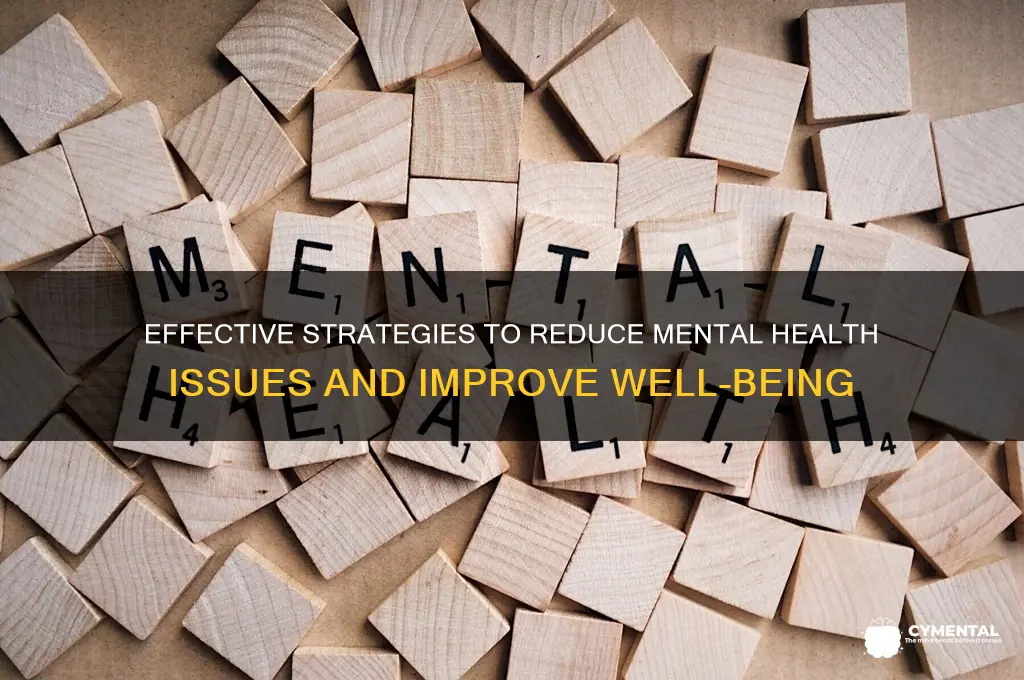
Addressing the rise in mental health issues requires a multifaceted approach that combines individual, community, and systemic strategies. Encouraging open conversations about mental health can reduce stigma, while promoting self-care practices such as regular exercise, mindfulness, and adequate sleep can build resilience. Access to affordable and timely mental health services, including therapy and counseling, is essential, as is fostering supportive social networks and workplaces. Additionally, addressing societal factors like economic inequality, discrimination, and excessive stress through policy changes and community initiatives can create a more nurturing environment. By integrating these efforts, we can work toward decreasing mental health issues and improving overall well-being.
| Characteristics | Values |
|---|---|
| Regular Physical Activity | Reduces symptoms of anxiety and depression by releasing endorphins. |
| Healthy Diet | Foods rich in omega-3, antioxidants, and vitamins improve brain function. |
| Adequate Sleep | 7-9 hours of sleep per night stabilizes mood and reduces stress. |
| Social Connections | Strong relationships provide emotional support and reduce loneliness. |
| Mindfulness and Meditation | Reduces stress, anxiety, and improves emotional regulation. |
| Limit Screen Time | Reduces exposure to negative content and improves sleep quality. |
| Access to Mental Health Care | Early intervention and therapy prevent worsening of mental health issues. |
| Work-Life Balance | Reduces burnout and improves overall well-being. |
| Avoid Substance Abuse | Alcohol and drugs exacerbate mental health problems. |
| Purpose and Meaning | Engaging in meaningful activities boosts self-esteem and resilience. |
| Financial Stability | Reduces stress related to economic insecurity. |
| Education and Awareness | Promotes early recognition and management of mental health issues. |
| Community Support | Access to support groups and resources fosters recovery. |
| Exposure to Nature | Spending time outdoors reduces stress and improves mood. |
| Cognitive Behavioral Therapy (CBT) | Effective in treating anxiety, depression, and other mental health issues. |
Explore related products


What You'll Learn
- Promote Physical Activity: Regular exercise reduces stress, anxiety, and depression, boosting mood and overall mental well-being
- Encourage Social Connections: Building strong relationships and support networks helps combat loneliness and isolation
- Practice Mindfulness: Techniques like meditation and deep breathing reduce anxiety and improve emotional regulation
- Limit Screen Time: Reducing digital overload minimizes stress, improves sleep, and enhances mental clarity
- Access Professional Help: Early intervention and therapy provide effective tools to manage mental health challenges

Promote Physical Activity: Regular exercise reduces stress, anxiety, and depression, boosting mood and overall mental well-being
Physical activity isn’t just about building muscle or losing weight—it’s a powerful tool for mental health. Studies consistently show that regular exercise reduces symptoms of stress, anxiety, and depression by releasing endorphins, the brain’s natural mood lifters. Even moderate activities like brisk walking or cycling can trigger these effects, making it accessible to people of all fitness levels. The key lies in consistency; aim for at least 150 minutes of moderate aerobic exercise or 75 minutes of vigorous activity weekly, as recommended by health organizations. This isn’t a one-size-fits-all prescription, though—tailor the intensity and type of exercise to your preferences and capabilities to ensure it becomes a sustainable habit.
Consider the mechanics of how exercise impacts mental health. Physical activity increases blood flow to the brain, promoting the growth of new neurons and improving overall brain performance. It also reduces levels of cortisol, the stress hormone, while boosting serotonin and dopamine, which regulate mood and pleasure. For instance, a 30-minute jog can provide immediate relief from anxiety, while long-term adherence to a fitness routine can prevent depressive episodes. Incorporating strength training or yoga can add further benefits, such as improved sleep and enhanced self-esteem, both critical for mental resilience.
For those hesitant to start, begin small and build gradually. A 10-minute walk during lunch or a short yoga session in the morning can be a stepping stone. Group activities, like team sports or fitness classes, offer the added advantage of social interaction, which further combats feelings of isolation. Parents can encourage children to engage in active play, as habits formed in youth often carry into adulthood. For older adults, low-impact exercises like swimming or tai chi can improve mental well-being without straining joints. The goal is to make physical activity a natural part of daily life, not a chore.
While exercise is a potent mental health ally, it’s not a standalone cure. It works best when paired with other strategies like therapy, mindfulness, and a balanced diet. Overdoing it can lead to burnout or injury, so listen to your body and avoid pushing beyond your limits. If mental health issues persist despite regular activity, consult a healthcare professional for a comprehensive approach. Ultimately, promoting physical activity is about fostering a healthier mind through a healthier body—a simple yet transformative practice within anyone’s reach.
Supporting Family Mental Health: Strategies for Understanding and Healing Together
You may want to see also
Explore related products




Encourage Social Connections: Building strong relationships and support networks helps combat loneliness and isolation
Human beings are inherently social creatures, and our mental well-being is deeply intertwined with the quality of our relationships. Loneliness and social isolation are significant risk factors for mental health issues, including depression, anxiety, and even cognitive decline. Building and maintaining strong social connections can act as a powerful buffer against these risks, fostering resilience and emotional well-being.
Research shows that individuals with robust social support networks are better equipped to cope with stress, experience greater life satisfaction, and have a reduced risk of developing mental health disorders.
So, how can we actively encourage social connections and combat loneliness? Firstly, prioritize face-to-face interactions. While digital communication has its place, in-person interactions provide a depth of connection that virtual platforms often lack. Aim for at least one meaningful, face-to-face interaction per day, whether it's a coffee date with a friend, a walk with a neighbor, or a group activity.
Secondly, join community groups or clubs aligned with your interests. Shared passions create natural opportunities for connection. Consider local book clubs, sports teams, volunteer organizations, or hobby groups. These settings provide a sense of belonging and allow for organic relationship-building.
Be proactive in reaching out. Don’t wait for others to initiate contact. Invite someone for a meal, suggest a weekend outing, or simply check in with a phone call. Small gestures can strengthen bonds and signal to others that they are valued.
Lastly, cultivate active listening skills. Strong relationships are built on mutual understanding and empathy. When engaging with others, focus fully on the conversation, ask open-ended questions, and validate their feelings. This not only deepens connections but also creates a safe space for others to share their struggles.
While building social connections takes effort, the mental health benefits are profound. By prioritizing face-to-face interactions, engaging in shared activities, taking initiative, and practicing active listening, we can create a supportive network that safeguards our mental well-being and combats the isolating effects of loneliness.
Stigma Behind Bars: Society's Perception of Mental Health in Prisons
You may want to see also
Explore related products


$7.84 $14.99


Practice Mindfulness: Techniques like meditation and deep breathing reduce anxiety and improve emotional regulation
Mindfulness isn’t just a buzzword—it’s a scientifically backed tool for reducing mental health issues. Studies show that regular mindfulness practices, such as meditation and deep breathing, can lower cortisol levels, the body’s primary stress hormone. For instance, a 2014 study published in *JAMA Internal Medicine* found that mindfulness meditation programs had moderate evidence of improved anxiety, depression, and pain. These techniques work by shifting the brain’s focus from reactive, emotional centers to more rational, prefrontal regions, fostering emotional regulation and reducing anxiety.
To begin practicing mindfulness, start with just 5–10 minutes daily. Find a quiet space, sit comfortably, and focus on your breath. Inhale deeply through your nose for a count of four, hold for four, exhale through your mouth for six. This 4-4-6 pattern slows heart rate and calms the nervous system. If your mind wanders—and it will—gently redirect your attention to your breath. Apps like Headspace or Calm offer guided sessions for beginners, making it easier to establish a routine. Consistency is key; aim to practice at the same time each day to build a habit.
While meditation is powerful, deep breathing exercises can be done anywhere, making them ideal for acute stress. Try the "Box Breathing" technique: inhale for four seconds, hold for four, exhale for four, and pause for four. Repeat this cycle for 2–3 minutes to reset your nervous system. For children or those new to mindfulness, simplify the practice by focusing on sensory experiences, like naming five things you can see or feel. This grounds the mind in the present moment, reducing anxiety without requiring advanced focus.
Despite its benefits, mindfulness isn’t a cure-all. It’s most effective when paired with other strategies, like therapy or lifestyle changes. Overdoing it—such as meditating for hours daily—can lead to frustration or disconnection. Start small, be patient, and adjust the practice to fit your needs. For example, if sitting still feels impossible, try mindful walking: focus on the sensation of each step and the rhythm of your breath. The goal isn’t perfection but progress in cultivating awareness and emotional balance.
Incorporating mindfulness into daily life amplifies its impact. Beyond formal sessions, practice "micro-mindfulness" by pausing to notice small details—the warmth of a cup of tea, the sound of rain, or the texture of a fabric. These moments of presence accumulate, rewiring the brain to default to calm rather than chaos. Over time, mindfulness becomes less of a practice and more of a mindset, offering a sustainable way to reduce anxiety and enhance emotional regulation in an increasingly chaotic world.
Supporting Your Parent: Strategies for Navigating Mental Health Challenges
You may want to see also
Explore related products



Limit Screen Time: Reducing digital overload minimizes stress, improves sleep, and enhances mental clarity
Excessive screen time has been linked to increased levels of cortisol, the stress hormone, particularly when engaging with social media or news platforms. A study published in the *Journal of Computer-Mediated Communication* found that individuals who reduced their social media usage by 30 minutes per day reported lower stress levels within a week. This isn’t surprising, given the constant barrage of notifications, comparisons, and information overload that digital devices deliver. By setting clear boundaries—such as turning off non-essential notifications after 7 PM or designating tech-free zones like the bedroom—you can create a buffer between your mind and the digital noise, allowing your nervous system to reset.
To implement this effectively, start by tracking your daily screen time using built-in tools like Apple’s Screen Time or Android’s Digital Wellbeing. Aim to reduce recreational screen time by 20% in the first week, focusing on cutting back during evenings and before bed. For example, if you spend 4 hours daily on non-essential screens, reduce it to 3.2 hours. Replace this time with activities that promote relaxation, such as reading a physical book, practicing mindfulness, or engaging in a hobby. For families, consider a "device-free dinner" rule to encourage real-world connection and reduce mealtime distractions.
The impact of screen time on sleep is particularly pronounced due to the blue light emitted by devices, which suppresses melatonin production. A 2019 study in *Sleep Health* found that participants who stopped using screens 1 hour before bed experienced significant improvements in sleep quality and duration. To counteract this, enable blue light filters on your devices after sunset or invest in blue light-blocking glasses. Additionally, charge your phone outside the bedroom to resist the urge to scroll in bed. For children and teens, who are more susceptible to sleep disruption, enforce a "screens off" rule at least 90 minutes before bedtime to support their developing brains.
Finally, reducing screen time isn’t about eliminating technology but about reclaiming mental space. A comparative analysis of digital minimalism practices shows that individuals who prioritize intentional tech use report higher levels of mental clarity and focus. For instance, instead of mindlessly scrolling through social media, allocate 15–30 minutes daily for purposeful engagement, such as connecting with friends or learning something new. Pair this with regular "digital detoxes"—weekends or days where you disconnect entirely—to reset your mental baseline. By treating screen time as a tool rather than a habit, you can minimize its negative impact while maximizing its benefits.
Supporting Refugee Mental Health: Strategies for Inclusive and Compassionate Care
You may want to see also
Explore related products
$10.99 $18.99


Access Professional Help: Early intervention and therapy provide effective tools to manage mental health challenges
Mental health challenges often escalate when left unaddressed, but early intervention can halt this progression. Research shows that untreated anxiety or depression, for instance, can double in severity within 6–12 months, impacting work, relationships, and physical health. Conversely, studies published in *JAMA Psychiatry* highlight that individuals who engage in therapy within the first three months of symptom onset experience a 60% reduction in symptom severity compared to those who delay. This underscores the critical role of timely professional help in preventing long-term complications.
Accessing therapy doesn’t require a diagnosis or crisis—it’s a proactive step. Cognitive Behavioral Therapy (CBT), for example, is effective for mild to moderate anxiety and depression, often requiring 12–20 sessions to see lasting results. For adolescents, family-based interventions like Dialectical Behavior Therapy (DBT) have shown significant improvements in emotional regulation within 6 months. Practical tips include using telehealth platforms for convenience, checking insurance coverage for mental health services, and starting with a primary care physician for a referral. Early action not only mitigates symptoms but also builds resilience, equipping individuals with tools to navigate future challenges.
While therapy is powerful, barriers like stigma, cost, and lack of awareness persist. A comparative analysis reveals that countries with integrated mental health services, such as Australia’s Headspace program, report 30% higher therapy utilization rates among young adults. In contrast, regions with fragmented systems see delays of up to 2 years between symptom onset and treatment initiation. To bridge this gap, employers can offer Employee Assistance Programs (EAPs), and schools can integrate mental health screenings for students aged 10–18. These systemic changes, paired with individual initiative, can normalize seeking help and ensure early intervention becomes the norm, not the exception.
The takeaway is clear: early professional intervention isn’t just a treatment—it’s a preventive measure. By addressing mental health challenges at their onset, individuals can avoid the compounding effects of untreated conditions. Whether through CBT, DBT, or other evidence-based approaches, therapy provides actionable strategies to manage symptoms and improve quality of life. The key lies in recognizing the first signs, overcoming barriers to access, and leveraging available resources. In doing so, we transform mental health care from a reactive response to a proactive pillar of well-being.
Supporting Mental Health in Special Needs: Strategies for Care and Understanding
You may want to see also
Frequently asked questions
Engaging in regular physical activity, practicing mindfulness or meditation, maintaining a balanced diet, ensuring adequate sleep, and setting realistic goals can significantly reduce stress and anxiety.
Building and maintaining strong social connections provide emotional support, reduce feelings of loneliness, and offer opportunities for sharing experiences, all of which contribute to better mental health.
Therapy, such as cognitive-behavioral therapy (CBT), provides tools to manage symptoms, address underlying issues, and develop healthier thought patterns, making it a crucial resource for improving mental well-being.
Yes, adopting a healthy lifestyle—including regular exercise, a nutritious diet, limited alcohol and caffeine intake, and consistent sleep patterns—can significantly improve mental health and reduce symptoms of depression and anxiety.
Self-care is essential as it helps individuals recharge, reduce burnout, and prioritize their mental well-being. Activities like hobbies, relaxation techniques, and setting boundaries play a vital role in maintaining mental health.