Lucas Bennett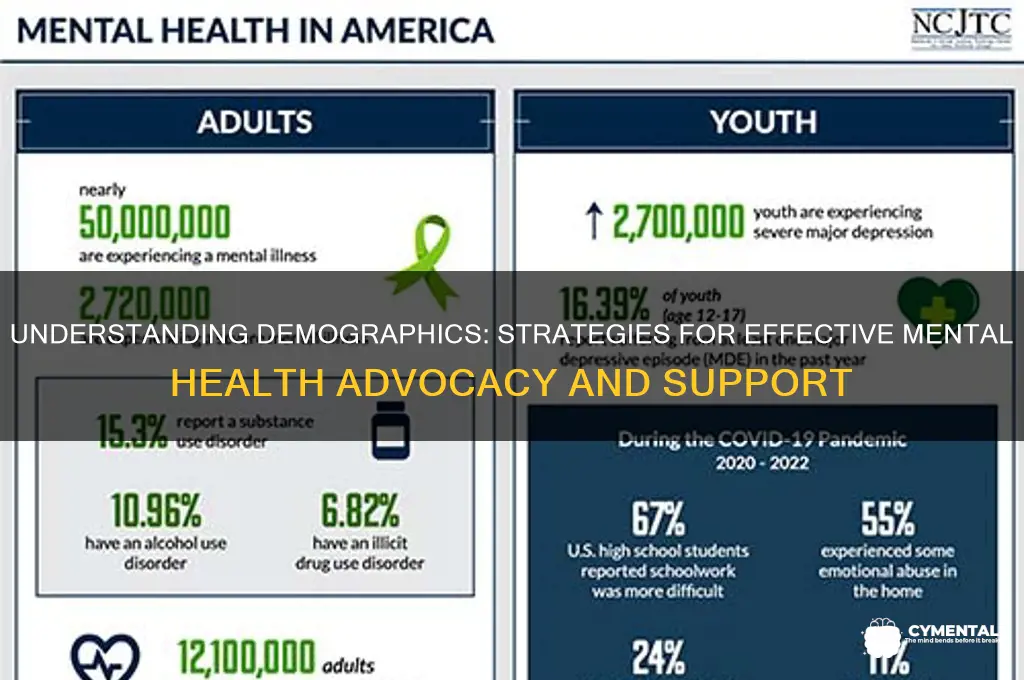
Understanding how to gather and analyze demographics for mental health issues is crucial for developing effective interventions, policies, and support systems. Demographic data, such as age, gender, ethnicity, socioeconomic status, and geographic location, provides valuable insights into the prevalence, risk factors, and disparities associated with mental health conditions. By identifying patterns and trends within specific populations, researchers, healthcare providers, and policymakers can tailor resources to meet the unique needs of underserved or vulnerable groups. This process involves utilizing surveys, census data, health records, and community-based research to ensure accuracy and inclusivity. Ultimately, leveraging demographic information empowers stakeholders to address mental health challenges more equitably and effectively, fostering better outcomes for individuals and communities alike.
| Characteristics | Values |
|---|---|
| Age | Mental health issues are prevalent across all age groups, but rates vary: adolescents (10-19 years) and young adults (20-29 years) have higher rates of depression and anxiety. Older adults (≥60 years) face increased risks of dementia and depression. |
| Gender | Women are more likely to experience anxiety and depression, while men have higher rates of substance abuse and suicide. Non-binary individuals face elevated risks due to discrimination and stigma. |
| Race/Ethnicity | Racial and ethnic minorities often face disparities in mental health due to systemic barriers, discrimination, and limited access to care. For example, Black and Hispanic individuals report higher rates of psychological distress. |
| Socioeconomic Status | Lower socioeconomic status is linked to higher rates of mental health issues due to stressors like poverty, unemployment, and lack of access to resources. |
| Education Level | Lower educational attainment is associated with higher risks of mental health problems, as education often correlates with better access to healthcare and coping mechanisms. |
| Geographic Location | Urban areas may have higher rates of anxiety and depression due to stressors like overcrowding, while rural areas face challenges like limited access to mental health services. |
| Employment Status | Unemployed individuals are at higher risk of mental health issues due to financial stress and loss of social connections. Underemployment and job insecurity also contribute to psychological distress. |
| Marital Status | Single or divorced individuals may experience higher rates of depression and anxiety compared to married or partnered individuals, though this varies by cultural context. |
| Sexual Orientation | LGBTQ+ individuals face higher risks of mental health issues due to discrimination, stigma, and minority stress. |
| Disability Status | People with disabilities are more likely to experience mental health issues due to barriers to accessibility, social isolation, and healthcare disparities. |
| Immigration Status | Immigrants and refugees often face unique mental health challenges, including trauma, acculturation stress, and limited access to culturally competent care. |
| Data Sources | Latest data from WHO (World Health Organization), CDC (Centers for Disease Control and Prevention), and national health surveys (e.g., NHIS, NSDUH) provide demographic insights into mental health issues. |
Explore related products

$21.77 $24.95

$9.83 $16.99

$14.21 $30


What You'll Learn
- Data Sources: Identify reliable sources like surveys, census, and health records for demographic data
- Target Populations: Focus on age, gender, ethnicity, and socioeconomic groups in mental health studies
- Data Analysis Tools: Use software like SPSS, R, or Tableau for demographic data interpretation
- Ethical Considerations: Ensure privacy, consent, and confidentiality when handling sensitive demographic information
- Application in Research: Apply demographics to tailor mental health interventions and policies effectively

Data Sources: Identify reliable sources like surveys, census, and health records for demographic data
Understanding the demographic landscape of mental health issues requires tapping into robust and reliable data sources. Surveys, census data, and health records are cornerstone resources, each offering unique insights into prevalence, trends, and disparities. Surveys, such as the National Survey on Drug Use and Health (NSDUH) in the U.S., provide granular data on mental health conditions across age, gender, race, and socioeconomic groups. These self-reported measures are invaluable for identifying at-risk populations but rely on participant honesty and awareness of their own mental health status. Census data, while less detailed, offers a broad demographic framework, linking mental health indicators to socioeconomic factors like income, education, and employment. Health records, including electronic health records (EHRs) and claims data, provide clinical validation, though they often underrepresent undiagnosed cases and those who avoid healthcare systems.
To effectively leverage these sources, start by defining your demographic focus—age groups, geographic regions, or specific communities. For instance, if targeting adolescents, combine NSDUH data with school-based health surveys to capture both diagnosed and undiagnosed cases. Cross-reference census data to identify socioeconomic factors influencing access to care. When using health records, be mindful of biases; rural populations or uninsured individuals may be underrepresented. Tools like the Behavioral Risk Factor Surveillance System (BRFSS) can supplement these sources by linking mental health data with behavioral risk factors, offering a more holistic view. Always ensure data compliance with regulations like HIPAA or GDPR, especially when handling sensitive health records.
A comparative analysis of these sources reveals their strengths and limitations. Surveys excel in capturing self-reported experiences but may suffer from response bias. Census data provides a comprehensive demographic backbone but lacks clinical specificity. Health records offer diagnostic accuracy but miss those outside the healthcare system. For example, while EHRs can show antidepressant prescription rates among adults aged 25–40, they won’t account for those managing depression through therapy alone. Combining these sources—using census data to stratify populations, surveys to gauge prevalence, and health records to validate diagnoses—creates a more accurate demographic profile.
Practical tips for implementation include prioritizing datasets with large sample sizes and rigorous methodologies, such as the World Health Organization’s World Mental Health Surveys. Use data visualization tools like Tableau or Python libraries to identify patterns, such as higher anxiety rates among urban young adults compared to rural peers. Collaborate with public health agencies or academic institutions to access restricted datasets, ensuring ethical use and anonymization. Finally, validate findings by triangulating data from multiple sources—for instance, confirming survey-reported depression rates with corresponding antidepressant prescription data from health records.
In conclusion, identifying reliable demographic data for mental health work demands a strategic approach to sourcing and integrating information. By combining surveys, census data, and health records, researchers and practitioners can uncover nuanced insights into mental health disparities. Each source has its role: surveys for self-reported experiences, census data for socioeconomic context, and health records for clinical validation. Careful consideration of biases, ethical use, and complementary analysis ensures a comprehensive understanding of mental health demographics, paving the way for targeted interventions and policies.
Recognizing Mental Health Issues: Early Signs and Detection Strategies
You may want to see also
Explore related products

$22.95 $24.95

$39.14 $59.99


Target Populations: Focus on age, gender, ethnicity, and socioeconomic groups in mental health studies
Mental health disparities often mirror societal inequalities, making it crucial to identify and prioritize target populations in research and intervention efforts. Age, gender, ethnicity, and socioeconomic status (SES) are key demographic factors that intersect to shape mental health outcomes. For instance, adolescents and young adults aged 15–24 are particularly vulnerable to anxiety and depression, with global prevalence rates reaching 15–20% in this age group. Tailoring studies to this demographic requires age-appropriate assessment tools, such as the Generalized Anxiety Disorder-7 (GAD-7) for youth, and interventions like cognitive-behavioral therapy (CBT) adapted for developmental stages.
Gender plays a significant role in mental health, with women twice as likely as men to be diagnosed with depression, while men are more prone to substance abuse and suicide. These differences necessitate gender-specific approaches in research. For example, studies on postpartum depression should focus on women in the first year after childbirth, utilizing tools like the Edinburgh Postnatal Depression Scale (EPDS). Conversely, research on male mental health must address stigma and encourage help-seeking behaviors, possibly through peer-led programs or digital platforms that offer anonymity.
Ethnicity and cultural background are critical in understanding mental health disparities. Minority groups, such as African American, Hispanic, and Indigenous populations, often face higher rates of trauma, discrimination, and limited access to care. Culturally sensitive research methods, such as employing bilingual interviewers or using validated tools like the Cultural Formulation Interview (CFI), are essential. For instance, a study on PTSD among refugees should incorporate trauma-informed care and consider language barriers, ensuring participants feel safe and understood.
Socioeconomic status (SES) is a powerful determinant of mental health, with low-income individuals experiencing higher rates of stress, anxiety, and depression due to financial instability, poor housing, and limited access to resources. Research targeting this group should focus on cost-effective interventions, such as group therapy or digital mental health apps, and address systemic barriers like transportation or childcare. For example, a community-based study in underserved neighborhoods might offer free mental health screenings and connect participants to affordable care options.
In conclusion, identifying target populations in mental health studies requires a nuanced understanding of how age, gender, ethnicity, and SES intersect to influence outcomes. By employing tailored methodologies, culturally sensitive tools, and context-specific interventions, researchers can ensure that their work addresses the unique needs of vulnerable groups. This approach not only enhances the validity of findings but also promotes equity in mental health care, ultimately improving outcomes for those most at risk.
Mentors' Role in Mental Health: Support, Growth, and Resilience
You may want to see also
Explore related products


Data Analysis Tools: Use software like SPSS, R, or Tableau for demographic data interpretation
Understanding demographic patterns in mental health requires robust data analysis tools. Software like SPSS, R, and Tableau transforms raw data into actionable insights, revealing trends across age, gender, ethnicity, and socioeconomic status. For instance, SPSS allows researchers to perform chi-square tests to identify significant associations between mental health disorders and demographic variables, while Tableau’s interactive dashboards visualize disparities in access to care among rural vs. urban populations. These tools bridge the gap between data collection and meaningful interpretation, enabling targeted interventions.
Selecting the right tool depends on your analytical goals and technical expertise. R, a programming language, offers unparalleled flexibility for custom analyses, such as logistic regression to predict mental health outcomes based on demographic factors. However, it requires coding proficiency. In contrast, SPSS provides a user-friendly interface for statistical tests, making it ideal for researchers without programming experience. Tableau excels in data visualization, allowing stakeholders to grasp complex demographic patterns at a glance. For example, a heatmap in Tableau can highlight regions with high depression rates among young adults (ages 18–25), guiding resource allocation.
While these tools are powerful, their effectiveness hinges on data quality and ethical considerations. Ensure your dataset is representative and free from biases, such as underreporting in marginalized communities. For instance, mental health surveys in low-income areas may require multilingual formats to improve response rates. Additionally, anonymize data to protect participant privacy, especially when analyzing sensitive demographics like race or sexual orientation. Misinterpretation of results can perpetuate stereotypes, so approach findings with caution and contextual understanding.
Practical tips can maximize the utility of these tools. When using SPSS, leverage its automated reporting feature to streamline documentation of demographic analyses. In R, utilize packages like *ggplot2* for advanced visualizations tailored to mental health data, such as age-stratified prevalence graphs. Tableau’s geospatial mapping can pinpoint underserved areas, but ensure you have precise location data. Regularly update your software to access the latest features, and consider cross-training your team to avoid over-reliance on a single tool.
Ultimately, data analysis tools are not just technical instruments but catalysts for change in mental health work. By uncovering demographic disparities, they empower policymakers, clinicians, and advocates to design equitable solutions. For example, identifying higher anxiety rates among LGBTQ+ youth (ages 13–19) through R’s multivariate analysis can inform targeted school-based programs. Whether you choose SPSS, R, or Tableau, the goal remains the same: to translate data into strategies that improve mental health outcomes for all populations.
Therapy's Impact: Reducing Mental Health Issues and Improving Well-being
You may want to see also
Explore related products


$84.91 $101.95


Ethical Considerations: Ensure privacy, consent, and confidentiality when handling sensitive demographic information
Handling sensitive demographic data in mental health research demands rigorous ethical safeguards. Privacy breaches can exacerbate stigma, discourage participation, and erode trust in healthcare systems. For instance, linking mental health diagnoses to identifiable demographic markers like race or income could lead to discrimination in employment or insurance. Researchers must implement encryption protocols, anonymize datasets, and restrict access to authorized personnel only. Tools like differential privacy, which adds controlled noise to datasets, can further protect individual identities while preserving data utility.
Obtaining informed consent is not merely a procedural checkbox but a cornerstone of ethical research. Participants must fully understand how their demographic information will be used, stored, and shared. Consent forms should avoid jargon, clearly outline risks (e.g., potential re-identification), and specify data retention periods. For vulnerable populations—such as adolescents or individuals with severe mental illness—consent processes may require additional safeguards, like involving caregivers or using simplified language. Regularly revisiting consent, especially in longitudinal studies, ensures participants remain informed as research evolves.
Confidentiality extends beyond data storage to include how findings are communicated. When publishing demographic insights, researchers must avoid presenting data in granular formats that could inadvertently reveal identities. For example, instead of reporting mental health rates for a specific neighborhood, aggregate data at the city or county level. Case studies, while powerful, should omit unique demographic details that could lead to identification. Collaborating with ethicists or community representatives can help strike a balance between transparency and protection.
Ethical lapses in handling demographic data can have far-reaching consequences, from legal penalties to irreparable harm to participants. Consider the 2018 Facebook-Cambridge Analytica scandal, where misuse of personal data eroded public trust in data collection practices. In mental health research, such breaches could deter individuals from seeking treatment or participating in future studies. Institutions must establish oversight committees, conduct regular audits, and provide ongoing training to ensure compliance with ethical standards like GDPR or HIPAA. Ultimately, prioritizing privacy, consent, and confidentiality is not just a legal obligation but a moral imperative to protect those whose stories shape our understanding of mental health.
Singulair and Mental Health: Frequency of Psychological Side Effects
You may want to see also
Explore related products


Application in Research: Apply demographics to tailor mental health interventions and policies effectively
Demographic data serves as the compass for navigating the complex landscape of mental health research, ensuring interventions and policies are not one-size-fits-all but precisely tailored to meet diverse needs. By dissecting populations into categories such as age, gender, ethnicity, socioeconomic status, and geographic location, researchers can identify disparities in mental health outcomes and access to care. For instance, studies consistently show higher rates of depression among women compared to men, while adolescents and young adults are more prone to anxiety disorders. These insights are not mere statistics; they are actionable intelligence that can shape targeted strategies.
Consider the application of demographics in designing mental health interventions for adolescents. Research reveals that 15- to 24-year-olds are particularly vulnerable to mental health issues, with suicide being the second leading cause of death in this age group globally. Tailoring interventions for this demographic might involve integrating mental health education into school curricula, leveraging social media platforms for awareness campaigns, and training teachers to recognize early warning signs. For example, a study in the U.S. found that school-based cognitive-behavioral therapy programs reduced anxiety symptoms in teenagers by 30% over six months. Such targeted approaches are only possible when demographic data informs the design and implementation of interventions.
However, applying demographics in mental health research is not without challenges. One major pitfall is the risk of oversimplification or stereotyping. For instance, assuming all elderly individuals face depression ignores the diversity within this group, such as cultural backgrounds or varying levels of social support. Researchers must balance demographic categorization with an understanding of individual nuances. Another caution is the potential for data gaps, particularly in marginalized communities where mental health issues may be underreported due to stigma or lack of access to healthcare. Addressing these gaps requires inclusive data collection methods, such as community-based surveys or partnerships with local organizations.
To effectively apply demographics in mental health policy, policymakers must translate research findings into actionable frameworks. For example, if data shows higher rates of PTSD among veterans, policies could mandate specialized mental health services within veterans’ hospitals or allocate funding for peer support programs. Similarly, if urban youth from low-income neighborhoods exhibit elevated levels of stress, policies could focus on increasing access to affordable therapy and creating safe community spaces. The key is to use demographic insights to allocate resources where they are most needed, ensuring equity in mental health care.
In conclusion, demographics are not just numbers—they are tools for creating equitable, effective mental health interventions and policies. By understanding the unique needs of different populations, researchers and policymakers can move beyond generic solutions to deliver targeted support. Whether it’s designing age-specific programs, addressing gender disparities, or tackling socioeconomic barriers, demographic data provides the foundation for meaningful change. The challenge lies in using this data thoughtfully, avoiding oversimplification, and ensuring inclusivity. When done right, demographic-driven approaches can transform mental health care, making it more responsive, compassionate, and impactful.
Understanding and Supporting: Compassionate Strategies for Mental Health Challenges
You may want to see also
Frequently asked questions
Key sources include government health databases (e.g., CDC, WHO), national surveys (e.g., NHIS, NSDUH), academic research studies, and mental health organizations (e.g., NAMI, Mental Health America).
Verify the data’s source credibility, check publication dates, cross-reference with multiple datasets, and prioritize peer-reviewed studies or official reports from reputable organizations.
Common factors include age, gender, race/ethnicity, socioeconomic status, geographic location, education level, and employment status, as they significantly influence mental health outcomes.
Analyze demographic trends to identify at-risk populations, tailor interventions to specific needs, allocate resources effectively, and advocate for policy changes to address disparities.