Lucas Bennett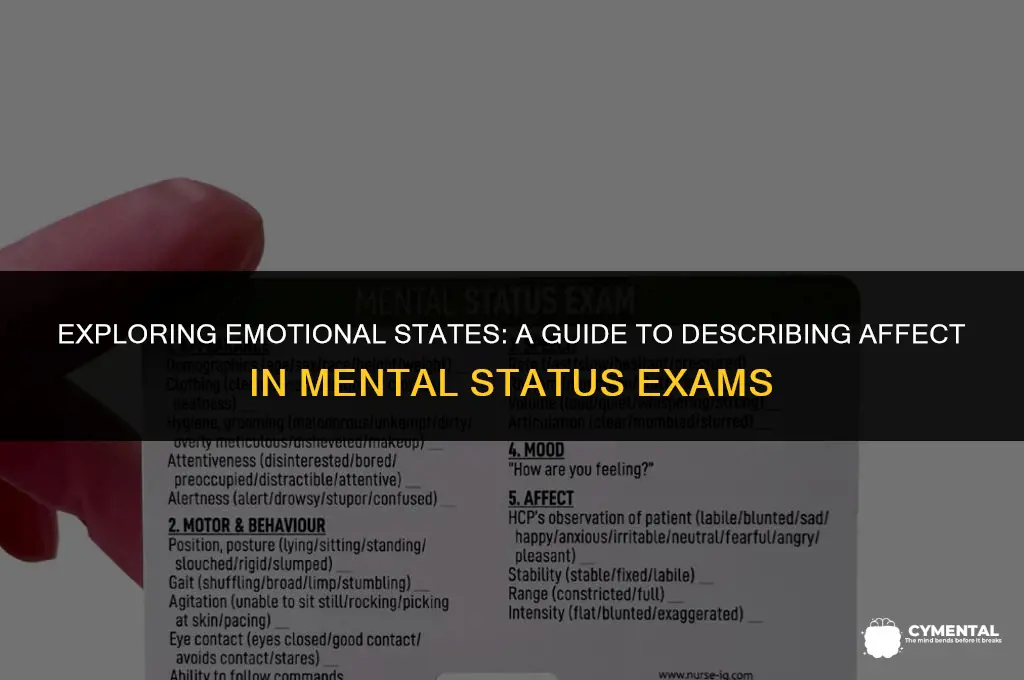
When conducting a mental status examination, accurately describing a patient's affect is crucial for understanding their emotional state and overall mental health. Affect refers to the observable emotional experience of an individual, which can manifest in various ways such as facial expressions, tone of voice, and body language. To describe affect effectively, it is essential to observe these nonverbal cues carefully and consider how they align with the patient's reported mood. For instance, a patient may verbally express feeling sad, but their affect might appear more anxious or agitated based on their physical demeanor. In such cases, it is important to note the discrepancy and explore potential reasons for the mismatch. Additionally, cultural factors and individual differences can influence how emotions are expressed and perceived, so it is vital to approach the assessment with sensitivity and an open mind. By providing a detailed and nuanced description of the patient's affect, clinicians can gain valuable insights into their emotional well-being and tailor their treatment approach accordingly.
Explore related products


What You'll Learn
- Observation of Facial Expressions: Note the patient's facial expressions and how they change during the interview
- Assessment of Mood: Ask the patient to describe their mood and listen for any indicators of depression or mania
- Evaluation of Affect Regulation: Observe how well the patient regulates their emotions during the conversation
- Identification of Emotional Range: Determine the range of emotions displayed by the patient, from happiness to sadness
- Analysis of Emotional Reactivity: Assess how reactive the patient is to different topics or stimuli during the exam

Observation of Facial Expressions: Note the patient's facial expressions and how they change during the interview
Facial expressions are a crucial aspect of human communication, often conveying emotions and attitudes more effectively than words. In the context of a mental status exam, observing a patient's facial expressions can provide valuable insights into their emotional state and overall mental health. This non-verbal communication can be particularly telling, as it may reveal feelings that the patient is not consciously aware of or is hesitant to express verbally.
During an interview, it is essential to pay close attention to the patient's facial expressions and how they change in response to different questions or topics. For instance, a sudden shift from a neutral expression to one of concern or distress may indicate that the patient is experiencing anxiety or discomfort. Conversely, a consistent smile or relaxed demeanor may suggest that the patient is feeling at ease and engaged in the conversation.
To accurately describe affect in a mental status exam, it is necessary to have a nuanced understanding of facial expressions and their corresponding emotions. This involves recognizing subtle changes in the patient's facial muscles, such as the slight furrowing of the brow or the tightening of the jaw, which can indicate a range of emotions from worry to anger. Additionally, it is important to consider the context in which these expressions occur, as the same expression can have different meanings depending on the situation.
One practical tip for observing facial expressions is to maintain eye contact with the patient while also paying attention to their overall facial features. This can help to establish a connection and build trust, while also allowing for a more accurate assessment of their emotional state. It is also helpful to take notes during the interview, jotting down observations about the patient's facial expressions and how they change over time. This can provide a useful reference when compiling the results of the mental status exam.
In conclusion, observing facial expressions is a critical component of describing affect in a mental status exam. By paying close attention to the patient's non-verbal communication, clinicians can gain a deeper understanding of their emotional state and overall mental health, which can inform treatment decisions and improve patient outcomes.
Debunking Wellness Myths: The Surprising Factor That Doesn't Matter
You may want to see also
Explore related products


$40.84 $61.99


Assessment of Mood: Ask the patient to describe their mood and listen for any indicators of depression or mania
Begin the assessment of mood by asking the patient to describe their current emotional state in their own words. This open-ended question allows the patient to express their feelings freely, providing valuable insight into their mental health. Listen attentively for any indicators of depression, such as feelings of sadness, hopelessness, or worthlessness, or signs of mania, like elevated mood, increased energy, or racing thoughts.
It's essential to consider the patient's tone of voice, facial expressions, and body language during this assessment. For instance, a patient who reports feeling "fine" but exhibits a flat affect or avoids eye contact may be experiencing depressive symptoms. Conversely, a patient who describes their mood as "great" but speaks rapidly and exhibits impulsive behavior may be showing signs of mania.
When assessing mood, it's also important to consider the patient's personal history and any previous mental health diagnoses. Patients with a history of depression or bipolar disorder may be more likely to experience mood fluctuations, and their responses should be interpreted within this context. Additionally, be aware of any cultural or language barriers that may affect the patient's ability to accurately describe their mood.
To further evaluate the patient's mood, consider asking additional questions about their sleep patterns, appetite, and energy levels. Changes in these areas can often be indicative of mood disorders. For example, a patient who reports difficulty sleeping or a significant decrease in appetite may be experiencing depressive symptoms, while a patient who reports increased energy or a decreased need for sleep may be showing signs of mania.
Remember to document the patient's responses and observations in their medical record, using specific language to describe their mood and any potential indicators of depression or mania. This information will be valuable for future assessments and can help guide treatment decisions. By taking a thorough and nuanced approach to assessing mood, healthcare providers can better understand their patients' mental health needs and provide appropriate care.
Nurturing Mental Wellness: The Power of Supportive Friendships
You may want to see also
Explore related products



Evaluation of Affect Regulation: Observe how well the patient regulates their emotions during the conversation
During a mental status examination, evaluating affect regulation involves closely observing how well a patient manages their emotional responses throughout the conversation. This assessment is crucial as it provides insights into the patient's emotional stability and coping mechanisms. To conduct this evaluation effectively, the examiner should pay attention to the patient's facial expressions, tone of voice, and body language, noting any signs of emotional distress or inappropriate reactions.
One approach to assessing affect regulation is to monitor the patient's ability to maintain a consistent emotional state or to appropriately shift emotions in response to different topics or stimuli. For instance, if a patient exhibits a flat affect, showing little to no emotional response, it may indicate difficulties in emotional regulation. Conversely, rapid or extreme shifts in emotion could suggest impulsivity or an inability to control emotional outbursts.
It's also important to consider the context in which the patient is expressing their emotions. For example, if a patient becomes tearful when discussing a personal loss, this may be an appropriate emotional response rather than a sign of poor regulation. The examiner should also be aware of cultural differences in emotional expression and avoid making assumptions based on their own biases.
In addition to observing the patient's emotional responses, the examiner can also ask direct questions about the patient's emotional state and coping strategies. This can provide valuable information about the patient's self-awareness and ability to manage their emotions effectively. For instance, asking the patient how they typically handle stress or frustration can offer insights into their emotional regulation skills.
Overall, evaluating affect regulation during a mental status examination requires a nuanced and empathetic approach. By carefully observing and inquiring about the patient's emotional responses, the examiner can gain a deeper understanding of the patient's emotional well-being and identify potential areas for intervention or support.
The Unseen Game: Mental Health's Impact on Athletes' Performance
You may want to see also
Explore related products



![Psychiatric-Mental Health Nurse Practitioner Study Cards: PMHNP Exam Review and Practice Test Questions for the Psychiatric Mental Health Nursing Certification [Full Color Cards]](https://m.media-amazon.com/images/I/51IRL+rhRgL._AC_UL320_.jpg)

Identification of Emotional Range: Determine the range of emotions displayed by the patient, from happiness to sadness
To accurately determine the range of emotions displayed by a patient during a mental status exam, it is crucial to observe and document the patient's emotional expressions throughout the assessment. This process involves identifying and categorizing the patient's emotional states, from happiness and contentment to sadness and despair. By doing so, healthcare professionals can gain valuable insights into the patient's mental health and well-being.
One effective approach to identifying the emotional range is to use a standardized rating scale, such as the Affect Grid or the Facial Action Coding System (FACS). These tools provide a structured framework for assessing and quantifying emotional expressions, allowing for a more objective and consistent evaluation. For instance, the Affect Grid categorizes emotions into six primary categories: happiness, sadness, anger, fear, disgust, and surprise. By using such a scale, clinicians can systematically observe and record the patient's emotional responses during the exam.
In addition to using rating scales, it is also important to consider the context in which the emotions are expressed. For example, a patient may display a range of emotions in response to a specific stimulus or situation, such as discussing a traumatic event or receiving good news. By taking into account the situational context, healthcare professionals can better understand the underlying causes of the patient's emotional responses and develop more targeted treatment plans.
Another key aspect of identifying the emotional range is to be aware of nonverbal cues, such as body language, facial expressions, and tone of voice. These nonverbal indicators can provide valuable information about the patient's emotional state, even when they are not explicitly expressing their feelings verbally. For instance, a patient may exhibit signs of anxiety or discomfort through fidgeting, avoiding eye contact, or speaking in a monotone voice. By paying close attention to these nonverbal cues, clinicians can gain a more comprehensive understanding of the patient's emotional well-being.
In conclusion, accurately determining the range of emotions displayed by a patient during a mental status exam requires a multifaceted approach that incorporates standardized rating scales, contextual understanding, and careful observation of nonverbal cues. By using these techniques, healthcare professionals can gain valuable insights into the patient's mental health and develop more effective treatment strategies.
The Impact of Vaping on Mental Health: A Comprehensive Guide
You may want to see also
Explore related products


Analysis of Emotional Reactivity: Assess how reactive the patient is to different topics or stimuli during the exam
During a mental status exam, analyzing emotional reactivity involves assessing how a patient responds to various topics or stimuli. This can provide valuable insights into their emotional state and potential underlying psychological conditions. To conduct this analysis effectively, it's essential to observe the patient's verbal and non-verbal cues, such as facial expressions, body language, and tone of voice, when discussing different subjects or presenting them with specific stimuli.
One approach to assessing emotional reactivity is to introduce topics that are likely to elicit a strong emotional response, such as personal relationships, past traumas, or current stressors. By carefully monitoring the patient's reactions, you can gauge the intensity and nature of their emotional responses. For example, do they become visibly agitated or tearful when discussing a particular topic, or do they exhibit a flat, detached demeanor?
Another important aspect of analyzing emotional reactivity is to consider the context in which the exam is taking place. Environmental factors, such as the setting of the exam or the presence of other individuals, can influence a patient's emotional state and reactivity. Additionally, it's crucial to be aware of cultural differences and how they may impact emotional expression and reactivity.
When interpreting the results of your analysis, it's essential to consider the patient's baseline emotional state and any potential underlying psychological conditions. For instance, a patient with a history of depression may exhibit a more subdued emotional response, while someone with anxiety may display heightened reactivity to certain stimuli. By taking these factors into account, you can develop a more comprehensive understanding of the patient's emotional reactivity and its implications for their mental health.
In conclusion, analyzing emotional reactivity during a mental status exam requires careful observation, consideration of contextual factors, and an understanding of the patient's individual circumstances. By approaching this analysis with sensitivity and nuance, you can gain valuable insights into the patient's emotional state and contribute to a more accurate diagnosis and treatment plan.
The Impact of Social Media on Teen Mental Health
You may want to see also
Frequently asked questions
Assessing affect in a mental status exam helps clinicians understand a patient's emotional state, which can provide valuable insights into their mental health condition. It allows for the identification of mood disorders, emotional instability, or other psychiatric issues that may influence the patient's behavior and overall well-being.
Clinicians describe affect by observing and interpreting a patient's facial expressions, tone of voice, body language, and overall demeanor. They look for indicators such as mood, emotional intensity, and the appropriateness of the emotional response to the situation.
Some common terms used to describe affect include euthymic (normal mood), dysphoric (sad or unhappy), irritable, anxious, agitated, blunted (reduced emotional expression), and labile (rapidly changing emotions).
It is important to consider cultural factors when assessing affect because emotional expression and interpretation can vary significantly across different cultures. What may be considered a normal emotional response in one culture could be seen as abnormal in another. Clinicians must be aware of these cultural differences to avoid misinterpreting a patient's emotional state.
A patient's affect can impact their treatment plan by influencing the choice of therapeutic interventions and medications. For example, if a patient is experiencing severe depression, their treatment plan may include antidepressant medications and cognitive-behavioral therapy. On the other hand, if a patient is experiencing mania, their treatment plan may include mood stabilizers and psychoeducation about managing their condition.