Madison Cole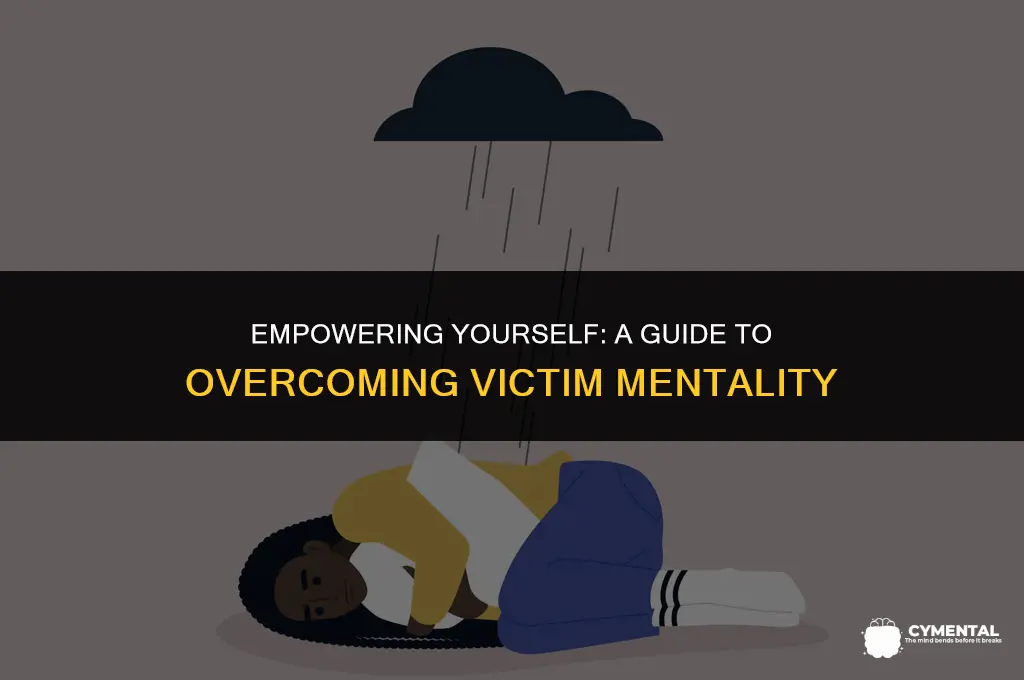
Victim mentality is a pervasive and debilitating mindset that can trap individuals in a cycle of negativity and powerlessness. It's characterized by a tendency to view oneself as a perpetual victim of circumstances, other people's actions, or even one's own perceived shortcomings. This mindset can lead to feelings of helplessness, anger, and resentment, and can significantly hinder personal growth and well-being. Getting out of victim mentality requires a conscious effort to shift one's perspective and take control of one's own life narrative. It involves recognizing and challenging negative thought patterns, cultivating self-awareness and self-compassion, and developing healthy coping mechanisms to deal with life's challenges. By adopting a more empowered and proactive mindset, individuals can break free from the constraints of victim mentality and move towards a more fulfilling and self-determined life.
| Characteristics | Values |
|---|---|
| Recognize victimhood | Acknowledge and identify when you're feeling like a victim |
| Take responsibility | Understand that you have control over your thoughts and actions |
| Empower yourself | Focus on your strengths and abilities |
| Set boundaries | Establish clear limits with others to protect your well-being |
| Practice self-care | Engage in activities that promote physical and emotional health |
| Seek support | Reach out to friends, family, or professionals for help when needed |
| Challenge negative thoughts | Dispute and reframe unhelpful or distorted thinking patterns |
| Focus on solutions | Shift your attention from problems to potential solutions and strategies |
| Cultivate gratitude | Practice appreciation for the positive aspects of your life |
| Embrace growth | View challenges as opportunities for learning and personal development |
Explore related products


What You'll Learn

Recognize and challenge negative thought patterns that perpetuate victimhood
To effectively challenge negative thought patterns that perpetuate victimhood, it's crucial to first recognize these patterns. This involves becoming aware of your internal dialogue and identifying recurring themes of helplessness, blame, or catastrophizing. One practical approach is to keep a thought journal where you record your thoughts, especially those that make you feel victimized. Reviewing this journal can help you spot common negative thought patterns, such as "I can't do anything right" or "Everything always goes wrong for me."
Once you've identified these patterns, the next step is to challenge them. This can be done by asking yourself questions that encourage a more balanced perspective. For example, if you find yourself thinking, "I'm always a failure," you could challenge this thought by asking, "Is there evidence to support this claim? Have I succeeded in anything recently?" This process helps to disrupt the automatic flow of negative thoughts and encourages a more critical and realistic evaluation of your circumstances.
Another effective strategy is to reframe your thoughts in a more positive and empowering light. Instead of dwelling on what went wrong, focus on what you can learn from the experience and how you can grow. For instance, if you experience a setback at work, rather than thinking, "I'm not good enough," you could reframe this as, "This is an opportunity to learn and improve my skills." This shift in perspective can help you feel more in control and less like a victim of your circumstances.
It's also important to surround yourself with positive influences that can help counteract negative thought patterns. This might include supportive friends and family, inspirational books, or motivational speakers. Engaging in activities that bring you joy and a sense of accomplishment can also help to boost your self-esteem and reduce feelings of victimhood.
Finally, consider seeking professional help if your negative thought patterns are persistent and significantly impacting your daily life. Cognitive-behavioral therapy (CBT) is a particularly effective approach for addressing these types of thought patterns. A CBT therapist can help you identify and challenge your negative thoughts, as well as develop more adaptive coping strategies.
In conclusion, recognizing and challenging negative thought patterns is a key step in moving beyond a victim mentality. By becoming more aware of your thoughts, actively challenging them, reframing them in a positive light, surrounding yourself with positive influences, and seeking professional help if needed, you can develop a more resilient and empowered mindset.
Navigating Workers' Comp for Mental Health: A Comprehensive Guide
You may want to see also
Explore related products



Take responsibility for your actions and decisions
To truly break free from a victim mentality, one must first acknowledge and accept responsibility for their actions and decisions. This means recognizing that you have the power to shape your own life and that your choices have consequences. It's easy to blame others for your circumstances, but doing so keeps you trapped in a cycle of helplessness. Instead, focus on what you can control and take ownership of your role in creating your current situation.
One way to take responsibility is to practice self-reflection. Regularly examine your thoughts, feelings, and behaviors to identify patterns that may be holding you back. Ask yourself tough questions about your motivations and the choices you've made. This process can be uncomfortable, but it's essential for personal growth and empowerment.
Another key aspect of taking responsibility is setting clear goals and working towards them. When you have a sense of direction and purpose, you're less likely to feel like a victim of circumstance. Break your goals down into smaller, manageable steps and celebrate your progress along the way. This will help you build confidence and a sense of accomplishment.
It's also important to surround yourself with positive influences. Seek out people who uplift and inspire you, and distance yourself from those who bring you down. Remember that you have the power to choose who you spend time with and what you expose yourself to.
Finally, practice gratitude. Focus on the things you're thankful for, no matter how small they may seem. This will help shift your perspective from one of victimhood to one of abundance and appreciation.
By taking responsibility for your actions and decisions, you can begin to break free from the constraints of a victim mentality and create a more fulfilling life for yourself.
Navigating Mental Health: Your Guide to Securing a Case Manager
You may want to see also
Explore related products


Focus on what you can control and change
One of the most effective strategies for overcoming a victim mentality is to focus on what you can control and change. This approach shifts your mindset from feeling helpless and passive to being proactive and empowered. By concentrating on the aspects of your life that are within your power to alter, you can begin to make tangible progress and build a sense of agency.
Start by identifying the specific areas in your life where you feel victimized or stuck. This could be a toxic relationship, a dead-end job, or a personal struggle. Once you've pinpointed these areas, take a step back and assess what actions you can take to improve the situation. For example, if you're in a toxic relationship, you might decide to set boundaries, seek counseling, or even end the relationship if necessary. If you're unhappy with your job, you could start by updating your resume, networking, or exploring new career paths.
It's important to remember that change often requires patience and persistence. You may face setbacks and obstacles along the way, but by staying focused on your goals and taking consistent action, you can begin to see positive results. Celebrate small victories and use them as motivation to keep moving forward.
Another key aspect of focusing on what you can control is practicing self-care. Taking care of your physical, emotional, and mental well-being can help you build resilience and better cope with challenges. This might include regular exercise, healthy eating, getting enough sleep, and engaging in activities that bring you joy and relaxation.
Finally, surround yourself with supportive people who encourage and uplift you. Having a strong support system can make a significant difference in your ability to overcome a victim mentality and make positive changes in your life. Seek out friends, family members, or even professionals who can offer guidance, encouragement, and accountability as you work towards your goals.
Navigating the VA Disability Claims Process for Depression: A Comprehensive Guide
You may want to see also
Explore related products


$15.83 $16.99


Practice self-care and prioritize your well-being
Engaging in regular self-care practices can significantly shift your focus from a victim mentality to one of empowerment and resilience. Start by identifying activities that bring you joy and relaxation, such as reading, taking a warm bath, or practicing yoga. Schedule these activities into your daily routine, prioritizing them as non-negotiable appointments with yourself. Over time, this consistent practice will help you build a sense of self-worth and autonomy, counteracting the feelings of helplessness associated with a victim mentality.
In addition to scheduling self-care activities, it's crucial to pay attention to your physical health. Ensure you're getting adequate sleep, maintaining a balanced diet, and engaging in regular exercise. These fundamental aspects of self-care not only improve your overall well-being but also contribute to a more positive mindset. When you feel physically strong and energized, you're better equipped to handle challenges and setbacks, reducing the likelihood of slipping into a victim mentality.
Another important aspect of prioritizing your well-being is setting healthy boundaries in your relationships. Learn to say "no" to requests that drain your energy or compromise your values. Surround yourself with supportive individuals who uplift and encourage you, rather than those who bring you down or take advantage of your kindness. By establishing these boundaries, you assert your self-worth and create a safe space for personal growth and healing.
Furthermore, practicing mindfulness and meditation can be powerful tools in shifting your mindset. These practices help you become more aware of your thoughts and emotions, allowing you to recognize and challenge negative patterns associated with a victim mentality. Through mindfulness, you can cultivate a sense of inner peace and stability, enabling you to respond to life's challenges with greater resilience and adaptability.
Lastly, consider seeking professional help if you find it difficult to overcome a victim mentality on your own. Therapists and counselors can provide valuable guidance and support, helping you identify the root causes of your mindset and develop strategies for change. Remember, prioritizing your well-being is not a sign of weakness; it's a courageous step towards reclaiming your power and living a more fulfilling life.
Navigating the Path to Mental Health Care: A Guide to Hospital Admission
You may want to see also
Explore related products





Seek support from positive influences and professionals if needed
Recognizing when to seek support is a critical step in overcoming a victim mentality. Positive influences, such as supportive friends and family, can provide the encouragement and perspective needed to challenge negative thought patterns. However, it's also important to acknowledge when professional help is necessary. Therapists and counselors are trained to help individuals identify and reframe victim mentalities, providing strategies to build resilience and regain control over one's life narrative.
One effective approach is cognitive-behavioral therapy (CBT), which focuses on identifying and changing negative thought patterns. A therapist can guide you through exercises to recognize distorted thinking and replace it with more balanced, realistic thoughts. For example, if you find yourself frequently thinking, "I'm always a victim of circumstance," a CBT therapist might help you reframe this thought to, "I can take steps to influence my circumstances and outcomes."
In addition to therapy, seeking out positive role models and mentors can be instrumental in shifting your mindset. Surrounding yourself with individuals who exhibit resilience and a growth mindset can inspire you to adopt similar attitudes. Look for people who have overcome adversity and can offer practical advice and support.
It's also important to consider the role of self-care in this process. Engaging in activities that promote physical and emotional well-being, such as exercise, meditation, and hobbies, can help build the resilience needed to overcome a victim mentality. By taking care of yourself, you send a message that you are worth the effort and investment, which can be a powerful antidote to victimhood.
Remember, seeking support is not a sign of weakness; it's a sign of strength and a willingness to take control of your life. Whether you reach out to friends, family, or professionals, taking that first step towards seeking help is a crucial part of the journey towards overcoming a victim mentality.
Navigating Mental Health Waivers: A Guide for Military Aspirants
You may want to see also
Frequently asked questions
Victim mentality is a mindset where an individual perceives themselves as a victim of circumstances, actions of others, or societal structures. This mentality can lead to feelings of powerlessness, helplessness, and a lack of personal responsibility. It can negatively impact one's life by hindering personal growth, damaging relationships, and preventing the individual from taking proactive steps to improve their situation.
Common signs of victim mentality include:
- Blaming others for one's problems
- Feeling helpless or powerless
- Believing that one is entitled to special treatment
- Refusing to take responsibility for one's actions
- Focusing on the negative aspects of situations
- Believing that the world is against oneself
- Feeling sorry for oneself
- Avoiding personal accountability
Overcoming victim mentality involves a conscious effort to shift one's mindset and take responsibility for one's life. Here are some steps to help:
- Recognize and acknowledge the victim mentality
- Identify the root causes of the victim mentality
- Challenge negative thoughts and beliefs
- Practice self-reflection and self-awareness
- Take responsibility for one's actions and decisions
- Set realistic goals and work towards achieving them
- Surround oneself with positive and supportive people
- Seek professional help if needed