Harper Lewis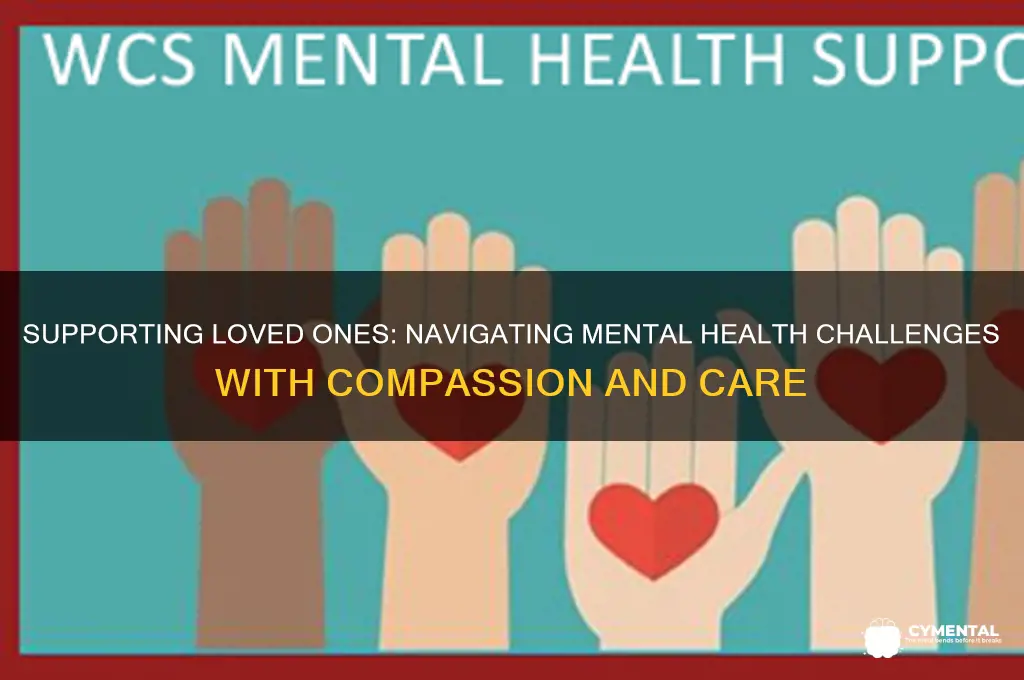
Supporting a loved one with mental health issues requires patience, empathy, and understanding. It’s essential to educate yourself about their condition to better comprehend their experiences and challenges. Open communication is key—create a safe, non-judgmental space for them to express their feelings without fear of criticism. Encourage professional help, such as therapy or medication, while respecting their autonomy and decisions. Take care of your own well-being too, as caregiving can be emotionally taxing; setting boundaries and seeking support for yourself is crucial. Above all, remind them—and yourself—that they are not alone, and recovery is a journey you can navigate together with love and resilience.
Explore related products


What You'll Learn
- Educate Yourself: Learn about their condition, symptoms, and effective coping strategies to better understand and support them
- Active Listening: Offer a non-judgmental ear, validate their feelings, and show empathy without trying to fix them
- Set Boundaries: Protect your well-being by establishing clear limits while maintaining compassion and support
- Encourage Treatment: Gently guide them toward professional help, therapy, or medication if they’re open to it
- Self-Care: Prioritize your mental health to avoid burnout and remain a stable support system for them

Educate Yourself: Learn about their condition, symptoms, and effective coping strategies to better understand and support them
Understanding a loved one's mental health condition begins with recognizing that knowledge is power. Mental health disorders, such as depression, anxiety, bipolar disorder, or schizophrenia, manifest differently in each individual. For instance, while one person with depression might withdraw socially, another might exhibit irritability or fatigue. By familiarizing yourself with the specific symptoms of their condition, you can better identify triggers and patterns, allowing for more empathetic and targeted support. Online resources like the National Alliance on Mental Illness (NAMI) or the World Health Organization (WHO) offer comprehensive guides tailored to various diagnoses, often breaking down complex medical jargon into digestible insights.
Education extends beyond symptom recognition to understanding the biological, psychological, and environmental factors contributing to their condition. For example, knowing that anxiety disorders often involve an overactive amygdala—the brain’s "fear center"—can reframe your perspective from frustration to compassion. Similarly, learning about the role of neurotransmitters like serotonin in depression can highlight why lifestyle changes, medication, or therapy are essential components of treatment. This deeper understanding fosters patience and reduces the tendency to attribute their struggles to personal failings or lack of effort.
Practical coping strategies are another critical aspect of self-education. For instance, if your loved one struggles with panic attacks, learn grounding techniques like the 5-4-3-2-1 method (identifying five things you see, four you can touch, etc.) to help them during an episode. For someone with bipolar disorder, establishing a routine and monitoring sleep patterns can be invaluable. Apps like Calm or Headspace offer guided exercises for stress reduction, while books like *The Anxiety and Phobia Workbook* provide actionable tools. Sharing these resources or practicing them together can create a sense of partnership in their recovery.
However, education must be balanced with caution. Avoid becoming an armchair diagnostician or therapist, as this can undermine professional care. Instead, use your knowledge to ask informed questions during therapy sessions or medical appointments, ensuring you’re aligned with their treatment plan. Additionally, be mindful of information overload; focus on reputable sources and avoid anecdotal advice that may perpetuate stigma or misinformation. The goal is not to become an expert but to be a well-informed ally who can provide consistent, compassionate support.
Ultimately, educating yourself transforms your role from a passive bystander to an active participant in their journey. It equips you with the language to communicate effectively, the insight to anticipate challenges, and the tools to offer meaningful assistance. For example, understanding that someone with PTSD may experience flashbacks during fireworks season allows you to plan ahead, creating a safe and quiet space for them. This proactive approach not only alleviates their burden but also strengthens your relationship, fostering trust and resilience in the face of adversity.
Prevent Mental Health Issues: Practical Strategies for a Healthier Mind
You may want to see also
Explore related products


Active Listening: Offer a non-judgmental ear, validate their feelings, and show empathy without trying to fix them
One of the most powerful tools in supporting a loved one with mental health issues is the art of active listening. It’s not about having all the answers or offering quick fixes; it’s about creating a safe space where they feel heard and understood. Imagine your role as that of a mirror, reflecting their emotions without distortion or judgment. This simple yet profound act can alleviate their sense of isolation and validate their experiences, which are often dismissed or minimized in a world that prioritizes productivity over emotional well-being.
To practice active listening, start by eliminating distractions—put away your phone, turn off the TV, and focus entirely on them. Use open-ended questions like, “How does that make you feel?” or “Can you tell me more about that?” to encourage them to express themselves. Avoid interrupting or jumping to conclusions. Instead, paraphrase what they’ve said to confirm your understanding, such as, “It sounds like you’re feeling overwhelmed by the pressure at work.” This shows you’re engaged and helps clarify their thoughts. Remember, the goal isn’t to solve their problems but to acknowledge their reality.
Validation is a cornerstone of active listening. Phrases like “That must be really hard for you” or “It makes sense that you’d feel that way” can go a long way in making them feel accepted. Avoid dismissive statements like “It’s not that bad” or “Just think positively.” Such responses invalidate their feelings and can deepen their distress. Empathy, not sympathy, is key. Instead of saying, “I’m sorry you’re going through this,” try, “I can’t imagine how difficult this must be for you, but I’m here to support you.” This subtle shift acknowledges their pain while offering solidarity.
Active listening also requires patience and self-awareness. Be mindful of your own biases or urges to offer advice. If you find yourself thinking, “They should just…,” pause and refocus on their perspective. It’s natural to want to fix things, but unsolicited advice can feel dismissive. Instead, ask, “What do you think might help right now?” This empowers them to take the lead in their own healing process. Over time, consistent active listening can strengthen your relationship and build trust, fostering an environment where they feel safe to share even their most vulnerable thoughts.
Finally, remember that active listening is a skill that improves with practice. It’s not about being perfect but about being present. If you slip into problem-solving mode, gently redirect the conversation back to their feelings. For example, if they mention feeling anxious about a social event, resist the urge to suggest they stay home. Instead, say, “It sounds like the thought of going makes you really anxious. What’s the hardest part for you?” This keeps the focus on their emotional experience, reinforcing that their feelings matter. By offering a non-judgmental ear, validating their emotions, and showing genuine empathy, you become a source of comfort and support in their journey toward mental well-being.
Explore related products


Set Boundaries: Protect your well-being by establishing clear limits while maintaining compassion and support
Caring for a loved one with mental health issues often blurs the line between support and self-sacrifice. Without boundaries, caregivers risk emotional exhaustion, resentment, and compromised well-being. Establishing limits isn’t selfish—it’s essential for sustaining the relationship and ensuring both parties can thrive. Think of boundaries as the oxygen mask on an airplane: secure yours first before assisting others.
Step 1: Identify Your Limits
Start by reflecting on what drains you emotionally, physically, or financially. Are you canceling plans repeatedly to accommodate their needs? Are you neglecting your own health or responsibilities? For example, if your loved one calls late at night during crises, decide on a cutoff time after which you’ll respond via text but not engage in lengthy conversations. Be specific: “I’ll be available until 9 PM, but after that, I’ll check in tomorrow.”
Step 2: Communicate Clearly and Compassionately
Boundaries fail when they’re ambiguous or delivered harshly. Use “I” statements to express your needs without sounding accusatory. For instance, “I feel overwhelmed when I’m the only person you rely on for support. Can we explore other resources together?” Pair limits with reassurance: “I care about you deeply, and setting this boundary helps me be more present when we’re together.”
Caution: Avoid Enabling Behaviors
Compassion can inadvertently reinforce unhealthy patterns. For example, repeatedly dropping everything to solve their problems may prevent them from developing coping skills. Instead, offer support in ways that encourage independence. If they struggle with anxiety, suggest, “Let’s practice deep breathing together,” rather than taking over tasks they’re capable of handling.
Takeaway: Boundaries Strengthen Relationships
Contrary to fear, boundaries don’t create distance—they foster mutual respect. When caregivers prioritize their well-being, they model self-care, which can inspire their loved ones to do the same. Remember, you’re not their therapist; you’re their ally. By protecting your energy, you ensure the support you provide is sustainable, genuine, and rooted in love, not obligation.
Navigating a Compassionate Breakup with a Partner Facing Mental Health Challenges
You may want to see also
Explore related products


Encourage Treatment: Gently guide them toward professional help, therapy, or medication if they’re open to it
One of the most effective ways to support a loved one struggling with mental health is to encourage them to seek professional treatment. This doesn’t mean forcing them into therapy or medication—it means creating an environment where they feel safe exploring these options. Start by normalizing the conversation around mental health. Share stories of others who’ve benefited from therapy or medication, or casually mention resources like local therapists or online platforms. For example, you could say, “I read about a new counseling center downtown that specializes in anxiety—it might be worth checking out if you’re interested.” This approach avoids pressure while planting the seed of possibility.
Encouraging treatment requires patience and sensitivity. Avoid phrases like “You need help” or “You should see someone,” which can feel judgmental. Instead, use “I” statements to express concern and offer support. For instance, “I’ve noticed you’ve been feeling overwhelmed lately, and I’d love to help you find someone to talk to if you’re open to it.” If they’re hesitant, acknowledge their fears—many people worry about stigma, cost, or the unknown. Offer to help research affordable options, accompany them to the first appointment, or simply listen without pushing. Small, non-threatening steps, like suggesting a single consultation, can make the idea of treatment feel less daunting.
Medication is often a sensitive topic, but it can be a game-changer for many. If your loved one is open to the idea, educate yourself on common medications for their condition so you can discuss it knowledgeably. For example, selective serotonin reuptake inhibitors (SSRIs) are frequently prescribed for depression and anxiety, often starting at a low dose (e.g., 10 mg of Lexapro) and adjusted over time. Emphasize that medication is a tool, not a cure-all, and that it often works best alongside therapy. Share stories of others who’ve found relief through medication, but avoid making it sound like a quick fix. Instead, frame it as one of several options they can explore at their own pace.
Finally, remember that encouragement doesn’t mean taking control. Your role is to support, not to decide. If they agree to seek help, celebrate their courage, but don’t micromanage their journey. Provide practical assistance, like helping them compile a list of questions for their first therapy session or reminding them of appointment times. If they resist, respect their boundaries while leaving the door open for future conversations. Over time, consistent, gentle encouragement can help them see treatment not as a sign of weakness, but as a step toward healing and strength.
Heart-Mind Connection: Unraveling the Link Between Cardiac and Mental Health
You may want to see also
Explore related products


Self-Care: Prioritize your mental health to avoid burnout and remain a stable support system for them
Supporting a loved one with mental health issues is an act of profound care, but it can also be emotionally taxing. Without intentional self-care, caregivers often experience burnout, diminishing their ability to provide effective support. Prioritizing your mental health isn’t selfish—it’s essential. Imagine a lifeboat: you can’t rescue someone if you’re drowning yourself.
Step 1: Establish Boundaries
Define clear limits on time, energy, and emotional availability. For instance, allocate specific hours for support conversations and communicate them openly. If your loved one texts late at night, respond the next day to protect your rest. Boundaries aren’t barriers; they’re safeguards that ensure you remain a reliable presence.
Step 2: Practice Emotional Hygiene
Just as you’d wash your hands to prevent illness, cleanse your emotional space. After intense interactions, take 10–15 minutes to journal, meditate, or breathe deeply. This resets your emotional baseline and prevents their struggles from becoming yours. Think of it as emotional detoxification.
Step 3: Seek External Support
You don’t have to carry this alone. Join a caregiver support group, either locally or online. Speaking with others who understand your challenges provides validation and practical strategies. Additionally, consider therapy for yourself—a professional can help you process complex emotions and prevent compassion fatigue.
Caution: Avoid the Martyr Trap
Caregivers often equate self-sacrifice with love, but this mindset is unsustainable. Skipping meals, losing sleep, or neglecting hobbies to be available 24/7 will deplete your resources. Remember: you’re not their therapist, just their support system. Let professionals handle clinical aspects while you focus on emotional presence.
Self-care isn’t a luxury; it’s a necessity. Schedule non-negotiable time for activities that recharge you—whether it’s exercise, reading, or a hobby. By maintaining your mental health, you ensure your loved one has a stable, resilient anchor in their storm. After all, you can’t pour from an empty cup.
Taking the First Step: A Guide to Mental Health Screening
You may want to see also
Frequently asked questions
Offer consistent, non-judgmental support by listening actively, validating their feelings, and encouraging professional help. Respect their boundaries and avoid pressuring them, while also taking care of your own well-being.
Gently express your concerns and suggest resources like therapy or support groups. Avoid forcing them, but let them know you’re there when they’re ready. Focus on building trust and patience.
Look for signs like sudden changes in behavior, withdrawal, or increased distress. Encourage open communication, offer to accompany them to appointments, and seek guidance from mental health professionals if necessary.




![My Aging Parent Needs Help!: 7 Step Guide to Caregiving with No Regrets, More Compassion, and Going from Overwhelmed to Organized [Includes Tips for Caregiver Burnout]](https://m.media-amazon.com/images/I/61YC-rddcbL._AC_UL320_.jpg)