Noah Parker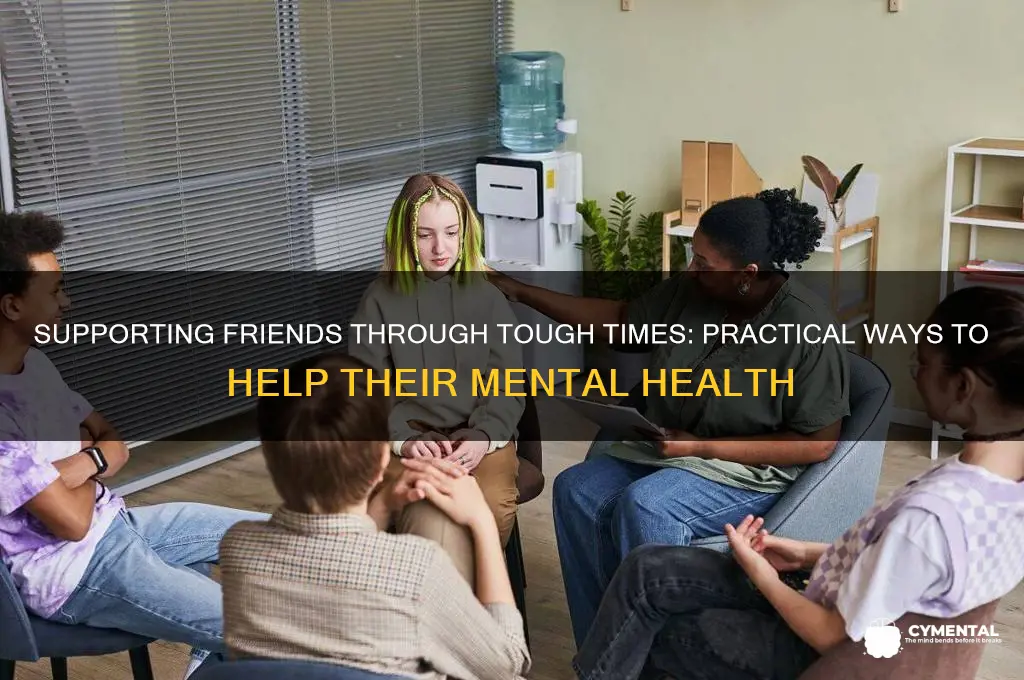
Helping a friend who is struggling with a bad mental state can be challenging but incredibly important, as your support can make a significant difference in their journey toward healing. Start by creating a safe, non-judgmental space where they feel comfortable sharing their feelings, and listen actively without trying to fix their problems or offer unsolicited advice. Encourage them to seek professional help, such as therapy or counseling, while also being there for them in small, consistent ways, like checking in regularly or engaging in activities that bring them joy. Validate their emotions, remind them they are not alone, and take care of yourself in the process, as supporting someone through mental health struggles can be emotionally taxing. Your patience, empathy, and presence can be a powerful source of strength for your friend during their difficult time.
Explore related products


What You'll Learn
- Listen Actively: Give undivided attention, avoid judgment, and validate their feelings without interrupting or offering solutions
- Encourage Professional Help: Gently suggest therapy or counseling, offering to assist in finding resources or scheduling appointments
- Stay Connected: Regularly check in, maintain contact, and show consistent support through messages, calls, or visits
- Be Patient: Understand recovery takes time; avoid pressuring them and respect their pace in healing
- Offer Practical Help: Assist with daily tasks like cooking, cleaning, or errands to ease their burden

Listen Actively: Give undivided attention, avoid judgment, and validate their feelings without interrupting or offering solutions
Active listening is a cornerstone of supporting a friend in a bad mental state, yet it’s often misunderstood as mere silence. It’s not about waiting for your turn to speak but fully engaging with their words, tone, and emotions. When your friend is sharing their struggles, put away distractions—no phones, no multitasking. Maintain eye contact if you’re in person, or if it’s a call, avoid background noise. This undivided attention communicates respect and care, signaling that their pain matters to you. Research shows that feeling heard reduces stress and fosters emotional connection, making this step both simple and profoundly impactful.
Validation is the antidote to judgment, but it requires precision. Instead of dismissing their feelings with phrases like “It could be worse” or “You’ll get over it,” acknowledge their reality. For example, say, “It makes sense you’re feeling overwhelmed with everything going on,” or “I’d feel the same way if I were in your shoes.” This approach doesn’t minimize their experience; it normalizes it. Studies in psychology highlight that validation reduces defensiveness and encourages openness, creating a safe space for your friend to explore their emotions without fear of criticism.
Interrupting to offer solutions, no matter how well-intentioned, can inadvertently silence your friend. Phrases like “Have you tried…?” or “You should just…” shift the focus from their feelings to your advice, potentially making them feel unheard or inadequate. Instead, let them lead the conversation. If they ask for advice, respond with questions like, “What do you think might help?” or “How can I support you in this?” This empowers them to take ownership of their situation while still benefiting from your presence.
Practicing active listening isn’t instinctive; it’s a skill that requires mindfulness and patience. Start by noticing your impulses—the urge to fix, advise, or compare their struggles to your own. When these arise, take a mental step back and refocus on their words. Use reflective statements like, “It sounds like you’re really hurting right now,” to show you’re following along. Over time, this practice becomes more natural, transforming you into a trusted confidant rather than just a sympathetic ear.
The power of active listening lies in its simplicity and depth. It doesn’t require expertise, just presence and empathy. By giving your friend the gift of being fully heard, you help alleviate their isolation and validate their humanity. Remember, your goal isn’t to solve their problems but to remind them they’re not alone. In a world that often rushes to fix, the act of simply listening can be revolutionary.
Understanding Mental Illness: The Brain's Role in Learning and Awareness
You may want to see also
Explore related products


Encourage Professional Help: Gently suggest therapy or counseling, offering to assist in finding resources or scheduling appointments
Recognizing when a friend needs professional help can be tricky, but certain signs—like persistent sadness, withdrawal from activities, or drastic changes in behavior—often signal the need for intervention. While your support is invaluable, it’s not a substitute for trained expertise. Therapy or counseling provides tools and strategies that friends, no matter how well-intentioned, cannot offer. Gently suggesting professional help isn’t about abandoning your friend; it’s about empowering them with resources to heal and grow.
Approaching the conversation requires sensitivity and timing. Choose a quiet, private moment when your friend feels safe and open to dialogue. Instead of saying, “You need therapy,” frame it as a collaborative suggestion: “I’ve noticed you’ve been struggling, and I think talking to someone professionally could really help. Would you be open to exploring that?” Offer specific examples of how therapy has benefited others or share personal experiences if relevant. Avoid making it feel like an ultimatum; let them know it’s their choice, and you’re there to support them, not judge.
One of the biggest barriers to seeking help is often the logistical burden. That’s where your assistance can make a tangible difference. Offer to research therapists or counselors who specialize in their concerns, whether it’s anxiety, depression, or trauma. Websites like Psychology Today or local mental health organizations can be great starting points. If they’re overwhelmed by the process, propose helping them schedule an initial appointment or even accompanying them if they’d like. Small acts like these remove obstacles and show your commitment to their well-being.
It’s crucial to respect their boundaries while encouraging professional help. If they’re hesitant, don’t push; instead, let them know the offer stands whenever they’re ready. Some people may fear stigma or feel therapy isn’t for them, so normalizing it can help. Share statistics, like how 1 in 4 adults experience mental health challenges annually, or emphasize that seeking help is a sign of strength, not weakness. Your role isn’t to convince them but to create a safe space where they feel supported in making that decision.
Finally, remember that encouraging professional help is just one part of supporting a friend in a bad mental state. Continue checking in, listening without judgment, and being present in their life. Professional help is a tool, not a cure-all, and your friendship remains a vital source of comfort and stability. By combining your emotional support with the expertise of a therapist, you’re helping your friend build a robust foundation for recovery and resilience.
Mirtazapine's Role in Enhancing Mental Health and Well-being
You may want to see also
Explore related products


Stay Connected: Regularly check in, maintain contact, and show consistent support through messages, calls, or visits
Isolation can exacerbate mental health struggles, creating a vicious cycle of withdrawal and despair. Staying connected breaks this cycle by reminding your friend they’re not alone. A simple text, a brief call, or an unannounced visit (if welcomed) can signal that someone cares, even when they feel unworthy of attention. Consistency is key—sporadic outreach may feel performative, but regular check-ins, even if brief, reinforce a sense of stability and reliability. For instance, a daily “thinking of you” message or a weekly 15-minute call can become a lifeline, anchoring them in a routine of support.
The *how* of staying connected matters as much as the act itself. Tailor your approach to their preferences and energy levels. Some may crave deep conversations, while others might prefer lighthearted memes or shared playlists. If they’re overwhelmed, avoid pressure to respond by framing messages as one-sided updates: “Just wanted to share this song I thought you’d like.” For those who struggle with verbal communication, consider sending a care package or handwritten note—tangible reminders of your presence. The goal isn’t to fix their pain but to normalize your availability, creating a safe space for them to reach out when ready.
A common pitfall is assuming silence means disinterest. Mental health struggles often mute the ability to initiate contact, but that doesn’t diminish the need for connection. If your friend pulls away, resist taking it personally. Instead, reframe your role as a steady presence, not a demand for reciprocity. For example, if they stop responding to texts, switch to leaving voicemails: “Hey, no pressure to reply, but I wanted to hear your voice.” This shifts the dynamic from expectation to unconditional support, easing their burden of guilt or inadequacy.
Finally, balance your efforts with self-awareness. Overzealous attempts to connect can feel smothering, especially if your friend values solitude. Pay attention to cues—if they consistently decline calls or seem drained after visits, scale back while maintaining openness. Set boundaries for yourself, too; supporting someone in crisis can be emotionally taxing. Aim for sustainable practices, like alternating between light check-ins and deeper conversations, to ensure your efforts remain genuine and long-lasting. Staying connected isn’t about fixing their mental state—it’s about reminding them they’re seen, valued, and never truly alone.
Dogs and Mental Health: How Canines Provide Emotional Support and Healing
You may want to see also
Explore related products


Be Patient: Understand recovery takes time; avoid pressuring them and respect their pace in healing
Recovery from a bad mental state is a marathon, not a sprint. It’s a process filled with setbacks, small victories, and moments of stagnation. Understanding this timeline is crucial when supporting a friend. Mental health struggles often stem from deep-rooted issues—trauma, chronic stress, or biochemical imbalances—that cannot be resolved overnight. Pressuring someone to "get better" or setting arbitrary deadlines can exacerbate their anxiety and guilt, reinforcing feelings of inadequacy. Instead, acknowledge the complexity of their journey. For instance, research shows that therapy, a common recovery tool, often takes 3 to 6 months to yield noticeable improvements, and even then, progress is nonlinear. Respecting this pace isn’t passive; it’s an active choice to prioritize their well-being over quick fixes.
Consider the analogy of healing a broken bone. Just as a fracture requires time, rest, and careful treatment, mental health recovery demands patience and consistency. Imagine telling someone with a broken leg to "just walk it off"—it’s not only unhelpful but harmful. Similarly, phrases like "You’ll be fine soon" or "Why aren’t you better yet?" can invalidate their experience. Instead, adopt a posture of quiet support. Ask open-ended questions like, "How are you feeling today?" or "What can I do to help right now?" These inquiries signal that you’re present without imposing expectations. Practical tips include avoiding comparisons ("My friend recovered faster") and celebrating small milestones, like a day when they managed to leave the house or complete a task.
Patience also means managing your own expectations. It’s natural to feel frustrated or helpless when a friend is suffering, but projecting these emotions onto them can create additional stress. For example, if your friend cancels plans repeatedly due to anxiety, resist the urge to say, "You’re always doing this." Instead, communicate your feelings constructively: "I miss spending time with you, but I understand if you’re not up for it." Setting boundaries is essential here—you can offer support without sacrificing your own mental health. A helpful framework is the "three strikes rule": after three attempts to connect or help, step back and reassess, ensuring you’re not enabling avoidance while still being available.
Finally, patience extends to the methods of recovery. Not every approach works for everyone, and experimentation is often necessary. For instance, while medication can be life-changing for some, others may find relief through mindfulness practices or lifestyle changes. Encourage exploration without attachment to outcomes. Share resources—like apps for guided meditation (e.g., Headspace) or books on cognitive behavioral therapy—but let your friend decide what resonates. The goal is to create a safe, nonjudgmental space where they can navigate their healing without fear of failure or disappointment. In doing so, you become a steady presence in their journey, not a timer counting down to an unrealistic finish line.
Vygotsky's Impact: Empowering Physically Disabled and Mentally Impaired Children
You may want to see also
Explore related products


Offer Practical Help: Assist with daily tasks like cooking, cleaning, or errands to ease their burden
When someone is struggling with their mental health, even the simplest tasks can feel overwhelming. The weight of depression, anxiety, or stress can turn mundane activities like cooking a meal or doing laundry into insurmountable hurdles. This is where practical help becomes a powerful form of support. By offering to assist with daily tasks, you’re not just lightening their physical load—you’re acknowledging their struggle and providing tangible relief in a way that words alone often can’t.
Consider this: a friend battling severe anxiety might skip meals because the thought of grocery shopping or standing at the stove feels paralyzing. Here’s where you can step in. Offer to cook a meal together or drop off a prepared dish. If cooking isn’t your forte, suggest ordering food and splitting the cost. The key is to make it effortless for them to accept. For example, instead of asking, “Do you need help with groceries?” say, “I’m heading to the store—what can I pick up for you?” This removes the mental effort required to ask for help and ensures they feel cared for without added pressure.
Cleaning is another area where practical assistance can make a significant difference. A cluttered environment can exacerbate feelings of chaos and hopelessness. If your friend is comfortable with it, offer to spend an hour tidying up their space. Focus on high-impact areas like the kitchen or living room, and avoid rearranging personal items without permission. For those who prefer privacy, suggest hiring a cleaning service for a one-time visit and offer to split the cost. Even small gestures, like washing their dishes or doing a load of laundry, can provide a sense of order and calm.
Errands, too, can become a source of stress when mental energy is depleted. Volunteering to pick up prescriptions, drop off dry cleaning, or handle a post office run can free up mental bandwidth for your friend to focus on self-care. Pair these tasks with a check-in—a quick coffee or walk afterward—to show you’re there for more than just the to-do list. Remember, the goal isn’t to take over their life but to provide a safety net during a vulnerable time.
The beauty of practical help lies in its immediacy and visibility. Unlike emotional support, which can feel abstract, tangible assistance provides concrete evidence that someone cares. It also fosters a sense of reciprocity, reminding your friend that it’s okay to rely on others. Over time, as their mental state improves, they may even return the favor, strengthening your bond. So, the next time you notice a friend struggling, don’t underestimate the power of rolling up your sleeves and diving into their daily tasks—it might just be the lifeline they need.
Hydrogen Water and Mental Health: Exploring Potential Benefits and Science
You may want to see also
Frequently asked questions
Start by expressing genuine concern in a calm and non-judgmental way. Use open-ended questions like, “How are you feeling lately?” and let them know you’re there to listen without pushing for details.
Respect their boundaries and let them know you’re available whenever they’re ready. Offer support in other ways, like spending time together doing something they enjoy or simply being present.
Encourage them to seek professional help, such as therapy or counseling, while offering emotional support. Help them maintain a routine, stay active, and avoid isolating themselves.
Take it seriously and don’t leave them alone. Encourage them to call a crisis hotline or seek immediate professional help. Let them know they’re not alone and that you care about them.
Set boundaries to avoid burnout and prioritize your own mental health. Seek support from others, practice self-care, and remember you’re not responsible for fixing their problems—you’re there to support them.