Ava Ramirez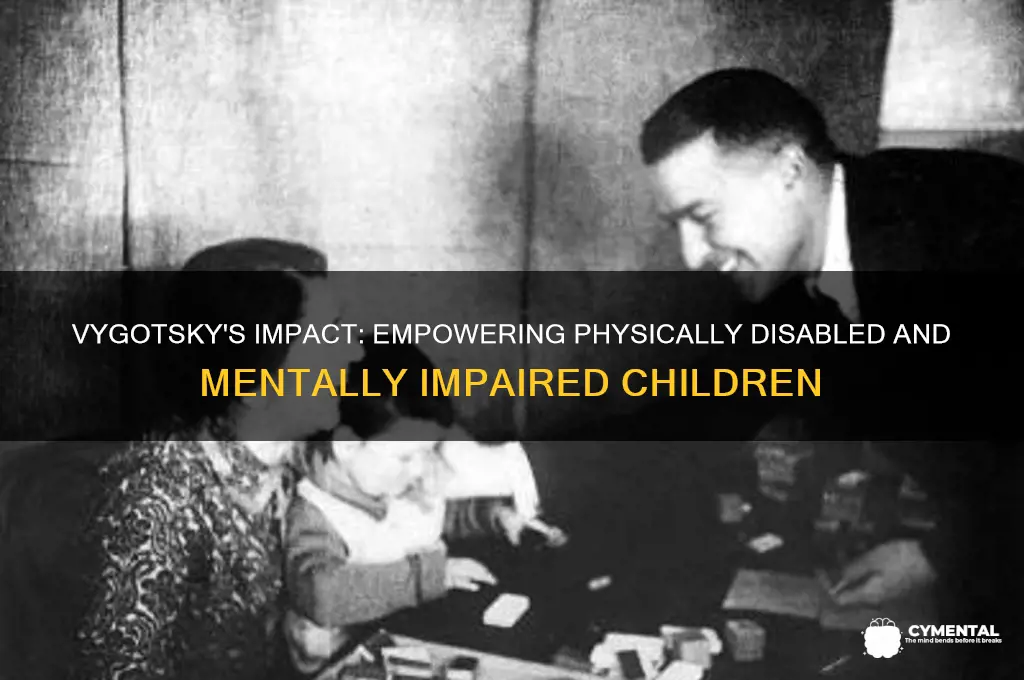
Lev Vygotsky, a pioneering psychologist, significantly influenced the field of education and special needs through his sociocultural theory, which emphasizes the role of social interaction and cultural context in cognitive development. His work has been particularly beneficial for physically disabled and mentally impaired children by highlighting the importance of scaffolding and the Zone of Proximal Development (ZPD). Vygotsky’s ZPD concept suggests that learning occurs most effectively when children are supported in tasks just beyond their current abilities, with the help of more knowledgeable others, such as teachers, peers, or caregivers. For physically disabled children, this approach encourages the use of adaptive tools and technologies to bridge gaps in physical capabilities, fostering independence and skill development. For mentally impaired children, Vygotsky’s theories promote individualized, socially mediated instruction that leverages their strengths and provides tailored support to enhance cognitive and social functioning. By focusing on collaborative learning and the potential for growth within the ZPD, Vygotsky’s framework has empowered educators and therapists to create inclusive, supportive environments that maximize the potential of all children, regardless of their challenges.
| Characteristics | Values |
|---|---|
| Zone of Proximal Development (ZPD) | Emphasized the importance of scaffolding to help children with disabilities learn tasks they cannot perform independently but can achieve with guidance. |
| Social Learning | Highlighted the role of social interactions and collaborative learning in supporting disabled children’s cognitive and social development. |
| Cultural and Contextual Learning | Stressed adapting learning environments and tools to fit the cultural and physical needs of disabled children. |
| Language and Communication | Focused on developing alternative communication methods (e.g., sign language, visual aids) for mentally impaired children. |
| Inclusive Education | Advocated for integrating disabled children into mainstream educational settings with appropriate support systems. |
| Individualized Instruction | Supported tailored teaching methods based on each child’s unique abilities and challenges. |
| Use of Assistive Technologies | Encouraged the use of tools and technologies to bridge physical and cognitive gaps for disabled learners. |
| Emotional and Psychological Support | Recognized the importance of emotional encouragement and reducing stigma to foster confidence and motivation in disabled children. |
| Play and Exploration | Promoted play-based learning to enhance problem-solving skills and social interactions for children with disabilities. |
| Assessment and Feedback | Emphasized continuous assessment and constructive feedback to monitor progress and adjust teaching strategies for disabled learners. |
Explore related products


$22.5 $29.95


What You'll Learn
- Social Interaction's Role: Emphasized learning through social interactions, aiding disabled children's cognitive development via collaborative activities
- Zone of Proximal Development: Identified potential learning range, tailoring support for mentally impaired children's skill acquisition
- Scaffolding Techniques: Provided structured support, gradually reducing assistance to foster independence in disabled learners
- Cultural Tools Use: Promoted adaptive tools and technologies to enhance physically disabled children's learning experiences
- Language as Cognitive Tool: Highlighted language's role in thinking, benefiting mentally impaired children's communication and reasoning

Social Interaction's Role: Emphasized learning through social interactions, aiding disabled children's cognitive development via collaborative activities
Lev Vygotsky's theory of social development underscores the transformative power of social interactions in cognitive growth, particularly for children with physical and mental impairments. By emphasizing collaborative activities, Vygotsky provided a framework that leverages peer and adult support to bridge developmental gaps. For instance, a child with cerebral palsy struggling with fine motor skills can engage in group puzzles, where peers guide hand placement and strategy, fostering problem-solving abilities while accommodating physical limitations. This approach not only enhances cognitive skills but also integrates the child into a social learning environment, reducing isolation.
To implement Vygotsky’s principles effectively, educators and caregivers should design activities that require mutual problem-solving and shared goals. For example, a mentally impaired child might pair with a neurotypical peer to build a Lego structure, with the latter providing verbal cues and the former executing the task. This dynamic operates within the child’s Zone of Proximal Development (ZPD)—the gap between what they can achieve independently and with guidance. Over time, gradually reduce scaffolding to encourage independence, ensuring the activity remains challenging yet attainable. For children aged 5–12, 20–30 minutes of structured collaborative tasks daily can yield measurable cognitive improvements.
Critics might argue that relying on social interactions could overwhelm children with severe impairments, but Vygotsky’s theory advocates for tailored support, not forced participation. For nonverbal children, augmentative communication tools like picture cards or tablets can facilitate interaction during group activities. For instance, a child with autism might use a tablet to indicate preferences during a group storytelling session, contributing meaningfully without verbal pressure. The key is to adapt the activity to the child’s abilities, ensuring inclusion without frustration.
A comparative analysis reveals Vygotsky’s approach contrasts sharply with individual-focused therapies, which often isolate children during skill-building. While one-on-one sessions have merit, collaborative activities foster social-emotional skills alongside cognitive development. For example, a physically disabled child learning math through group games not only grasps numerical concepts but also learns negotiation and teamwork. This dual benefit is particularly valuable for disabled children, who often face social barriers in addition to cognitive challenges.
In conclusion, Vygotsky’s emphasis on social interactions offers a holistic pathway to cognitive development for disabled children. By embedding learning within collaborative activities, educators can create inclusive environments that address both intellectual and social needs. Practical steps include pairing children based on complementary strengths, using adaptive tools, and progressively reducing support as skills improve. This method not only aligns with Vygotsky’s theory but also empowers children to navigate their developmental journeys with confidence and connection.
IQ Tests and Mental Health: Diagnostic Tool or Misleading Measure?
You may want to see also
Explore related products


$397.73 $539


Zone of Proximal Development: Identified potential learning range, tailoring support for mentally impaired children's skill acquisition
Lev Vygotsky's concept of the Zone of Proximal Development (ZPD) revolutionized how educators approach skill acquisition in mentally impaired children. By identifying the gap between what a child can achieve independently and what they can accomplish with guidance, the ZPD offers a roadmap for tailored support. This framework shifts the focus from deficits to potential, recognizing that every child, regardless of cognitive or physical challenges, possesses a unique learning range waiting to be unlocked.
Imagine a child with Down syndrome struggling to button a shirt. Their independent ability (actual development) might be limited to holding the button, while their potential with assistance (ZPD) could extend to completing the task with verbal prompts and hand-over-hand guidance. The ZPD highlights this crucial zone where learning occurs through scaffolding – the provision of just enough support to bridge the gap between current ability and potential mastery.
Applying the ZPD in practice involves a dynamic process. First, assess the child's current skill level through observation and structured tasks. Then, identify the target skill and break it down into manageable steps. For our shirt-buttoning example, steps might include identifying buttonholes, aligning button and hole, and pushing the button through. Next, provide scaffolding tailored to the child's needs. This could involve physical demonstrations, verbal instructions, visual aids, or adaptive tools like button hooks. Gradually, as the child masters each step with support, reduce the scaffolding, encouraging independent practice within their expanding ZPD.
Regularly reassess and adjust the scaffolding based on the child's progress. This iterative process ensures that support remains within the ZPD, challenging the child without overwhelming them. It's crucial to remember that the ZPD is not static; it evolves as the child learns and grows, requiring constant adaptation of teaching strategies.
The beauty of the ZPD lies in its emphasis on collaboration and empowerment. By working within this zone, educators and caregivers become facilitators of learning, not merely instructors. They provide the necessary tools and guidance, allowing the child to actively participate in their own skill acquisition. This approach fosters a sense of accomplishment and builds confidence, crucial for the overall development of mentally impaired children.
School Psychologists: Essential Mental Health Support in Education
You may want to see also
Explore related products


Scaffolding Techniques: Provided structured support, gradually reducing assistance to foster independence in disabled learners
Lev Vygotsky's theory of scaffolding offers a transformative approach to educating physically disabled and mentally impaired children. By providing structured support that gradually diminishes, educators can bridge the gap between what learners can achieve independently and their potential with guidance. This method, rooted in the Zone of Proximal Development (ZPD), empowers disabled learners to build skills and confidence, ultimately fostering greater independence.
Scaffolding techniques are not one-size-fits-all. For a child with cerebral palsy struggling with writing, a teacher might start by physically guiding their hand to form letters. As the child gains control, the teacher reduces this support, moving to verbal prompts, then visual aids, and finally independent practice. This gradual release of responsibility mirrors the child's growing abilities, ensuring they don't become reliant on assistance.
Consider a child with Down syndrome learning to solve simple math problems. Initially, the teacher might use concrete manipulatives like blocks to represent numbers. As the child grasps the concept, the teacher transitions to pictorial representations, then abstract symbols. This progression, guided by the child's ZPD, allows them to internalize the process, moving from dependence on physical aids to mental manipulation of numbers.
The key to successful scaffolding lies in careful observation and adjustment. Educators must constantly assess the learner's progress, identifying the point where they can manage a task with minimal support. Too much assistance can hinder growth, while too little can lead to frustration. Regularly reviewing and modifying the level of scaffolding ensures a dynamic learning environment that adapts to the child's evolving needs.
Implementing scaffolding effectively requires a shift in perspective. It's not about doing the work for the learner, but about providing the tools and guidance they need to do it themselves. This approach demands patience, creativity, and a deep understanding of the learner's unique challenges and strengths. By embracing Vygotsky's principles, educators can unlock the potential of disabled learners, helping them navigate their educational journey with increasing autonomy and success.
Occupational Therapy's Role in Mental Health: A Comprehensive Guide
You may want to see also
Explore related products

$36.88 $49


Cultural Tools Use: Promoted adaptive tools and technologies to enhance physically disabled children's learning experiences
Lev Vygotsky's theory of cultural-historical psychology emphasizes the role of tools and cultural artifacts in cognitive development. For physically disabled children, this translates into a powerful strategy: leveraging adaptive tools and technologies to bridge the gap between their abilities and the demands of learning environments. By integrating these tools, educators and caregivers can create a more inclusive and effective learning experience.
Consider the use of assistive technologies like screen readers, speech-to-text software, or adaptive keyboards for children with motor impairments. These tools act as mediators, allowing children to engage with educational content in ways that align with their unique needs. For instance, a child with limited hand mobility might use a head-controlled mouse to navigate digital resources, fostering independence and participation in classroom activities. Vygotsky’s concept of "cultural tools" here extends beyond physical objects to include digital interfaces that reshape the learning landscape.
The key lies in selecting tools that align with the child’s developmental zone of proximal development (ZPD)—the gap between what they can achieve independently and what they can accomplish with guidance. For a 7-year-old with cerebral palsy, this might mean introducing a tablet with pre-installed educational apps that encourage problem-solving and creativity. Pairing this technology with scaffolding, such as step-by-step tutorials or adult assistance, ensures the child remains challenged yet supported. Over time, the goal is to gradually reduce reliance on these tools as the child builds skills and confidence.
However, implementation requires careful consideration. Not all adaptive tools are one-size-fits-all. A child with visual impairments, for example, might benefit more from tactile learning aids like Braille displays or textured maps than from auditory tools. Assessments should be conducted to identify the most effective tools for each child, taking into account their specific disabilities, learning styles, and developmental stage. Collaboration between educators, occupational therapists, and parents is essential to ensure consistency and effectiveness.
Ultimately, Vygotsky’s framework encourages viewing adaptive tools not as crutches but as catalysts for growth. By embedding these technologies into the learning environment, we empower physically disabled children to explore, learn, and thrive. The takeaway is clear: cultural tools, when thoughtfully applied, can transform barriers into opportunities, fostering a more equitable and dynamic educational experience.
Social Care Services: Supporting Mental Health and Well-being Effectively
You may want to see also
Explore related products


$19.29 $37


Language as Cognitive Tool: Highlighted language's role in thinking, benefiting mentally impaired children's communication and reasoning
Language is not merely a means of communication; it is a cognitive tool that shapes thought, organizes experience, and bridges the gap between the internal and external world. For mentally impaired children, this tool becomes a lifeline, offering a structured way to navigate their cognitive and social environments. Vygotsky’s theory of language as a mediator of thought emphasizes that language is not just about expressing ideas but about forming them. For children with cognitive impairments, this means that language development is directly tied to their ability to reason, problem-solve, and interact meaningfully with others. By fostering language skills, educators and caregivers can unlock new levels of cognitive functioning in these children, turning abstract concepts into tangible, understandable ideas.
Consider the example of a child with Down syndrome who struggles with sequential reasoning. Through the use of language—specifically, verbal prompts and structured narratives—caregivers can break down complex tasks into manageable steps. For instance, teaching the child to say, “First, I put on my shoes. Then, I pick up my bag,” not only aids in memory retention but also helps them internalize the sequence of actions. This is a practical application of Vygotsky’s concept of *inner speech*, where external language becomes internalized, guiding thought processes. Over time, this internalized language can reduce reliance on external prompts, fostering independence in daily activities.
However, implementing language as a cognitive tool requires careful consideration of the child’s developmental stage and specific needs. For younger children (ages 3–6), focus on foundational language skills like labeling objects, following simple instructions, and engaging in turn-taking conversations. For older children (ages 7–12), incorporate more abstract language, such as describing emotions, hypothesizing outcomes, or solving verbal puzzles. For instance, asking, “What do you think will happen if we mix these colors?” encourages reasoning and prediction. Caution must be taken to avoid overwhelming the child with complex language structures too quickly, as this can lead to frustration and disengagement.
A persuasive argument for prioritizing language development in mentally impaired children lies in its long-term benefits. Research shows that children who receive language-focused interventions demonstrate improved academic performance, better social integration, and enhanced problem-solving abilities. For example, a study involving children with autism spectrum disorder found that those who participated in language-based cognitive training showed significant gains in both verbal and non-verbal reasoning tasks. This underscores the transformative power of language as a cognitive tool, not just for communication but for overall cognitive development.
In conclusion, language serves as a critical bridge between thought and action for mentally impaired children. By leveraging Vygotsky’s insights, educators and caregivers can design interventions that use language to scaffold cognitive processes, turning abstract ideas into concrete, manageable concepts. Whether through structured narratives, verbal prompts, or interactive conversations, the strategic use of language can unlock new cognitive pathways, fostering independence, reasoning, and meaningful communication. The key lies in tailoring these approaches to the child’s unique needs, ensuring that language becomes not just a tool for expression but a foundation for thought itself.
Writing as Therapy: Unlocking Mental Health Benefits Through Self-Expression
You may want to see also
Frequently asked questions
Vygotsky's ZPD emphasizes the gap between what a child can do independently and what they can achieve with guidance. For physically disabled children, this approach focuses on identifying their potential with support, using adaptive tools, and tailored instruction to enhance learning and independence.
Vygotsky stressed the importance of social interaction in cognitive development. For mentally impaired children, this meant creating supportive environments where peers, teachers, or caregivers could scaffold learning, fostering communication, problem-solving, and social skills through collaborative activities.
Scaffolding involves providing temporary support to help learners achieve tasks they cannot complete alone. For physically disabled children, this could include assistive technologies, modified materials, or step-by-step guidance, gradually reducing support as they gain skills and confidence.
Vygotsky highlighted the role of culture and social context in learning. For mentally impaired children, this meant adapting educational practices to their unique needs, incorporating familiar cultural tools, and fostering inclusive environments that promote acceptance and participation.
Vygotsky’s emphasis on higher mental functions (like problem-solving and abstract thinking) encouraged educators to focus on developing these skills in impaired children. By using concrete, hands-on activities and gradually introducing abstract concepts, educators could help these children build cognitive abilities despite their challenges.