Madison Cole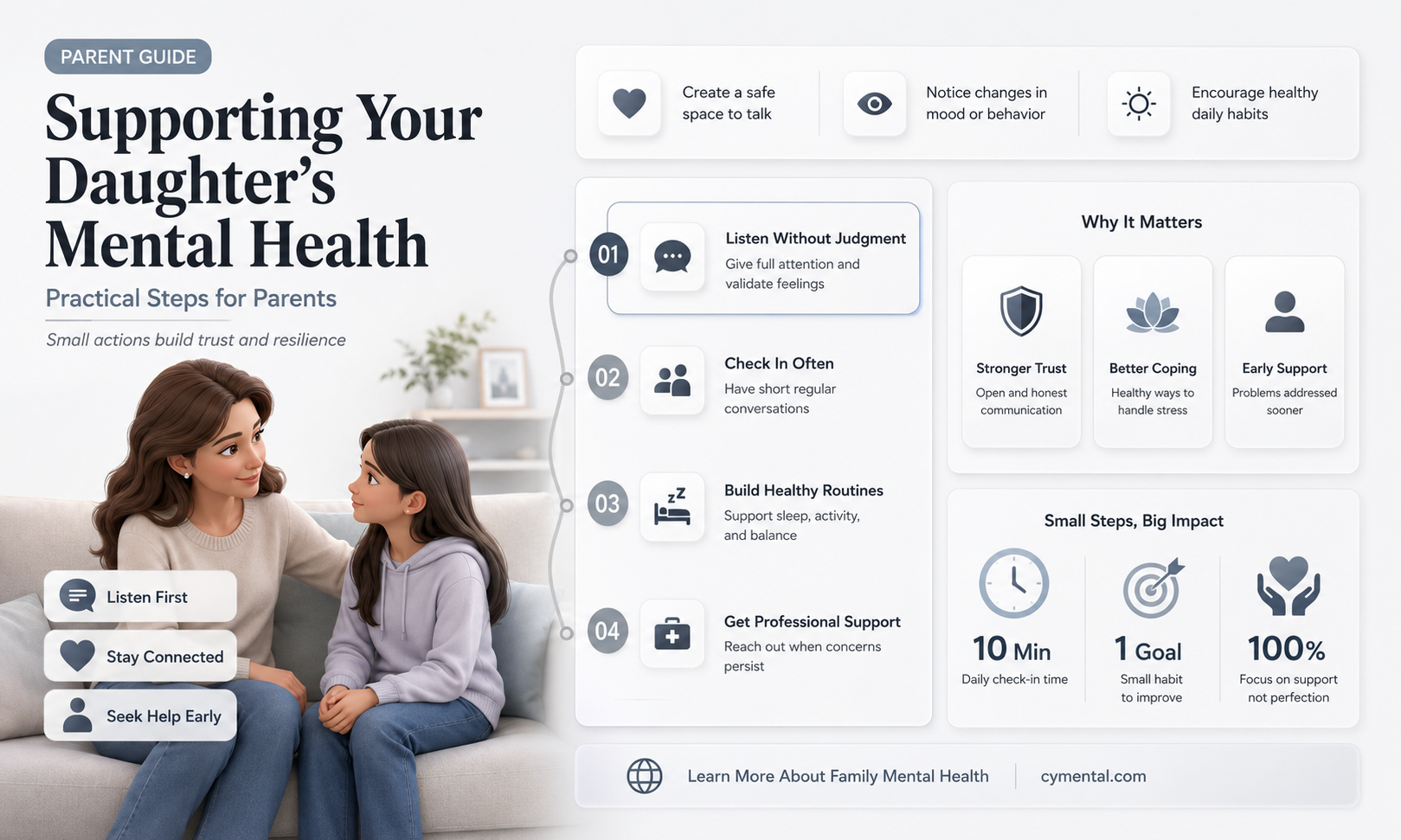
Supporting your daughter’s mental health is one of the most important roles you can play as a parent. Start by creating an open, non-judgmental environment where she feels safe to express her feelings and concerns. Listen actively and validate her emotions, even if you don’t fully understand them. Educate yourself about mental health to better recognize signs of distress, such as changes in behavior, mood, or sleep patterns. Encourage healthy habits like regular exercise, balanced nutrition, and adequate sleep, as these can significantly impact her well-being. Seek professional help if needed, whether through therapy, counseling, or other resources, and involve her in the decision-making process. Above all, let her know she is loved and supported unconditionally, and that you are there to help her navigate challenges together.
| Characteristics | Values |
|---|---|
| Open Communication | Create a safe, non-judgmental space for her to express feelings. Listen actively without interrupting. |
| Educate Yourself | Learn about mental health conditions, common challenges, and available resources. |
| Encourage Professional Help | Support her in seeking therapy, counseling, or psychiatric care if needed. |
| Promote Healthy Habits | Encourage regular sleep, balanced nutrition, exercise, and hydration. |
| Model Positive Behavior | Demonstrate healthy coping mechanisms, self-care, and emotional regulation. |
| Limit Screen Time | Set boundaries on social media and screen use to reduce stress and comparison. |
| Foster Social Connections | Encourage friendships, group activities, and community involvement. |
| Validate Her Feelings | Acknowledge her emotions without dismissing or minimizing them. |
| Be Patient and Consistent | Understand that recovery takes time and maintain consistent support. |
| Monitor for Warning Signs | Stay alert for changes in behavior, mood, or habits that may indicate distress. |
| Involve Her in Decision-Making | Include her in discussions about her care and respect her preferences. |
| Celebrate Small Wins | Acknowledge and praise her efforts and progress, no matter how small. |
| Avoid Stigmatizing Language | Use respectful and supportive language when discussing mental health. |
| Create a Structured Routine | Establish predictable daily routines to provide stability and reduce anxiety. |
| Encourage Mindfulness and Relaxation | Teach or practice mindfulness, meditation, or hobbies that promote relaxation. |
| Be Present and Available | Spend quality time with her and show that you are there for her unconditionally. |
Explore related products


$7.97 $18.99


What You'll Learn
- Encourage Open Communication: Create safe, non-judgmental spaces for her to express feelings and thoughts freely
- Promote Healthy Habits: Support regular sleep, balanced meals, exercise, and screen time limits for well-being
- Seek Professional Help: Consult therapists or counselors if needed; early intervention is key
- Build Resilience Skills: Teach problem-solving, coping strategies, and positive self-talk to manage stress
- Be a Role Model: Demonstrate self-care, emotional regulation, and healthy relationships in your own life

Encourage Open Communication: Create safe, non-judgmental spaces for her to express feelings and thoughts freely
One of the most powerful ways to support your daughter’s mental health is by fostering an environment where she feels safe to share her thoughts and emotions without fear of judgment. Adolescents often struggle with self-expression due to societal pressures, fear of rejection, or a lack of emotional vocabulary. By creating a non-judgmental space, you validate her experiences and signal that her feelings matter, which can reduce anxiety and build trust. Start by actively listening without interrupting or immediately offering solutions. Reflect her emotions back to her with phrases like, “It sounds like you’re feeling overwhelmed—is that right?” This shows you’re engaged and helps her articulate her feelings more clearly.
To establish this safe space, set aside dedicated time for conversations, free from distractions like phones or TV. For younger daughters (ages 8–12), this might involve casual check-ins during car rides or bedtime chats. For teenagers (ages 13–18), who often crave autonomy, frame conversations as collaborative rather than interrogative. For example, instead of asking, “How was your day?” try, “What was the best and worst part of today?” Be mindful of your tone and body language; a calm, open demeanor encourages honesty. Avoid phrases like, “You’re overreacting,” or “It’s not that big of a deal,” as these can shut down communication and make her feel dismissed.
A practical strategy is to model vulnerability yourself. Share age-appropriate examples of your own struggles and how you cope with them. For instance, if you’re feeling stressed, say, “I’m feeling a bit overwhelmed today, so I’m going to take a short walk to clear my head.” This normalizes emotional expression and teaches her healthy coping mechanisms. For younger children, use storytelling or books about emotions to introduce concepts like sadness or anger. For teens, discuss complex topics like peer pressure or self-esteem in a way that invites her perspective rather than lecturing.
However, creating a safe space isn’t just about talking—it’s also about respecting boundaries. If your daughter isn’t ready to open up, don’t force it. Let her know you’re available whenever she feels comfortable. Be consistent in your approach; sporadic or inconsistent efforts can erode trust. For example, if you promise to keep something confidential, honor that promise unless there’s a serious safety concern. Breaking trust, even once, can make her hesitant to share in the future.
Finally, remember that open communication is a skill that develops over time. Be patient with yourself and your daughter as you navigate this process. Celebrate small victories, like when she shares something personal or asks for advice. Over time, these conversations can strengthen your relationship and equip her with the emotional resilience to navigate life’s challenges. By prioritizing her voice and validating her experiences, you’re not just helping her manage her mental health—you’re teaching her the value of self-expression and connection.
Supporting Mental Health: Effective Ways to Help a Loved One in Need
You may want to see also
Explore related products




Promote Healthy Habits: Support regular sleep, balanced meals, exercise, and screen time limits for well-being
Adolescents need 8–10 hours of sleep nightly, yet nearly 73% fall short, according to the CDC. Irregular sleep disrupts mood regulation, cognitive function, and stress resilience—key pillars of mental health. To support your daughter, establish a consistent bedtime routine: dim lights an hour before sleep, limit caffeine after 3 PM, and ensure her bedroom is cool, dark, and device-free. Use a sleep tracker app to monitor patterns and adjust as needed. Consistency is key; even weekend deviations can destabilize her circadian rhythm.
A balanced diet isn’t just about physical health—it directly impacts neurotransmitter production and emotional stability. Incorporate omega-3 fatty acids (found in salmon, walnuts, and flaxseeds), complex carbs (oats, quinoa), and lean proteins into her meals. Avoid skipping breakfast, as it stabilizes blood sugar and reduces irritability. For teens, aim for 3 meals and 2 snacks daily, focusing on whole foods over processed options. Involve her in meal planning to foster autonomy and healthier choices.
Exercise releases endorphins, reduces cortisol, and improves sleep quality—a trifecta for mental well-being. Encourage 60 minutes of moderate activity daily, tailored to her interests (dance, hiking, team sports). Start small: a 10-minute walk after dinner or a yoga session before bed. Avoid framing exercise as punishment; instead, highlight its stress-relieving benefits. For teens, group activities can also combat social isolation, a common mental health trigger.
Excessive screen time correlates with increased anxiety, depression, and disrupted sleep. Set clear boundaries: no screens 1 hour before bed, and cap daily recreational use at 2 hours. Use parental controls if needed, but focus on collaboration over control. Encourage alternative activities like reading, journaling, or hobbies to replace mindless scrolling. Model healthy tech habits yourself—teens learn more from actions than words. Regularly discuss the impact of social media on self-esteem and offer strategies to curate a positive online environment.
Propranolol for Anxiety: Efficacy, Benefits, and Mental Health Impact
You may want to see also
Explore related products





Seek Professional Help: Consult therapists or counselors if needed; early intervention is key
Recognizing when your daughter needs professional mental health support can be challenging, but early intervention is a game-changer. Adolescents often struggle to articulate their emotions, and what may seem like typical teenage moodiness could be a cry for help. If you notice persistent changes in behavior—such as withdrawal from social activities, drastic shifts in academic performance, or frequent expressions of hopelessness—it’s time to act. Mental health issues like anxiety or depression thrive in silence, but professional intervention can halt their progression and equip your daughter with coping strategies tailored to her needs.
The process begins with finding the right therapist or counselor, which requires research and patience. Look for professionals specializing in adolescent mental health, as they are trained to navigate the unique challenges of this age group. Many therapists offer free consultations, allowing you to assess their approach and ensure it aligns with your daughter’s personality. For instance, cognitive-behavioral therapy (CBT) is highly effective for teens struggling with anxiety, while dialectical behavior therapy (DBT) can help those with emotional regulation issues. Don’t hesitate to involve your daughter in this decision—her buy-in is crucial for successful treatment.
One common barrier to seeking help is the stigma surrounding therapy, but framing it as a proactive step rather than a last resort can shift her perspective. Explain that therapy is a tool for self-improvement, much like tutoring for academics. Start with small steps, such as a single session, to ease her into the process. If cost is a concern, explore sliding-scale clinics, school counseling services, or telehealth platforms, which often offer more affordable options. Early intervention doesn’t just address current struggles—it builds resilience, preventing more severe issues down the line.
Finally, your role as a parent is to provide unwavering support throughout this journey. Attend family therapy sessions if offered, as they can improve communication and strengthen your relationship. Be mindful of your own reactions; avoid phrases like “just stay positive” or “it’s all in your head,” which can invalidate her feelings. Instead, validate her experiences and celebrate small victories. Remember, seeking professional help isn’t a sign of failure—it’s a testament to your commitment to her well-being. With the right support, your daughter can navigate her mental health challenges and emerge stronger.
Positive Relationships: A Powerful Tool for Mental Health and Well-Being
You may want to see also
Explore related products

$14.99


$11.56 $18.99


Build Resilience Skills: Teach problem-solving, coping strategies, and positive self-talk to manage stress
Resilience isn’t an innate trait but a skill set that can be cultivated, much like learning to ride a bike. For daughters navigating the complexities of adolescence and beyond, building resilience equips them to face challenges without being overwhelmed. Start by framing problems as solvable rather than insurmountable. For instance, when your daughter encounters a conflict with a friend, guide her to break it down into smaller, manageable parts: *What specifically upset you? What’s one step you can take to address it?* This structured approach demystifies stress and empowers her to act rather than retreat.
Problem-solving thrives on practice, not perfection. Introduce age-appropriate scenarios to sharpen her skills. For younger girls (ages 8–12), use games or stories where characters face dilemmas, encouraging her to suggest solutions. For teens, discuss real-life situations like managing homework overload or handling peer pressure. Pair this with teaching coping strategies such as deep breathing exercises (inhale for 4 seconds, hold for 4, exhale for 6) or journaling, which research shows can reduce stress by 25% when practiced consistently. The key is to normalize these tools as everyday resources, not last-resort fixes.
Positive self-talk is the backbone of resilience, yet it’s often overlooked. Daughters internalize messages from their environment, so model optimistic self-dialogue in your own life. When she criticizes herself harshly—*“I’m so bad at math”*—gently reframe it: *“Math is tough right now, but you’re improving every time you practice.”* Encourage her to keep a “wins” journal, jotting down daily achievements, no matter how small. Over time, this shifts her focus from setbacks to progress, rewiring her brain to approach challenges with confidence rather than fear.
Caution: Avoid oversimplifying her struggles or dismissing her emotions with toxic positivity. Phrases like *“Just think happy thoughts”* can make her feel invalidated. Instead, validate her feelings first—*“It’s okay to feel frustrated”*—then guide her toward constructive solutions. Also, be mindful of over-involvement; resilience grows through independent problem-solving. Offer support, not solutions, unless she’s in immediate distress. Finally, remember that resilience is a marathon, not a sprint. Celebrate small victories, and be patient as she builds these skills at her own pace.
Soccer's Impact: Healing Minds and Battling Mental Illness
You may want to see also
Explore related products


Be a Role Model: Demonstrate self-care, emotional regulation, and healthy relationships in your own life
Children learn more from what they observe than from what they are told. If you want to help your daughter with her mental health, start by examining your own behaviors. Are you modeling self-care, emotional regulation, and healthy relationships? Your actions—whether it’s taking time for yourself, managing stress constructively, or resolving conflicts respectfully—become her blueprint for coping. For instance, if she sees you prioritizing exercise, meditation, or hobbies, she’ll understand these practices are non-negotiable, not luxuries. Similarly, how you handle disagreements with your partner or friends teaches her what healthy communication looks like. Your life becomes her living textbook; make sure it’s one worth studying.
Self-care isn’t selfish—it’s essential, and it needs to be visible. Incorporate small, consistent acts of self-care into your routine and explain their purpose to your daughter. For example, if you dedicate 20 minutes daily to journaling or reading, share how it helps you clear your mind. If you schedule regular doctor’s appointments or therapy sessions, normalize these as part of maintaining well-being. For younger children (ages 5–12), this might mean showing them how you take breaks during work or play. For teenagers, it could involve discussing the importance of sleep hygiene or setting boundaries with technology. By making self-care a family value, you teach her it’s not just okay but necessary to prioritize herself.
Emotional regulation is a skill, and like any skill, it’s learned through observation and practice. When you experience frustration, sadness, or anger, narrate your process of managing it. For instance, “I’m feeling upset right now, so I’m going to take a few deep breaths to calm down.” This not only models healthy coping but also gives her language to describe her own emotions. For younger children, use simple, concrete strategies like counting to 10 or drawing feelings. For teens, encourage more complex techniques like mindfulness or reframing negative thoughts. The key is to show her that emotions aren’t problems to avoid but signals to address thoughtfully.
Healthy relationships are built on respect, communication, and boundaries—and your daughter learns these principles by watching you. Notice how you interact with others: Do you listen actively? Apologize when you’re wrong? Set limits when needed? For example, if a friend oversteps a boundary, explain to your daughter why you addressed it and how you did so respectfully. If you and your partner disagree, resolve it in a way that demonstrates compromise and empathy. For younger children, this might involve modeling kindness in sibling interactions or with peers. For teens, discuss the red flags of unhealthy relationships and the importance of mutual respect. By embodying these dynamics, you equip her to seek and maintain positive connections in her own life.
Finally, remember that being a role model doesn’t mean being perfect. It’s about being authentic and intentional. Acknowledge your mistakes and how you work to improve—this teaches resilience and self-compassion. For instance, if you lose your temper, apologize and explain what you’ll do differently next time. If you neglect self-care for a period, share how it affected you and what steps you’re taking to get back on track. This transparency shows her that mental health is an ongoing journey, not a destination. By living these principles, you don’t just tell her how to thrive—you show her.
Boost Focus and Calm: Strategies for Achieving Mental Clarity
You may want to see also
Frequently asked questions
Begin by choosing a calm, private moment and use open-ended questions like, "How are you feeling lately?" or "Is there anything on your mind?" Let her know you’re there to listen without judgment and that her feelings matter. Avoid pressuring her to open up immediately; sometimes, just knowing you’re available is enough.
Common signs include changes in mood, sleep, or appetite; withdrawal from friends or activities; declining school performance; irritability; or expressions of hopelessness. Trust your instincts—if something feels off, it’s worth addressing gently and seeking professional guidance if needed.
Balance support with independence by encouraging open communication, validating her feelings, and helping her develop coping skills. Respect her boundaries while staying involved, and let her know you’re there to help without taking over. Consider involving a therapist if she’s open to it.
Acknowledge her concerns and explain that seeking help is a sign of strength, not weakness. Offer to accompany her to an appointment or suggest starting with a trusted school counselor. Be patient and persistent, but avoid forcing her—focus on building trust and showing you care.