Noah Parker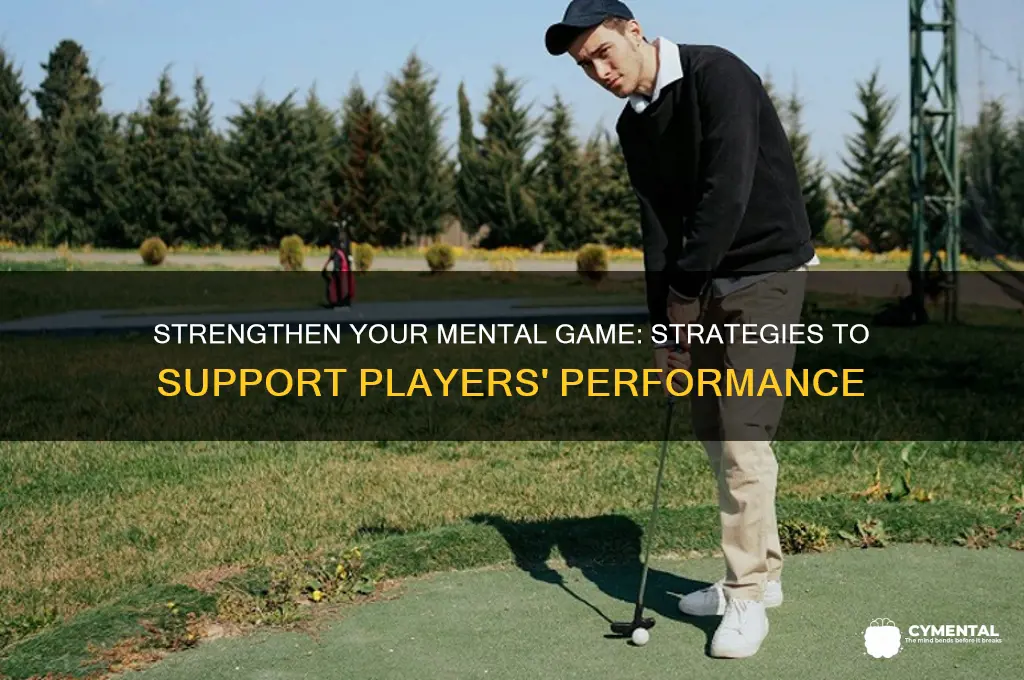
Helping a player strengthen their mental game is crucial for unlocking their full potential, as mental resilience often separates good athletes from great ones. The mental game encompasses focus, confidence, emotional control, and the ability to handle pressure, all of which can significantly impact performance. To support a player in this area, start by fostering self-awareness, encouraging them to identify and address their mental triggers, such as self-doubt or anxiety. Implement techniques like visualization, mindfulness, and positive self-talk to build mental toughness and maintain composure during competition. Additionally, create a supportive environment where open communication is encouraged, allowing players to express their struggles without fear of judgment. By combining these strategies with consistent practice and patience, coaches, teammates, and mentors can empower players to develop a strong mental foundation that complements their physical skills and drives long-term success.
Explore related products


What You'll Learn
- Mindfulness Techniques: Teach players to focus on the present moment, reducing anxiety and improving concentration
- Goal Setting: Help players set realistic, achievable goals to boost motivation and track progress effectively
- Positive Self-Talk: Encourage players to replace negative thoughts with constructive, empowering internal dialogue
- Routine Building: Develop pre-game rituals to create consistency, confidence, and mental preparedness for performance
- Emotional Regulation: Teach strategies to manage emotions like frustration or anger during high-pressure situations

Mindfulness Techniques: Teach players to focus on the present moment, reducing anxiety and improving concentration
Athletes often struggle with mental barriers that hinder performance, but mindfulness techniques offer a practical solution. By grounding players in the present moment, these practices reduce anxiety and enhance focus, transforming potential weaknesses into strengths. For instance, a pre-game ritual of deep breathing—inhale for four seconds, hold for four, exhale for six—can reset the nervous system, lowering cortisol levels and calming the mind. This simple exercise, backed by sports psychologists, is accessible to athletes of all ages and skill levels, requiring no equipment or extensive training.
Consider the contrast between a player fixated on past mistakes and one fully immersed in the current play. The latter, trained in mindfulness, avoids the mental clutter that derails concentration. A study published in *Journal of Applied Sport Psychology* found that athletes who practiced mindfulness reported a 30% reduction in game-day anxiety. To implement this, coaches can introduce short, guided meditations during practice breaks, focusing players on their senses—the feel of the ball, the sound of their breath, the sight of the field. Over time, this trains the brain to default to the present, even under pressure.
However, mindfulness isn’t a one-size-fits-all solution. Younger athletes, for example, may struggle with longer meditation sessions, so incorporating movement-based mindfulness—like mindful dribbling or shooting drills—can be more engaging. For older players, journaling about pre-game sensations and thoughts can deepen self-awareness, a critical component of staying present. The key is consistency; just 10 minutes of daily practice can yield noticeable improvements in focus and emotional regulation within weeks.
Critics might argue that mindfulness takes time away from physical training, but its efficiency lies in its dual benefits. A player who masters present-moment awareness not only performs better but also recovers faster from setbacks, both mental and physical. For instance, a basketball player who misses a critical shot can use a quick mindfulness technique—like a three-second body scan—to reset before the next play, rather than dwelling on the error. This resilience is as much a skill as any physical ability.
Incorporating mindfulness into an athlete’s routine requires patience and adaptability. Start small, perhaps with a one-minute breathing exercise before practice, and gradually build up to longer sessions. Pairing mindfulness with existing routines—like stretching or cool-downs—can make it feel less like an add-on and more like an integral part of training. Ultimately, teaching players to anchor themselves in the present isn’t just about improving performance; it’s about equipping them with a tool for lifelong mental resilience.
Multivitamins and Mental Health: Unlocking the Potential Benefits
You may want to see also
Explore related products



Goal Setting: Help players set realistic, achievable goals to boost motivation and track progress effectively
Goal setting is a cornerstone of mental toughness in sports, yet many players falter by aiming too high or too vague. Consider the difference between "improve my serve" and "increase my first-serve percentage to 70% within six weeks by practicing 30 serves daily." The latter is specific, measurable, and time-bound, providing a clear roadmap for action. Without such clarity, motivation wanes, and progress becomes intangible. Start by helping players define goals that align with their skill level, resources, and competitive environment. This precision transforms abstract aspirations into actionable steps, fostering a sense of control and purpose.
A common pitfall in goal setting is overloading players with long-term objectives without breaking them into manageable chunks. For instance, a junior tennis player aiming to win a national championship in two years might feel overwhelmed by the scope. Instead, introduce *micro-goals*—weekly or monthly milestones like improving footwork agility by 15% or mastering a new tactical strategy. These smaller wins build confidence and maintain focus, making the ultimate goal feel attainable. Pair each micro-goal with a specific drill or routine, ensuring players know exactly what to practice and why.
Tracking progress is where many players and coaches fall short. A goal without measurement is merely a wish. Implement a *progress journal* where players record daily or weekly outcomes, such as match statistics, practice intensity, or mental resilience scores (e.g., on a scale of 1–10). For younger athletes (ages 12–16), visual tools like charts or color-coded calendars can make tracking engaging. For older players, apps like *Coach’s Eye* or *Hudl* can provide data-driven insights. Regularly review these records together to celebrate successes, identify patterns, and adjust strategies as needed.
Caution against setting goals solely based on outcomes, such as winning a tournament or outperforming a rival. These external benchmarks are beyond a player’s control and can lead to frustration. Instead, emphasize *process-oriented goals*—actions the player can directly influence, like maintaining a 90% effort level during practice or reducing unforced errors by 20%. This shift in focus builds resilience, as players learn to derive satisfaction from their effort and improvement, regardless of the final score.
Finally, goal setting should be a collaborative, dynamic process. Players often resist goals imposed by coaches or parents, so involve them in crafting their objectives. Ask probing questions like, "What specific skills do you want to improve?" or "How will you measure success in the next month?" Revisit goals periodically to ensure they remain relevant and challenging but not daunting. For elite athletes, consider incorporating *stretch goals*—ambitious but not impossible targets—to push boundaries without sacrificing motivation. By treating goal setting as a living strategy, players stay engaged, adaptable, and driven to excel.
Helping Reluctant Loved Ones Access Mental Health Care in California
You may want to see also
Explore related products


Positive Self-Talk: Encourage players to replace negative thoughts with constructive, empowering internal dialogue
The inner voice of an athlete can be their greatest ally or their toughest opponent. Negative self-talk, such as "I always mess up under pressure" or "I’m not good enough," erodes confidence and hinders performance. Replacing these destructive thoughts with positive, empowering self-talk is a proven strategy to strengthen mental resilience. Research in sports psychology shows that athletes who practice constructive internal dialogue experience reduced anxiety, improved focus, and better overall performance.
To implement this, start by teaching players to identify their negative thought patterns. Encourage them to keep a journal for a week, noting moments when self-doubt arises. Once these patterns are recognized, guide them to reframe these thoughts into positive affirmations. For example, instead of "I’ll probably miss this shot," they can say, "I’ve practiced this, and I’m prepared to execute." The key is specificity—vague positivity is less effective than targeted, actionable statements.
Practical exercises can reinforce this habit. One effective technique is the "3-2-1 method": players identify three strengths they bring to the game, two past successes they’re proud of, and one goal they’re working toward. Repeating these points daily, especially before competition, helps anchor their mindset in positivity. Another strategy is to pair self-talk with physical cues, such as taking a deep breath while silently affirming, "I am calm and in control."
However, caution must be taken to avoid toxic positivity, where players suppress negative emotions entirely. It’s healthy to acknowledge challenges, but the focus should be on responding constructively rather than dwelling. For younger athletes (ages 10–14), simplify the language and incorporate visual aids, like sticky notes with affirmations placed on their equipment or mirror. For older players (15+), encourage them to record their affirmations and listen to them during downtime or pre-game routines.
The takeaway is clear: positive self-talk is a skill, not an innate trait. Like any skill, it requires consistent practice. Coaches and mentors should model this behavior, using empowering language when addressing players. Over time, this practice shifts the athlete’s default mindset from self-criticism to self-encouragement, fostering not only better performance but also a healthier relationship with the sport.
Spirituality's Role in Supporting Your Son's Mental Health Journey
You may want to see also
Explore related products


Routine Building: Develop pre-game rituals to create consistency, confidence, and mental preparedness for performance
Routines are the invisible architecture of peak performance, transforming chaos into control. Athletes like Serena Williams and Michael Phelps swear by their pre-game rituals, not just for superstition, but because they work. A well-crafted routine acts as a mental anchor, signaling to the brain that it’s time to shift into performance mode. Whether it’s a specific warm-up sequence, a breathing exercise, or a mental rehearsal, these rituals create a predictable framework that reduces anxiety and enhances focus. The key lies in their consistency—repetition builds neural pathways that make high-pressure situations feel familiar, not foreign.
To build an effective pre-game routine, start by identifying the elements that personally trigger focus and calm. For some, it’s a 10-minute meditation session; for others, it’s listening to a specific playlist. The routine should be tailored to the individual’s needs, not borrowed wholesale from another player. For example, a basketball player might begin with a dynamic stretching routine, followed by visualizing key plays, and ending with a silent affirmation. The sequence should be timed to fit the pre-game schedule, ensuring it’s neither rushed nor overly long. A 20- to 30-minute ritual is ideal for most athletes, allowing enough time to mentally prepare without becoming monotonous.
One common mistake in routine building is overcomplicating the process. Simplicity is key. A routine should be easy to replicate, even under stress. For instance, a golfer might focus on three specific actions: aligning their stance, taking three deep breaths, and visualizing the shot’s trajectory. Each step is deliberate and repeatable, requiring minimal cognitive effort. Avoid incorporating elements that rely on external factors, like a specific piece of equipment or another person’s presence, as these can disrupt consistency. The goal is to create a self-contained system that the athlete can rely on, regardless of the environment.
The power of a pre-game routine extends beyond the physical act; it’s a psychological tool. By engaging in the same sequence before every performance, athletes train their minds to associate the routine with success. This conditioning reduces pre-game jitters and fosters a sense of control. For younger athletes (ages 12–18), routines can also serve as a coping mechanism for competition-related stress. Parents and coaches should encourage players to experiment with different rituals during practice sessions, refining them until they feel natural. Over time, the routine becomes a source of confidence, a reminder that they’ve prepared and are ready to perform.
Finally, routines are not set in stone. They should evolve as the athlete grows and their needs change. A routine that works for a high school player might need adjustments at the collegiate or professional level. Regular self-reflection is crucial—athletes should periodically assess whether their rituals still serve their purpose. For instance, a runner might add a mental imagery exercise to their routine after realizing they struggle with mid-race focus. By staying adaptable, routines remain a dynamic tool for mental preparedness, ensuring athletes are not just consistent, but consistently improving.
Veterans' Mental Health Crisis: Are We Providing Enough Support?
You may want to see also
Explore related products


Emotional Regulation: Teach strategies to manage emotions like frustration or anger during high-pressure situations
High-pressure situations often trigger intense emotions like frustration or anger, which can derail a player’s focus and performance. The key to emotional regulation lies in recognizing these emotions early and responding to them constructively. For instance, a tennis player facing a critical match point might feel their heart racing and thoughts spiraling. Instead of letting anger take over, they can pause, take a deep breath, and refocus on the present moment. This simple act of mindfulness interrupts the emotional surge, allowing them to regain control and execute their next move with clarity.
One effective strategy for emotional regulation is the STOP technique: Stop, Take a breath, Observe your emotions, and Proceed mindfully. This four-step process is particularly useful for players aged 12 and above, as it requires a level of self-awareness that younger athletes may still be developing. For example, a soccer player who misses a penalty kick might feel immediate frustration. By stopping to take a deep breath, they can observe the physical sensations of anger—tight chest, clenched fists—without judgment. This awareness creates a mental buffer, enabling them to proceed with a calmer mindset.
Another powerful tool is cognitive reframing, which involves shifting perspective to view challenges as opportunities rather than threats. For instance, a basketball player who keeps missing shots might reframe their frustration by thinking, “Each miss is a chance to learn and adjust my technique.” This technique is especially effective for older teens and adults, who have the cognitive maturity to challenge their own thought patterns. Pairing reframing with positive self-talk, such as “I’ve practiced this, and I can do it,” reinforces emotional resilience under pressure.
Physical strategies, like progressive muscle relaxation, can also help manage emotional spikes. Players can tense and release muscle groups in sequence—starting from their toes and moving up to their head—to reduce physiological arousal. This technique is ideal for pre-game jitters or mid-game tension and can be practiced in as little as 5 minutes. For younger players (ages 8–12), simplifying the process to focus on tensing and relaxing hands or shoulders can still yield benefits without overwhelming them.
Finally, emotional regulation is not about suppressing feelings but channeling them productively. Coaches and players should normalize discussing emotions openly, reducing the stigma around frustration or anger. Regular practice of these strategies—whether through mindfulness exercises, reframing drills, or physical techniques—builds mental muscle memory. Over time, players will find themselves responding to high-pressure situations with composure, turning potential setbacks into moments of growth.
Exploring Gender Dysphoria: Mental Health Support as a Treatment Option
You may want to see also
Frequently asked questions
Encourage consistent practice of mindfulness, positive self-talk, and goal-setting. Help them reframe failures as learning opportunities and focus on controllable aspects like effort and preparation rather than outcomes.
Teach deep breathing exercises, visualization techniques, and pre-game routines to create familiarity and calm. Emphasize focusing on the present moment rather than worrying about potential outcomes.
Validate their feelings, highlight their strengths, and remind them of past successes. Encourage self-compassion and help them set small, achievable goals to rebuild confidence gradually.