Caleb Wright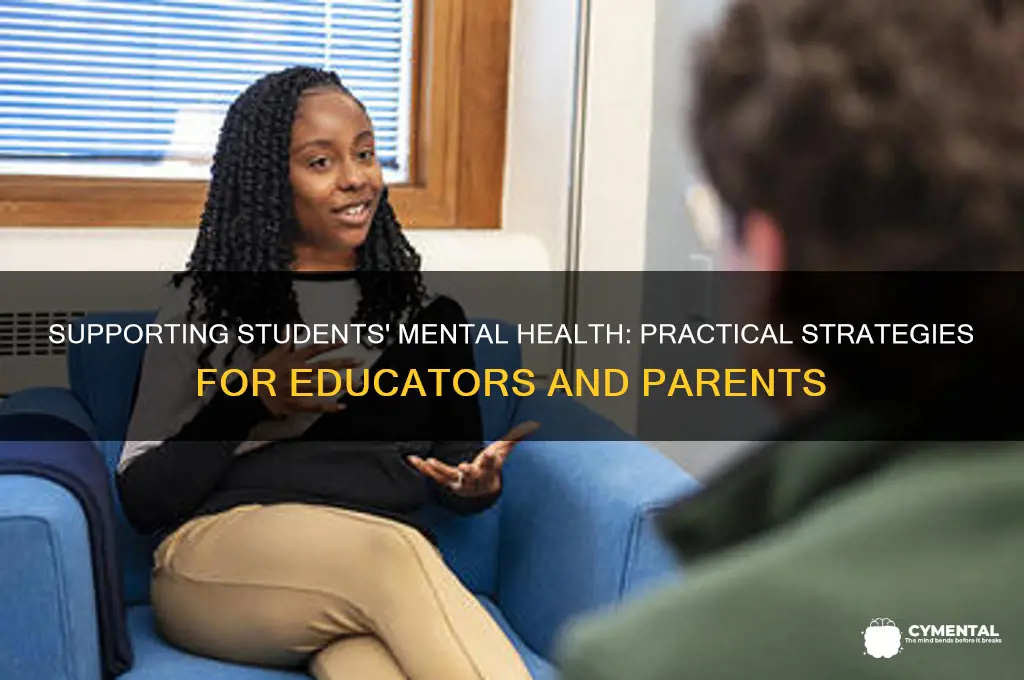
Supporting a student with mental health issues requires a compassionate, informed, and proactive approach. Educators, parents, and peers play a crucial role in creating a safe and understanding environment where students feel comfortable seeking help. Key steps include fostering open communication, actively listening without judgment, and encouraging professional support from counselors or mental health professionals. It’s essential to recognize signs of distress, such as changes in behavior, academic performance, or social withdrawal, and to respond with empathy and patience. Schools can also implement mental health resources, such as workshops, peer support programs, and accessible counseling services, to ensure students have the tools they need to thrive. By prioritizing mental well-being and reducing stigma, we can empower students to navigate challenges and build resilience for a healthier future.
| Characteristics | Values |
|---|---|
| Create a Safe Environment | Foster trust, ensure confidentiality, and provide a non-judgmental space for students to share their feelings. |
| Active Listening | Pay full attention, avoid interrupting, and validate the student's emotions without dismissing them. |
| Encourage Professional Help | Provide resources for counseling, therapy, or mental health services available on campus or in the community. |
| Promote Self-Care | Encourage healthy habits like regular sleep, exercise, balanced diet, and stress management techniques. |
| Educate on Mental Health | Raise awareness about mental health, reduce stigma, and provide educational materials or workshops. |
| Monitor for Red Flags | Be vigilant for signs of severe distress, self-harm, or suicidal ideation, and intervene promptly. |
| Collaborate with Professionals | Work with school counselors, psychologists, or external mental health professionals to support the student. |
| Flexibility in Academics | Offer accommodations like extended deadlines, reduced workload, or alternative assessments if needed. |
| Build a Support Network | Encourage connections with peers, mentors, or support groups to reduce feelings of isolation. |
| Regular Check-Ins | Schedule periodic conversations to monitor the student's progress and provide ongoing support. |
| Respect Boundaries | Avoid pushing the student to share more than they are comfortable with and honor their limits. |
| Provide Crisis Resources | Share emergency contacts, hotlines, or crisis intervention services for immediate assistance. |
| Foster Inclusivity | Ensure the learning environment is inclusive and respectful of diverse backgrounds and experiences. |
| Model Positive Behavior | Demonstrate empathy, patience, and resilience as a role model for healthy coping strategies. |
| Encourage Goal Setting | Help the student set achievable goals to build confidence and a sense of purpose. |
| Use Positive Reinforcement | Acknowledge and celebrate small achievements to boost morale and motivation. |
| Stay Informed | Keep updated on the latest mental health research, tools, and best practices to provide effective support. |
Explore related products



What You'll Learn
- Active Listening: Show empathy, focus fully, avoid judgment, and validate feelings during conversations
- Encourage Professional Help: Guide students to counseling, therapy, or mental health resources
- Create Safe Spaces: Foster trust, confidentiality, and support in academic environments
- Promote Self-Care: Teach stress management, sleep, exercise, and healthy habits
- Monitor Changes: Notice behavioral shifts, withdrawal, or academic decline; intervene early

Active Listening: Show empathy, focus fully, avoid judgment, and validate feelings during conversations
Students struggling with mental health often feel isolated and misunderstood. Active listening can bridge this gap, offering a lifeline of connection and support. It’s not about fixing their problems but creating a safe space where they feel heard and valued. This begins with empathy—putting yourself in their shoes, acknowledging their pain without minimizing it. For instance, instead of saying, “It’ll get better,” try, “It sounds like this has been really tough for you.” Such responses validate their experience, fostering trust and openness.
Mastering active listening requires intentional focus. Eliminate distractions—put away your phone, maintain eye contact (when culturally appropriate), and mirror their body language subtly. Repeat back key phrases to confirm understanding, like, “So, you’re feeling overwhelmed by the workload?” This not only clarifies their message but also shows you’re fully present. Research shows that even small pauses—3-5 seconds—between their words and your response can make them feel more heard. Avoid interrupting or rushing them; let them set the pace of the conversation.
Judgment is the silent killer of trust. Students may fear being labeled as “dramatic” or “weak,” so approach their struggles with neutrality. Phrases like, “That must be hard,” or, “I can see why you’d feel that way,” convey acceptance without evaluation. Even if their perspective differs from yours, resist the urge to correct or advise unless asked. Validation doesn’t mean agreement—it means recognizing their emotions as real and valid. For younger students (ages 13-15), this can be particularly impactful, as they’re still developing emotional literacy.
Active listening isn’t a one-time act but a skill to practice consistently. After conversations, reflect on your approach: Did you truly listen, or were you formulating a response? Did you validate their feelings, or did you inadvertently dismiss them? Over time, this practice builds rapport, making students more likely to seek help when needed. For educators or mentors, incorporating active listening into daily interactions—even brief check-ins—can create a supportive environment. Remember, the goal isn’t perfection but progress in fostering genuine connection.
Supporting Loved Ones: Strategies for Navigating Mental Health Challenges
You may want to see also
Explore related products


Encourage Professional Help: Guide students to counseling, therapy, or mental health resources
Students often hesitate to seek professional help for mental health issues due to stigma, lack of awareness, or fear of judgment. As an educator or supporter, your role is to normalize and facilitate access to counseling, therapy, or mental health resources. Start by creating an environment where seeking help is seen as a sign of strength, not weakness. Share personal anecdotes (if appropriate) or success stories of peers who benefited from professional support to reduce hesitancy.
Guiding students to resources requires a structured, empathetic approach. Begin by privately expressing concern and asking open-ended questions like, “Have you considered talking to a counselor about this?” Provide specific, actionable information: the name of the campus counseling center, contact details, and available services. For younger students (ages 13–18), involve parents or guardians early, ensuring they understand the importance of professional intervention. For college students, emphasize that most universities offer free or low-cost counseling services as part of tuition.
A common barrier is the perception that therapy is only for “serious” issues. Counter this by explaining that mental health professionals address a range of concerns, from stress management to trauma recovery. Use analogies like, “Just as you’d see a doctor for a physical injury, therapists help heal emotional wounds.” For students unsure about committing to therapy, suggest a single session to “test the waters” or recommend digital platforms like BetterHelp or Talkspace for flexible, low-pressure options.
Encouraging professional help also means addressing logistical hurdles. Help students schedule their first appointment by offering to walk them to the counseling center or assist with paperwork. For students with financial constraints, research and share sliding-scale clinics or community mental health programs. Follow up after the initial referral to ask how the experience went, reinforcing that their well-being is a priority. Remember, your goal isn’t to diagnose or treat but to bridge the gap between their need and available resources.
Finally, be mindful of cultural or personal biases that may influence a student’s willingness to seek help. For example, some cultures view mental health struggles as a private matter or a sign of family failure. Acknowledge these perspectives without judgment and emphasize that seeking help is an act of self-care, not a reflection of personal inadequacy. By combining sensitivity, specificity, and persistence, you can empower students to take the first step toward professional support, fostering long-term resilience and recovery.
Spirituality and Mental Health: Healing the Mind, Body, and Soul
You may want to see also
Explore related products


Create Safe Spaces: Foster trust, confidentiality, and support in academic environments
Students often hesitate to disclose mental health struggles due to fear of judgment, stigma, or repercussions. Creating safe spaces in academic environments begins with dismantling these barriers. Start by establishing clear policies that prioritize confidentiality and non-judgmental support. For instance, faculty and staff should be trained to respond empathetically, using phrases like, "I’m here to listen" or "Your feelings matter," rather than dismissive comments. Implement physical spaces, such as quiet rooms or wellness centers, where students can retreat without fear of intrusion. These measures signal to students that their mental health is valued and protected.
Fostering trust requires consistent, intentional actions. Regularly communicate available resources through multiple channels—emails, posters, and orientation sessions—to ensure students know where to turn. For younger students (ages 13–18), peer-led initiatives like mental health clubs can create a sense of community and reduce isolation. In higher education, faculty can incorporate brief, anonymous mental health check-ins at the start of classes to normalize the conversation. Trust is built when students see that their institution actively cares, not just in words but in deeds.
Confidentiality is non-negotiable. Train staff to understand the limits of their role: they should know when to refer students to professionals rather than attempting to counsel them directly. For example, a teacher noticing persistent signs of anxiety in a student should direct them to a school counselor while assuring, "Our conversation stays between us unless you’re in danger." Schools can also partner with external mental health organizations to provide anonymous helplines or counseling services, ensuring students have safe outlets without fearing their privacy will be compromised.
Support must extend beyond reactive measures to proactive systems. Incorporate mental health education into curricula to reduce stigma and equip students with coping strategies. For instance, a 30-minute weekly mindfulness session in middle schools has been shown to improve emotional regulation in adolescents. Similarly, universities can offer workshops on stress management or time management tailored to exam periods. By embedding support into the academic experience, institutions create an environment where mental health is not an afterthought but a priority.
Finally, evaluate and adapt. Safe spaces are not static; they evolve based on student needs. Conduct regular surveys or focus groups to gather feedback on what’s working and what’s missing. For example, a high school might discover that students feel more comfortable accessing support during lunch hours rather than after school. Act on this feedback by adjusting resource availability. By continuously refining these spaces, schools demonstrate their commitment to fostering trust, confidentiality, and support in ways that genuinely resonate with students.
The Hidden Financial Impact of Mental Health Issues on Businesses
You may want to see also
Explore related products





Promote Self-Care: Teach stress management, sleep, exercise, and healthy habits
Students often juggle academic pressures, social expectations, and personal challenges, making them susceptible to stress and mental health struggles. Teaching self-care practices like stress management, sleep hygiene, regular exercise, and healthy habits can empower them to build resilience and maintain well-being.
Consider the analytical approach: Stress, when chronic, disrupts cortisol levels, impairing concentration, memory, and emotional regulation—critical functions for academic success. Techniques like deep breathing exercises (e.g., 4-7-8 breathing: inhale for 4 seconds, hold for 7, exhale for 8) activate the parasympathetic nervous system, reducing stress hormones. Similarly, mindfulness practices, such as 5-minute daily meditations, have been shown to improve focus and reduce anxiety in adolescents aged 13–18. Incorporating these into a student’s routine requires minimal time but yields significant cognitive and emotional benefits.
From an instructive perspective, establishing a consistent sleep schedule is non-negotiable. Teens need 8–10 hours of sleep nightly, yet many fall short due to late-night studying or screen use. Encourage students to create a "wind-down" routine: dim lights 1 hour before bed, avoid screens, and engage in calming activities like reading or journaling. For exercise, recommend 30–60 minutes of moderate activity daily—walking, cycling, or yoga—which boosts endorphins and improves mood. Pair this with a balanced diet rich in omega-3s (found in nuts, seeds, and fatty fish) to support brain health.
A comparative lens reveals the interconnectedness of these habits. For instance, regular exercise not only reduces stress but also improves sleep quality, creating a positive feedback loop. Conversely, poor sleep can lead to increased stress and unhealthy food choices, highlighting the need for a holistic approach. Schools can model this by offering mindfulness sessions, recess breaks, and nutrition workshops, embedding self-care into the daily curriculum.
Finally, a persuasive argument: Investing in self-care is not selfish; it’s essential for long-term mental health. Students who learn these skills early are better equipped to navigate future challenges. Start small—encourage one new habit at a time, like drinking 8 glasses of water daily or taking a 10-minute walk during study breaks. Over time, these practices become second nature, fostering a foundation of resilience that lasts beyond the classroom.
Supporting Educators: Strategies for Teachers Managing Mental Health Challenges
You may want to see also
Explore related products


Monitor Changes: Notice behavioral shifts, withdrawal, or academic decline; intervene early
Students often exhibit subtle yet significant changes in behavior before a mental health crisis escalates. A once-engaged learner might start missing deadlines, avoiding group activities, or displaying irritability. These shifts, though seemingly minor, can be early indicators of underlying struggles. Educators and peers must remain vigilant, recognizing that such changes are not merely "phases" but potential cries for help. By acknowledging these signs, you position yourself to act as a crucial support system, preventing small issues from snowballing into larger crises.
To effectively monitor these changes, establish a baseline understanding of each student’s typical behavior. Note their participation levels, social interactions, and academic performance. For instance, a student who consistently submits well-researched essays might suddenly turn in superficial work, signaling distress. Similarly, a social butterfly withdrawing from conversations or a quiet student becoming overly agitated warrants attention. Tools like weekly check-ins or progress trackers can help educators systematically observe patterns without overwhelming their workload.
Early intervention is key, but it requires a delicate approach. Avoid confrontational language that might alienate the student. Instead, use open-ended questions like, "I’ve noticed you’ve been less involved in class lately—is everything okay?" or "How can I support you with your assignments?" Phrasing concerns as observations rather than accusations fosters trust. For younger students (ages 10–14), consider involving parents or guardians, but always respect the student’s privacy unless there’s an immediate safety risk.
While monitoring changes, be mindful of cultural or personality differences that might mimic mental health issues. For example, introverted students may naturally prefer solitude, and some cultures emphasize reserved behavior. Contextualize observations by consulting with school counselors or cultural liaisons to avoid misinterpreting behaviors. Additionally, avoid over-relying on academic performance as the sole metric; a student excelling in exams might still be struggling emotionally.
In conclusion, monitoring behavioral shifts, withdrawal, or academic decline is both an art and a science. It demands attentiveness, empathy, and a proactive mindset. By noticing these changes early and intervening thoughtfully, you can create a safety net for students, ensuring they feel seen, heard, and supported. Remember, your role isn’t to diagnose but to guide—connecting students to professional resources while offering consistent, compassionate support.
Mastering Mental Health Advocacy: A Guide to Public Speaking
You may want to see also
Frequently asked questions
Look for changes in behavior, such as withdrawal from social activities, declining academic performance, increased irritability, or persistent sadness. Physical signs like fatigue, changes in appetite, or frequent absences can also be indicators. Approach the student privately and express concern in a non-judgmental way.
Listen actively and empathetically without interrupting or offering immediate solutions. Validate their feelings, assure them they are not alone, and encourage them to seek professional help. Share available resources, such as school counselors or mental health services, and follow up to show continued support.
Foster an inclusive and non-judgmental atmosphere by promoting open communication and empathy. Be flexible with deadlines or assignments when necessary, and avoid singling out students. Educate yourself about mental health to reduce stigma and model understanding for the entire class.
Normalize seeking help by discussing mental health resources casually and positively. Provide a list of available services, such as school counselors, therapists, or hotlines, and offer to assist with making an appointment. Emphasize that seeking help is a sign of strength and that professionals are there to support them.