Caleb Wright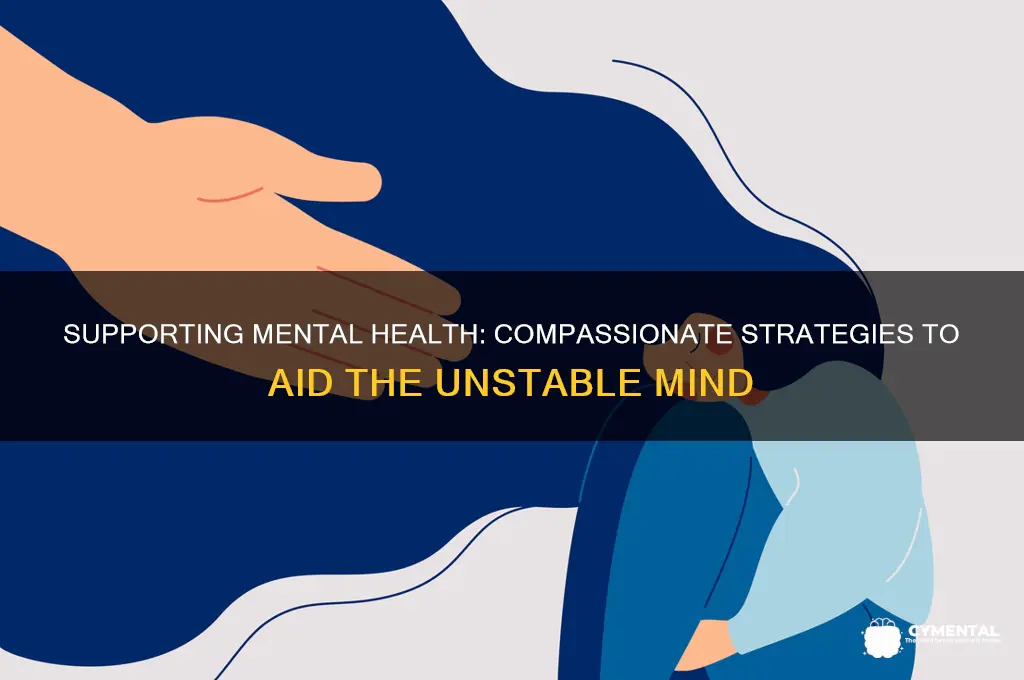
Helping someone who is mentally unstable requires empathy, patience, and understanding. It’s essential to approach the situation with compassion, avoiding judgment or stigma, while encouraging open communication. Start by actively listening without interrupting, validating their feelings, and letting them know they are not alone. Encourage professional help, such as therapy or counseling, and offer to assist in finding resources or accompanying them to appointments. Maintain a supportive presence, but also set healthy boundaries to protect your own well-being. Small gestures, like checking in regularly or engaging in calming activities together, can make a significant difference. Remember, mental health challenges are complex, and recovery takes time, so consistency and genuine care are key.
Explore related products


What You'll Learn
- Active Listening: Show empathy, avoid judgment, and give full attention to their feelings and thoughts
- Encourage Professional Help: Gently suggest therapy, counseling, or psychiatric support for expert guidance
- Create Safe Spaces: Foster trust, respect boundaries, and ensure they feel secure and accepted
- Promote Self-Care: Encourage healthy habits like sleep, exercise, and mindfulness to support mental health
- Stay Supportive: Be consistent, patient, and available without enabling harmful behaviors

Active Listening: Show empathy, avoid judgment, and give full attention to their feelings and thoughts
Mental health struggles often leave individuals feeling isolated and misunderstood. Active listening can be a powerful tool to bridge this gap. It involves creating a safe space where someone feels truly heard, without fear of judgment or interruption. Imagine a friend confiding in you about their anxiety. Instead of offering quick fixes or downplaying their concerns, you lean in, maintain eye contact, and reflect back their emotions: "It sounds like this situation is really overwhelming for you." This simple act of validation can be incredibly comforting.
Active listening isn't about solving problems; it's about acknowledging the person's experience. Avoid the urge to offer advice unless explicitly asked. Phrases like "I understand" can feel dismissive if not followed by genuine empathy. Instead, try open-ended questions like "Can you tell me more about what that feels like?" or "What's been the hardest part for you?" These encourage deeper sharing and demonstrate your commitment to understanding their perspective.
Think of active listening as a form of emotional first aid. Just as you'd tend to a physical wound with care and attention, approach their emotional pain with the same gentleness. Mirror their body language subtly – a slight lean forward, a nod – to signal engagement. Summarize what they've said to ensure clarity and show you're following along. For example, "So, what I'm hearing is that you feel trapped and unsure of how to move forward." This not only confirms your understanding but also makes them feel truly seen.
Remember, active listening is a skill that takes practice. Be patient with yourself and the person you're supporting. Avoid interrupting, even if you think you know what they're going to say. Let them finish their thoughts completely. Silence can be powerful; it allows them to process their feelings and gather their thoughts without pressure.
The impact of active listening extends far beyond the conversation itself. It fosters trust, strengthens relationships, and can even encourage someone to seek professional help. By creating a safe and non-judgmental space, you're empowering them to explore their emotions and potentially find their own path towards healing.
Meditation Yoga: Enhancing Facial and Mental Health Naturally
You may want to see also
Explore related products


Encourage Professional Help: Gently suggest therapy, counseling, or psychiatric support for expert guidance
Mental health struggles often require more than a supportive ear; they need the expertise of trained professionals. While offering a listening ear is valuable, it’s crucial to recognize when a situation calls for specialized intervention. Therapists, counselors, and psychiatrists possess the tools to diagnose, treat, and manage mental health conditions effectively. Their guidance can provide a roadmap for recovery, offering strategies tailored to the individual’s needs.
Suggesting professional help requires sensitivity and tact. Begin by normalizing the conversation around mental health care. Phrases like, “Many people find it helpful to talk to someone trained in these situations,” or “Therapy has been a game-changer for others dealing with similar challenges,” can reduce stigma. Avoid framing it as a last resort; instead, position it as a proactive step toward healing. For instance, if a friend expresses persistent anxiety, you might say, “It sounds like you’re carrying a lot—have you considered talking to a counselor? They’re really good at helping people manage these feelings.”
Practical barriers often deter individuals from seeking help. Offer concrete assistance to make the process less daunting. Research local therapists or online platforms that accept their insurance, or provide a list of low-cost mental health resources. For younger individuals (ages 18–25), suggest university counseling services or apps like BetterHelp, which cater to their demographic. For older adults, recommend psychiatrists who specialize in age-related concerns. Small gestures, like offering to accompany them to the first appointment, can make a significant difference.
Encouraging professional help doesn’t mean abandoning your role as a supporter; it means enhancing it. After suggesting therapy, follow up periodically without being intrusive. Ask open-ended questions like, “How did your session go?” or “What’s been helpful so far?” This shows ongoing commitment while respecting their autonomy. Remember, the goal is to empower them to take control of their mental health, not to dictate their choices. By gently guiding them toward expert care, you’re helping lay the foundation for long-term recovery.
Unwind and Thrive: How Hobbies Boost Mental Health Naturally
You may want to see also
Explore related products



Create Safe Spaces: Foster trust, respect boundaries, and ensure they feel secure and accepted
Mentally unstable individuals often retreat into isolation, fearing judgment or misunderstanding. Creating safe spaces counters this by offering an environment where they can express themselves without fear. These spaces aren’t physical locations alone—they’re defined by the attitudes and behaviors of those within them. A safe space fosters trust through consistency, respects boundaries by listening without intrusion, and ensures security by validating emotions rather than dismissing them.
To build such a space, start with active listening. Avoid interrupting or offering solutions unless asked. Instead, reflect their feelings: “It sounds like you’re feeling overwhelmed right now.” This validates their experience and signals that their emotions are acknowledged. For example, a teenager struggling with anxiety may clam up during family discussions. A parent who pauses, says, “I see you’re hesitant to share,” and waits patiently creates a non-threatening opening. Practical tip: Use open-ended questions like, “How can I support you best?” to show respect for their autonomy.
Boundaries are critical in safe spaces. Mentally unstable individuals often feel their limits are ignored or tested. Respecting boundaries means asking permission before offering help, avoiding prying questions, and accepting “no” without argument. For instance, someone with PTSD might flinch at sudden movements. A safe space accommodates this by moving deliberately and explaining actions beforehand: “I’m going to hand you this glass of water, okay?” Caution: Overstepping boundaries, even with good intentions, can erode trust. Always prioritize their comfort over your desire to assist.
Security in a safe space comes from predictability and acceptance. Establish routines where possible—consistent check-ins, calm tones, and familiar phrases like, “You’re safe here.” For children, this might mean a designated “calm corner” with sensory tools (weighted blankets, fidget toys). For adults, it could be a weekly coffee date where mental health is openly discussed without pressure. Persuasive point: Safe spaces aren’t about fixing problems but creating a foundation for healing. When someone feels secure, they’re more likely to seek professional help or engage in self-care practices.
Finally, model empathy and patience. Safe spaces thrive when those involved lead by example. Avoid phrases like, “Just think positively,” or, “It could be worse.” Instead, say, “This must be really hard for you.” Descriptive detail: Imagine a friend with depression who cancels plans repeatedly. A safe response is, “I’m here whenever you’re ready,” rather than, “You’re always bailing.” Takeaway: Safe spaces are built on small, consistent actions that communicate, “You matter, and you’re accepted as you are.”
Sculpting for Serenity: Unveiling Art's Healing Power on Mental Health
You may want to see also
Explore related products






Promote Self-Care: Encourage healthy habits like sleep, exercise, and mindfulness to support mental health
Mental instability often disrupts basic routines, leaving individuals vulnerable to worsening symptoms. Promoting self-care by encouraging healthy habits like sleep, exercise, and mindfulness can act as a stabilizing force, offering both immediate relief and long-term resilience. These practices don’t replace professional treatment but serve as complementary tools to manage symptoms and improve overall well-being.
Consider sleep, the cornerstone of mental health. Adults require 7–9 hours nightly, yet stress and anxiety frequently interfere with this essential function. Establishing a consistent sleep schedule, limiting screen time before bed, and creating a calming bedtime routine (e.g., reading, herbal tea) can significantly improve sleep quality. For those with insomnia, cognitive-behavioral therapy for insomnia (CBT-I) is a proven, drug-free intervention that restructures sleep patterns over 4–8 weeks.
Exercise is another powerful tool, releasing endorphins that counteract depression and anxiety. Aim for 150 minutes of moderate aerobic activity weekly, such as brisk walking or cycling. Even short bursts of movement, like a 10-minute dance session, can provide immediate mood enhancement. For individuals resistant to traditional workouts, incorporating physical activity into daily life—gardening, yoga, or even stretching—can be equally effective.
Mindfulness practices, including meditation and deep breathing, train the mind to stay present, reducing rumination and anxiety. Start with 5–10 minutes daily, using guided apps or simple techniques like focusing on breath. Research shows that consistent mindfulness practice can alter brain structure, increasing gray matter in areas linked to emotional regulation. For beginners, pairing mindfulness with physical activity, such as mindful walking, can make the practice more accessible.
However, self-care isn’t one-size-fits-all. What works for one person may overwhelm another. Encourage experimentation and patience, emphasizing progress over perfection. For instance, someone with severe anxiety might begin with 2-minute breathing exercises before building up to longer sessions. Additionally, avoid framing self-care as a cure-all; instead, position it as a proactive step toward managing symptoms and fostering resilience. By integrating these habits into daily life, individuals can create a foundation of stability, even in the face of mental health challenges.
Laughter as Therapy: How Humor Boosts Mental Health and Resilience
You may want to see also
Explore related products



Stay Supportive: Be consistent, patient, and available without enabling harmful behaviors
Supporting someone with mental instability requires a delicate balance between offering unwavering support and avoiding behaviors that might perpetuate their struggles. Consistency is key; erratic or unpredictable responses can exacerbate anxiety and distrust. For instance, if you commit to weekly check-ins, honor that promise. A missed call or forgotten text might seem minor, but it can reinforce feelings of abandonment or unreliability in someone already grappling with emotional fragility.
Patience is equally critical, as recovery or stabilization rarely follows a linear path. Progress may appear slow or even nonexistent, and setbacks are common. Resist the urge to rush the process or express frustration, even if their behavior tests your limits. Instead, acknowledge their efforts, no matter how small, and remind them that setbacks are part of the journey. For example, if they struggle with self-harm, celebrate days of resistance rather than focusing on relapses.
Availability doesn’t mean being on-call 24/7; it means setting clear boundaries that protect your own mental health while remaining a reliable presence. Offer specific times when you’re available to talk, and stick to them. If they call outside those hours, respond with a brief, empathetic message like, "I’m not available right now, but I’ll call you at 7 p.m. to check in." This approach communicates care without fostering dependency.
Enabling harmful behaviors is a common pitfall. It often stems from a desire to alleviate their pain but can inadvertently reinforce destructive patterns. For example, if someone avoids social situations due to anxiety, repeatedly excusing their absence might hinder their progress. Instead, encourage small steps forward, such as attending a 15-minute gathering, while validating their fears. Offer to accompany them if possible, but avoid shielding them from challenges entirely.
Striking this balance requires self-awareness and honesty. Regularly assess your role in their life: Are you fostering growth, or are you inadvertently shielding them from consequences? Seek guidance from mental health professionals if you’re unsure. Remember, true support empowers individuals to face their struggles, not avoid them. By staying consistent, patient, and available—while avoiding enablement—you can be a stabilizing force in their journey toward healing.
Empower Yourself, Lift Others: Balancing Self-Preservation and Compassion
You may want to see also
Frequently asked questions
Look for signs such as extreme mood swings, withdrawal from social activities, persistent sadness or anxiety, changes in sleep or appetite, and expressions of hopelessness or self-harm. Trust your instincts and approach them with empathy.
Encourage them gently, express your concern, and offer to accompany them to seek professional help. If they remain resistant and are at risk of harm, contact a mental health professional or crisis hotline for guidance.
Set clear boundaries, encourage professional treatment, and avoid taking responsibility for their actions. Offer emotional support while promoting self-reliance and healthy coping mechanisms.
Assist with small tasks like meal preparation or reminders, encourage routine and self-care, listen without judgment, and help them access resources like therapy or support groups.
Prioritize your own mental health by setting limits, seeking support from friends or a therapist, and practicing self-care activities like exercise, meditation, or hobbies. Avoid burnout by maintaining a balance between helping and personal well-being.