Madison Cole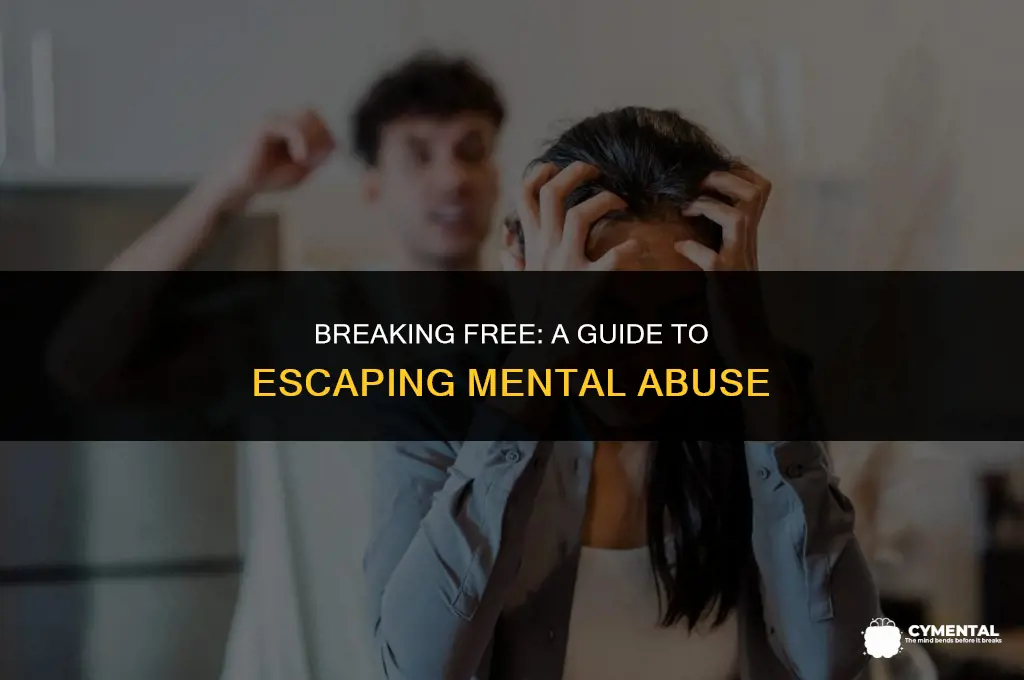
Leaving a mentally abusive relationship can be an incredibly challenging and complex process. Mental abuse often involves manipulation, gaslighting, and emotional control, which can make it difficult for victims to recognize the abuse and feel empowered to leave. However, it is crucial to understand that mental abuse is a serious form of domestic violence and that there are resources and support available for those who wish to escape these harmful situations. The first step in leaving a mentally abusive relationship is often to educate oneself about the signs of abuse and to seek out support from trusted friends, family, or mental health professionals. With the right guidance and resources, it is possible to break free from the cycle of abuse and begin the journey towards healing and recovery.
| Characteristics | Values |
|---|---|
| Definition | A mentally abusive relationship is characterized by behaviors that manipulate, control, or demean the victim, often leading to psychological trauma. |
| Signs | Constant criticism, belittling, gaslighting, emotional manipulation, isolation from friends and family, threats, and controlling behavior. |
| Impact on Victim | Low self-esteem, anxiety, depression, confusion, fear, and a sense of helplessness or hopelessness. |
| Cycle of Abuse | The relationship often follows a cycle of tension-building, explosion, and honeymoon phases, where the abuser apologizes and promises to change. |
| Difficulty in Leaving | Victims may struggle to leave due to emotional attachment, fear of retaliation, financial dependence, or lack of support. |
| Steps to Leave | Recognize the abuse, seek support from friends, family, or professionals, create a safety plan, gather important documents, and find a safe place to stay. |
| Legal Protections | Many jurisdictions offer legal protections such as restraining orders, which can help prevent further abuse and ensure the victim's safety. |
| Healing Process | Leaving an abusive relationship is just the first step; victims often require therapy, support groups, and time to heal and rebuild their self-esteem. |
| Warning Signs for Others | Behaviors such as excessive jealousy, controlling actions, and verbal abuse can be warning signs that someone is in an abusive relationship. |
| Support Resources | Hotlines, shelters, counseling services, and online resources are available to help victims of mental abuse. |
| Myths and Misconceptions | Myths include the belief that mental abuse is not as harmful as physical abuse, or that victims are somehow responsible for the abuse they endure. |
| Importance of Awareness | Raising awareness about mental abuse is crucial for helping victims recognize the signs, seek help, and understand that they are not alone. |
Explore related products


What You'll Learn
- Recognize the abuse: Identify patterns of manipulation, criticism, and control in your partner's behavior
- Seek support: Reach out to friends, family, or a therapist to share your experiences and gain emotional support
- Create a safety plan: Develop a strategy for leaving the relationship safely, including finding a new place to live
- Set boundaries: Establish clear limits with your partner to protect yourself from further abuse
- Practice self-care: Focus on your physical and emotional well-being by engaging in activities that bring you joy and relaxation

Recognize the abuse: Identify patterns of manipulation, criticism, and control in your partner's behavior
Recognizing abuse in a relationship involves identifying specific patterns of behavior that are indicative of manipulation, criticism, and control. These patterns can be subtle and may not always be immediately apparent, but they are crucial to acknowledge in order to address and ultimately leave a mentally abusive relationship.
One key pattern to look out for is gaslighting, where your partner may deny your perceptions or memories, making you question your own sanity. This can be particularly damaging as it undermines your confidence in your own judgment and can make it difficult to recognize the abuse for what it is. Another pattern is excessive criticism, where your partner constantly finds fault with you, your decisions, or your actions, often in a way that is disproportionate to the situation. This can erode your self-esteem and make you feel inadequate or worthless.
Control is another significant aspect of abuse, where your partner may try to dictate your actions, limit your freedom, or isolate you from friends and family. This can take many forms, such as monitoring your phone or social media, restricting your access to certain places or people, or even controlling your finances. It's important to note that these behaviors are not always overtly aggressive; they can be disguised as concern or care, making them even more insidious.
To effectively identify these patterns, it can be helpful to keep a journal of your partner's behavior, noting specific incidents and how they made you feel. This can provide a clear record of the abuse and help you to recognize the frequency and severity of these patterns. Additionally, seeking support from trusted friends, family, or a therapist can offer an outside perspective and help you to see the relationship more clearly.
Remember, recognizing the abuse is the first step towards leaving a mentally abusive relationship. By identifying these patterns of manipulation, criticism, and control, you can begin to reclaim your autonomy and take steps towards a healthier, more fulfilling life.
Exploring the Intricacies of Mental Age: A Journey Beyond Chronological Years
You may want to see also
Explore related products


Seek support: Reach out to friends, family, or a therapist to share your experiences and gain emotional support
Leaving a mentally abusive relationship can be an isolating experience, making it crucial to seek support from those around you. Reaching out to friends, family, or a therapist can provide a lifeline of emotional support and help you navigate the complex feelings and challenges that come with ending such a relationship.
When seeking support, it's essential to choose individuals who are non-judgmental and empathetic to your situation. This might include close friends or family members who have your best interests at heart and can offer a listening ear without criticism. Alternatively, a therapist can provide a safe and confidential space to process your emotions and develop strategies for moving forward.
Sharing your experiences with others can be a powerful way to break the cycle of abuse and reclaim your narrative. By speaking openly about the mental abuse you've endured, you can gain validation and recognition for your struggles, which can be a significant step towards healing and recovery.
In addition to emotional support, seeking help from others can also provide practical assistance. For example, friends or family members might be able to help you with tasks such as finding a new place to live, securing employment, or accessing legal resources. A therapist can also help you develop a safety plan for leaving the relationship and provide referrals to other support services as needed.
Remember that seeking support is a sign of strength, not weakness. It takes courage to reach out and ask for help, especially when you've been subjected to mental abuse. By connecting with others, you can begin to rebuild your sense of self-worth and agency, which are often eroded by abusive relationships.
Ultimately, seeking support is a crucial step in the process of leaving a mentally abusive relationship. By reaching out to friends, family, or a therapist, you can gain the emotional and practical support you need to break free from the cycle of abuse and start rebuilding your life.
Understanding Mental Wards: A Compassionate Guide to Psychiatric Care
You may want to see also
Explore related products




Create a safety plan: Develop a strategy for leaving the relationship safely, including finding a new place to live
Leaving a mentally abusive relationship requires careful planning to ensure your safety and well-being. A crucial step in this process is developing a comprehensive safety plan. This involves identifying potential risks, creating a support network, and establishing a secure living arrangement. Start by assessing the situation and recognizing any immediate dangers. If you're in a situation where you feel threatened or unsafe, it's essential to prioritize your physical safety.
Once you've identified potential risks, reach out to friends, family, or a support hotline to create a network of people who can assist you in leaving the relationship. These individuals can provide emotional support, help you gather necessary items, and offer a safe place to stay temporarily. It's also important to document any evidence of abuse, such as threatening messages or incidents of violence, as this can be useful if you decide to seek legal action.
Finding a new place to live is a critical component of your safety plan. Consider reaching out to local shelters or housing assistance programs that specialize in helping individuals in abusive situations. These organizations can provide temporary housing and resources to help you get back on your feet. If you're unable to find a shelter or housing program, consider staying with a trusted friend or family member until you can secure a more permanent living arrangement.
In addition to finding a new place to live, it's important to take steps to protect your financial independence. This may involve opening a separate bank account, obtaining a credit card in your own name, and ensuring that you have access to important documents such as identification, social security cards, and insurance information. By taking these steps, you can reduce your dependence on your abuser and increase your ability to leave the relationship safely.
Finally, remember that leaving a mentally abusive relationship is a process that takes time and planning. Be patient with yourself and seek support from professionals or support groups as needed. With a well-thought-out safety plan in place, you can take the necessary steps to leave the relationship and begin rebuilding your life.
Exploring the Mental Foramen: A Gateway to Understanding Neural Connections
You may want to see also
Explore related products


$12.97 $13.97



Set boundaries: Establish clear limits with your partner to protect yourself from further abuse
Establishing clear boundaries is a crucial step in protecting yourself from further abuse in a mentally abusive relationship. This involves setting firm limits on what behaviors you will and will not tolerate from your partner. It's important to communicate these boundaries assertively and to be prepared to enforce them consistently.
One way to set boundaries is to create a list of behaviors that are off-limits, such as name-calling, belittling, or controlling your access to friends and family. Once you have identified these behaviors, it's essential to communicate them to your partner in a clear and direct manner. Use "I" statements to express how these behaviors make you feel and why they are unacceptable. For example, you could say, "I feel disrespected when you call me names, and it's not okay for you to treat me that way."
It's also important to establish consequences for when your partner crosses these boundaries. These consequences should be clear and enforceable, such as taking a break from the relationship or seeking support from friends or a therapist. Be prepared to follow through on these consequences if your partner continues to engage in abusive behaviors.
Setting boundaries can be challenging, especially if you have been in an abusive relationship for a long time. It may be helpful to seek support from a therapist or a support group to help you develop and maintain healthy boundaries. Remember, you deserve to be treated with respect and kindness, and setting boundaries is an important step in reclaiming your power and protecting yourself from further abuse.
Taking the First Step: Self-Admission to a Mental Health Facility
You may want to see also
Explore related products





Practice self-care: Focus on your physical and emotional well-being by engaging in activities that bring you joy and relaxation
Engaging in self-care is crucial when recovering from a mentally abusive relationship. One effective way to practice self-care is by focusing on activities that promote physical and emotional well-being. This can include exercise, meditation, or hobbies that bring joy and relaxation. Regular physical activity, for instance, can help reduce stress and anxiety, improve mood, and boost self-esteem. Activities like yoga or pilates can also help reconnect with your body and promote mindfulness.
Another important aspect of self-care is nurturing your emotional health. This can involve seeking support from friends and family, joining a support group, or working with a therapist. Expressing yourself creatively through art, music, or writing can also be a powerful way to process emotions and regain a sense of control. Additionally, practicing self-compassion and setting healthy boundaries can help rebuild your self-worth and protect you from future abuse.
It's essential to prioritize self-care when leaving a mentally abusive relationship, as it can help you regain your strength and confidence. By focusing on your physical and emotional well-being, you can begin to heal and move forward with your life. Remember, self-care is not selfish – it's a necessary step in your recovery journey.
When it comes to self-care, it's important to find activities that resonate with you personally. Experiment with different hobbies and practices to discover what brings you the most joy and relaxation. Be patient with yourself, and don't be afraid to seek help when needed. With time and consistent effort, you can cultivate a self-care routine that supports your overall well-being and helps you thrive in your new life.
Understanding Mental Incapacity: A Comprehensive Guide
You may want to see also
Frequently asked questions
Signs of mental abuse include constant criticism, belittling, gaslighting, manipulation, isolation from friends and family, and controlling behavior. It's important to recognize these patterns to address and exit the relationship safely.
Preparation involves recognizing the abuse, seeking support from trusted friends or professionals, creating a safety plan, gathering important documents and belongings, and finding a safe place to stay. Emotional preparation and having a support network are crucial.
Legal steps may include filing for a restraining order, seeking custody of children if applicable, and understanding one's rights regarding property and finances. Consulting with a legal professional can provide guidance tailored to the individual's situation.
Healing involves seeking therapy or counseling, practicing self-care, rebuilding self-esteem, and reconnecting with supportive friends and family. It's a gradual process that requires patience and self-compassion.
Resources include domestic violence hotlines, shelters, support groups, legal aid services, and mental health professionals. These organizations provide assistance, guidance, and support throughout the process of leaving and healing.