Caleb Wright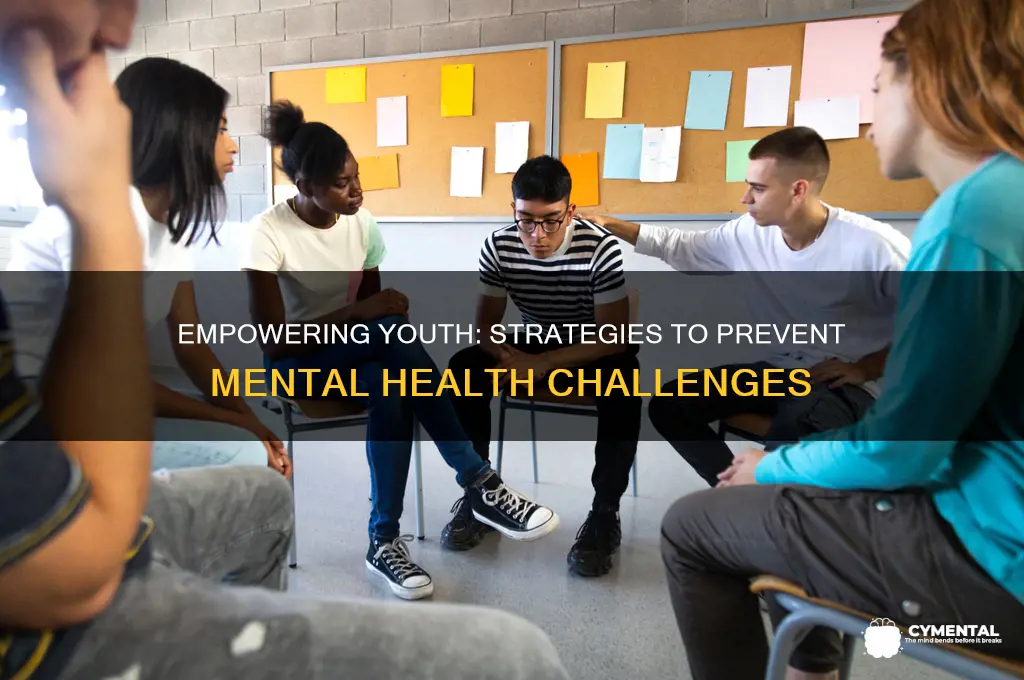
Preventing mental health issues in youth requires a multifaceted approach that addresses biological, psychological, and social factors. Early intervention is key, starting with fostering open conversations about mental health to reduce stigma and encourage help-seeking behaviors. Schools and communities play a vital role by implementing programs that promote emotional resilience, stress management, and coping skills. Parents and caregivers should prioritize creating supportive environments, ensuring balanced screen time, and encouraging physical activity and healthy sleep habits. Access to mental health resources, such as counseling and peer support groups, must be readily available and tailored to young people’s needs. Additionally, addressing systemic issues like bullying, academic pressure, and socioeconomic disparities is essential to create a protective framework for youth mental well-being.
Explore related products





What You'll Learn
- Promote Healthy Sleep Habits: Encourage consistent sleep schedules and limit screen time before bed
- Foster Social Connections: Support meaningful relationships and community involvement for emotional well-being
- Teach Stress Management: Provide tools like mindfulness, deep breathing, and time management techniques
- Encourage Physical Activity: Regular exercise reduces anxiety, depression, and improves mood
- Access to Mental Health Resources: Ensure availability of counseling, helplines, and early intervention programs

Promote Healthy Sleep Habits: Encourage consistent sleep schedules and limit screen time before bed
Sleep is the cornerstone of mental resilience in youth, yet it’s often sacrificed to screen time and erratic schedules. Adolescents require 8–10 hours of sleep nightly, but studies show over 70% fall short. This deficit amplifies risks for anxiety, depression, and cognitive decline. The culprit? Blue light from screens suppresses melatonin, delaying sleep onset by up to an hour. Establishing a consistent sleep routine isn’t just beneficial—it’s protective.
To implement this, start by setting a non-negotiable bedtime and wake time, even on weekends. For teens aged 13–18, aim for lights out between 9–10 PM. Introduce a "digital sunset" rule: ban screens at least one hour before bed. Replace scrolling with calming activities like reading, journaling, or gentle stretching. Parents can model this behavior by charging devices outside bedrooms, creating a tech-free sanctuary. Consistency is key—irregular sleep patterns disrupt circadian rhythms, exacerbating mood instability.
However, enforcement requires nuance. For older teens, abrupt changes may provoke resistance. Instead, co-create a plan that acknowledges their autonomy while emphasizing the mental health benefits. Use data-driven tools like sleep trackers to visualize progress and foster accountability. For younger adolescents, gamify the process with rewards for meeting sleep goals. Caution: avoid shaming or punishment for slip-ups, as this can breed resentment and undermine motivation.
The science is clear: prioritizing sleep is a proactive defense against mental health issues. A 2020 study found teens with consistent sleep schedules reported 30% lower stress levels. By limiting screen time and anchoring routines, families can fortify young minds against the pressures of modern life. This isn’t just about rest—it’s about resilience.
Empowering Connections: Strategies to Engage and Support Mental Health Struggles
You may want to see also
Explore related products

$9.71 $18.99


Foster Social Connections: Support meaningful relationships and community involvement for emotional well-being
Human beings are inherently social creatures, and this is especially true for adolescents. Research consistently shows that strong social connections are a protective factor against mental health issues in youth. A study by the American Psychological Association found that teens with higher levels of social support were significantly less likely to experience depression and anxiety.
Building Blocks of Connection:
Fostering meaningful relationships isn't about quantity, it's about quality. Encourage youth to cultivate deep connections with a few trusted individuals – family members, close friends, mentors, or even pets. These relationships provide a sense of belonging, security, and emotional validation, acting as a buffer against stress and adversity.
Consider structured activities that promote bonding, such as shared hobbies, team sports, or community service projects. For younger children (ages 8-12), group activities like scouting or art classes can be particularly beneficial. Teenagers (ages 13-18) might find connection through youth groups, book clubs, or online communities centered around shared interests.
The Power of Community:
Community involvement extends beyond individual relationships, offering a sense of purpose and belonging to something larger than oneself. Volunteering, for instance, has been shown to boost self-esteem, reduce stress, and combat feelings of isolation. Aim for at least 2-3 hours of community engagement per week, whether it's helping at a local food bank, tutoring younger students, or participating in neighborhood clean-up initiatives.
Navigating the Digital Landscape:
While online interactions can supplement real-world connections, they shouldn't replace them. Excessive screen time, particularly on social media platforms, has been linked to increased feelings of loneliness and depression in adolescents. Encourage mindful social media use, emphasizing quality interactions over passive scrolling. Set clear boundaries, such as designated tech-free times or limiting social media use to 1-2 hours per day.
Creating Safe Spaces:
Foster environments where youth feel comfortable expressing their emotions and seeking support. This could involve family dinners where open communication is encouraged, peer support groups facilitated by a counselor, or simply creating dedicated time for one-on-one conversations. Remember, listening actively and non-judgmentally is crucial.
By prioritizing meaningful relationships and community involvement, we can provide young people with the social scaffolding they need to thrive emotionally and build resilience against mental health challenges.
Navigating Allyship: Supporting Racial Justice While Managing Mental Health
You may want to see also
Explore related products


Teach Stress Management: Provide tools like mindfulness, deep breathing, and time management techniques
Stress is an inevitable part of life, but for youth, it can be particularly overwhelming, often leading to mental health issues if left unmanaged. Teaching stress management techniques early on equips young people with the tools to navigate challenges healthily. Mindfulness, deep breathing, and time management are not just buzzwords but practical strategies that can be integrated into daily routines. For instance, mindfulness practices, such as guided meditation or body scans, have been shown to reduce cortisol levels, the hormone associated with stress. Even 5–10 minutes of mindfulness daily can make a significant difference, especially for adolescents aged 12–18, who are more susceptible to stress-induced anxiety.
Deep breathing exercises are another powerful tool that can be taught and practiced anywhere, anytime. The 4-7-8 technique, where one breathes in for 4 seconds, holds for 7 seconds, and exhales for 8 seconds, is particularly effective in calming the nervous system. This technique can be introduced in schools or at home as a quick intervention during moments of heightened stress. For younger children (ages 8–12), simplifying the technique to a 3-2-3 rhythm can make it more accessible and engaging. Pairing these exercises with visual aids or apps designed for youth can enhance their effectiveness and encourage consistent use.
Time management, often overlooked as a stress management tool, is critical for youth who juggle academics, extracurriculars, and social life. Teaching them to prioritize tasks using methods like the Pomodoro Technique (25 minutes of focus followed by a 5-minute break) can prevent burnout. For teens, incorporating digital tools like calendars or task management apps can help them visualize their commitments and allocate time effectively. However, it’s essential to caution against over-scheduling; balance is key. Encouraging youth to block out time for relaxation and hobbies ensures that stress management isn’t just about productivity but also about well-being.
The integration of these tools into educational and home environments requires a thoughtful approach. Schools can embed mindfulness sessions into morning routines or physical education classes, while parents can model these practices at home. For example, family dinners can include a minute of deep breathing before eating, normalizing these techniques as part of daily life. Additionally, educators and caregivers should emphasize that stress management is a skill that improves with practice, not a one-time fix. By fostering a culture of patience and consistency, youth are more likely to adopt these habits long-term.
Ultimately, teaching stress management is about empowering youth to take control of their mental health. Mindfulness, deep breathing, and time management are not just coping mechanisms but foundational skills for resilience. By providing these tools early and often, we can help young people build a buffer against the pressures of adolescence and beyond. The goal isn’t to eliminate stress but to transform how it’s experienced—from a debilitating force to a manageable part of life. With the right strategies in place, youth can thrive, not just survive, in the face of challenges.
Addressing Campus Mental Health: Strategies for Student Well-being and Support
You may want to see also
Explore related products


Encourage Physical Activity: Regular exercise reduces anxiety, depression, and improves mood
Physical activity isn’t just about building muscles or shedding pounds—it’s a powerful tool for mental health. Studies consistently show that regular exercise reduces symptoms of anxiety and depression in youth, while boosting overall mood. The reason? Exercise triggers the release of endorphins, often called "feel-good" hormones, which act as natural stress relievers. It also promotes better sleep, a critical factor in emotional regulation. For adolescents, whose brains are still developing, these benefits can be particularly transformative.
To harness these advantages, aim for at least 60 minutes of moderate-to-vigorous physical activity daily, as recommended by the World Health Organization. This doesn’t mean forcing teens into marathon runs or gym sessions. Instead, focus on activities they enjoy—whether it’s dancing, skateboarding, team sports, or even brisk walking with friends. The key is consistency, not intensity. For younger children, unstructured play—like tag or climbing—counts too. Parents and caregivers can lead by example, turning exercise into a shared, enjoyable routine rather than a chore.
However, it’s crucial to avoid overemphasis on performance or appearance. Framing exercise as a way to "look good" can backfire, fostering body image issues or burnout. Instead, highlight how movement makes them *feel*—more energized, less stressed, and clearer-headed. For teens struggling with motivation, start small: a 10-minute walk, a quick yoga session, or a dance break. Gradually build up, celebrating progress without fixating on outcomes. Schools can play a role too, by integrating movement into the day—think active recess, standing desks, or classroom stretches.
One practical tip: pair physical activity with social interaction. Joining a sports team, attending group fitness classes, or even walking with a friend can amplify the mental health benefits. Social connection combats loneliness, a growing concern among youth, while shared activity creates a sense of belonging. For introverted teens, solo activities like cycling or hiking can still provide mental clarity, especially when done in nature, which has its own therapeutic effects.
Incorporating movement into daily life doesn’t require a radical overhaul. Simple swaps—like biking to school, taking the stairs, or having walking study sessions—add up. The goal is to make physical activity a natural part of a young person’s routine, not an add-on. By doing so, we equip them with a lifelong habit that strengthens not just their bodies, but their minds.
Supporting Incarcerated Minds: Strategies for Improving Prisoner Mental Health
You may want to see also
Explore related products


$24.07 $29.99


Access to Mental Health Resources: Ensure availability of counseling, helplines, and early intervention programs
Youth mental health crises often escalate due to delayed intervention, making early access to resources a critical preventive measure. Schools, for instance, can integrate weekly counseling sessions into their curriculum, ensuring students aged 13–18 have consistent opportunities to address emerging issues before they worsen. A study by the American Psychological Association found that adolescents who received regular counseling reported a 40% reduction in anxiety symptoms over six months. Pairing this with 24/7 helplines, like the National Alliance on Mental Illness (NAMI) Helpline, provides immediate support outside structured settings, creating a safety net for moments of acute distress.
However, availability alone isn’t enough; awareness and accessibility must be prioritized. Schools and communities should conduct quarterly workshops to educate youth on how to utilize these resources, emphasizing confidentiality and the absence of judgment. For example, a campaign in Canada, "Talk Today," successfully increased helpline usage among teens by 35% through peer-led promotion and teacher endorsements. Similarly, early intervention programs, such as Cognitive Behavioral Therapy (CBT) workshops for at-risk youth, can be tailored to address specific stressors like exam anxiety or social isolation. These programs, when delivered in 8–12 sessions, have shown significant improvements in emotional regulation and resilience.
A comparative analysis reveals that regions with integrated mental health services—combining counseling, helplines, and early intervention—report lower rates of self-harm and suicidal ideation among youth. For instance, Finland’s school-based mental health model, which includes mandatory counseling access and peer support groups, has reduced youth suicide rates by 50% over the past decade. In contrast, areas with fragmented or underfunded systems often see higher rates of untreated mental health issues. This underscores the need for systemic investment in comprehensive, youth-friendly resources.
To implement this effectively, policymakers and educators must collaborate to remove barriers to access. For example, offering counseling during lunch hours or after school ensures participation without academic penalties. Helplines should be promoted through multiple channels—social media, posters, and classroom discussions—to reach diverse communication preferences. Early intervention programs can be made more engaging by incorporating technology, such as mental health apps or virtual reality therapy sessions, which appeal to tech-savvy youth. By combining these strategies, communities can create a robust support system that addresses mental health proactively, not reactively.
Supporting Friends Through Mental Health Struggles: Practical Ways to Help
You may want to see also
Frequently asked questions
Effective strategies include promoting open communication about emotions, fostering a supportive environment, encouraging healthy lifestyle habits (sleep, exercise, nutrition), teaching stress management skills, and providing access to mental health education and resources.
Parents and caregivers can support youth by actively listening without judgment, modeling healthy coping mechanisms, setting consistent routines, staying involved in their lives, and seeking professional help when needed.
Schools play a crucial role by implementing mental health programs, training staff to recognize warning signs, creating safe and inclusive environments, reducing academic pressure, and offering counseling services.
Early intervention is critical as it can prevent minor issues from escalating into severe mental health disorders. Recognizing signs early, providing timely support, and addressing underlying causes can significantly improve outcomes.
Yes, lifestyle changes such as regular physical activity, balanced nutrition, adequate sleep, limiting screen time, and engaging in hobbies or social activities can reduce stress, improve mood, and lower the risk of mental health issues.