Ava Ramirez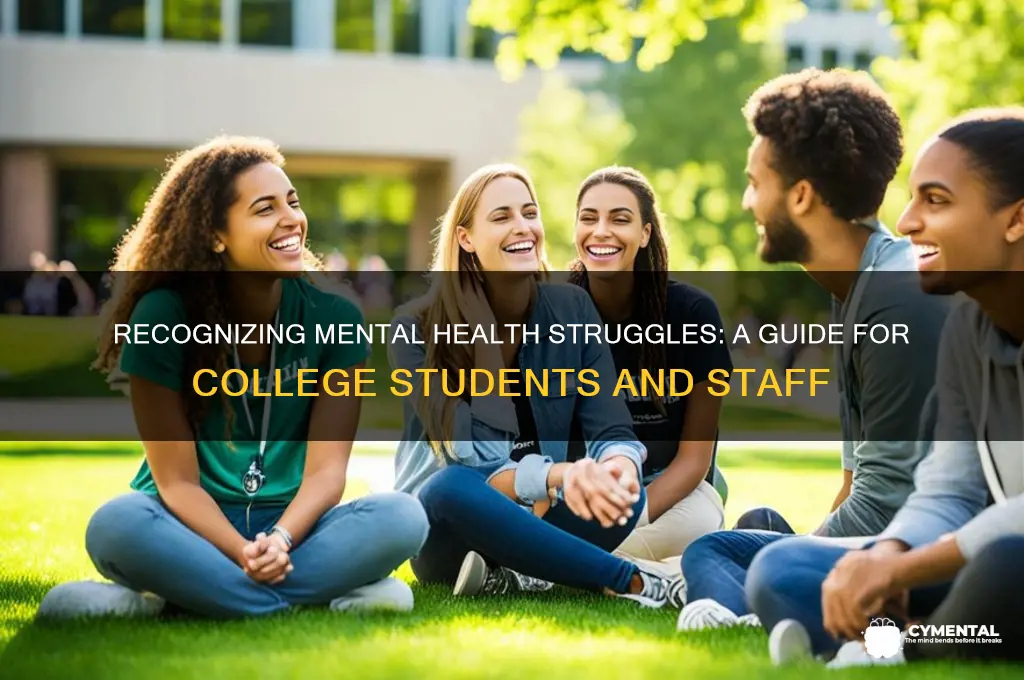
Spotting mental health issues in colleges is crucial, as the transition to higher education often brings unique stressors that can impact students' well-being. Common signs include significant changes in behavior, such as withdrawal from social activities, declining academic performance, or persistent sadness. Physical symptoms like changes in sleep patterns, appetite, or energy levels may also indicate underlying mental health struggles. Additionally, increased irritability, difficulty concentrating, or expressions of hopelessness should not be overlooked. Faculty, staff, and peers play a vital role in recognizing these signs and fostering an environment where students feel safe to seek help. Early intervention, coupled with access to campus mental health resources, can make a significant difference in supporting students' mental health and academic success.
Explore related products

$15.99 $21.95


What You'll Learn
- Recognizing sudden changes in academic performance or attendance patterns
- Identifying social withdrawal or isolation from peers and activities
- Noticing extreme mood swings or persistent irritability in students
- Observing changes in sleep, appetite, or personal hygiene habits
- Detecting signs of substance abuse or risky behaviors on campus

Recognizing sudden changes in academic performance or attendance patterns
A student who once excelled in calculus now struggles to pass quizzes. Another, always punctual, starts missing morning lectures. These shifts, while seemingly minor, can signal underlying mental health struggles. Sudden changes in academic performance or attendance patterns often serve as visible markers of internal turmoil, making them critical indicators for early intervention.
Consider these patterns as red flags, not definitive diagnoses. A single missed class doesn’t equate to depression, but consistent absences paired with declining grades warrant attention. Look for clusters of changes: a student who stops participating in discussions, submits incomplete assignments, or withdraws from study groups may be grappling with anxiety, burnout, or other mental health challenges. Tracking these shifts requires observation, not surveillance—a supportive eye rather than a critical one.
To effectively recognize these changes, establish a baseline. Faculty and advisors should note typical behaviors early in the semester. For instance, if a student consistently scores A’s on essays but suddenly drops to C’s, investigate gently. Ask open-ended questions like, “I’ve noticed a shift in your work—is everything okay?” Avoid assumptions or accusations, which can alienate the student. Instead, offer resources like counseling services or academic support programs.
Practical tips include maintaining regular check-ins, especially for at-risk populations such as first-year students or those with known stressors. Use data tools like attendance trackers or grade dashboards, but prioritize human connection over algorithms. Encourage peers to speak up if they notice concerning changes in friends, fostering a culture of collective care. Remember, the goal isn’t to police performance but to create pathways for students to seek help before crises escalate.
In conclusion, sudden academic or attendance shifts are more than numbers on a screen—they’re cries for support. By recognizing these patterns early and responding with empathy, colleges can transform potential breakdowns into opportunities for growth and recovery.
Supporting Children’s Mental Health: Practical Strategies for Parents and Caregivers
You may want to see also
Explore related products


Identifying social withdrawal or isolation from peers and activities
Social withdrawal or isolation from peers and activities can be a subtle yet significant indicator of mental health struggles among college students. Unlike occasional solitude, which can be healthy, persistent avoidance of social interactions or a sudden disengagement from once-enjoyed activities often signals deeper distress. For instance, a student who stops attending club meetings, skips group projects, or consistently eats alone in the cafeteria may be exhibiting signs of withdrawal. Recognizing these patterns early is crucial, as they can be precursors to more severe issues like depression or anxiety.
To identify social withdrawal effectively, observe changes in behavior rather than relying on stereotypes of isolation. A student who was once outgoing but now declines invitations or seems reluctant to participate in class discussions may be struggling. Similarly, a shift from active involvement in campus life to spending excessive time alone in their dorm room warrants attention. Practical tips include noting whether the student avoids eye contact, responds minimally in conversations, or appears visibly uncomfortable in social settings. Faculty and peers can play a vital role by documenting these observations and approaching the student with empathy, offering support without judgment.
Comparatively, it’s important to distinguish between cultural preferences for solitude and genuine social withdrawal. Some students may naturally prefer quieter environments or have fewer close friends, which doesn’t necessarily indicate a problem. However, when isolation is accompanied by other signs of distress—such as changes in academic performance, sleep patterns, or personal hygiene—it becomes a red flag. For example, a student who stops submitting assignments and rarely leaves their room may be experiencing overwhelming stress or depression. Context matters, and understanding the individual’s baseline behavior is key to accurate identification.
Persuasively, addressing social withdrawal requires proactive intervention rather than waiting for the student to seek help. Colleges can implement peer support programs or faculty training to encourage early detection and response. Simple steps like checking in with a withdrawn student, offering resources like counseling services, or inviting them to low-pressure social events can make a difference. Cautions include avoiding forceful interactions, which may exacerbate feelings of alienation, and respecting boundaries while showing genuine concern. The goal is to create a supportive environment where students feel safe to re-engage at their own pace.
In conclusion, identifying social withdrawal in college students demands attentiveness to behavioral changes, cultural sensitivity, and proactive intervention. By recognizing the signs early and responding with empathy, faculty, peers, and institutions can help students reconnect and access the support they need. This approach not only addresses immediate concerns but also fosters a campus culture that prioritizes mental well-being.
Supporting Students' Mental Health: Practical Strategies for Educators and Parents
You may want to see also
Explore related products




Noticing extreme mood swings or persistent irritability in students
Students exhibiting extreme mood swings or persistent irritability often signal underlying mental health struggles. These behaviors can manifest as sudden shifts from euphoria to deep sadness, or as a constant, unwarranted anger that disrupts their interactions. Unlike typical mood fluctuations, these changes are disproportionate to the situation and may persist for days or weeks. Faculty and peers should note if a student’s emotional volatility interferes with their academic performance, social relationships, or daily functioning. Recognizing these signs early can be crucial in connecting them with the support they need.
To effectively identify these patterns, observe consistency and context. Track whether the irritability or mood swings occur across different settings—classrooms, dorms, or social gatherings—or if they are isolated incidents. For instance, a student who is consistently short-tempered during group projects but calm elsewhere may be experiencing stress-specific irritability. However, if their behavior is erratic and pervasive, it could indicate a deeper issue like bipolar disorder, depression, or anxiety. Keep a mental or written log of these observations to identify trends, but avoid diagnosing; instead, focus on documenting specific behaviors to share with a mental health professional.
Approaching a student about their mood swings requires sensitivity and strategy. Start by expressing concern in a private, non-confrontational manner. For example, “I’ve noticed you seem more frustrated lately, and I wanted to check in—is there anything you’d like to talk about?” Avoid phrases like “You’re overreacting” or “Just calm down,” which can invalidate their feelings. Offer resources such as counseling services or peer support groups, and emphasize that seeking help is a sign of strength. If the student resists, remain supportive without pushing, and consider alerting a counselor or advisor who can intervene discreetly.
Persistent irritability or mood swings can stem from various factors, including academic pressure, sleep deprivation, or unresolved trauma. For example, a student juggling multiple deadlines, part-time work, and family responsibilities may exhibit irritability as a coping mechanism. Encourage self-care practices like maintaining a consistent sleep schedule, limiting caffeine intake, and engaging in stress-reducing activities such as mindfulness or exercise. While these steps may not resolve the root cause, they can provide immediate relief and create a foundation for further intervention.
Finally, institutional support systems play a pivotal role in addressing these issues. Colleges should train faculty and staff to recognize warning signs and provide clear pathways to mental health resources. Workshops on emotional regulation and stress management can also empower students to identify and address their own struggles. By fostering a culture of awareness and compassion, campuses can ensure that students with extreme mood swings or persistent irritability receive the timely and effective support they need to thrive academically and personally.
Supporting Your Child’s Mental Health: Practical Strategies for Parents
You may want to see also
Explore related products


Observing changes in sleep, appetite, or personal hygiene habits
Sleep disturbances often serve as an early warning sign of mental health struggles. A student who consistently sleeps through morning classes or naps excessively during the day may be grappling with depression, anxiety, or overwhelming stress. Conversely, insomnia—whether difficulty falling asleep or staying asleep—can signal heightened anxiety or even manic episodes in bipolar disorder. Tracking these patterns requires more than casual observation; note if the behavior persists for two weeks or more, as short-term disruptions could stem from academic pressure or social adjustments. For roommates or peers, initiating a conversation about sleep habits can be delicate; frame it as concern rather than judgment, such as, *"I’ve noticed you’ve been sleeping a lot lately—is everything okay?"*
Appetite changes, though subtle, can reveal deeper emotional turmoil. Sudden weight loss or gain, skipping meals, or binge eating might indicate conditions like depression, eating disorders, or severe anxiety. For instance, a student who once enjoyed dining hall meals but now avoids food entirely could be experiencing anorexia or extreme stress. Conversely, emotional eating or late-night snacking might reflect attempts to self-soothe. Practical steps for peers include offering to eat together in a supportive environment or gently suggesting campus resources like nutrition counseling. However, avoid labeling behaviors as "good" or "bad," as this can alienate the individual and worsen their distress.
Personal hygiene neglect is a red flag that should not be ignored. A student who stops showering, wears the same clothes for days, or appears unkempt may be battling severe depression, where even basic self-care feels insurmountable. This decline often coincides with social withdrawal, as the individual may feel ashamed or lack the energy to maintain appearances. For observers, resist the urge to offer unsolicited advice or express disgust; instead, approach with empathy and offer concrete help, such as, *"I’m here if you need anything—even if it’s just talking."* Encourage professional support by mentioning campus counseling services or mental health hotlines.
Connecting these changes to broader mental health requires a nuanced approach. Sleep, appetite, and hygiene are interrelated—disruptions in one often affect the others. For example, a student with insomnia might lose their appetite or neglect self-care due to exhaustion. When addressing these issues, focus on creating a nonjudgmental space for dialogue. Avoid phrases like, *"You just need to try harder,"* which can invalidate their experience. Instead, emphasize understanding and offer actionable steps, such as suggesting a joint visit to the campus health center or sharing resources on managing stress. Early intervention can prevent minor symptoms from escalating into crises, making proactive observation a critical tool in supporting college students’ mental well-being.
Are Mental Health Issues Hereditary? Unraveling the Genetic Link
You may want to see also
Explore related products


Detecting signs of substance abuse or risky behaviors on campus
Substance abuse and risky behaviors often leave visible traces in a student’s daily life, though these signs can be subtle or mistaken for typical college stress. Look for sudden changes in appearance, such as bloodshot eyes, unexplained weight loss or gain, or a persistent lack of personal hygiene. These physical markers may indicate drug or alcohol misuse. For instance, a student who frequently smells of alcohol or has a persistent cough might be experimenting with substances beyond casual use. Similarly, track marks on arms or legs could signal injection drug use, though these are often concealed. Observing these changes early can prompt timely intervention.
Behavioral shifts are equally telling. A once-engaged student who starts skipping classes, missing deadlines, or withdrawing from social activities may be struggling with substance abuse. Risky behaviors, like driving under the influence or engaging in unsafe sexual practices, often accompany such patterns. For example, a student who repeatedly shows up late to morning classes or avoids campus events they once enjoyed might be prioritizing substance use over responsibilities. Keep an eye on financial irregularities too—frequent borrowing, sudden affluence, or unexplained expenses can indicate money spent on drugs or alcohol.
To address these issues effectively, adopt a proactive and empathetic approach. Start by initiating a private conversation, expressing concern without judgment. Use specific observations, such as, “I’ve noticed you’ve been missing a lot of classes lately, and I’m worried about you.” Avoid accusatory language, which can trigger defensiveness. Encourage the student to seek help through campus resources like counseling services or substance abuse programs. Many colleges offer confidential support, including peer recovery groups or medical evaluations. For severe cases, such as suspected overdose or self-harm, contact campus security or emergency services immediately.
Comparing typical college stress to substance abuse requires nuance. While occasional partying is common, consistent patterns of intoxication or reckless behavior warrant attention. For example, a student who drinks heavily every weekend versus one who blacks out regularly or combines alcohol with prescription drugs is at higher risk. Similarly, experimentation with marijuana differs from daily use that interferes with academics or relationships. Understanding these distinctions helps tailor responses—whether it’s a gentle check-in or a referral to professional help. Early detection and support can prevent minor issues from escalating into crises.
Navigating Job Searches: Strategies for Success with Mental Health Challenges
You may want to see also
Frequently asked questions
Common signs include persistent sadness, sudden changes in academic performance, social withdrawal, changes in sleep or eating patterns, increased irritability, and expressions of hopelessness or worthlessness.
Professors and staff can look for changes in behavior, such as missed classes, disengagement in discussions, uncharacteristic errors in work, or emotional outbursts. Regular check-ins and creating a safe space for students to share concerns can also help.
Peers often notice subtle changes in behavior, mood, or appearance. Encouraging students to look out for one another and providing resources to report concerns confidentially can help identify issues early.
Yes, anxiety, depression, and stress-related disorders are prevalent. Additionally, eating disorders, substance abuse, and adjustment disorders are common due to the pressures of academic and social life.
Approach the student privately and express concern in a non-judgmental way. Encourage them to seek help from campus counseling services or mental health professionals, and provide resources or support as needed.