Noah Parker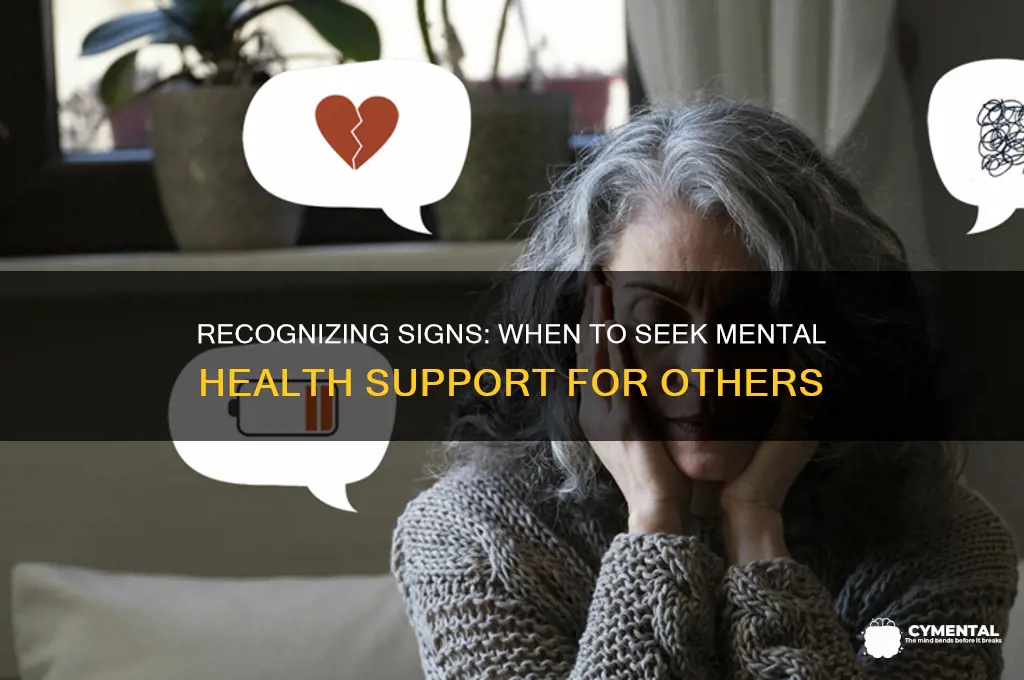
Recognizing when someone may need mental health support can be challenging, as signs often manifest subtly and vary widely from person to person. Common indicators include persistent changes in behavior, such as withdrawal from social activities, unexplained irritability, or a noticeable decline in performance at work or school. Emotional red flags, like prolonged sadness, anxiety, or mood swings, can also signal distress. Physical symptoms, such as changes in sleep patterns, appetite, or unexplained aches, may accompany mental health struggles. Additionally, expressions of hopelessness, frequent mentions of death, or self-harm should never be ignored. While these signs do not definitively diagnose a mental health issue, they serve as important cues to approach the individual with empathy, encourage open conversation, and suggest professional help if needed.
Explore related products


What You'll Learn
- Sudden Behavior Changes: Noticeable shifts in mood, energy, or habits without clear cause
- Social Withdrawal: Avoiding friends, family, or activities they once enjoyed persistently
- Severe Anxiety/Depression: Overwhelming worry, sadness, or hopelessness lasting weeks or more
- Substance Abuse: Increased reliance on drugs, alcohol, or other harmful coping mechanisms
- Suicidal Indicators: Expressing thoughts of self-harm, death, or giving away possessions

Sudden Behavior Changes: Noticeable shifts in mood, energy, or habits without clear cause
A sudden shift in someone’s behavior can be a red flag, signaling underlying mental distress. Imagine a colleague who’s always punctual and organized suddenly missing deadlines, appearing disheveled, and snapping at coworkers. Or a friend who’s typically outgoing and energetic withdrawing from social activities, sleeping excessively, and losing interest in hobbies. These changes, when unexplained and persistent, warrant attention. They may indicate conditions like depression, anxiety, or even bipolar disorder, where mood and energy fluctuations are hallmark symptoms.
Analyzing these shifts requires context. Ask yourself: Is this a temporary reaction to stress, or a sustained pattern? Minor fluctuations in mood are normal, but drastic, prolonged changes—like sudden aggression, apathy, or hyperactivity—demand scrutiny. For instance, a teenager who abruptly stops attending classes, starts isolating themselves, and exhibits extreme irritability could be experiencing a depressive episode or early signs of psychosis. Recognizing these patterns early can lead to timely intervention, potentially preventing more severe outcomes.
Practical steps can help you respond effectively. First, observe and document specific behaviors—note when they started, their frequency, and any triggers. Approach the person privately, using non-judgmental language like, “I’ve noticed you seem different lately, and I’m worried about you.” Avoid diagnosing or minimizing their experience. Instead, encourage professional help by offering resources, such as a therapist’s contact or a mental health hotline. If the person is resistant, consider involving a trusted mutual contact, like a family member or counselor, who can intervene constructively.
Comparing sudden behavior changes to physical symptoms can underscore their urgency. Just as sudden chest pain or unexplained weight loss would prompt a doctor’s visit, abrupt mental or emotional shifts should trigger concern. Mental health conditions are treatable, but early detection is critical. For example, someone experiencing a manic episode might spend recklessly, engage in risky behaviors, or go days without sleep—behaviors that, if addressed promptly, can be managed with medication and therapy. Ignoring these signs could lead to long-term consequences, including damaged relationships or self-harm.
Finally, remember that cultural and individual differences can influence how behavior changes manifest. What’s considered “sudden” or “noticeable” varies—a reserved person may show distress through subtle withdrawal, while an extrovert might exhibit dramatic mood swings. Age also plays a role: adolescents may express turmoil through rebellious behavior, while older adults might display confusion or apathy. Tailoring your approach to the person’s personality and background ensures a more empathetic and effective response. By staying observant and proactive, you can help bridge the gap between noticing a change and getting someone the support they need.
Empowering Self-Care: Practical Strategies to Help Yourself Thrive Daily
You may want to see also
Explore related products


Social Withdrawal: Avoiding friends, family, or activities they once enjoyed persistently
Social withdrawal, marked by persistent avoidance of friends, family, or once-enjoyed activities, is often a silent cry for help. Unlike occasional solitude, which can be healthy, this behavior becomes concerning when it’s prolonged and uncharacteristic. For instance, a teenager who stops attending soccer practice, a hobby they’ve loved for years, or an adult who declines family gatherings without explanation may be signaling distress. Such changes rarely occur in isolation; they’re often accompanied by other signs like mood swings, fatigue, or neglect of personal care. Recognizing these patterns early can be the first step in offering support.
Analyzing the root causes of social withdrawal reveals a complex interplay of emotional and psychological factors. Anxiety, depression, and burnout frequently underlie this behavior, as individuals may feel overwhelmed by social interactions or perceive themselves as a burden to others. For example, someone with generalized anxiety disorder might avoid social situations to prevent anticipated embarrassment, while a person experiencing depression may lack the energy to engage. Even external stressors, like workplace conflicts or academic pressure, can trigger this retreat. Understanding these triggers is crucial for addressing the issue effectively, as it highlights the need for tailored interventions rather than a one-size-fits-all approach.
Persuading someone to seek help when they’re withdrawn can be challenging but is far from impossible. Start by creating a safe, non-judgmental space for conversation. Instead of asking broad questions like “What’s wrong?”, try specific inquiries such as, “I’ve noticed you haven’t been joining us for game nights lately—is there something going on?” Offer practical assistance, such as accompanying them to a therapy session or helping them research mental health resources. For younger individuals, parents or caregivers can play a pivotal role by modeling open communication and normalizing discussions about emotions. Remember, persistence and patience are key; it may take multiple attempts before someone feels ready to open up.
Comparing social withdrawal to other mental health indicators underscores its significance as a red flag. While symptoms like insomnia or irritability are often more visible, withdrawal can be subtler yet equally alarming. Unlike occasional introversion, which is a personality trait, this behavior represents a departure from one’s baseline social engagement. For instance, a naturally outgoing person suddenly becoming reclusive is more concerning than a lifelong introvert declining a party invitation. This distinction highlights the importance of context and individual differences when assessing whether someone needs mental health support.
Descriptively, the impact of prolonged social withdrawal extends beyond the individual, affecting relationships and overall well-being. Friends and family may feel hurt or confused by the sudden distance, leading to strained connections. Over time, isolation can exacerbate feelings of loneliness and hopelessness, creating a vicious cycle that deepens mental health struggles. Practical steps to mitigate this include encouraging small, manageable social interactions, such as a short walk with a trusted friend or joining a low-pressure group activity. For severe cases, professional intervention, such as cognitive-behavioral therapy, can provide tools to rebuild social confidence and address underlying issues. Early action not only helps the individual but also preserves the support network they may desperately need.
The Cost of Mental Health Care: Expensive Reality and Affordable Options
You may want to see also
Explore related products


Severe Anxiety/Depression: Overwhelming worry, sadness, or hopelessness lasting weeks or more
Persistent feelings of overwhelming worry, sadness, or hopelessness that last for weeks or more are red flags signaling severe anxiety or depression. These emotions, when prolonged, can paralyze daily functioning, making even simple tasks feel insurmountable. Unlike fleeting stress or temporary sadness, this condition embeds itself into a person’s life, altering their ability to work, maintain relationships, or find joy in previously loved activities. Recognizing these signs early is crucial, as untreated severe anxiety or depression can lead to physical health deterioration, social isolation, or even suicidal thoughts.
To identify this in someone, observe changes in their behavior and mood. Are they withdrawing from social interactions, neglecting personal hygiene, or expressing persistent feelings of worthlessness? Do they struggle with concentration, sleep disturbances, or drastic changes in appetite? For instance, a once outgoing colleague who now avoids meetings, skips lunch gatherings, and appears visibly fatigued might be grappling with this condition. It’s not about occasional sadness or stress; it’s the unrelenting nature of these emotions that distinguishes severe anxiety or depression.
Practical steps can be taken to support someone showing these signs. Start by creating a safe, non-judgmental space for conversation. Use open-ended questions like, “How have you been feeling lately?” rather than assumptions. Encourage professional help by offering to assist in finding a therapist or psychiatrist. For adults, cognitive-behavioral therapy (CBT) and medication, such as selective serotonin reuptake inhibitors (SSRIs) prescribed at dosages like 20–40 mg daily for fluoxetine, are evidence-based treatments. Adolescents may benefit from family therapy and lower medication dosages, tailored to their developmental stage.
However, caution must be exercised. Avoid minimizing their experiences with statements like, “Just stay positive,” as this can deepen feelings of isolation. Also, be mindful of self-care while supporting someone; burnout is a real risk. The takeaway is clear: severe anxiety or depression is not a fleeting state but a serious condition requiring timely intervention. By recognizing the signs and taking actionable steps, you can help bridge the gap between suffering and support.
Supporting Your Child with Mental Disabilities: Finding the Right Help
You may want to see also
Explore related products


Substance Abuse: Increased reliance on drugs, alcohol, or other harmful coping mechanisms
Notice a friend suddenly drinking more than the recommended daily limit of one drink for women and two for men? Or perhaps they’re popping painkillers far beyond the prescribed dosage, say, exceeding 400mg of ibuprofen in a day without medical advice. These behaviors could signal a growing dependence on substances as a coping mechanism. While occasional use might seem harmless, consistent over-reliance often masks deeper emotional or psychological distress.
Consider the context: Is their substance use tied to specific triggers, like stress at work or relationship issues? Do they seem unable to unwind without a drink or pill? Increased frequency and quantity are red flags, especially if they downplay concerns or become defensive when confronted. For instance, a college student might start using Adderall to study but gradually escalate to daily use, even on non-academic days, to manage anxiety. This shift from occasional to habitual use warrants attention.
Here’s a practical tip: Observe changes in behavior alongside substance use. Are they neglecting responsibilities, like skipping work or ignoring family commitments? Do they isolate themselves or exhibit mood swings after using? Keep a mental (or written) log of these patterns. If you notice a correlation between substance use and deteriorating mental health, gently suggest professional help. For example, “I’ve noticed you’ve been drinking more lately, and it seems like it’s affecting your mood. Have you considered talking to someone about it?”
Compare this to healthier coping strategies: exercise, therapy, or mindfulness. Unlike these, substances provide temporary relief but often exacerbate underlying issues. A 2021 study found that 40% of individuals with substance abuse disorders also struggled with anxiety or depression. Encouraging alternatives, like joining a support group or trying journaling, can be a starting point. However, avoid forcing solutions; instead, emphasize your concern and offer to help them find resources.
In conclusion, increased reliance on substances isn’t just about the act itself—it’s a symptom of deeper distress. By recognizing patterns, understanding triggers, and offering compassionate support, you can help steer someone toward healthier coping mechanisms and professional intervention. Remember, early detection and intervention are key to preventing long-term harm.
Masturbation and Mental Health: Uncovering the Surprising Benefits and Myths
You may want to see also
Explore related products


Suicidal Indicators: Expressing thoughts of self-harm, death, or giving away possessions
One of the most alarming signs that someone may be struggling with their mental health is when they begin to express thoughts of self-harm or death. These statements should never be dismissed as mere attention-seeking behavior or a cry for help; they are often a direct indication of deep emotional pain and a potential plan to end their life. Phrases like "I wish I wasn’t here," "I can’t take it anymore," or "You’d be better off without me" are red flags that demand immediate attention. If someone verbalizes these sentiments, it’s crucial to take them seriously and respond with empathy and urgency.
Another subtle yet significant indicator is the act of giving away prized possessions or suddenly settling personal affairs. This behavior often reflects a person’s belief that they won’t need their belongings in the future, as they may be contemplating suicide. For instance, a teenager giving their favorite video game console to a friend or an adult unexpectedly updating their will could be silent cries for help. Observing these actions requires a delicate balance—approach the person with concern, not accusation, and ask open-ended questions like, "I’ve noticed you’ve been giving things away. Is everything okay?"
It’s essential to recognize that these indicators often coexist with other behavioral changes, such as withdrawal from social activities, drastic mood swings, or increased substance use. However, the explicit mention of self-harm or death, coupled with the symbolic act of giving away possessions, is a unique and urgent combination. These signs are not always easy to detect, especially if the individual is adept at masking their feelings. For example, a high-achieving student might appear functional but privately express suicidal thoughts to a close friend. Being attuned to these nuances can make a life-saving difference.
If you notice these indicators, the next steps are critical. First, remain calm but act swiftly. Encourage the person to seek professional help, such as contacting a mental health hotline (e.g., the National Suicide Prevention Lifeline at 988 in the U.S.) or scheduling an appointment with a therapist. Offer to accompany them if they’re willing. Second, remove any potential means of self-harm, such as medications, weapons, or sharp objects, from their immediate environment. Finally, stay connected and check in regularly, even if they resist. Your consistent presence can provide a sense of hope and safety during their darkest moments.
In conclusion, recognizing suicidal indicators like expressions of self-harm, preoccupation with death, or giving away possessions requires vigilance and compassion. These signs are not always overt, but they are unmistakable once identified. By responding promptly and appropriately, you can play a pivotal role in guiding someone toward the support they desperately need. Remember, acknowledging these warning signs isn’t about overreacting—it’s about saving a life.
Supporting Recovery: Strategies for Drug-Induced Mental Health Challenges
You may want to see also
Frequently asked questions
Look for persistent changes in behavior, mood, or functioning. Signs include prolonged sadness, withdrawal from social activities, extreme irritability, difficulty concentrating, changes in sleep or appetite, or expressions of hopelessness. If these symptoms interfere with daily life, it may indicate a need for mental health support.
Red flags include talking about suicide, self-harm, or death; sudden, severe mood swings; aggressive or impulsive behavior; or a complete inability to cope with daily tasks. If someone is expressing thoughts of harming themselves or others, seek professional help or emergency services immediately.
Be compassionate, non-judgmental, and direct. Start by expressing concern and sharing specific observations, such as, "I’ve noticed you seem really stressed lately, and I’m worried about you." Offer support and suggest resources, like therapy or helplines, while respecting their autonomy and decisions.