Noah Parker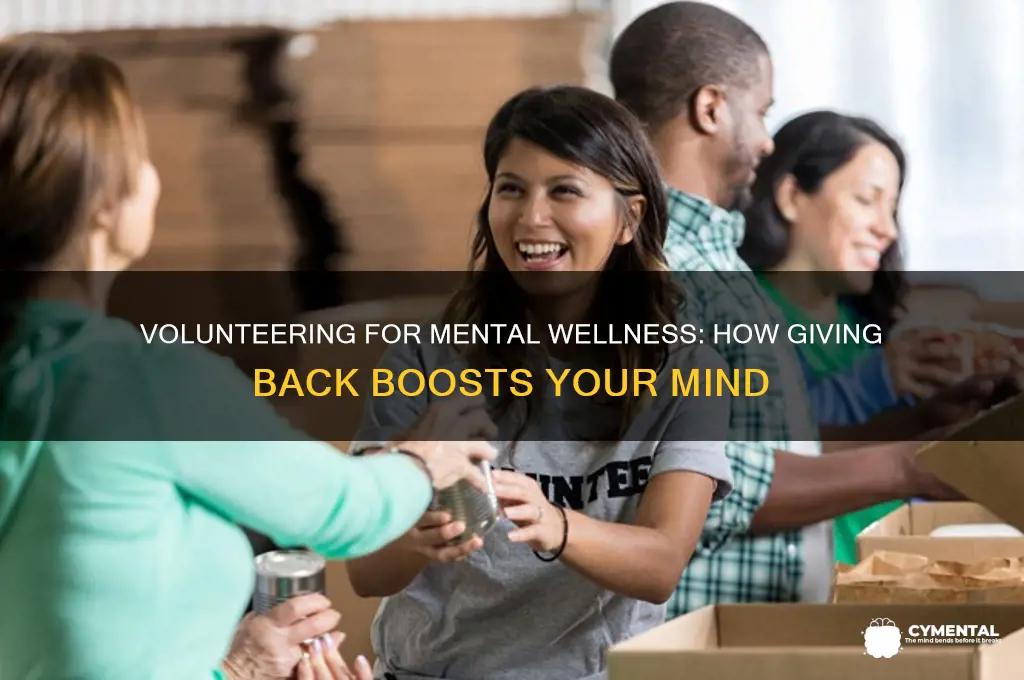
Volunteering can significantly enhance mental health by fostering a sense of purpose, connection, and accomplishment. Engaging in activities that benefit others not only distracts from personal stressors but also boosts self-esteem and reduces feelings of loneliness. The social interactions inherent in volunteer work combat isolation, while the act of helping others triggers the release of endorphins, often referred to as the helper’s high, which can alleviate symptoms of depression and anxiety. Additionally, volunteering provides structure and routine, which are essential for mental well-being, and offers opportunities for personal growth and skill development, further contributing to a positive self-image and resilience.
| Characteristics | Values |
|---|---|
| Reduces Stress & Anxiety | Volunteering provides a sense of purpose and accomplishment, releasing feel-good hormones like oxytocin and reducing cortisol (stress hormone) levels. Studies show volunteers report lower stress and anxiety levels. |
| Combats Depression | Social connection and meaningful activity, both inherent in volunteering, are powerful tools against depression. Research indicates volunteers have lower rates of depression. |
| Boosts Self-Esteem & Confidence | Mastering new skills, receiving appreciation, and contributing to a cause all contribute to a positive self-image and increased confidence. |
| Increases Social Connection | Volunteering combats loneliness by fostering new friendships, building community ties, and providing a sense of belonging. |
| Provides Purpose & Meaning | Contributing to a cause greater than oneself gives life meaning and a sense of fulfillment, which is crucial for mental well-being. |
| Promotes Physical Activity | Many volunteer roles involve physical activity, which is known to improve mood, reduce stress, and enhance overall health. |
| Offers Distraction from Negative Thoughts | Focusing on helping others can provide a healthy distraction from personal worries and negative thought patterns. |
| Encourages Learning & Growth | Volunteering often involves learning new skills, gaining experience, and challenging oneself, leading to personal growth and a sense of accomplishment. |
Explore related products


What You'll Learn
- Reduces Stress: Volunteering provides purpose, social connections, and a sense of accomplishment, lowering stress levels
- Combats Depression: Helping others boosts serotonin, fosters gratitude, and reduces feelings of isolation and sadness
- Builds Confidence: Achieving goals and receiving appreciation through volunteering enhances self-esteem and self-worth
- Creates Community: Volunteering connects you with like-minded people, reducing loneliness and fostering belonging
- Provides Purpose: Engaging in meaningful activities gives structure, direction, and a sense of fulfillment

Reduces Stress: Volunteering provides purpose, social connections, and a sense of accomplishment, lowering stress levels
Stress, a pervasive modern affliction, often stems from a lack of control, isolation, or a sense of aimlessness. Volunteering directly counters these stressors by embedding individuals in meaningful roles that foster purpose, connection, and achievement. For instance, a study published in the *Journal of Happiness Studies* found that adults who volunteered regularly reported 20% lower stress levels compared to non-volunteers. This isn’t merely anecdotal; the act of contributing to a cause greater than oneself shifts focus away from personal worries, providing a mental respite. Whether it’s tutoring children, assisting at a food bank, or cleaning up local parks, these activities create a structured environment where stress can be channeled into productive action.
Purpose, the antidote to aimlessness, is a cornerstone of stress reduction through volunteering. When individuals align their efforts with a cause they care about, they gain a sense of direction that transcends daily pressures. For example, a retiree volunteering at an animal shelter not only finds joy in caring for animals but also rediscovers a sense of identity and value. This purpose acts as a buffer against stress, as the brain prioritizes goal-oriented tasks over anxiety-inducing thoughts. Practical tip: Start small—commit to one hour a week in a role that resonates with your passions, gradually increasing as you feel more engaged.
Social connections, another stress-reducing benefit of volunteering, are often overlooked in their therapeutic power. Humans are inherently social creatures, and isolation can exacerbate stress. Volunteering places individuals in collaborative settings where they interact with like-minded people, fostering a sense of belonging. For instance, group activities like community gardening or disaster relief efforts encourage teamwork and camaraderie, which release oxytocin, a hormone that reduces stress and promotes emotional well-being. Caution: If you’re introverted, choose roles that balance interaction with independent tasks to avoid overwhelm.
Finally, the sense of accomplishment derived from volunteering is a potent stress reliever. Completing tasks, no matter how small, triggers the brain’s reward system, releasing dopamine, which enhances mood and reduces anxiety. For example, a volunteer who successfully organizes a fundraising event experiences a surge of pride and satisfaction, counteracting stress hormones like cortisol. This cycle of achievement and reward creates a positive feedback loop, making volunteering a sustainable habit for stress management. Takeaway: Track your accomplishments—keep a journal of tasks completed and the impact they’ve had, reinforcing the value of your efforts.
Incorporating volunteering into your routine doesn’t require a massive time commitment. Even 2–4 hours per week can yield significant stress-reducing benefits. The key is consistency and alignment with your interests. By providing purpose, fostering connections, and delivering a sense of accomplishment, volunteering transforms stress from an overwhelming force into a manageable—even motivatable—aspect of life. Start today: identify a local organization or cause that resonates with you, and take the first step toward a calmer, more fulfilling mindset.
Supporting Your Son's Mental Health: A Guide for Parents
You may want to see also
Explore related products


Combats Depression: Helping others boosts serotonin, fosters gratitude, and reduces feelings of isolation and sadness
Volunteering isn’t just about giving back—it’s a powerful tool for rewiring your brain’s chemistry. When you help others, your body releases serotonin, often called the “feel-good” neurotransmitter. Studies show that acts of kindness can increase serotonin levels by up to 20%, mimicking the effects of certain antidepressants. This biochemical shift doesn’t just lift your mood temporarily; it creates a lasting buffer against depressive symptoms. For instance, a 2013 study published in the *Journal of Happiness Studies* found that volunteers experienced a significant reduction in depressive symptoms after just 100 hours of service annually. Think of it as a natural prescription for mental well-being—one that requires no copay.
Gratitude is a byproduct of volunteering that often goes unnoticed but plays a critical role in combating depression. When you focus on helping others, you shift your perspective from what’s lacking in your life to what you have to offer. This mindset fosters gratitude, which has been linked to a 23% reduction in depressive symptoms, according to research from the *American Psychological Association*. For example, tutoring a struggling student might remind you of your own strengths, while serving meals at a shelter can highlight the abundance in your life. Practical tip: Keep a gratitude journal alongside your volunteer schedule to amplify these effects. Write down three things you’re thankful for after each session to reinforce the positive feedback loop.
Isolation is a silent contributor to depression, but volunteering dismantles it by embedding you in a community. Humans are social creatures, and meaningful connections are essential for mental health. Volunteering provides structured opportunities to interact with others, reducing feelings of loneliness. A 2018 study in *BMC Public Health* found that older adults who volunteered regularly reported a 40% decrease in feelings of isolation compared to non-volunteers. Even introverts benefit—you don’t need to be the life of the party; simply showing up consistently can create a sense of belonging. Start small: commit to one hour a week at a local library or animal shelter, and gradually increase your involvement as you feel more comfortable.
The act of helping others also distracts from negative thought patterns, a common symptom of depression. When you’re focused on solving a problem or supporting someone else, there’s less mental bandwidth for rumination. This cognitive shift is particularly effective for individuals aged 18–30, who are more prone to overthinking, according to a *Harvard Medical School* report. For maximum impact, choose volunteer roles that align with your passions—whether it’s mentoring youth, restoring natural habitats, or organizing community events. The key is to engage fully, allowing the activity to serve as a healthy distraction while simultaneously building a sense of purpose.
Finally, volunteering combats depression by restoring a sense of agency and accomplishment. Depression often strips individuals of their motivation and self-worth, but completing tasks for the greater good reignites these feelings. For example, a 2020 study in *Social Science & Medicine* found that participants who engaged in goal-oriented volunteer work reported a 30% increase in self-efficacy. To maximize this benefit, set measurable goals within your volunteer role—whether it’s fundraising a specific amount or completing a project by a deadline. Celebrate these achievements, no matter how small, to reinforce the idea that you have the power to make a difference—both for others and for yourself.
Mental Health First Aid: Impact, Effectiveness, and Real-World Outcomes
You may want to see also
Explore related products


Builds Confidence: Achieving goals and receiving appreciation through volunteering enhances self-esteem and self-worth
Volunteering isn’t just about giving back—it’s a powerful tool for personal transformation. When you commit to a cause, whether it’s tutoring children, cleaning up parks, or organizing community events, you set yourself up to achieve tangible goals. Each completed task, no matter how small, becomes a milestone. These achievements, when recognized by others or even just acknowledged internally, act as building blocks for confidence. The act of seeing your efforts make a difference fosters a sense of capability that extends beyond the volunteer role, reshaping how you perceive your own potential.
Consider the case of a young adult who volunteers at a local animal shelter. Initially hesitant and unsure of their ability to handle responsibilities, they start with simple tasks like feeding the animals. Over time, they take on more complex duties, such as coordinating adoption events. Each success—whether it’s a successful adoption or positive feedback from a colleague—reinforces their belief in their abilities. This cumulative effect is backed by studies showing that goal attainment in altruistic contexts can significantly boost self-efficacy, a key component of self-esteem. For maximum impact, aim for roles that challenge you slightly beyond your comfort zone, as this is where growth and confidence flourish.
Appreciation plays a critical role in this process. Humans are wired to seek validation, and when your efforts are acknowledged, it amplifies the psychological benefits of volunteering. A heartfelt "thank you" from a beneficiary or a certificate of appreciation from an organization doesn’t just feel good—it solidifies your sense of worth. For instance, a retiree volunteering at a food bank might feel their contributions are insignificant until they receive a letter from a family expressing gratitude for the consistent support. This external validation, combined with internal satisfaction, creates a dual-pronged attack on self-doubt. To maximize this effect, seek out roles where feedback is frequent and specific, as vague praise often lacks the same impact.
However, it’s essential to approach volunteering with the right mindset. Confidence-building isn’t instantaneous; it requires consistency and patience. Start with a commitment of at least 2–3 hours per week for a minimum of three months to see noticeable changes in self-esteem. Avoid overcommitting, as burnout can negate the positive effects. Pair your efforts with self-reflection—journaling about your experiences can help you recognize patterns of growth. For those new to volunteering, begin with group activities to ease anxiety and gradually transition to individual roles as confidence grows.
In essence, volunteering is a confidence-building workshop disguised as community service. By setting and achieving goals, coupled with receiving appreciation, you not only contribute to a greater cause but also rewrite your internal narrative. The key lies in choosing roles that align with your interests and offer room for growth, ensuring the experience is both rewarding and transformative. With time, the confidence gained through volunteering becomes a cornerstone of mental resilience, proving that giving back is as much about self-improvement as it is about helping others.
Art Therapy: Healing Minds Through Creative Expression and Self-Discovery
You may want to see also
Explore related products


Creates Community: Volunteering connects you with like-minded people, reducing loneliness and fostering belonging
Human connection is a fundamental need, yet modern life often leaves us isolated. Volunteering offers a powerful antidote by immersing you in a community of individuals united by shared values and goals. Whether it’s planting trees, tutoring children, or serving meals at a shelter, these activities naturally foster conversations, collaboration, and camaraderie. Unlike superficial interactions, the bonds formed through volunteering are rooted in purpose, creating a deeper sense of belonging that combats loneliness.
Consider the structure of volunteer opportunities: they often involve regular meetings, shared tasks, and collective achievements. For instance, joining a weekly community garden project not only provides a consistent social outlet but also allows you to witness the tangible results of your collective effort. Over time, these interactions evolve from transactional to relational, transforming acquaintances into friends who understand and support your passions. Studies show that adults who volunteer regularly report higher levels of social integration, with those volunteering 100+ hours annually experiencing the most significant benefits.
However, building community through volunteering requires intentionality. Start by choosing causes that genuinely resonate with you—authenticity attracts like-minded individuals. For example, if you’re passionate about animal welfare, volunteering at a shelter will connect you with others who share that interest. Next, actively engage in conversations during breaks or after tasks. Simple questions like, “What brought you here?” or “How long have you been volunteering?” can spark meaningful dialogue. Finally, participate in post-volunteer social events, if available, to strengthen bonds outside the structured environment.
A cautionary note: while volunteering fosters community, it’s not a quick fix for loneliness. Building relationships takes time, and not every interaction will lead to a lasting connection. Be patient and consistent. For older adults, who are particularly vulnerable to isolation, volunteering can be especially impactful. A study found that seniors who volunteered weekly reported a 40% reduction in feelings of loneliness compared to non-volunteers. Similarly, young adults aged 18–25 can benefit from structured volunteer programs that double as networking opportunities, easing the transition into adulthood.
In conclusion, volunteering is more than an act of service—it’s a gateway to meaningful relationships. By embedding yourself in a community of like-minded individuals, you not only contribute to a greater cause but also nurture your own mental well-being. The key lies in choosing the right opportunities, actively engaging with others, and allowing relationships to develop naturally. Whether you’re planting seeds in a garden or mentoring a student, the connections you forge can transform isolation into belonging, one interaction at a time.
Mental Health Status Exam: A Key Tool for Diagnosing Anxiety
You may want to see also
Explore related products





Provides Purpose: Engaging in meaningful activities gives structure, direction, and a sense of fulfillment
Volunteering isn’t just about giving back—it’s about finding something to hold onto when life feels aimless. Engaging in meaningful activities, like tutoring a child or organizing a community garden, anchors your days with purpose. This structure isn’t rigid; it’s a framework that gives you control over your time and energy. For instance, committing to a weekly shift at a local shelter provides a consistent rhythm to your week, replacing emptiness with expectation. Studies show that individuals who volunteer regularly report higher levels of life satisfaction, largely because these activities create a sense of direction that spills over into other areas of life.
Consider the act of teaching someone to read. It’s not just about the skill transfer—it’s about the daily goal-setting, the progress tracking, and the fulfillment of seeing someone grow. This kind of engagement forces you to step outside your own concerns and focus on something larger than yourself. For those struggling with mental health, this shift in perspective can be transformative. A 2013 study published in the *Journal of Happiness Studies* found that volunteers experienced greater life satisfaction and reduced depressive symptoms, attributing these benefits to the sense of purpose derived from helping others.
But how much is enough? Research suggests that volunteering for about 100 hours annually—roughly 2 hours per week—maximizes mental health benefits without overwhelming your schedule. Start small: sign up for a monthly beach cleanup or commit to one afternoon at a food bank. The key is consistency, not intensity. Over time, these activities become touchstones, reminders that your actions matter. For older adults, in particular, volunteering can combat the isolation and lack of purpose that often accompany retirement, offering a renewed sense of identity and belonging.
Practical tip: Pair your volunteering with activities that align with your passions or skills. If you love animals, volunteer at a shelter; if you’re a numbers whiz, help with nonprofit bookkeeping. This alignment amplifies the sense of fulfillment, making the experience feel less like an obligation and more like an extension of who you are. Caution: Avoid overcommitting. While purpose is powerful, burnout negates its benefits. Set boundaries and prioritize self-care alongside your volunteer work.
Ultimately, volunteering provides a compass for those navigating mental health challenges. It’s not a cure, but it’s a tool—one that offers structure, direction, and the quiet satisfaction of knowing you’ve made a difference. By weaving these activities into your life, you create a narrative of purpose, one small act at a time.
Coding Unlocks Potential: Empowering Kids with Mental Disabilities Through Programming
You may want to see also
Frequently asked questions
Volunteering boosts mental health by providing a sense of purpose, reducing feelings of loneliness, and increasing social connections. It also releases endorphins, often referred to as "helper's high," which can improve mood and reduce stress.
Yes, volunteering can help alleviate symptoms of depression and anxiety by shifting focus away from personal stressors, fostering a sense of accomplishment, and creating opportunities for positive social interactions.
Volunteering connects individuals with others who share similar interests or causes, fostering a sense of belonging and community. Regular social interaction through volunteering can significantly reduce feelings of isolation.
Absolutely. Volunteering allows individuals to develop new skills, take on challenges, and see the positive impact of their efforts, which can enhance self-worth and confidence.
Yes, volunteering often involves scheduled activities, which can help establish a routine. This structure can be particularly beneficial for individuals struggling with mental health issues, as it provides stability and a sense of control.