Noah Parker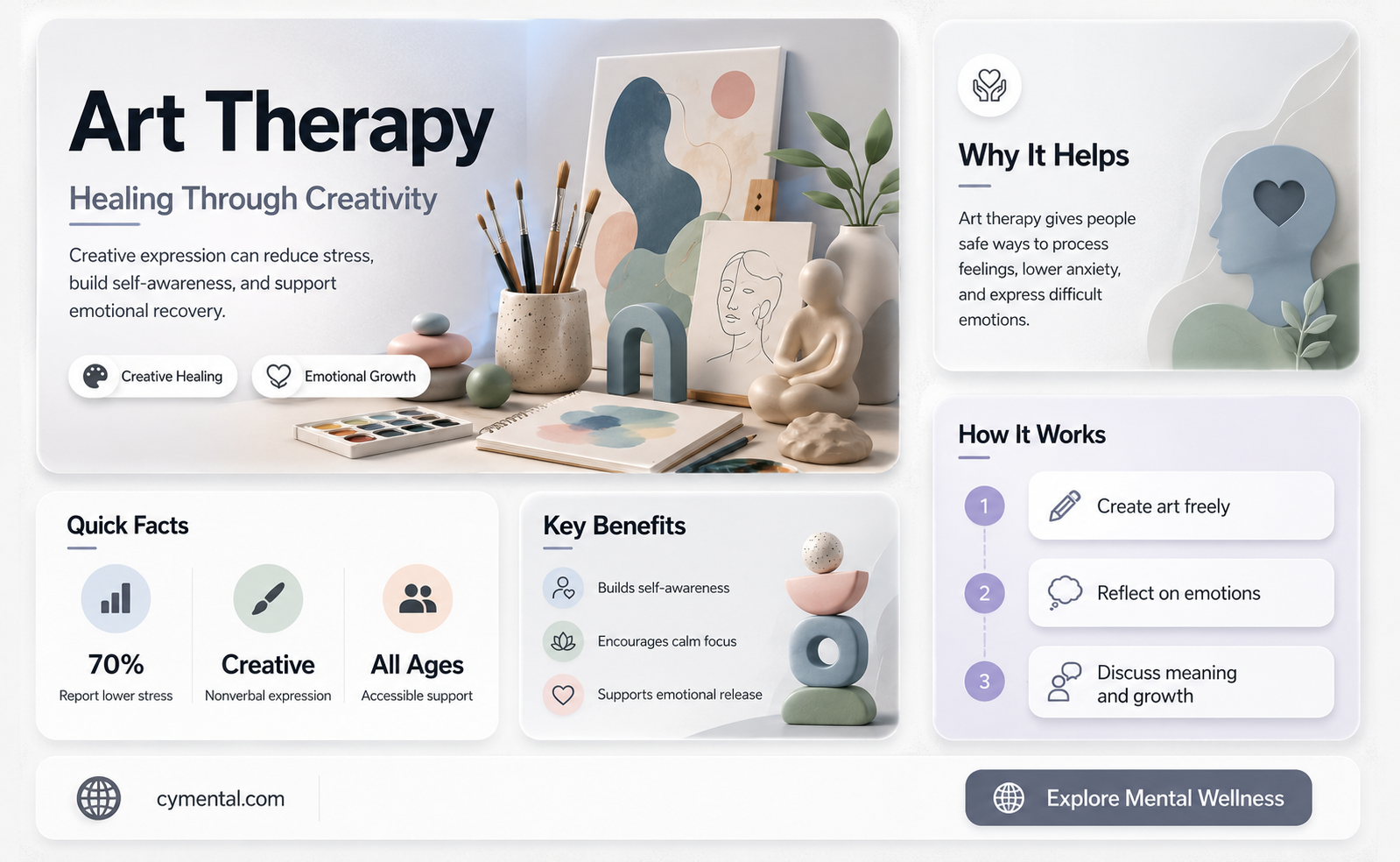
Art therapy is a powerful and unique approach to mental health treatment that utilizes creative expression as a means of healing and self-discovery. Through various art forms such as painting, drawing, sculpting, or collage, individuals can explore and communicate their emotions, thoughts, and experiences in a non-verbal way. This therapeutic method is particularly beneficial for those who struggle to express themselves through words alone, offering a safe and supportive outlet for processing trauma, managing stress, and improving overall well-being. By engaging in the creative process, individuals can gain insight into their inner world, develop coping strategies, and foster a sense of self-awareness, ultimately promoting personal growth and emotional resilience.
| Characteristics | Values |
|---|---|
| Emotional Expression | Provides a safe outlet for expressing emotions, especially for those who struggle with verbal communication. |
| Stress Reduction | Engaging in creative activities lowers cortisol levels, reducing stress and anxiety. |
| Self-Awareness | Encourages introspection, helping individuals understand their thoughts, feelings, and behaviors. |
| Trauma Processing | Allows individuals to externalize and process traumatic experiences in a non-verbal, symbolic way. |
| Improved Mood | Boosts serotonin levels, enhancing mood and overall well-being. |
| Cognitive Stimulation | Enhances problem-solving skills, focus, and cognitive flexibility through creative engagement. |
| Sense of Accomplishment | Completing art projects fosters a sense of achievement and boosts self-esteem. |
| Social Connection | Group art therapy sessions promote social interaction, reducing feelings of isolation. |
| Mindfulness | Encourages present-moment awareness, reducing rumination and improving mental clarity. |
| Non-Verbal Communication | Offers an alternative to verbal communication, beneficial for those with speech difficulties or trauma. |
| Coping Mechanism | Teaches healthy ways to manage emotions and cope with mental health challenges. |
| Personal Insight | Helps uncover subconscious thoughts and feelings through symbolic art creation. |
| Accessibility | Suitable for all ages and abilities, requiring no prior artistic skill. |
| Holistic Healing | Addresses emotional, psychological, and physical aspects of mental health. |
| Reduced Symptoms | Studies show art therapy can reduce symptoms of depression, anxiety, and PTSD. |
Explore related products


$8.5 $19.99

$8.99 $19.99


What You'll Learn
- Stress Reduction: Art therapy lowers stress by promoting relaxation and mindfulness through creative expression
- Emotional Release: Creating art helps individuals safely express and process complex or suppressed emotions
- Improved Self-Esteem: Completing art projects boosts confidence and fosters a sense of accomplishment and self-worth
- Trauma Healing: Art therapy provides a non-verbal outlet for processing and recovering from traumatic experiences
- Enhanced Communication: It helps individuals articulate thoughts and feelings when verbal expression is challenging

Stress Reduction: Art therapy lowers stress by promoting relaxation and mindfulness through creative expression
Stress is an inevitable part of life, but chronic stress can wreak havoc on both physical and mental health. Art therapy offers a unique approach to stress reduction by engaging the mind in a way that promotes relaxation and mindfulness. Unlike traditional talk therapy, art therapy allows individuals to express their emotions non-verbally, bypassing the need for words when they feel overwhelming. This process can be particularly beneficial for those who struggle to articulate their feelings or who find verbal communication stressful. By focusing on the act of creation, individuals can shift their attention away from stressors, entering a state of flow that calms the nervous system.
Consider the act of painting, for example. The rhythmic motion of a brush on canvas, the blending of colors, and the focus required to bring an image to life all contribute to a meditative experience. Research suggests that engaging in creative activities like this can lower cortisol levels, the hormone associated with stress. A study published in *Art Therapy: Journal of the American Art Therapy Association* found that just 45 minutes of art-making significantly reduced stress levels in participants, regardless of their artistic skill. This accessibility is key—art therapy doesn’t require talent, only willingness to explore. Even simple activities like doodling or coloring can activate the brain’s relaxation response, making it an effective tool for all ages, from children to seniors.
For those seeking a structured approach, mindfulness-based art therapy techniques can deepen the stress-reducing benefits. One such technique is the "mandala drawing," a circular design that encourages focus and symmetry. Start by drawing a circle on paper and dividing it into sections. Then, fill each section with patterns, colors, or shapes, concentrating on the present moment. This practice not only fosters relaxation but also enhances mindfulness, helping individuals become more aware of their thoughts and emotions without judgment. Pairing this activity with deep breathing exercises can amplify its calming effects, creating a holistic stress-relief experience.
While art therapy is powerful, it’s important to approach it with realistic expectations. Stress reduction through art is not an instant fix but a gradual process that requires consistency. Aim to dedicate at least 20–30 minutes, 2–3 times a week, to creative activities. Over time, this practice can build resilience to stress, improving overall mental well-being. Additionally, combining art therapy with other stress management techniques, such as exercise or journaling, can yield even greater benefits. Remember, the goal isn’t to create a masterpiece but to engage in a process that nurtures your mind and spirit.
Incorporating art therapy into daily life doesn’t have to be complicated. Keep a sketchbook and pencils handy for spontaneous doodling, or set aside a corner of your space as a creative sanctuary. For those who prefer guided activities, online platforms and local workshops offer structured sessions tailored to stress reduction. The key is to make it a regular part of your routine, allowing creativity to become a reliable tool in your stress management toolkit. By embracing art therapy, you’re not just reducing stress—you’re cultivating a practice that fosters relaxation, mindfulness, and emotional balance.
Accessing Mental Health Support: Affordable Options for the Uninsured
You may want to see also
Explore related products


Emotional Release: Creating art helps individuals safely express and process complex or suppressed emotions
Art therapy provides a unique avenue for emotional release, allowing individuals to externalize feelings that may be too overwhelming or complex to articulate verbally. Unlike traditional talk therapy, which relies on language, art therapy uses visual symbols and metaphors to bypass cognitive barriers, enabling direct access to the subconscious. For instance, a person struggling with unresolved grief might create abstract shapes or dark colors, unconsciously revealing emotions they hadn’t yet acknowledged. This nonverbal expression acts as a bridge between the mind and body, facilitating the release of pent-up emotions in a safe, contained space.
Consider the process of creating art as a form of emotional alchemy. Each brushstroke, line, or color choice becomes a tangible representation of internal turmoil, transforming abstract feelings into something observable and manageable. For example, a teenager dealing with anger might use aggressive, chaotic strokes on paper, physically releasing tension without resorting to harmful behaviors. Similarly, a trauma survivor might layer colors to symbolize the complexity of their experience, gradually processing fragmented memories. This act of creation not only externalizes emotions but also provides a sense of control, as individuals shape their feelings into a concrete form.
Practical application of art therapy for emotional release can be tailored to individual needs. For children, simple activities like drawing emotions as monsters or using clay to mold stress can make abstract feelings tangible. Adults might benefit from more structured techniques, such as creating a visual journal to track emotional patterns over time. Group settings can amplify this process, as shared art-making fosters collective emotional release and reduces feelings of isolation. Regardless of age or skill level, the key is consistency—engaging in art-making regularly, even for 15–20 minutes daily, can create a habit of emotional processing.
However, it’s essential to approach art therapy with awareness of its limitations. While creating art can be cathartic, it may also unearth intense emotions that require professional guidance to navigate. For instance, a person with PTSD might inadvertently trigger distressing memories through their artwork. In such cases, pairing art therapy with evidence-based modalities like Cognitive Behavioral Therapy (CBT) or Eye Movement Desensitization and Reprocessing (EMDR) can provide a more comprehensive approach. Additionally, therapists should encourage clients to reflect on their creations, asking questions like, “What does this piece say about how you’re feeling?” to deepen emotional insight.
Ultimately, the power of art therapy lies in its ability to make the invisible visible. By translating emotions into visual form, individuals can confront, understand, and release feelings that have long been suppressed. This process not only fosters emotional healing but also builds resilience, as individuals learn to engage with their inner world in a constructive, creative way. Whether through painting, sculpting, or collage, art therapy offers a universal language for the heart—one that transcends words and connects directly to the human experience.
Protein Shakes and Mental Health: Unlocking the Mind-Body Connection
You may want to see also
Explore related products


Improved Self-Esteem: Completing art projects boosts confidence and fosters a sense of accomplishment and self-worth
Art therapy offers a unique pathway to enhanced self-esteem through the tangible act of completing creative projects. Unlike abstract achievements, art provides a physical manifestation of effort and skill, serving as a concrete reminder of one’s capabilities. For individuals struggling with self-doubt or negative self-perception, holding a finished piece—whether a painting, sculpture, or collage—can act as irrefutable evidence of their ability to create and succeed. This process transforms abstract feelings of inadequacy into a visual affirmation of competence, making self-esteem less of an emotional concept and more of a grounded reality.
Consider the structured approach of art therapy sessions, where participants are guided through projects tailored to their skill level and emotional needs. For instance, a beginner might start with simple exercises like coloring mandalas or sketching basic shapes, gradually progressing to more complex tasks. This incremental challenge builds confidence layer by layer, ensuring that each completed piece reinforces a sense of achievement. Therapists often encourage reflection post-completion, asking questions like, “What did you learn about yourself during this process?” or “How does this piece reflect your strengths?” Such dialogue deepens the connection between the creative act and personal growth, embedding self-worth into the very fabric of the experience.
The impact of art therapy on self-esteem is particularly pronounced in adolescents and young adults, who often grapple with identity formation and peer comparison. A study published in *Art Therapy: Journal of the American Art Therapy Association* found that participants aged 14–21 reported a 30% increase in self-esteem measures after 12 weeks of weekly art therapy sessions. The key factor? The non-competitive nature of art therapy, which emphasizes personal expression over external validation. Unlike academic or athletic pursuits, art therapy allows individuals to define success on their own terms, fostering a sense of accomplishment that is inherently self-referential and thus more resilient to external criticism.
Practical tips for maximizing this benefit include setting small, achievable goals within each project, such as completing one section of a painting per session. Keeping a journal to document progress and emotions can also amplify the sense of growth. For those hesitant to start, beginning with collaborative projects can reduce pressure, as shared achievements still contribute to individual confidence. Finally, displaying finished artwork—whether at home, in a therapist’s office, or digitally—serves as a daily reminder of one’s ability to overcome challenges and create something meaningful. In this way, art therapy becomes not just a therapeutic tool, but a lifelong practice for cultivating enduring self-worth.
Multivitamins and Mental Health: Unlocking the Potential Benefits
You may want to see also
Explore related products


Trauma Healing: Art therapy provides a non-verbal outlet for processing and recovering from traumatic experiences
Trauma often silences its survivors, locking emotions and memories in a non-verbal prison. Art therapy unlocks this cage by offering a safe, wordless space to express the inexpressible. Unlike talk therapy, which relies on language, art therapy allows individuals to externalize their trauma through color, shape, and texture. This process can be particularly beneficial for those who struggle to articulate their experiences due to fear, shame, or dissociation. For instance, a survivor of childhood abuse might use dark, jagged lines to represent pain, gradually introducing softer hues as they begin to heal. This visual narrative becomes a bridge between the unconscious mind and conscious awareness, facilitating the first steps toward recovery.
Consider the case of a veteran suffering from PTSD who finds it impossible to discuss combat experiences verbally. Through guided art therapy sessions, they begin creating abstract paintings that reflect their inner turmoil—chaotic brushstrokes, stark contrasts, and fragmented imagery. Over time, these artworks evolve, incorporating symbols of resilience and hope. This transformation mirrors the healing process, as the individual gradually reclaims agency over their narrative. Research supports this approach, showing that art therapy can reduce PTSD symptoms by up to 30% in veterans, particularly when combined with traditional therapies. For optimal results, sessions should occur weekly for at least 8–12 weeks, allowing enough time for trust to develop and progress to unfold.
While art therapy is inherently flexible, certain techniques are particularly effective for trauma healing. One such method is the "trauma narrative," where individuals create a visual timeline of their experience, from the traumatic event to their current state. This exercise helps externalize the trauma, making it feel less overwhelming. Another technique involves using clay or sculpture to physically mold emotions, providing a tactile release for pent-up tension. For children, who often lack the vocabulary to describe trauma, drawing or play-based art therapy can be transformative. Parents and caregivers should encourage open-ended creativity, avoiding judgment or interpretation, and instead focusing on the act of creation itself as a healing tool.
Despite its benefits, art therapy for trauma is not without challenges. Some individuals may initially resist the process, fearing that revisiting painful memories will retraumatize them. Therapists must proceed with caution, ensuring a safe and supportive environment. Grounding techniques, such as deep breathing or sensory objects, can help clients stay present during sessions. Additionally, art therapists should be trained in trauma-informed care, understanding the potential triggers and pacing the process accordingly. For those new to art therapy, starting with simple materials like crayons or finger paint can reduce pressure and encourage exploration. The goal is not to create a masterpiece but to engage in a dialogue with one’s inner self, one stroke or shape at a time.
In conclusion, art therapy offers a unique pathway to trauma healing by bypassing the limitations of language and tapping into the subconscious. Its non-verbal nature makes it accessible to individuals of all ages and backgrounds, from children to veterans, providing a universal language of expression. While it requires patience and a skilled therapist, the results can be profound, enabling survivors to rewrite their stories in vivid, hopeful colors. Whether through painting, sculpting, or drawing, the act of creation becomes an act of reclamation—a testament to the resilience of the human spirit.
Positive Relationships: A Powerful Tool for Mental Health and Well-Being
You may want to see also
Explore related products


Enhanced Communication: It helps individuals articulate thoughts and feelings when verbal expression is challenging
Art therapy serves as a bridge for those who struggle to express themselves verbally, offering a non-threatening medium to communicate complex emotions and experiences. For individuals with trauma, anxiety, or neurodivergent conditions like autism, words often fall short. Art, however, bypasses these limitations. A simple sketch, a splash of color, or the arrangement of objects can convey what feels inexpressible. This visual language becomes a tool for therapists to decode inner turmoil, providing insights that might otherwise remain hidden. For instance, a child who cannot articulate their fear of abandonment might create repetitive, confined shapes, offering a window into their emotional state.
Consider the process of creating art as a structured yet fluid dialogue. Unlike verbal communication, which demands immediate coherence, art allows for pauses, revisions, and ambiguity. This flexibility reduces pressure, particularly for those who fear judgment or lack the vocabulary to describe their feelings. A study published in *Art Therapy: Journal of the American Art Therapy Association* found that participants with PTSD reported feeling more in control during art sessions compared to traditional talk therapy. The act of painting, sculpting, or collaging becomes a safe space to explore emotions incrementally, without the need for immediate verbalization.
To harness this benefit, therapists often employ specific techniques. For example, the "mandala drawing" exercise encourages clients to focus on circular patterns, which can symbolize wholeness or fragmentation depending on the individual’s state. Another method is "art journaling," where clients combine visual elements with brief written reflections, gradually building a narrative. For younger clients, aged 6–12, play-based art activities like clay modeling or mask-making can externalize emotions in a developmentally appropriate way. Caregivers can support this process by providing open-ended prompts, such as "Show me how you feel today," rather than asking direct questions.
However, it’s crucial to approach art therapy with sensitivity. Not all clients will respond equally, and misinterpretation of their work can hinder progress. Therapists must avoid imposing their own interpretations, instead guiding clients to explore their creations. For instance, instead of saying, "This dark color means you’re sad," a therapist might ask, "What does this color remind you of?" This collaborative approach ensures the client remains the primary interpreter of their own expression. Additionally, consistency is key; regular sessions, ideally weekly for 6–8 weeks, allow for gradual trust-building and deeper exploration.
Ultimately, art therapy’s role in enhancing communication lies in its ability to meet individuals where they are, emotionally and cognitively. It transforms the abstract into the tangible, making the act of sharing feelings less daunting. For those who feel silenced by their struggles, it offers a voice—one that doesn’t require words. Whether in a clinical setting or as a personal practice, this modality empowers individuals to express, process, and ultimately understand themselves more fully.
Seeking Support: A Guide to Accessing Mental Health Assistance
You may want to see also
Frequently asked questions
Art therapy provides a non-verbal outlet for expressing emotions, allowing individuals to process and release stress and anxiety. Creating art can induce a meditative state, promoting relaxation and reducing cortisol levels.
Yes, art therapy encourages self-reflection and exploration, helping individuals gain insight into their thoughts and feelings. Completing art projects can also boost confidence and foster a sense of accomplishment.
Art therapy can be a powerful tool for trauma survivors, as it allows them to express painful experiences indirectly, bypassing the need for verbal communication. This can help in safely processing and healing from trauma.
Absolutely! Art therapy is not about artistic talent but about self-expression. It focuses on the process of creating rather than the final product, making it accessible and beneficial for everyone, regardless of skill level.