Harper Lewis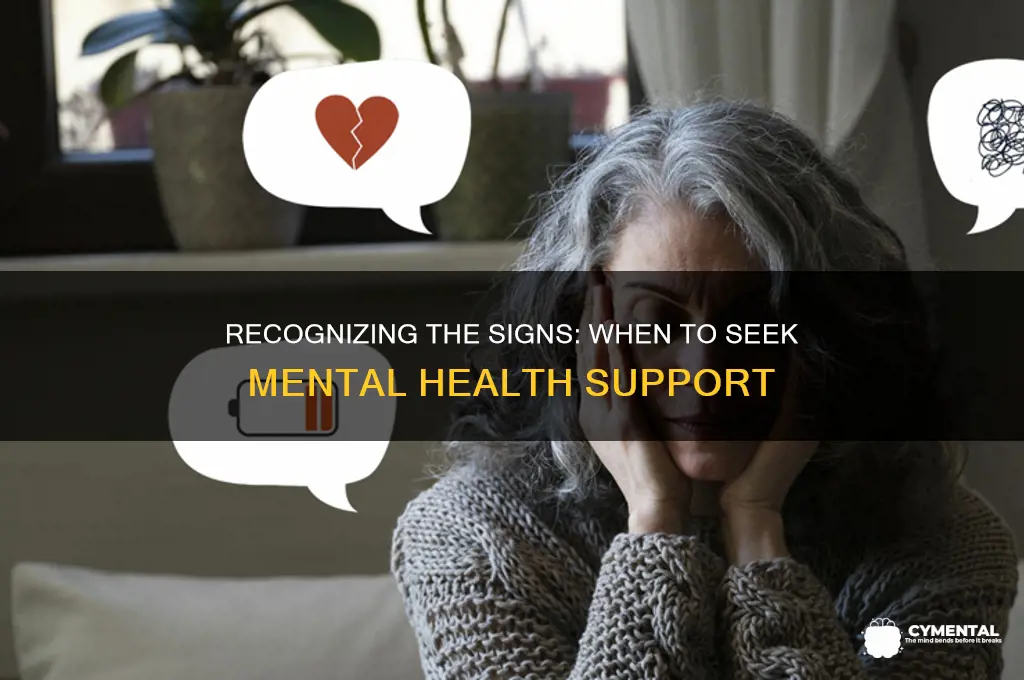
Recognizing when you might need mental health support can be challenging, as the signs often manifest subtly and vary from person to person. Common indicators include persistent feelings of sadness, anxiety, or hopelessness that interfere with daily life, significant changes in sleep or appetite, difficulty concentrating, or withdrawing from social activities and relationships. Physical symptoms like unexplained aches or fatigue, as well as thoughts of self-harm or a sense of being overwhelmed, are also red flags. If these issues persist for weeks or months, or if they disrupt your ability to function, it may be time to seek professional help. Trusting your instincts and reaching out to a mental health professional can be a crucial step toward healing and well-being.
Explore related products


What You'll Learn
- Recognizing Emotional Distress: Persistent sadness, anxiety, or mood swings disrupting daily life
- Changes in Behavior: Withdrawal, aggression, or significant shifts in habits or routines
- Physical Symptoms: Unexplained fatigue, headaches, or stomach issues linked to stress
- Difficulty Functioning: Struggling with work, relationships, or basic self-care tasks
- Suicidal Thoughts: Persistent thoughts of self-harm or ending one’s life

Recognizing Emotional Distress: Persistent sadness, anxiety, or mood swings disrupting daily life
Emotional distress often manifests as persistent sadness, anxiety, or mood swings that seep into every corner of daily life, making even simple tasks feel insurmountable. Imagine waking up each morning with a weight on your chest, struggling to find motivation for work, or snapping at loved ones over minor inconveniences. These aren’t just "bad days"—they’re recurring patterns that signal something deeper. If you notice these feelings lasting for weeks or months, disrupting your ability to function normally, it’s a clear indicator that your emotional well-being needs attention.
Consider this: anxiety isn’t just feeling nervous before a presentation; it’s when worry paralyzes you, preventing you from leaving the house or sleeping at night. Mood swings aren’t merely occasional irritability; they’re extreme shifts that leave you or those around you confused and drained. Persistent sadness isn’t fleeting disappointment; it’s a constant heaviness that colors your perception of the world. When these symptoms interfere with work, relationships, or self-care, they’re no longer just emotions—they’re red flags.
To assess whether your emotional distress warrants professional help, track its impact on your daily life. Are you canceling plans regularly? Avoiding responsibilities? Feeling disconnected from activities you once enjoyed? A practical tip is to keep a journal for two weeks, noting how often these emotions arise and how they affect your actions. If they’re consistently hindering your ability to live fully, it’s time to seek support.
Here’s a comparative perspective: Just as physical pain signals injury, emotional distress signals mental strain. You wouldn’t ignore a broken bone, so why neglect persistent emotional suffering? Mental health professionals often recommend interventions like therapy or medication when symptoms persist beyond the body’s natural ability to cope. For instance, cognitive-behavioral therapy (CBT) has proven effective for managing anxiety and mood disorders, with studies showing significant improvement in 12–20 sessions.
Finally, recognize that seeking help isn’t a sign of weakness—it’s a step toward reclaiming control. Emotional distress, when left unaddressed, can escalate into more severe conditions like depression or generalized anxiety disorder. By acknowledging these signs early, you’re not just alleviating current suffering but also preventing long-term damage. Start with a conversation—whether with a trusted friend, a primary care physician, or a mental health hotline. The first step is always the hardest, but it’s also the most crucial.
Breaking Barriers: How You Can Help End Mental Health Stigma
You may want to see also
Explore related products


Changes in Behavior: Withdrawal, aggression, or significant shifts in habits or routines
Behavioral changes can serve as early warning signs of underlying mental health issues, often manifesting as withdrawal, aggression, or significant shifts in habits or routines. These changes may seem subtle at first but can escalate, affecting relationships, work, and overall well-being. For instance, a once outgoing individual suddenly avoiding social gatherings or a typically calm person becoming increasingly irritable could signal distress. Recognizing these patterns is crucial, as they often reflect internal struggles that may not be immediately apparent.
Withdrawal, in particular, is a red flag that should not be ignored. It often begins with small acts like declining invitations or spending more time alone, but it can progress to complete isolation. This behavior may stem from feelings of overwhelm, anxiety, or depression. For example, a college student who stops attending classes or a professional who avoids team meetings might be experiencing mental health challenges. If you notice yourself or someone else pulling away from activities once enjoyed, it’s essential to investigate further. Practical steps include reaching out to a trusted friend, journaling to track feelings, or consulting a mental health professional for guidance.
Aggression, on the other hand, can manifest as verbal outbursts, physical altercations, or passive-aggressive behavior. This shift is often a response to unresolved stress, trauma, or frustration. For instance, a parent snapping at their children over minor issues or an employee lashing out at colleagues could be exhibiting signs of mental strain. While occasional irritability is normal, persistent aggression warrants attention. Strategies to address this include practicing mindfulness techniques, such as deep breathing or meditation, and seeking therapy to explore underlying causes. Ignoring these behaviors can lead to damaged relationships and worsening mental health.
Significant shifts in habits or routines can also indicate mental health concerns. These changes might include drastic alterations in sleep patterns, eating habits, or hygiene. For example, someone who starts sleeping 12 hours a day or skips meals frequently may be struggling with depression. Conversely, insomnia or overeating can signal anxiety. Practical tips for managing these shifts include maintaining a consistent sleep schedule, incorporating physical activity into daily routines, and setting small, achievable goals to restore structure. Tracking these changes in a journal can help identify patterns and provide valuable insights during professional consultations.
In conclusion, changes in behavior such as withdrawal, aggression, or shifts in habits are not to be dismissed. They are often the body’s way of signaling that something deeper is amiss. By acknowledging these signs and taking proactive steps—whether through self-reflection, lifestyle adjustments, or professional help—individuals can address mental health challenges before they escalate. Early intervention is key, and understanding these behavioral markers empowers individuals to seek the support they need.
Are Mental Health Hotlines Free? Costs and Accessibility Explained
You may want to see also
Explore related products





Physical Symptoms: Unexplained fatigue, headaches, or stomach issues linked to stress
Your body often communicates emotional distress through physical symptoms, a phenomenon known as somatization. Unexplained fatigue, persistent headaches, and stomach issues like nausea, cramps, or irritable bowel syndrome (IBS) can be red flags signaling underlying stress or mental health struggles. These symptoms frequently arise when the body’s stress response system, the hypothalamic-pituitary-adrenal (HPA) axis, becomes overactive, flooding your system with cortisol and other stress hormones. While occasional physical discomfort is normal, recurring or chronic symptoms without a clear medical cause warrant attention.
Consider this scenario: A 32-year-old professional experiences daily exhaustion despite adequate sleep, coupled with tension headaches that worsen during workdays. Their doctor rules out anemia, thyroid issues, and migraines. Upon reflection, they realize their workload has doubled in the past six months, and they’ve been skipping meals and neglecting exercise. This example illustrates how stress-induced physical symptoms can masquerade as purely medical issues, highlighting the need for a holistic evaluation.
To differentiate between physical illness and stress-related symptoms, track patterns. Use a symptom journal to record when fatigue, headaches, or stomach issues occur, noting potential triggers like deadlines, conflicts, or changes in routine. Pair this with a stress audit: Rate your daily stress levels on a scale of 1 to 10 and compare it to symptom severity. If symptoms spike during high-stress periods and subside with relaxation, stress is likely the culprit. Practical tips include practicing deep breathing exercises, allocating 10 minutes daily for mindfulness, and maintaining a consistent sleep schedule to mitigate stress’s physical toll.
However, self-assessment has limits. If symptoms persist despite stress management efforts, consult a healthcare provider to rule out conditions like fibromyalgia, chronic fatigue syndrome, or gastrointestinal disorders. Simultaneously, seek a mental health professional to address potential anxiety, depression, or burnout. Combining medical and psychological care ensures a comprehensive approach, treating both the symptoms and their root causes. Ignoring these signals can lead to long-term health deterioration, making early intervention critical.
In conclusion, unexplained physical symptoms linked to stress are not merely inconveniences—they’re alarms urging you to address mental well-being. By recognizing patterns, adopting stress-reduction strategies, and seeking professional guidance, you can alleviate discomfort and foster resilience. Remember, your body’s signals are not weaknesses but opportunities to prioritize your health before stress takes a greater toll.
Unplugging for Peace: How Less Social Media Boosts Mental Health
You may want to see also
Explore related products






Difficulty Functioning: Struggling with work, relationships, or basic self-care tasks
One of the most tangible signs you may need mental health support is a noticeable decline in your ability to manage daily responsibilities. This isn’t about occasional procrastination or a bad day—it’s a persistent struggle to meet expectations at work, maintain healthy relationships, or even perform basic self-care tasks like showering or eating regularly. For example, if you’re consistently missing deadlines, snapping at loved ones over small issues, or neglecting personal hygiene for weeks, these are red flags. Such difficulties often stem from underlying mental health issues like depression, anxiety, or burnout, which can drain your energy and distort your ability to prioritize.
Consider this analytical breakdown: difficulty functioning often manifests in three key areas—work, relationships, and self-care. At work, you might find yourself unable to concentrate, feeling overwhelmed by tasks that were once routine, or avoiding responsibilities altogether. In relationships, you may withdraw from social interactions, lash out unexpectedly, or feel chronically irritable. With self-care, even simple acts like brushing your teeth or preparing a meal can feel insurmountable. These aren’t character flaws; they’re symptoms of a deeper issue. Tracking these patterns over time—say, noting how often you skip meals or cancel plans—can help you identify whether this is a temporary slump or a persistent problem requiring professional intervention.
If you suspect your functioning is impaired, start by implementing small, manageable changes to gauge their effectiveness. For instance, set a daily alarm to remind yourself to eat, or break work tasks into 15-minute chunks to reduce overwhelm. If these strategies don’t yield improvement after 2–3 weeks, it’s a strong indicator that you need additional support. Persuasively, seeking help isn’t a sign of weakness—it’s a proactive step toward reclaiming your life. Therapies like cognitive-behavioral therapy (CBT) or mindfulness-based stress reduction (MBSR) have proven effective for many in restoring functionality. Medication, under professional guidance, can also provide the stability needed to re-engage with daily tasks.
Comparatively, imagine two scenarios: one person ignores their declining functionality, attributing it to laziness or temporary stress, while another acknowledges the struggle and seeks help. The former risks deepening their mental health issues, potentially leading to job loss or relationship breakdowns. The latter, by contrast, can begin a journey toward healing, gradually rebuilding their capacity to function. The takeaway? Difficulty functioning isn’t something to endure silently. It’s a call to action—one that, when answered, can lead to profound recovery and resilience.
Finally, here’s a practical tip: keep a journal to document your struggles and small victories. Note days when you feel particularly paralyzed and those when you manage to complete tasks. This record can serve as both a diagnostic tool for professionals and a motivational reminder of your progress. Remember, mental health challenges are treatable, and acknowledging difficulty functioning is the first step toward reclaiming your ability to thrive in work, relationships, and self-care.
Embracing Authenticity: How Being Trans Enhances Mental Well-Being
You may want to see also
Explore related products






Suicidal Thoughts: Persistent thoughts of self-harm or ending one’s life
Suicidal thoughts are not merely fleeting moments of despair; they are urgent signals that your mental health requires immediate attention. These thoughts can manifest as persistent fantasies about self-harm, detailed plans to end your life, or a preoccupation with death. If you find yourself frequently imagining ways to escape emotional pain through self-destruction, it’s critical to recognize this as a symptom of severe distress, not a personal failure. Ignoring these thoughts can lead to irreversible consequences, while addressing them opens the door to recovery and hope.
To assess whether your suicidal thoughts warrant professional intervention, consider their frequency, intensity, and impact on daily life. Do these thoughts disrupt your ability to concentrate, sleep, or engage in activities you once enjoyed? Are they accompanied by feelings of hopelessness, worthlessness, or unbearable emotional pain? If you’ve begun isolating yourself, giving away possessions, or researching methods of self-harm, these are red flags that demand action. Practical steps include reaching out to a trusted friend, contacting a crisis hotline (e.g., the National Suicide Prevention Lifeline at 988 in the U.S.), or scheduling an emergency appointment with a mental health provider.
Comparing suicidal thoughts to physical pain can help underscore their seriousness. Just as persistent chest pain might indicate a heart attack, recurrent thoughts of self-harm are a symptom of a mental health crisis. You wouldn’t delay treatment for a physical ailment, and the same urgency applies here. Mental health professionals use evidence-based interventions like cognitive-behavioral therapy (CBT) and medication to address suicidal ideation. For instance, selective serotonin reuptake inhibitors (SSRIs) are often prescribed to stabilize mood and reduce impulsivity, but dosage and suitability should always be determined by a qualified provider.
Finally, it’s essential to debunk the myth that seeking help for suicidal thoughts is a sign of weakness. In reality, acknowledging your pain and taking steps to address it is an act of courage. Support systems, including therapy, medication, and peer groups, can provide the tools needed to navigate these thoughts. Remember, suicidal ideation is treatable, and recovery is possible. If you’re experiencing these thoughts, view them as a call to action—not a verdict on your life, but a starting point for healing.
Do Therapists Truly Help? Exploring Mental Health Therapy's Impact and Benefits
You may want to see also
Frequently asked questions
You may need mental health help if you experience persistent feelings of sadness, anxiety, or hopelessness; struggle to manage daily activities; have trouble sleeping or eating; or notice significant changes in your mood, behavior, or relationships. If these symptoms interfere with your life, it’s time to seek support.
Signs include frequent emotional outbursts, withdrawal from social activities, difficulty concentrating, thoughts of self-harm, or using substances to cope. If you feel overwhelmed and unable to improve your situation on your own, professional help can provide guidance and tools to heal.
Yes, physical symptoms like headaches, stomachaches, fatigue, or unexplained pain can be linked to mental health issues like stress, anxiety, or depression. If these symptoms persist without a clear medical cause, consider consulting a mental health professional.
If your stress or anxiety is constant, disrupts your daily life, causes panic attacks, or leads to avoidance of situations, it may be severe. Seeking help is important when these feelings feel unmanageable or last for weeks or months. Early intervention can prevent worsening symptoms.