Harper Lewis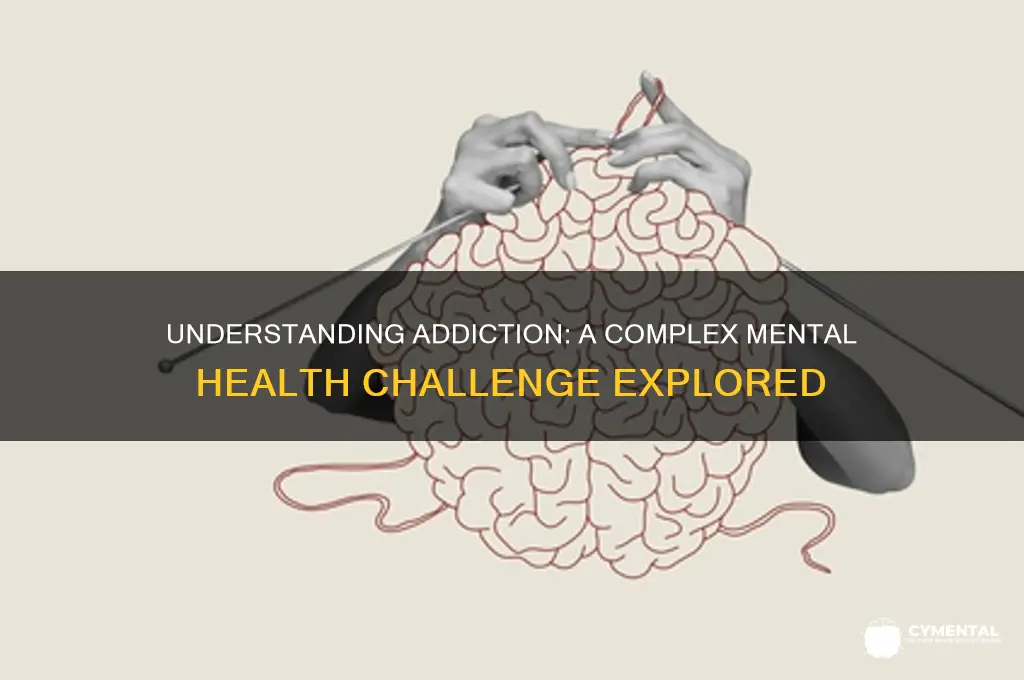
Addiction is increasingly recognized as a complex mental health issue rather than merely a lack of willpower or moral failing. It is characterized by compulsive substance use or behaviors despite harmful consequences, often rooted in changes to brain structure and function, particularly in areas governing reward, stress, and self-control. Research highlights its strong association with underlying mental health disorders, such as depression, anxiety, or trauma, suggesting a bidirectional relationship where each condition can exacerbate the other. Understanding addiction as a mental health issue emphasizes the need for comprehensive, evidence-based treatments, including therapy, medication, and support systems, to address both the addiction and its psychological underpinnings. This perspective also reduces stigma, encouraging individuals to seek help and fostering a more compassionate societal response.
| Characteristics | Values |
|---|---|
| Definition | Addiction is recognized as a chronic, relapsing disorder characterized by compulsive drug seeking and use despite harmful consequences. |
| Classification | Classified as a mental health disorder in the DSM-5 (Diagnostic and Statistical Manual of Mental Disorders, 5th edition). |
| Brain Changes | Alters brain regions involved in reward, stress, and self-control (e.g., prefrontal cortex, amygdala, nucleus accumbens). |
| Genetic Factors | 40-60% heritability; genetic predisposition increases vulnerability to addiction. |
| Environmental Factors | Exposure to trauma, stress, peer pressure, and availability of substances contribute to risk. |
| Co-occurring Disorders | High comorbidity with other mental health issues (e.g., depression, anxiety, PTSD). |
| Behavioral Patterns | Compulsive use, loss of control, cravings, and continued use despite negative consequences. |
| Physical Health Impact | Long-term substance use leads to chronic health issues (e.g., liver disease, cardiovascular problems). |
| Treatment Approaches | Evidence-based treatments include therapy (CBT, DBT), medication, and support groups (e.g., NA, AA). |
| Relapse Rates | Relapse rates (40-60%) are similar to other chronic diseases like diabetes and hypertension. |
| Social Stigma | Stigma often prevents individuals from seeking treatment, exacerbating mental health challenges. |
| Neurochemical Basis | Dysregulation of dopamine, serotonin, and other neurotransmitters plays a key role. |
| Developmental Impact | Early substance use increases risk of addiction and long-term mental health issues. |
| Public Health Perspective | Recognized as a public health issue requiring prevention, treatment, and policy interventions. |
| Recovery Outlook | Recovery is possible with comprehensive, long-term support and treatment. |
Explore related products


What You'll Learn
- Biological Factors: Genetic predispositions and brain chemistry changes contributing to addictive behaviors
- Psychological Triggers: Trauma, stress, and mental disorders as catalysts for addiction development
- Behavioral Patterns: Compulsive actions and loss of control despite negative consequences in addiction
- Dual Diagnosis: Co-occurrence of addiction with other mental health disorders and treatment challenges
- Social Influences: Peer pressure, environment, and societal norms impacting addiction vulnerability and recovery

Biological Factors: Genetic predispositions and brain chemistry changes contributing to addictive behaviors
Addiction doesn't arise solely from personal choices or moral failings. A growing body of research points to a significant biological underpinning, with genetic predispositions and brain chemistry changes playing a pivotal role in the development of addictive behaviors.
Imagine a lock and key system. Certain genetic variations act as a faulty lock, making individuals more susceptible to the "key" of addictive substances. Studies on twins and adopted individuals reveal a heritability estimate for addiction ranging from 40% to 60%, highlighting the strong genetic influence. For instance, variations in genes encoding for dopamine receptors, crucial for reward and pleasure, have been linked to increased vulnerability to substance abuse.
This genetic predisposition interacts with environmental factors, creating a complex interplay. Stress, trauma, and early exposure to substances can further exacerbate the risk. Think of it as a dimmer switch – genetics set the baseline sensitivity, while environmental factors adjust the intensity. A person with a strong genetic predisposition exposed to high-stress environments is at a significantly higher risk compared to someone with a lower genetic susceptibility in a supportive environment.
Understanding these biological factors is crucial for moving beyond stigmatization and towards effective treatment.
The brain's reward system, heavily reliant on dopamine, undergoes significant changes with repeated substance use. Initially, drugs or alcohol flood the system with dopamine, creating an intense feeling of pleasure. Over time, the brain adapts by reducing dopamine receptor sensitivity or production, leading to tolerance – the need for increasing amounts of the substance to achieve the same effect. This vicious cycle, driven by neurochemical changes, reinforces addictive behaviors as individuals seek to recreate the initial euphoria.
Recognizing the biological basis of addiction doesn't diminish personal responsibility, but it shifts the focus towards a more nuanced understanding and compassionate approach. It emphasizes the need for treatment strategies that address both the genetic predisposition and the neurochemical changes. This could involve medications that target specific neurotransmitter systems, behavioral therapies that help individuals develop coping mechanisms for cravings, and support systems that provide a stable and nurturing environment. By acknowledging the biological underpinnings, we can move towards more effective prevention and treatment strategies, offering hope for those struggling with addiction.
Empowering Educators: Strategies for Discussing Mental Health in Classrooms
You may want to see also
Explore related products


Psychological Triggers: Trauma, stress, and mental disorders as catalysts for addiction development
Trauma, stress, and mental disorders often act as silent architects of addiction, laying the groundwork for a cycle that can be difficult to break. Consider this: individuals who experience childhood trauma are up to four times more likely to develop substance use disorders later in life. The brain, when exposed to prolonged stress or trauma, undergoes neurochemical changes that can increase susceptibility to addictive behaviors. For instance, chronic stress elevates cortisol levels, which can impair the prefrontal cortex—the region responsible for decision-making and impulse control. This impairment makes it harder to resist the temporary relief substances provide, turning a coping mechanism into a dependency.
To understand this dynamic, imagine a person diagnosed with post-traumatic stress disorder (PTSD) at age 25. They might turn to alcohol to numb recurring flashbacks or anxiety. Over time, the brain begins to associate alcohol with emotional relief, reinforcing the behavior. This is not merely a lack of willpower; it’s a neurological rewiring fueled by psychological distress. Similarly, someone with untreated depression or anxiety may self-medicate with opioids or benzodiazepines, seeking to alleviate symptoms that mental health treatment could address more effectively. The key takeaway here is that addiction often thrives in the fertile soil of unresolved psychological pain.
Addressing addiction without tackling its psychological roots is like treating a symptom without diagnosing the disease. For example, a 30-year-old with a history of trauma and a heroin addiction is unlikely to achieve long-term recovery through detox alone. Integrating trauma-focused therapies, such as Eye Movement Desensitization and Reprocessing (EMDR) or Cognitive Behavioral Therapy (CBT), can help dismantle the emotional triggers driving substance use. Similarly, stress management techniques like mindfulness or yoga can reduce reliance on substances as a coping mechanism. Practical steps include setting aside 10–15 minutes daily for meditation or journaling to process emotions, and seeking professional help to develop personalized coping strategies.
Comparatively, societies that prioritize mental health support see lower addiction rates. Nordic countries, with their robust mental health systems, report significantly fewer substance use disorders than nations where mental health care is stigmatized or inaccessible. This highlights the importance of early intervention and comprehensive care. For instance, a teenager exhibiting signs of stress-induced substance use should be screened for underlying mental health issues and provided with age-appropriate resources, such as school counseling or peer support groups. By treating psychological triggers as actionable targets, we shift the focus from punishment to healing, offering a more sustainable path to recovery.
In conclusion, recognizing the role of trauma, stress, and mental disorders in addiction development is not just insightful—it’s transformative. It reframes addiction from a moral failing to a treatable condition rooted in psychological distress. Whether through therapy, stress reduction techniques, or systemic mental health support, addressing these triggers directly can disrupt the cycle of addiction. The message is clear: to combat addiction effectively, we must first heal the mind.
Understanding and Navigating Mental Health: A Compassionate Approach to Healing
You may want to see also
Explore related products


$28.99 $14.95


Behavioral Patterns: Compulsive actions and loss of control despite negative consequences in addiction
Addiction is characterized by compulsive actions and a loss of control, even when the individual is acutely aware of the negative consequences. This behavioral pattern is a hallmark of substance use disorders, but it also manifests in behavioral addictions like gambling or gaming. For instance, a person addicted to opioids may continue to use despite experiencing severe health issues, financial ruin, or strained relationships. The American Psychiatric Association’s *Diagnostic and Statistical Manual of Mental Disorders* (DSM-5) identifies this inability to stop as a core criterion for addiction, underscoring its classification as a mental health issue.
Consider the neurological mechanisms at play. Addiction hijacks the brain’s reward system, flooding it with dopamine in response to the addictive behavior. Over time, the brain adapts by reducing dopamine production or receptor sensitivity, creating a cycle where the individual needs increasing amounts of the substance or behavior to achieve the same effect—a phenomenon known as tolerance. For example, a smoker might progress from 5 cigarettes a day to 20 within a year to feel the same level of satisfaction. This escalation, despite clear health warnings, illustrates the compulsive nature of addiction and the erosion of self-control.
To address these behavioral patterns, evidence-based interventions focus on retraining the brain’s response to triggers. Cognitive-behavioral therapy (CBT) is a proven method, teaching individuals to identify and challenge the thoughts that lead to compulsive actions. For instance, a gambler might learn to replace the thought, “I’m due for a win,” with, “The odds are always against me.” Practical tips include setting strict time limits for gaming or using apps that block access to betting sites. Medications like naltrexone or bupropion can also reduce cravings, providing a biochemical assist to regain control.
Comparing substance addiction to behavioral addiction reveals striking similarities. Both involve a preoccupation with the behavior, unsuccessful attempts to quit, and continued engagement despite adverse outcomes. For example, a video game addict might neglect work deadlines or skip meals to keep playing, mirroring the neglect seen in someone addicted to alcohol. This overlap reinforces the idea that addiction, in all its forms, is a mental health issue rooted in maladaptive behavioral patterns. Recognizing this connection is crucial for developing comprehensive treatment strategies.
Finally, prevention and early intervention are key to breaking the cycle of compulsive actions. Education campaigns targeting adolescents, who are particularly vulnerable due to their developing brains, can highlight the risks of addictive behaviors. Schools can incorporate lessons on impulse control and decision-making, while parents can model healthy habits by limiting screen time and discussing the dangers of substance use. By addressing these patterns before they solidify, society can reduce the prevalence of addiction and its devastating consequences.
Identifying Mental Health Challenges in Veterans: A Comprehensive Guide
You may want to see also
Explore related products


Dual Diagnosis: Co-occurrence of addiction with other mental health disorders and treatment challenges
Addiction rarely travels alone. Up to 50% of individuals with a substance use disorder also meet criteria for another mental health condition, a phenomenon known as dual diagnosis. This complex interplay creates a vicious cycle: anxiety fuels alcohol cravings, depression deepens reliance on opioids, and ADHD impulsivity heightens vulnerability to stimulant abuse.
Consider Sarah, a 28-year-old battling both major depressive disorder and alcohol dependence. Her self-medication with alcohol temporarily numbs emotional pain but ultimately worsens her depression, leading to increased drinking. This example illustrates the bidirectional relationship in dual diagnosis: mental health issues can drive addiction, and substance abuse exacerbates psychiatric symptoms, creating a treatment labyrinth.
Recognizing dual diagnosis is crucial. Screening tools like the Substance Abuse Subtle Screening Inventory (SASSI) and the Patient Health Questionnaire-9 (PHQ-9) for depression are invaluable in identifying co-occurring conditions. Treatment must address both disorders simultaneously. Integrated approaches, combining medication management, psychotherapy like Cognitive Behavioral Therapy (CBT), and support groups, offer the best outcomes. For instance, Sarah might benefit from antidepressants, CBT to challenge negative thought patterns, and Alcoholics Anonymous meetings.
However, treating dual diagnosis presents unique challenges. Medication interactions require careful monitoring. A person on antidepressants and methadone for opioid addiction needs dosage adjustments to avoid adverse effects. Additionally, adherence to treatment can be difficult. The very nature of addiction and mental illness can impair motivation and insight, necessitating a patient-centered, empathetic approach.
Support systems are vital. Family involvement, peer support groups, and case management services provide crucial scaffolding for recovery. Remember, dual diagnosis is not a life sentence. With comprehensive, integrated care, individuals like Sarah can break free from the cycle of addiction and mental illness, reclaiming their lives and building a future of hope and resilience.
Supporting Teens: Practical Strategies for Mental Health and Well-Being
You may want to see also
Explore related products


Social Influences: Peer pressure, environment, and societal norms impacting addiction vulnerability and recovery
Peer pressure isn’t just a teenage problem. Adults face it too, often in subtler forms like workplace happy hours or social gatherings where refusing a drink feels like a social faux pas. Studies show that individuals who perceive their peers as approving of substance use are 2.5 times more likely to develop addictive behaviors. This isn’t about weakness; it’s about the brain’s hardwired need for acceptance. When saying “no” risks ostracism, the dopamine hit from fitting in can outweigh the rational fear of addiction.
Consider the environment: a neighborhood dotted with liquor stores and billboards advertising alcohol sees 40% higher rates of alcohol use disorder than areas with fewer outlets. Accessibility breeds normalization. For instance, a 2018 study found that adolescents living within a mile of a vape shop were twice as likely to start vaping. Environment isn’t just physical—it’s digital too. Social media algorithms amplify content glorifying substance use, creating a virtual peer pressure that transcends geography.
Societal norms play a dual role. In cultures where alcohol is central to celebrations, abstaining can feel like rejecting tradition. Conversely, societies that stigmatize addiction often drive individuals underground, delaying treatment. Japan’s high rates of alcohol consumption, for example, are tied to its work culture, where after-hours drinking is expected. Meanwhile, Portugal’s decriminalization of drugs, paired with a focus on treatment over punishment, has cut addiction rates by 50% since 2001. Norms shape vulnerability—and recovery.
To mitigate these influences, start small. If peer pressure is a concern, practice assertive refusals like, “I’m good, thanks,” without over-explaining. For environmental triggers, use apps like *Sober Grid* to map safe spaces or *Smoke Free* to track progress. Advocate for policy changes, like limiting alcohol advertising near schools. Recovery thrives in supportive environments; join groups like SMART Recovery or seek therapists specializing in addiction. Remember: societal norms are malleable. Your choices today can reshape tomorrow’s expectations.
Empowering Minds: Effective Strategies to Spread Mental Health Awareness
You may want to see also
Frequently asked questions
Yes, addiction is widely recognized as a mental health issue. It is classified as a substance use disorder or behavioral addiction in diagnostic manuals like the DSM-5 (Diagnostic and Statistical Manual of Mental Disorders).
Addiction is classified as a mental health issue because it involves changes in brain structure and function, particularly in areas related to reward, motivation, and decision-making. These changes can lead to compulsive behavior despite negative consequences.
Yes, addiction often coexists with other mental health disorders, such as depression, anxiety, or PTSD. This is known as a dual diagnosis or comorbidity, and it requires integrated treatment for both conditions.
While initial substance use or behavior may be a choice, addiction itself is not. It is a complex condition influenced by genetic, environmental, and psychological factors that alter brain chemistry and behavior.
Yes, addiction can be effectively treated as a mental health issue through therapies like cognitive-behavioral therapy (CBT), medication-assisted treatment (MAT), support groups, and holistic approaches that address underlying psychological factors.