Ava Ramirez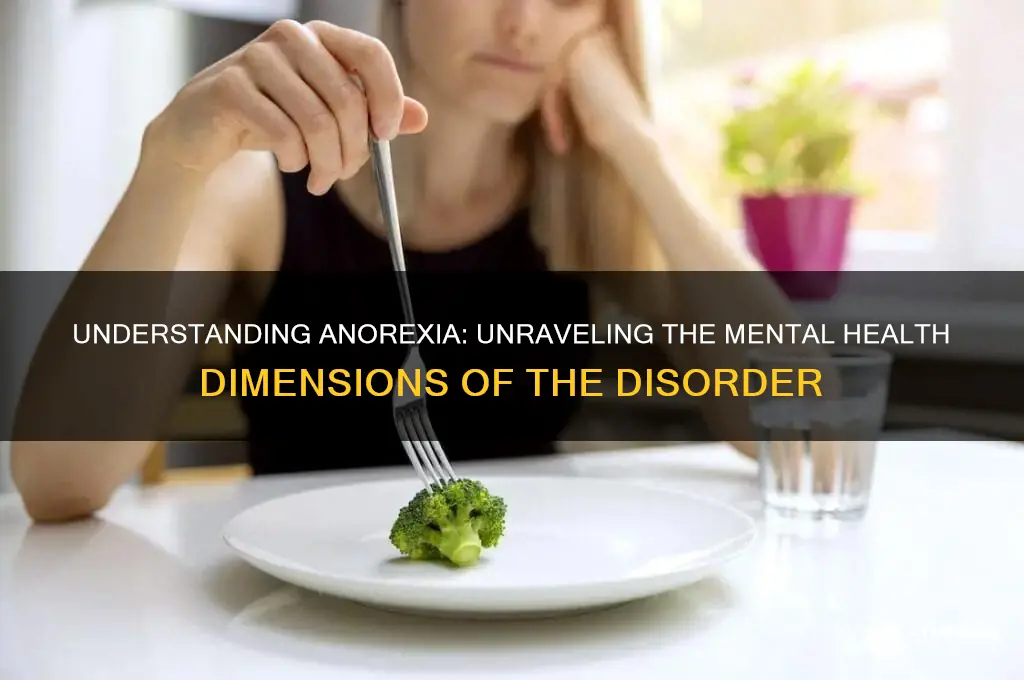
Anorexia nervosa, commonly referred to as anorexia, is a complex and serious eating disorder characterized by an intense fear of gaining weight, a distorted body image, and severe restriction of food intake. While it manifests through physical symptoms such as significant weight loss and malnutrition, its roots are deeply psychological, making it a recognized mental health issue. Anorexia often stems from a combination of genetic, environmental, and psychological factors, including low self-esteem, perfectionism, and societal pressures. The condition can lead to severe physical and emotional consequences, including depression, anxiety, and even life-threatening medical complications. Understanding anorexia as a mental health issue is crucial for effective treatment, which typically involves therapy, nutritional counseling, and sometimes medication to address both the psychological and physical aspects of the disorder.
| Characteristics | Values |
|---|---|
| Definition | Anorexia Nervosa is a serious mental health disorder characterized by an intense fear of gaining weight, distorted body image, and significant weight loss. |
| Classification | Classified as an eating disorder in the DSM-5 (Diagnostic and Statistical Manual of Mental Disorders, 5th edition). |
| Prevalence | Affects approximately 0.3–0.4% of young women and 0.1% of young men globally (NIMH, 2023). |
| Age of Onset | Typically begins during adolescence or early adulthood (ages 14–25). |
| Psychological Symptoms | Obsessive thoughts about food, body weight, and shape; fear of gaining weight; denial of hunger. |
| Physical Symptoms | Severe weight loss, malnutrition, fatigue, dizziness, hair thinning, brittle nails, and lanugo (fine hair growth). |
| Behavioral Symptoms | Restrictive eating, excessive exercise, use of laxatives or diuretics, avoidance of meals. |
| Comorbid Conditions | Often co-occurs with depression, anxiety, OCD, and substance abuse disorders. |
| Mortality Rate | One of the highest mortality rates among psychiatric disorders, with a risk of death up to 10 times higher than the general population. |
| Biological Factors | Genetic predisposition, hormonal imbalances, and alterations in brain chemistry (e.g., serotonin and dopamine). |
| Environmental Factors | Sociocultural pressures, trauma, family dynamics, and exposure to idealized body standards. |
| Treatment Approaches | Psychotherapy (e.g., CBT, family-based therapy), nutritional counseling, medication (e.g., antidepressants), and hospitalization in severe cases. |
| Prognosis | Recovery is possible with early intervention and comprehensive treatment, but relapse rates are high (30–50%). |
| Stigma and Awareness | Often misunderstood as a lifestyle choice rather than a serious mental health issue, leading to delayed treatment. |
| Latest Research (2023) | Emerging studies focus on neurobiological mechanisms, personalized treatment plans, and the role of social media in triggering symptoms. |
Explore related products


What You'll Learn
- Biological Factors: Genetic predisposition and brain chemistry's role in anorexia development
- Psychological Triggers: Trauma, low self-esteem, and perfectionism as contributing factors
- Sociocultural Influences: Media, societal beauty standards, and peer pressure impacts
- Diagnosis Criteria: DSM-5 guidelines for identifying anorexia as a mental disorder
- Treatment Approaches: Therapy, medication, and holistic methods for recovery

Biological Factors: Genetic predisposition and brain chemistry's role in anorexia development
Anorexia nervosa, a complex and often devastating condition, is increasingly recognized as a mental health issue with deep biological roots. Among these, genetic predisposition and brain chemistry play pivotal roles in its development. Research indicates that individuals with a family history of anorexia are up to 11 times more likely to develop the disorder, suggesting a strong hereditary component. Specific genes associated with serotonin regulation, dopamine pathways, and appetite control have been implicated, though no single gene is solely responsible. This genetic vulnerability, however, is not destiny; it interacts with environmental and psychological factors to trigger the onset of the disorder.
Understanding brain chemistry offers another layer of insight into anorexia’s biological underpinnings. Neurotransmitters like serotonin and dopamine, which regulate mood, reward, and appetite, are often dysregulated in individuals with anorexia. For instance, serotonin imbalances can lead to obsessive-compulsive behaviors, a hallmark of the disorder, while dopamine dysregulation may contribute to the distorted reward system that reinforces restrictive eating patterns. Neuroimaging studies have also revealed structural and functional abnormalities in the brains of anorexia patients, particularly in regions associated with decision-making, impulse control, and body image perception. These findings underscore the disorder’s neurobiological basis, challenging the misconception that anorexia is merely a lifestyle choice or a lack of willpower.
To illustrate the interplay between genetics and brain chemistry, consider a hypothetical scenario: a teenager with a genetic predisposition to anorexia begins dieting to fit societal beauty standards. Their serotonin and dopamine systems, already sensitive due to genetic factors, become further imbalanced as calorie restriction alters neurotransmitter activity. This triggers a cycle of anxiety, compulsive behavior, and distorted body image, reinforcing the disorder. Practical interventions, such as selective serotonin reuptake inhibitors (SSRIs) or cognitive-behavioral therapy, can help rebalance brain chemistry and disrupt this cycle, highlighting the importance of addressing biological factors in treatment.
While genetic predisposition and brain chemistry are critical, they are not the sole determinants of anorexia. However, recognizing their role is essential for developing targeted treatments. For instance, pharmacological interventions like SSRIs or antipsychotics can address neurotransmitter imbalances, while genetic testing may one day identify at-risk individuals for early intervention. Additionally, lifestyle modifications, such as regular exercise and a balanced diet, can support brain health and mitigate some biological risks. By integrating biological insights into treatment plans, clinicians can offer more personalized and effective care, moving beyond a one-size-fits-all approach.
In conclusion, the biological factors of genetic predisposition and brain chemistry are indispensable in understanding anorexia as a mental health issue. They provide a scientific foundation for the disorder’s complexity, offering hope for more precise and compassionate treatments. Acknowledging these factors not only destigmatizes anorexia but also empowers individuals and their families to seek evidence-based solutions. As research advances, the interplay between genes, brain chemistry, and environment will continue to reveal new pathways for prevention and recovery.
Mentors' Role in Mental Health: Support, Growth, and Resilience
You may want to see also
Explore related products


Psychological Triggers: Trauma, low self-esteem, and perfectionism as contributing factors
Trauma casts a long shadow, often manifesting in ways that seem disconnected from the original event. For individuals with anorexia, traumatic experiences—whether acute incidents or chronic stressors—can disrupt the brain’s regulation of emotions, stress, and self-perception. Research indicates that up to 70% of adolescents with eating disorders report a history of trauma, with sexual abuse, emotional neglect, and family dysfunction being common triggers. The body’s response to trauma often involves a need for control, and for some, restricting food intake becomes a coping mechanism. This behavior, while maladaptive, provides a sense of agency in the aftermath of powerlessness. Clinicians note that trauma-focused therapies, such as Eye Movement Desensitization and Reprocessing (EMDR), can help patients process these experiences, reducing the compulsion to control through starvation.
Low self-esteem acts as fertile ground for anorexia to take root, often fueled by societal pressures and internalized criticism. Adolescents, particularly those aged 12–18, are especially vulnerable due to developmental stages marked by identity formation and peer comparison. A study published in the *Journal of Adolescent Health* found that girls with low self-esteem are three times more likely to develop disordered eating behaviors. The cycle is insidious: negative self-perception leads to restrictive eating, which temporarily alleviates anxiety but ultimately reinforces feelings of inadequacy. Breaking this cycle requires interventions like cognitive-behavioral therapy (CBT), which challenges distorted self-beliefs and fosters self-compassion. Practical strategies, such as daily affirmations or journaling, can also help individuals reframe their self-narrative.
Perfectionism, often lauded in achievement-driven cultures, is a double-edged sword that can contribute to anorexia’s rigid control mechanisms. Individuals with perfectionist tendencies set unattainably high standards for themselves, viewing any deviation as failure. In the context of eating, this translates to extreme dietary rules and an obsession with weight as a measure of self-worth. A meta-analysis in *Psychological Bulletin* revealed that perfectionism is one of the strongest personality predictors of eating disorders. The irony is that the pursuit of perfection in body image often leads to physical and psychological deterioration. Mindfulness-based interventions, which encourage acceptance of imperfection, have shown promise in mitigating this risk. Encouraging small, manageable goals rather than all-or-nothing thinking can help individuals step off the perfectionist treadmill.
These psychological triggers—trauma, low self-esteem, and perfectionism—intertwine to create a complex web that sustains anorexia. Addressing them requires a multifaceted approach, combining therapeutic modalities with practical strategies tailored to the individual. For instance, a 16-year-old with a history of trauma might benefit from EMDR alongside family therapy to rebuild trust, while a college student struggling with perfectionism could find relief through mindfulness exercises and CBT. The key is to recognize these triggers not as character flaws but as responses to deeper emotional wounds. By untangling this web, individuals can begin to reclaim their relationship with food and, ultimately, themselves.
Breaking the Silence: Overcoming Isolation in Mental Health Struggles
You may want to see also
Explore related products



Sociocultural Influences: Media, societal beauty standards, and peer pressure impacts
The media's portrayal of beauty is a powerful force, often dictating societal ideals that can have detrimental effects on vulnerable individuals. A simple analysis of fashion magazines and social media platforms reveals a prevalent trend: the glorification of thinness. This is not merely about aesthetics; it's a cultural phenomenon that influences self-perception and body image, especially among adolescents and young adults. For instance, a study examining the impact of media on eating disorders found that exposure to thin-ideal media images significantly increased body dissatisfaction and disordered eating symptoms in young women. This is a critical issue, as it highlights how media consumption can directly contribute to the development of anorexia nervosa.
Understanding the Impact:
Imagine a teenager constantly bombarded with images of models and influencers, all adhering to a narrow definition of beauty—slim figures, flawless skin, and perfectly sculpted features. This daily exposure can lead to a distorted body image, where individuals strive for an unattainable ideal. The pressure to conform to these standards is immense, and it's not just about physical appearance. It's a psychological battle, where one's self-worth becomes intricately linked to their ability to achieve this ideal. This is a key factor in understanding why anorexia is not merely a physical condition but a complex mental health issue.
A Comparative Perspective:
Consider two scenarios: In a society that celebrates diverse body types, individuals are more likely to develop a healthy relationship with their bodies. Conversely, in a culture obsessed with thinness, the risk of body image issues and eating disorders skyrockets. This comparison underscores the influence of societal beauty standards. When the media and popular culture promote a single, unrealistic body type as the epitome of beauty, it sets an unachievable goal for most. This disparity between reality and ideal can lead to extreme dieting, excessive exercise, and, in severe cases, anorexia.
Practical Steps and Cautions:
- Media Literacy: Educate yourself and others about media literacy. Encourage critical thinking when consuming media content. Question the realism of portrayed beauty standards and challenge the notion that physical appearance defines self-worth.
- Diverse Representation: Advocate for diverse representation in media. Support and promote platforms that showcase various body types, ethnicities, and ages. This shift can help normalize different beauty ideals and reduce the pressure to conform.
- Peer Support: Foster an environment of body positivity within peer groups. Encourage open conversations about body image and self-acceptance. Peer pressure can be a powerful tool for positive change when directed towards embracing individuality.
- Early Intervention: Be vigilant for signs of body dissatisfaction and disordered eating, especially in adolescents. Early intervention and professional support are crucial in preventing the progression to anorexia.
In the battle against anorexia, addressing sociocultural influences is paramount. By recognizing the impact of media and societal beauty standards, we can implement strategies to mitigate their harmful effects. This involves a collective effort to redefine beauty, promote self-acceptance, and provide support systems that encourage healthy body image and mental well-being. It is through these actions that we can hope to reduce the incidence of anorexia and foster a more inclusive and compassionate society.
Supporting Children: Navigating Bio Parent's Mental Health Challenges with Care
You may want to see also
Explore related products


Diagnosis Criteria: DSM-5 guidelines for identifying anorexia as a mental disorder
Anorexia nervosa is unequivocally classified as a mental health disorder, and its diagnosis hinges on precise criteria outlined in the Diagnostic and Statistical Manual of Mental Disorders, Fifth Edition (DSM-5). These guidelines serve as a clinical roadmap, ensuring consistency and accuracy in identifying the condition. To diagnose anorexia nervosa, clinicians must confirm the presence of three core criteria. First, the individual must exhibit a restriction of energy intake leading to a significantly low body weight, considering age, sex, developmental trajectory, and physical health. This criterion underscores the disorder’s physical manifestations, which are often the most visible but not the sole indicators of the illness.
The second criterion delves into the psychological aspects, requiring evidence of an intense fear of gaining weight or becoming fat, or persistent behavior that interferes with weight gain, even when underweight. This fear is often disproportionate and persists despite objective evidence of low body weight. For example, a 16-year-old female weighing 30% below the expected weight for her age and height might still express terror at the prospect of gaining even a kilogram. Such distorted body image and fear are hallmark features that differentiate anorexia from other eating disorders or dietary restrictions.
The third criterion addresses a disturbance in the way one’s body weight or shape is experienced, or a lack of recognition of the seriousness of current low body weight. This could manifest as a person believing they are overweight despite being severely underweight or dismissing concerns about their health due to their weight. For instance, a 22-year-old male with a BMI of 15 might insist he looks "normal" and refuse medical intervention, illustrating the cognitive distortions inherent in the disorder.
Clinicians must also rule out conditions that could better explain the symptoms, such as gastrointestinal disorders or other mental health issues like depression or obsessive-compulsive disorder. The DSM-5 further subdivides anorexia into two specifiers: restricting type, where weight loss is achieved through fasting, dieting, or excessive exercise, and binge-eating/purging type, where the individual engages in recurrent binge eating or purging behavior. These specifiers help tailor treatment approaches, as individuals with the binge-eating/purging type may require additional interventions for addressing impulsive behaviors.
Understanding these criteria is crucial for early detection and intervention. For instance, parents or caregivers noticing a teenager skipping meals, excessively exercising, or expressing extreme dissatisfaction with their body should seek professional evaluation. Similarly, educators and healthcare providers must be vigilant for signs like rapid weight loss, preoccupation with food, or social withdrawal. By adhering to the DSM-5 guidelines, professionals can accurately diagnose anorexia nervosa, paving the way for evidence-based treatments such as cognitive-behavioral therapy, nutritional counseling, and, in severe cases, medical stabilization. This structured approach not only validates anorexia as a mental health issue but also ensures that those affected receive the comprehensive care they need.
Supporting Your Spouse: Navigating Mental Health Challenges Together
You may want to see also
Explore related products


Treatment Approaches: Therapy, medication, and holistic methods for recovery
Anorexia nervosa is unequivocally a mental health issue, characterized by a distorted body image, extreme fear of weight gain, and severe restriction of food intake. Its treatment demands a multifaceted approach, addressing both psychological and physiological aspects. Among the most effective strategies are therapy, medication, and holistic methods, each playing a distinct role in the recovery process.
Therapy stands as the cornerstone of anorexia treatment, with Cognitive Behavioral Therapy (CBT) being the most evidence-based approach. CBT helps individuals challenge and reframe negative thought patterns about body image and food. For adolescents, Family-Based Treatment (FBT) is particularly effective, involving parents in the recovery process to restore healthy eating habits. Sessions typically occur weekly, lasting 45–60 minutes, and may extend over 6–12 months depending on severity. Group therapy, such as Dialectical Behavior Therapy (DBT), can also provide peer support and skill-building for emotional regulation. A key takeaway is that therapy must be tailored to the individual’s needs, with consistent attendance being critical for progress.
Medication, while not a primary treatment, can complement therapy by addressing co-occurring conditions like depression, anxiety, or obsessive-compulsive disorder. Selective Serotonin Reuptake Inhibitors (SSRIs), such as fluoxetine (Prozac), are commonly prescribed for adults, with dosages starting at 20 mg daily and adjusted based on response. For adolescents, medication use is more cautious, often reserved for severe cases or when therapy alone is insufficient. It’s essential to monitor side effects, such as increased anxiety or gastrointestinal issues, and to use medication under the guidance of a psychiatrist. While medication can alleviate symptoms, it does not address the root causes of anorexia, underscoring the need for concurrent therapy.
Holistic methods offer a complementary approach, focusing on the mind-body connection and overall well-being. Nutritional counseling is fundamental, helping individuals rebuild a healthy relationship with food. Mindfulness practices, such as yoga or meditation, can reduce stress and improve body awareness. Art therapy or journaling allows for emotional expression, while acupuncture or massage may alleviate physical tension. For example, a daily 10-minute mindfulness meditation practice can significantly reduce anxiety levels over time. However, holistic methods should not replace evidence-based treatments but rather enhance them, providing a more comprehensive recovery experience.
Incorporating these approaches requires careful coordination. A treatment team, including a therapist, psychiatrist, dietitian, and primary care physician, ensures all aspects of recovery are addressed. Practical tips include maintaining a structured meal plan, setting small achievable goals, and fostering a supportive environment. Recovery is a gradual process, often marked by setbacks, but with persistence and the right combination of therapies, medication, and holistic practices, individuals can regain control of their lives. The ultimate goal is not just weight restoration but a sustainable, balanced relationship with food and self.
Understanding Stigma: How Society Treats Those with Mental Health Issues
You may want to see also
Frequently asked questions
Yes, anorexia nervosa is classified as a mental health disorder. It is recognized in the Diagnostic and Statistical Manual of Mental Disorders (DSM-5) as a serious psychiatric condition characterized by distorted body image, extreme fear of weight gain, and restrictive eating behaviors.
Anorexia is often linked to psychological factors such as low self-esteem, perfectionism, anxiety, and depression. Traumatic experiences, societal pressure, and genetic predispositions can also play a role in its development.
Yes, anorexia frequently coexists with other mental health issues, including depression, anxiety disorders, obsessive-compulsive disorder (OCD), and substance abuse. Addressing these comorbid conditions is crucial for effective treatment.
Treatment for anorexia typically involves a multidisciplinary approach, including psychotherapy (such as cognitive-behavioral therapy), nutritional counseling, and sometimes medication. Support from mental health professionals, family, and peers is essential for recovery.