Ava Ramirez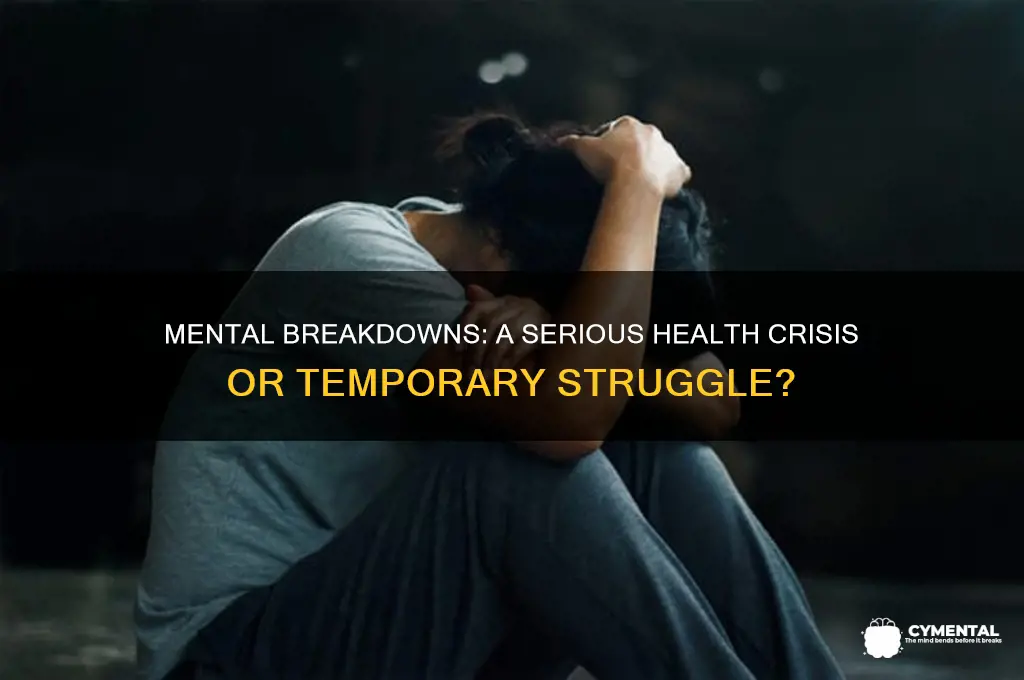
A mental breakdown, often characterized by an inability to function in daily life due to overwhelming stress, anxiety, or emotional distress, is indeed a serious health issue that warrants attention and care. While not a clinical diagnosis, it signifies a critical state where an individual’s mental health has reached a breaking point, potentially leading to severe consequences such as physical exhaustion, suicidal thoughts, or long-term psychological damage. Recognizing the signs early and seeking professional help is crucial, as untreated breakdowns can exacerbate underlying conditions like depression, anxiety disorders, or burnout. Addressing this issue requires a compassionate approach, emphasizing therapy, support systems, and lifestyle adjustments to restore mental well-being and prevent future episodes.
| Characteristics | Values |
|---|---|
| Definition | A mental breakdown, also known as a nervous breakdown, is an acute, temporary mental health crisis characterized by an inability to function in daily life due to overwhelming stress or emotional distress. |
| Seriousness | Yes, it is considered a serious health issue as it can significantly impair an individual's ability to cope with life's demands and may lead to severe consequences if left untreated. |
| Symptoms | Extreme anxiety, depression, insomnia, hallucinations, paranoia, inability to concentrate, physical symptoms (e.g., fatigue, headaches), and thoughts of self-harm or suicide. |
| Causes | Prolonged stress, trauma, major life changes, underlying mental health disorders (e.g., depression, anxiety), substance abuse, or a combination of these factors. |
| Duration | Typically short-term, lasting from a few hours to a few weeks, but can vary based on individual circumstances and treatment. |
| Treatment | Therapy (e.g., cognitive-behavioral therapy), medication, stress management techniques, social support, and lifestyle changes. Hospitalization may be required in severe cases. |
| Long-term Impact | If untreated, it can lead to chronic mental health issues, impaired relationships, job loss, and increased risk of self-harm or suicide. |
| Prevention | Managing stress, seeking early intervention for mental health issues, maintaining a healthy lifestyle, and building a strong support network. |
| Prevalence | Exact prevalence is difficult to determine due to varying definitions, but it is a common occurrence, especially in high-stress environments. |
| Stigma | Often stigmatized, leading to underreporting and delayed treatment. Raising awareness is crucial for reducing stigma and promoting timely intervention. |
Explore related products


What You'll Learn
- Symptoms and Warning Signs: Identifying emotional, physical, and behavioral indicators of a mental breakdown
- Causes and Triggers: Stress, trauma, burnout, and underlying mental health conditions contributing to breakdowns
- Impact on Daily Life: Effects on work, relationships, and overall functioning during a breakdown
- Treatment and Recovery: Therapy, medication, self-care, and support systems for healing
- Prevention Strategies: Stress management, boundaries, and early intervention to avoid breakdowns

Symptoms and Warning Signs: Identifying emotional, physical, and behavioral indicators of a mental breakdown
A mental breakdown, often referred to as a nervous breakdown, is not a clinical term but a colloquial description of an acute, temporary phase of mental distress. While not a formal diagnosis, it signifies a serious health issue that demands attention. Recognizing the symptoms and warning signs early can prevent long-term consequences and facilitate timely intervention. Emotional, physical, and behavioral indicators often intertwine, creating a complex web of signals that, when identified, can serve as a critical call to action.
Emotionally, individuals experiencing a mental breakdown often exhibit extreme feelings of hopelessness, anxiety, or despair. These emotions are not fleeting but persistent, overwhelming, and disproportionate to the situation at hand. For instance, someone might feel paralyzing fear over minor decisions or uncontrollable sadness without an apparent trigger. Such emotional states can lead to detachment from reality, where the person struggles to differentiate between rational thoughts and irrational fears. A key indicator is when these emotions interfere with daily functioning, such as maintaining relationships or performing routine tasks.
Physically, the body often mirrors the mind’s distress. Chronic fatigue, unexplained aches, and changes in sleep patterns are common. Insomnia or oversleeping, for example, can exacerbate emotional instability, creating a vicious cycle. Gastrointestinal issues like nausea, loss of appetite, or sudden weight changes may also emerge. These symptoms are not merely discomforts but red flags, especially when they persist for weeks. For adults over 30, these physical signs can sometimes mimic other health issues, making it crucial to consider mental health as a potential root cause.
Behaviorally, a mental breakdown often manifests as drastic changes in routine or social interactions. Withdrawal from social activities, neglect of personal hygiene, or sudden irritability are telltale signs. In severe cases, individuals might engage in self-destructive behaviors, such as substance abuse or reckless actions. A practical tip for caregivers or loved ones is to observe patterns: note if the person avoids responsibilities they once handled effortlessly or if they express persistent feelings of being overwhelmed. These behaviors, when combined with emotional and physical symptoms, paint a clear picture of a crisis.
Identifying these indicators requires vigilance and empathy. For instance, a 25-year-old professional might start missing deadlines, appear disheveled, and express constant exhaustion—signs that could be dismissed as burnout but may signal a deeper issue. Similarly, a 40-year-old parent who suddenly stops engaging in family activities and complains of persistent headaches warrants concern. The takeaway is clear: mental breakdowns are not moments of weakness but serious health crises with tangible symptoms. Early recognition and intervention, such as seeking professional help or encouraging self-care practices, can mitigate their impact and pave the way for recovery.
Supporting Employee Mental Health: Strategies for Compassionate Workplace Management
You may want to see also
Explore related products


$43.68 $70.95


Causes and Triggers: Stress, trauma, burnout, and underlying mental health conditions contributing to breakdowns
Stress, often the silent architect of mental breakdowns, accumulates like a snowball rolling downhill—unstoppable until it crushes everything in its path. Chronic stressors, such as financial instability, relationship conflicts, or workplace demands, erode resilience over time. For instance, a study published in *Psychosomatic Medicine* found that individuals exposed to high-stress environments for six months or more were 40% more likely to experience a mental breakdown. Practical tip: Implement stress-reduction techniques like the 4-7-8 breathing method (inhale for 4 seconds, hold for 7, exhale for 8) to interrupt the stress cycle before it escalates.
Trauma, whether acute or cumulative, acts as a fracture in the psyche, weakening its structure until it collapses under pressure. Survivors of accidents, abuse, or loss often carry invisible wounds that resurface during moments of vulnerability. For example, a 2021 report from the National Institute of Mental Health highlighted that 70% of mental breakdowns in trauma survivors were triggered by seemingly minor events that reactivated past pain. Caution: Avoid dismissing "small" triggers; they may be symbolic reminders of deeper trauma. Instead, encourage professional therapy modalities like EMDR or cognitive processing therapy to address root causes.
Burnout, the occupational hazard of the modern age, is not merely exhaustion—it’s a state of emotional, physical, and mental depletion that primes individuals for breakdown. The World Health Organization classifies burnout as an occupational phenomenon, yet its consequences spill into every facet of life. A 2020 survey revealed that 76% of healthcare workers experiencing burnout reported symptoms of a mental breakdown within a year. Steps to mitigate burnout: Set rigid boundaries between work and personal life, delegate tasks when possible, and take micro-breaks every 90 minutes to reset focus.
Underlying mental health conditions, such as depression, anxiety, or bipolar disorder, act as kindling for the fire of a mental breakdown. Without proper management, these conditions amplify the impact of stressors, trauma, or burnout. For instance, individuals with untreated generalized anxiety disorder are three times more likely to experience a breakdown during periods of heightened stress. Comparative insight: Think of mental health conditions as a pre-existing vulnerability—like a weakened immune system—that requires proactive care. Takeaway: Regular psychiatric check-ins, medication adherence, and lifestyle adjustments (e.g., 30 minutes of daily exercise) are non-negotiable for those at risk.
The interplay of these factors—stress, trauma, burnout, and underlying conditions—creates a perfect storm for mental breakdowns. Descriptively, imagine a bridge weakened by rust (underlying conditions), overloaded with vehicles (stress), struck by lightning (trauma), and lacking maintenance (burnout). Its collapse is not a matter of *if*, but *when*. Practical advice: Monitor warning signs like persistent insomnia, emotional numbness, or irritability, and seek intervention early. Remember, a mental breakdown is not a failure of character but a signal that the system has been pushed beyond its limits—and systems, like humans, require repair to function again.
Social Media's Dark Side: Uncovering Its Impact on Mental Health
You may want to see also
Explore related products


Impact on Daily Life: Effects on work, relationships, and overall functioning during a breakdown
A mental breakdown can render even the simplest tasks insurmountable, turning a once-manageable workday into a minefield of anxiety and exhaustion. Consider the case of a 32-year-old marketing manager who, during a breakdown, found herself unable to draft a client email without spiraling into self-doubt. Her productivity plummeted, deadlines were missed, and she began isolating herself from colleagues, fearing judgment. This isn’t an isolated incident; studies show that 60% of individuals experiencing a breakdown report significant work impairment, often leading to absenteeism or reduced performance. Employers may misinterpret this as laziness, exacerbating the individual’s stress and prolonging recovery.
In relationships, a breakdown acts like an emotional earthquake, fracturing connections that once felt unshakable. A 45-year-old teacher described how, during his breakdown, he became irritable and withdrawn, lashing out at his partner over minor issues. His inability to communicate his distress created a cycle of resentment, pushing his loved ones away. Research indicates that 75% of individuals in a breakdown experience strained relationships, often due to heightened sensitivity, emotional numbness, or a pervasive sense of hopelessness. Even supportive partners may struggle to understand the intensity of the experience, leading to feelings of isolation on both sides.
The ripple effects of a breakdown extend beyond work and relationships, permeating every aspect of daily functioning. Imagine a 28-year-old graphic designer who, during a breakdown, found herself unable to shower, cook, or even leave her apartment for days. Basic self-care routines became Herculean tasks, and her physical health deteriorated as a result. This isn’t uncommon; during a breakdown, 80% of individuals report difficulties with activities of daily living (ADLs), such as hygiene, meal preparation, and household chores. The cumulative effect is a downward spiral where neglect of basic needs further fuels mental distress.
To mitigate these impacts, practical strategies are essential. For work, consider a phased return with reduced hours or delegated tasks, and communicate openly with employers about your needs. In relationships, set boundaries and lean on a trusted friend or therapist to act as a mediator during conflicts. For daily functioning, break tasks into smaller, manageable steps—for example, instead of “clean the house,” start with “wipe down the kitchen counter.” Prioritize sleep and nutrition, as even small improvements in these areas can stabilize mood and energy levels. While a breakdown disrupts life profoundly, proactive measures can help reclaim control and foster gradual recovery.
Supporting Refugee Mental Health: Strategies for Inclusive and Compassionate Care
You may want to see also
Explore related products


Treatment and Recovery: Therapy, medication, self-care, and support systems for healing
A mental breakdown, often a manifestation of overwhelming stress or unresolved trauma, demands a multifaceted treatment approach. Therapy stands as a cornerstone, offering a structured environment to explore underlying causes and develop coping mechanisms. Cognitive Behavioral Therapy (CBT), for instance, helps individuals reframe negative thought patterns, while Dialectical Behavior Therapy (DBT) focuses on emotional regulation and distress tolerance. For those experiencing severe symptoms, Eye Movement Desensitization and Reprocessing (EMDR) can be particularly effective in processing traumatic memories. Each therapeutic modality is tailored to the individual’s needs, ensuring a personalized path to recovery.
Medication, when prescribed judiciously, can provide critical relief from symptoms that impede daily functioning. Antidepressants like selective serotonin reuptake inhibitors (SSRIs) are commonly used to manage depression and anxiety, often at starting doses of 10–20 mg/day, adjusted based on response and side effects. Benzodiazepines, such as lorazepam (0.5–2 mg/day), may be prescribed short-term for acute anxiety but carry risks of dependence and are not recommended for long-term use. It’s essential to monitor medication efficacy and side effects closely, often in collaboration with a psychiatrist, to ensure optimal outcomes.
Self-care, though often overlooked, is a vital component of recovery. Establishing a routine that includes regular sleep, balanced nutrition, and physical activity can stabilize mood and energy levels. Mindfulness practices, such as meditation or yoga, have been shown to reduce stress and improve emotional resilience. Even small changes, like limiting caffeine intake or dedicating 15 minutes daily to deep breathing exercises, can accumulate significant benefits over time. Self-care is not selfish; it’s a proactive measure to rebuild mental strength.
Support systems—whether family, friends, or peer groups—play an indispensable role in the healing process. Sharing experiences in a safe space, such as a support group, can reduce feelings of isolation and provide practical advice from those who’ve faced similar challenges. For caregivers, understanding the importance of active listening and patience can foster a nurturing environment. Professional support networks, like those offered by mental health organizations, can also connect individuals to resources and community programs. Recovery is rarely a solo journey; it thrives on collective empathy and encouragement.
Ultimately, treatment and recovery from a mental breakdown require a holistic approach that integrates therapy, medication, self-care, and support systems. Each element complements the others, addressing the biological, psychological, and social dimensions of mental health. By embracing these tools, individuals can not only heal but also build resilience against future challenges. The path may be arduous, but with the right strategies and support, recovery is not just possible—it’s probable.
School Stress: Uncovering the Hidden Toll on Student Mental Health
You may want to see also
Explore related products






Prevention Strategies: Stress management, boundaries, and early intervention to avoid breakdowns
Mental breakdowns, often characterized by overwhelming stress and emotional exhaustion, are indeed serious health issues that can disrupt lives and require significant recovery efforts. Preventing them hinges on proactive strategies that address root causes rather than symptoms. Stress management, boundary-setting, and early intervention form the cornerstone of this preventive approach, offering practical tools to maintain mental equilibrium.
Stress Management: The Foundation of Prevention
Chronic stress is a silent precursor to mental breakdowns, eroding resilience over time. Effective stress management involves both physiological and psychological techniques. Incorporate mindfulness practices, such as meditation or deep breathing exercises, for at least 10 minutes daily to reduce cortisol levels. Physical activity, particularly aerobic exercises like brisk walking or swimming for 30 minutes a day, releases endorphins that counteract stress. Additionally, prioritize sleep—adults need 7–9 hours nightly—as deprivation exacerbates vulnerability. For those in high-pressure environments, consider adaptive coping strategies like the 4-7-8 breathing technique (inhale for 4 seconds, hold for 7, exhale for 8) to reset the nervous system during acute stress episodes.
Boundaries: Protecting Mental Space
Without clear boundaries, external demands can overwhelm even the most resilient individuals. Start by identifying areas where overcommitment occurs—work, relationships, or social obligations—and allocate time limits. For instance, designate "no-work" hours after 7 PM and communicate this firmly to colleagues. In personal relationships, practice assertive communication; phrases like "I need time to recharge" or "I can’t commit to that right now" are essential tools. Digital boundaries are equally critical; limit social media to 30 minutes daily and disable non-essential notifications to reduce mental clutter. Boundaries aren’t selfish—they’re self-preservation, ensuring energy reserves aren’t depleted.
Early Intervention: Recognizing Warning Signs
The difference between a manageable challenge and a breakdown often lies in timely intervention. Watch for early indicators like persistent irritability, sleep disturbances, or a sense of detachment. If these symptoms persist for two weeks, seek professional guidance. Therapies like Cognitive Behavioral Therapy (CBT) can reframe negative thought patterns before they escalate. Employers can play a role by offering mental health days or EAPs (Employee Assistance Programs). For individuals, journaling daily emotions can provide insight into stress triggers, enabling proactive adjustments. Early action isn’t just about avoiding crisis—it’s about fostering long-term mental health.
Integrating Strategies for Holistic Prevention
Prevention is most effective when stress management, boundaries, and early intervention are combined. For example, a teacher might use mindfulness to manage classroom stress, set boundaries by declining extra committees, and consult a counselor at the first sign of burnout. Organizations can support this by offering workshops on stress reduction techniques and encouraging open conversations about mental health. At the individual level, consistency is key—small, daily practices compound into resilience. By treating prevention as a non-negotiable priority, mental breakdowns become less a question of "if" and more a preventable outcome of unchecked strain.
Empathetic Strategies for Supporting Customers with Mental Health Challenges
You may want to see also
Frequently asked questions
Yes, a mental breakdown is a serious health issue as it indicates extreme emotional or psychological stress that can impair daily functioning and require professional intervention.
Signs include overwhelming anxiety, inability to perform daily tasks, severe depression, physical symptoms like fatigue, and thoughts of self-harm or suicide.
Yes, if left untreated, a mental breakdown can contribute to or exacerbate long-term mental health issues such as chronic anxiety, depression, or post-traumatic stress disorder (PTSD).
Treatment often involves therapy, medication, stress management techniques, and lifestyle changes. Seeking help from a mental health professional is crucial for recovery.
While not always preventable, managing stress, maintaining a healthy lifestyle, seeking support, and addressing mental health concerns early can reduce the risk of a mental breakdown.