Madison Cole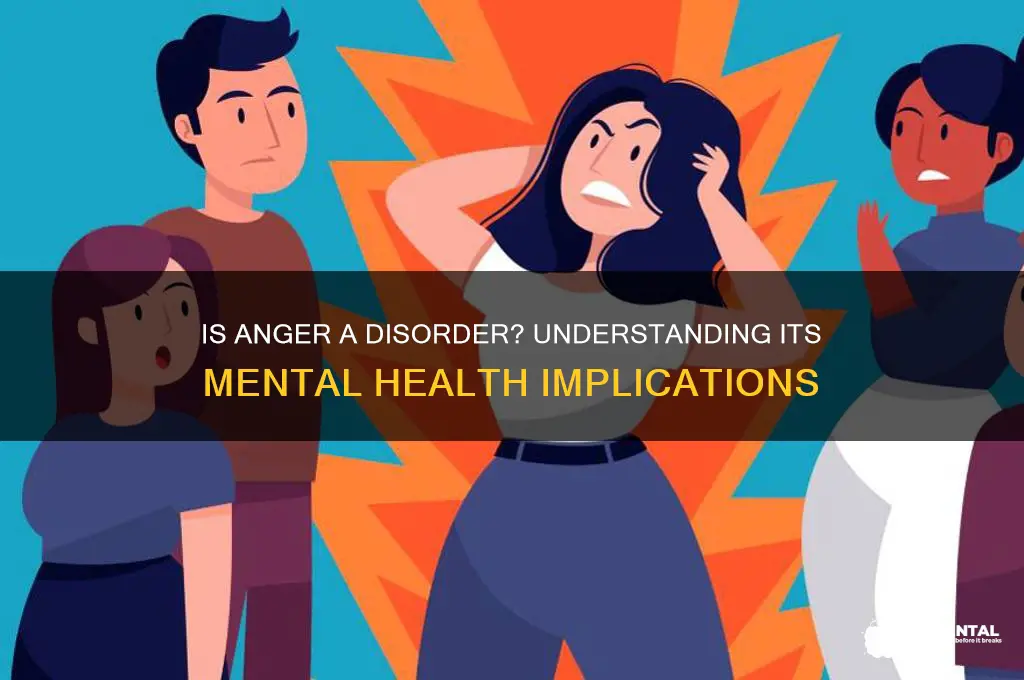
Anger issues, characterized by frequent, intense, or uncontrollable outbursts of anger, are often a subject of debate in the realm of mental health. While anger itself is a normal human emotion, persistent and disproportionate anger can significantly disrupt daily life, relationships, and overall well-being. The question of whether anger issues constitute a mental disorder is complex, as they are not explicitly classified as a standalone diagnosis in diagnostic manuals like the DSM-5 or ICD-11. However, they are frequently associated with underlying mental health conditions such as intermittent explosive disorder, borderline personality disorder, or generalized anxiety disorder. Understanding the root causes and appropriate interventions for anger issues is crucial, as untreated anger can lead to severe consequences, both personally and socially.
| Characteristics | Values |
|---|---|
| Definition | Anger issues are not a standalone mental disorder but can be a symptom of underlying conditions. |
| Associated Disorders | Intermittent Explosive Disorder (IED), Borderline Personality Disorder (BPD), Bipolar Disorder, Depression, Anxiety Disorders, PTSD. |
| Symptoms | Frequent outbursts, irritability, rage, physical aggression, verbal hostility, difficulty controlling anger, relationship strain. |
| Diagnostic Criteria (IED) | Recurrent behavioral outbursts representing a failure to control impulses, as manifested by verbal or physical aggression, causing distress or impairment. |
| Causes | Genetic predisposition, brain chemistry imbalances, environmental factors (e.g., trauma, abuse), learned behavior. |
| Treatment Options | Cognitive Behavioral Therapy (CBT), anger management classes, medication (e.g., antidepressants, mood stabilizers), mindfulness techniques. |
| Prevalence | IED affects approximately 2.7% of adults in the U.S. at some point in their lives. |
| Impact | Can lead to legal issues, damaged relationships, workplace problems, and physical health complications (e.g., hypertension, heart disease). |
| Misconception | Anger issues are often misunderstood as a lack of self-control rather than a potential sign of mental health struggles. |
| Importance of Diagnosis | Proper diagnosis is crucial to identify underlying conditions and tailor effective treatment plans. |
Explore related products



What You'll Learn
- Anger as a Symptom: Can anger indicate underlying mental health conditions like depression or anxiety
- Intermittent Explosive Disorder: Is uncontrollable anger a recognized mental disorder in diagnostic manuals
- Anger vs. Emotion Regulation: How does poor emotional regulation relate to mental health issues
- Anger and Trauma: Does unresolved trauma contribute to chronic anger problems
- Treatment Approaches: Are therapies like CBT effective for managing anger as a disorder

Anger as a Symptom: Can anger indicate underlying mental health conditions like depression or anxiety?
Anger, often dismissed as a fleeting emotion, can be a red flag signaling deeper mental health struggles. While it’s a normal response to frustration or injustice, persistent or explosive anger may indicate underlying conditions like depression or anxiety. For instance, individuals with depression sometimes express their emotional pain through irritability or anger rather than sadness. Similarly, those with anxiety may lash out when overwhelmed by stress or fear. Recognizing anger as a symptom rather than a standalone issue is crucial for addressing the root cause.
Consider the case of a 35-year-old professional who frequently snaps at colleagues and family members. On the surface, this behavior might be labeled as "anger issues," but a closer examination reveals chronic anxiety about job security and financial instability. The anger, in this case, is a maladaptive coping mechanism to mask feelings of helplessness. Therapists often use cognitive-behavioral techniques to help such individuals identify triggers and develop healthier responses, such as deep breathing or journaling, to manage both anger and anxiety.
From a persuasive standpoint, viewing anger as a symptom shifts the focus from blame to empathy. Instead of labeling someone as "difficult," it encourages a compassionate approach to understanding their struggles. For example, a teenager’s outbursts at home might stem from undiagnosed depression, where anger serves as a defense against feelings of worthlessness. Parents and caregivers can benefit from learning to ask open-ended questions like, "What’s really bothering you?" rather than reacting to the anger itself. This approach fosters trust and opens the door to seeking professional help.
Comparatively, anger as a symptom differs from anger as a primary disorder, such as Intermittent Explosive Disorder (IED), where rage is the central issue. While IED involves recurrent aggressive episodes out of proportion to the trigger, anger linked to depression or anxiety is secondary—a manifestation of another condition. For instance, someone with generalized anxiety disorder might experience anger during panic attacks due to heightened arousal. Treatment in such cases would target the anxiety, potentially involving medication like SSRIs (e.g., 20–40 mg of fluoxetine daily) alongside therapy, rather than focusing solely on anger management.
Practically, individuals can monitor their anger patterns to identify potential links to mental health conditions. Keep a journal to track when anger arises, noting accompanying emotions like sadness, worry, or fatigue. If anger consistently coincides with feelings of hopelessness or excessive worry, it may warrant a mental health evaluation. Additionally, mindfulness practices, such as progressive muscle relaxation or guided meditation, can help reduce the intensity of anger episodes while addressing the underlying stress or emotional distress. By treating anger as a symptom, individuals can move beyond surface-level management to achieve lasting mental wellness.
Supporting Loved Ones: Navigating Mental Health Challenges with Compassion and Care
You may want to see also
Explore related products


Intermittent Explosive Disorder: Is uncontrollable anger a recognized mental disorder in diagnostic manuals?
Uncontrollable anger, characterized by sudden and disproportionate outbursts, is not merely a personality quirk but a clinically recognized condition known as Intermittent Explosive Disorder (IED). Listed in the *Diagnostic and Statistical Manual of Mental Disorders, Fifth Edition* (DSM-5), IED is defined by recurrent, impulsive, and aggressive episodes that are grossly out of proportion to the situation. These episodes often result in physical assault, property damage, or verbal tirades, leaving individuals and their relationships in turmoil. Unlike general anger issues, IED is distinguished by its severity, frequency, and the inability to control impulses, making it a diagnosable mental disorder rather than a fleeting emotional state.
Diagnosing IED involves specific criteria outlined in the DSM-5. Individuals must experience at least three aggressive outbursts within a 12-month period, causing damage or injury. These episodes must also be disproportionate to the provocation and not better explained by another mental disorder, substance use, or medical condition. For example, a person who smashes furniture during a minor argument or engages in road rage incidents repeatedly may meet the criteria. Importantly, IED is not about occasional irritability but about a pattern of explosive behavior that disrupts daily functioning and relationships.
Treatment for IED often combines medication and psychotherapy. Cognitive Behavioral Therapy (CBT) is a cornerstone, teaching individuals to identify triggers, manage stress, and develop healthier coping mechanisms. Medications such as selective serotonin reuptake inhibitors (SSRIs), mood stabilizers like lithium, or anti-convulsants may be prescribed to reduce aggression and impulsivity. For instance, fluoxetine (20–60 mg/day) has shown efficacy in some cases. However, treatment must be tailored to the individual, and adherence to therapy is crucial for long-term management.
One of the challenges in addressing IED is the stigma surrounding anger issues, often dismissed as a lack of self-control rather than a legitimate disorder. This misconception can delay diagnosis and treatment, exacerbating the problem. Education and awareness are vital to encourage individuals to seek help without fear of judgment. For instance, support groups or online resources can provide a safe space for individuals to share experiences and strategies, fostering a sense of community and understanding.
In conclusion, Intermittent Explosive Disorder is a recognized mental disorder with clear diagnostic criteria and evidence-based treatments. It underscores the importance of viewing uncontrollable anger not as a moral failing but as a condition deserving of empathy and professional intervention. By acknowledging IED’s legitimacy, we can improve outcomes for those affected and reduce the societal impact of unchecked aggression. Practical steps, such as early assessment and consistent treatment, can transform lives and relationships, proving that even the most explosive anger can be managed effectively.
Preparing for Mental Health Challenges: A Comprehensive Planning Guide
You may want to see also
Explore related products




Anger vs. Emotion Regulation: How does poor emotional regulation relate to mental health issues?
Poor emotional regulation often turns fleeting anger into a chronic, destabilizing force. Unlike the adaptive anger that signals injustice or threat, dysregulated anger spirates into aggression, withdrawal, or self-sabotage. This maladaptive response stems from an overwhelmed prefrontal cortex—the brain’s "brake system"—failing to temper the amygdala’s primal fight-or-flight impulses. Over time, this pattern reinforces neural pathways that make explosive reactions feel automatic, even inevitable. For instance, a teenager repeatedly lashing out at minor criticisms may develop a default response of hostility, alienating peers and family, and cementing a cycle of isolation and resentment.
Consider the case of intermittent explosive disorder (IED), a condition characterized by disproportionate outbursts with little provocation. Research shows individuals with IED exhibit heightened activity in the amygdala and reduced connectivity to the prefrontal cortex during emotional tasks. This neurological imbalance mirrors broader deficits in emotion regulation seen in borderline personality disorder, ADHD, and PTSD. In these conditions, anger isn’t the core issue—it’s a symptom of a deeper inability to modulate distress. For example, a veteran with PTSD may explode over a misplaced item, not because the item matters, but because their dysregulated nervous system misinterprets the situation as a threat, triggering a cascade of anger.
Clinically, improving emotional regulation involves retraining the brain’s response patterns. Dialectical Behavior Therapy (DBT) teaches skills like mindfulness and distress tolerance to create a pause between stimulus and reaction. For instance, a DBT technique called "TIPP" (Temperature, Intense exercise, Paced breathing, Paired muscle relaxation) can rapidly calm the nervous system during an anger spike. Similarly, cognitive restructuring helps individuals challenge catastrophic thinking—such as assuming intentional malice behind neutral actions—that fuels disproportionate anger. Studies show these interventions reduce anger frequency and intensity in as little as 12 weeks, particularly when combined with medication like SSRIs or mood stabilizers for co-occurring conditions.
However, addressing dysregulated anger requires more than symptom management. It demands understanding the underlying causes, such as childhood trauma, chronic stress, or unmet emotional needs. For example, a child who learned to suppress anger to avoid punishment may develop passive-aggressive patterns in adulthood, where resentment festers until it erupts unpredictably. Therapies like Cognitive Processing Therapy (CPT) or Eye Movement Desensitization and Reprocessing (EMDR) can help resolve these root causes by processing traumatic memories and rebuilding emotional safety. Without this deeper work, anger interventions risk treating the smoke while ignoring the fire.
Ultimately, viewing anger through the lens of emotional regulation shifts the focus from suppression to skill-building. It’s not about eliminating anger—an impossible and unhealthy goal—but about expanding one’s emotional repertoire. Practical strategies include keeping an "anger log" to identify triggers, practicing progressive muscle relaxation daily, and setting clear boundaries to reduce resentment. For parents, modeling calm conflict resolution and teaching children emotion-labeling vocabulary ("I feel frustrated, not attacked") can prevent dysregulation from becoming ingrained. By treating anger as a signal rather than a sin, individuals can transform it from a destructive force into a catalyst for self-awareness and healthier relationships.
Healing Minds: Practical Strategies to Address and Overcome Mental Illness
You may want to see also
Explore related products

$16.16 $24.95





Anger and Trauma: Does unresolved trauma contribute to chronic anger problems?
Unresolved trauma often acts as a silent catalyst for chronic anger, embedding itself in the psyche and manifesting as explosive or simmering rage. When traumatic experiences remain unprocessed, the brain’s fight-or-flight response can become hyperactive, interpreting benign situations as threats. For instance, a person who experienced childhood abuse might react with disproportionate anger to minor criticisms, their nervous system primed to defend against perceived attacks. This isn’t merely a temperamental flaw but a survival mechanism gone awry, rooted in the brain’s attempt to protect itself from reliving past pain.
Consider the case of a combat veteran diagnosed with intermittent explosive disorder, a condition characterized by sudden, uncontrollable anger outbursts. Research shows that up to 70% of individuals with this disorder have a history of trauma. Their anger isn’t random; it’s a fragmented response to unresolved fear and helplessness. Similarly, adolescents who’ve experienced neglect may exhibit chronic anger as a mask for deep-seated insecurity. In these scenarios, anger isn’t the core issue—it’s a symptom of unhealed wounds.
To address trauma-induced anger, evidence-based therapies like Eye Movement Desensitization and Reprocessing (EMDR) and Cognitive Behavioral Therapy (CBT) are invaluable. EMDR, for example, helps reprocess traumatic memories by desensitizing the emotional charge they carry, reducing the intensity of anger triggers. Practical steps include journaling to identify patterns, practicing mindfulness to stay grounded during emotional surges, and setting boundaries to avoid retraumatization. For severe cases, medications like selective serotonin reuptake inhibitors (SSRIs) can stabilize mood, though they should complement therapy, not replace it.
A cautionary note: untreated trauma-related anger can escalate into self-destructive behaviors, strained relationships, or even legal consequences. It’s not about suppressing anger but understanding its origins. For instance, a 35-year-old woman who struggled with road rage discovered through therapy that her anger stemmed from a car accident she witnessed as a child. Once she processed the trauma, her outbursts subsided. This underscores the importance of professional intervention—anger management alone is insufficient if trauma is the root cause.
In conclusion, chronic anger is often a language of unresolved trauma, a cry for healing masked as aggression. By addressing the underlying trauma through targeted therapies and self-awareness practices, individuals can dismantle the cycle of anger and reclaim emotional equilibrium. The takeaway is clear: anger isn’t the enemy—unresolved trauma is. Recognizing this distinction is the first step toward lasting change.
Navigating Mental Health Reporting: A Comprehensive Guide to Seeking Help
You may want to see also
Explore related products


$6.69 $15.99



Treatment Approaches: Are therapies like CBT effective for managing anger as a disorder?
Anger, when persistent and disruptive, is often classified under conditions like Intermittent Explosive Disorder (IED) in the DSM-5, making it a diagnosable mental health issue. For those grappling with such challenges, Cognitive Behavioral Therapy (CBT) emerges as a frontline treatment, backed by decades of research. CBT targets the cognitive distortions that fuel anger, replacing automatic negative thoughts with adaptive responses. A typical CBT program for anger management spans 8 to 16 sessions, focusing on techniques like cognitive restructuring, relaxation training, and problem-solving skills. Studies show that 70-80% of participants report significant symptom reduction post-treatment, with effects often sustained at 6-month follow-ups.
However, CBT’s effectiveness isn’t universal. Individual factors like comorbid conditions (e.g., depression or substance abuse) or trauma history can complicate outcomes. For instance, individuals with PTSD may find anger-provoking situations triggering, requiring integrated trauma-focused therapies alongside CBT. Additionally, adherence to homework assignments—a cornerstone of CBT—varies widely. Clients who actively practice skills outside sessions, such as journaling anger triggers or rehearsing coping statements, tend to achieve better results. Group therapy formats, often more accessible and affordable, have shown comparable efficacy to individual sessions, particularly for those seeking peer support.
For adolescents and children, CBT is adapted to include simpler language and interactive elements like role-playing or games. Programs like the *Anger Control Training for Adolescents* incorporate parental involvement, recognizing that family dynamics often influence anger expression. In contrast, older adults may benefit from shorter, more structured sessions due to cognitive or physical limitations. Digital CBT platforms, such as smartphone apps or online modules, offer flexibility but lack the personalized feedback of in-person therapy, making them better suited as adjuncts rather than standalone treatments.
While CBT is evidence-based, it’s not the only viable approach. Dialectical Behavior Therapy (DBT), originally designed for borderline personality disorder, includes anger regulation as a core module and has shown promise in reducing aggressive outbursts. Mindfulness-based interventions, often integrated into CBT, teach individuals to observe anger without reacting impulsively. Pharmacotherapy, though less commonly prescribed, may be considered for severe cases; for example, selective serotonin reuptake inhibitors (SSRIs) can mitigate irritability in IED. However, medication alone rarely addresses the behavioral and cognitive patterns CBT targets.
In practice, successful anger management often requires a tailored approach. Clinicians might combine CBT with relaxation techniques like progressive muscle relaxation or biofeedback, which teach physiological control. For individuals resistant to traditional therapy, brief interventions like the *Anger Management 101* workbook or single-session anger management classes can provide foundational tools. Ultimately, the key to CBT’s effectiveness lies in its structured yet adaptable framework, empowering individuals to reframe anger not as an uncontrollable force, but as a manageable response shaped by learned strategies.
Professional Language for Discussing Mental Health Issues in the Workplace
You may want to see also
Frequently asked questions
Anger issues themselves are not classified as a standalone mental disorder in diagnostic manuals like the DSM-5 or ICD-11. However, they can be a symptom of underlying mental health conditions such as Intermittent Explosive Disorder (IED), depression, anxiety, or bipolar disorder.
Yes, anger issues can be a key symptom of Intermittent Explosive Disorder (IED), a mental health condition characterized by recurrent, impulsive, and aggressive outbursts that are disproportionate to the situation. IED is recognized as a diagnosable disorder.
No, anger issues are not always tied to a mental health problem. They can also stem from situational factors, such as stress, trauma, substance abuse, or learned behaviors. However, persistent and uncontrollable anger may warrant evaluation for underlying mental health concerns.
Yes, anger issues can be effectively treated, especially when they are part of a mental disorder. Treatment options include therapy (e.g., cognitive-behavioral therapy, anger management), medication, and lifestyle changes. Addressing the underlying condition is crucial for long-term management.