Caleb Wright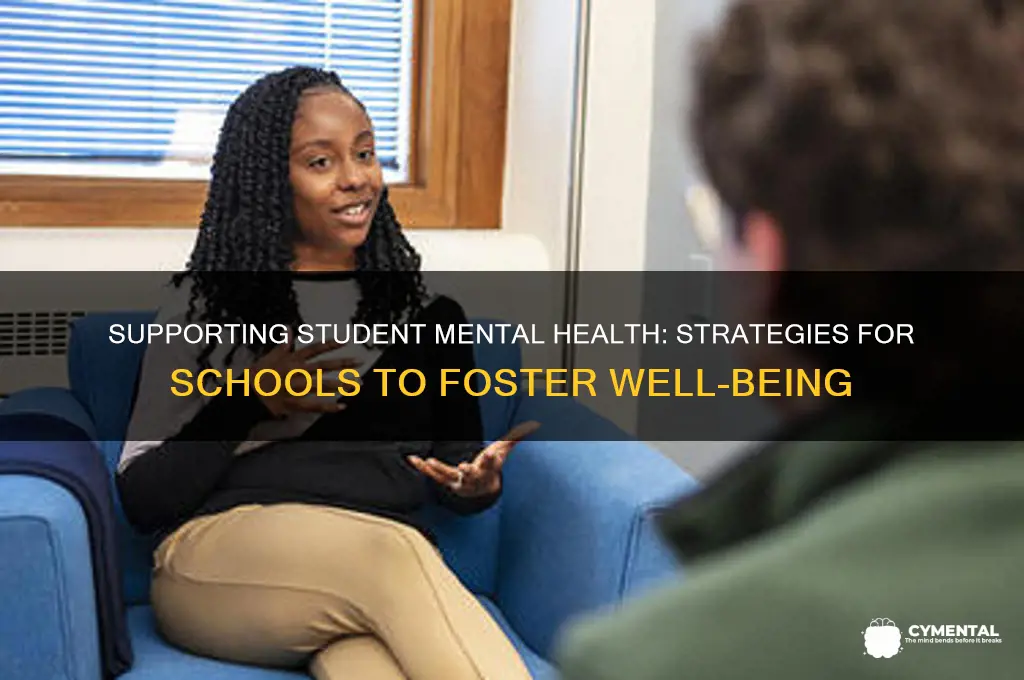
Addressing mental health issues in schools is crucial for fostering a supportive and inclusive learning environment where students can thrive academically, emotionally, and socially. With the increasing prevalence of anxiety, depression, and stress among young people, schools play a pivotal role in early intervention and prevention. Strategies such as integrating mental health education into curricula, training teachers and staff to recognize warning signs, and providing access to professional counseling services can significantly impact student well-being. Additionally, creating safe spaces for open dialogue, promoting peer support programs, and fostering a culture of empathy and understanding can help reduce stigma and encourage students to seek help when needed. By prioritizing mental health, schools can empower students to build resilience, develop coping skills, and achieve their full potential.
Explore related products


What You'll Learn
- Early Detection Signs: Train staff to recognize subtle changes in behavior, attendance, and academic performance
- Safe Spaces Creation: Establish quiet, supportive areas for students to express emotions without judgment
- Peer Support Programs: Implement student-led groups to foster connection, empathy, and shared coping strategies
- Curriculum Integration: Teach stress management, emotional regulation, and resilience as part of health education
- Professional Resources Access: Partner with counselors, therapists, and mental health organizations for on-site or virtual support

Early Detection Signs: Train staff to recognize subtle changes in behavior, attendance, and academic performance
Subtle shifts in a student’s behavior, attendance, or academic performance often precede more severe mental health struggles. These changes can be as minor as a consistent dip in grades, increased irritability, or unexplained absences. Yet, without trained eyes, such signs are easily dismissed as typical adolescent behavior. Early detection hinges on staff who can discern these patterns, transforming schools into proactive rather than reactive environments.
Training should focus on equipping educators with a checklist of observable indicators. For instance, a student who suddenly stops participating in class discussions, withdraws from social activities, or exhibits persistent fatigue may be signaling distress. Attendance records can also reveal red flags: frequent tardiness, unexcused absences, or a pattern of leaving early. Academic performance metrics, such as missed assignments or a sudden decline in test scores, should trigger concern when paired with other behavioral changes. Staff must learn to triangulate these data points, avoiding the trap of attributing them to laziness or disinterest.
A comparative approach can illustrate the importance of this training. Consider two scenarios: In School A, untrained staff overlook a student’s gradual disengagement, mistaking it for typical teenage moodiness. In School B, trained staff notice the same behavior, initiate a conversation, and connect the student to support services. The outcome? School A’s student spirals into isolation, while School B’s receives timely intervention. This contrast underscores the transformative potential of early detection.
Practical implementation requires a structured program. Workshops should include role-playing scenarios, case studies, and collaboration with mental health professionals. For example, a session might simulate recognizing signs in a hypothetical student who transitions from being a high achiever to missing deadlines. Staff should also learn to document observations objectively, using tools like behavior tracking sheets or digital platforms. Schools could adopt a tiered system: Tier 1 involves general awareness training for all staff, Tier 2 focuses on specialized training for counselors and administrators, and Tier 3 ensures collaboration with external mental health providers.
Cautions must accompany these efforts. Staff training should emphasize empathy and confidentiality to avoid stigmatizing students. Over-surveillance or misinterpretation of behaviors can erode trust, so educators must balance vigilance with sensitivity. Additionally, training should be ongoing, as mental health trends and student needs evolve. Schools should allocate resources for annual refresher courses and provide access to expert consultations when needed.
In conclusion, early detection is not about diagnosing students but about fostering a culture of awareness and support. By training staff to recognize subtle changes, schools can intervene before minor issues escalate into crises. This approach not only safeguards individual students but also strengthens the overall well-being of the school community.
Navigating Termination with Compassion: Supporting Employees with Mental Health Challenges
You may want to see also
Explore related products


Safe Spaces Creation: Establish quiet, supportive areas for students to express emotions without judgment
Students often struggle to find a place where they can openly express their emotions without fear of ridicule or misunderstanding. Creating safe spaces within schools addresses this critical need by offering designated areas where students can feel heard, supported, and validated. These spaces are not just physical locations but environments carefully designed to foster emotional well-being. For instance, a quiet corner in the library equipped with comfortable seating, soft lighting, and calming resources like journals or mindfulness tools can serve as a sanctuary for overwhelmed students. Such areas signal to students that their emotional health is a priority, encouraging them to seek help when needed.
To establish these safe spaces effectively, schools must consider both the physical and emotional elements involved. Start by identifying underutilized areas—such as empty classrooms, corners of the cafeteria, or outdoor benches—that can be transformed into quiet zones. Equip these spaces with essentials like tissues, stress-relief items (e.g., fidget toys or stress balls), and inspirational quotes or artwork. Additionally, ensure privacy by using room dividers or curtains, and clearly mark the area as a judgment-free zone with signage like "Take a Breath" or "You Are Not Alone." For younger students (ages 6–12), incorporate colorful, playful elements, while for teenagers (ages 13–18), focus on creating a more subdued, mature atmosphere.
One common challenge in creating safe spaces is ensuring they are accessible and inclusive for all students. Train staff members, including teachers, counselors, and administrators, to promote these areas without stigmatizing their use. For example, instead of singling out a student by suggesting they "go to the calm corner," normalize the space by encouraging its use during transitions or free periods. Peer involvement can also enhance inclusivity; consider training student volunteers to act as "safe space ambassadors" who can guide peers to the area and provide basic emotional support. However, caution against over-relying on peers for counseling roles—professional mental health resources should always be the primary referral.
The impact of safe spaces extends beyond immediate emotional relief. By providing a structured environment for students to process their feelings, these areas can reduce classroom disruptions, improve focus, and foster a culture of empathy. A study by the American School Counselor Association found that schools with designated safe spaces reported a 20% increase in students seeking mental health support voluntarily. This highlights the importance of not only creating these spaces but also actively promoting their availability and purpose. Schools can amplify their effectiveness by integrating them into broader mental health initiatives, such as mindfulness programs or emotional intelligence workshops.
In conclusion, safe spaces are more than just rooms or corners—they are lifelines for students navigating the complexities of adolescence. By thoughtfully designing and implementing these areas, schools can create environments where students feel empowered to express themselves authentically. Start small, involve the school community, and measure success not just by usage but by the overall shift in how mental health is perceived and addressed. With dedication and creativity, safe spaces can become a cornerstone of supportive school cultures, proving that sometimes, the quietest places make the loudest impact.
Unveiling Stigma: How Society Treats Mental Health Struggles
You may want to see also
Explore related products


Peer Support Programs: Implement student-led groups to foster connection, empathy, and shared coping strategies
Students often feel more comfortable confiding in peers than adults, making peer support programs a powerful tool for addressing mental health in schools. These programs leverage the natural bonds and shared experiences of students to create safe spaces for connection, empathy, and mutual support. By training and empowering student leaders, schools can foster a culture of openness and resilience, reducing stigma and encouraging early intervention.
Consider the structure: Peer support groups should meet regularly, ideally weekly for 30–45 minutes, during lunch periods, study halls, or after school. Groups of 8–12 students, led by 2–3 trained peer mentors, allow for meaningful interaction without overwhelming participants. Mentors, typically juniors or seniors, undergo 12–16 hours of training covering active listening, confidentiality, boundary-setting, and crisis response protocols. Schools should partner with mental health professionals to design curricula and provide ongoing supervision for mentors.
The benefits are twofold: Participants gain coping strategies, emotional validation, and a sense of belonging, while mentors develop leadership skills, empathy, and a deeper understanding of mental health. For example, a high school in Oregon implemented a peer support program where mentors facilitated discussions on stress management, self-care, and academic pressure. Over one semester, participants reported a 25% increase in feelings of social support and a 15% decrease in perceived stress levels.
However, challenges exist. Ensuring confidentiality while maintaining safety requires clear guidelines and regular check-ins with school counselors. Mentors must be carefully selected and supported to avoid burnout or vicarious trauma. Schools should also provide alternative resources for students who prefer adult-led interventions or require specialized care.
When implemented thoughtfully, peer support programs become a cornerstone of school-based mental health initiatives. They not only address immediate needs but also cultivate a generation of compassionate, resilient individuals equipped to navigate life’s challenges. By investing in student leaders and creating structured yet flexible spaces for connection, schools can transform the way mental health is understood and supported.
Supporting Your Child’s Mental Health: Practical Strategies for Parents
You may want to see also
Explore related products


Curriculum Integration: Teach stress management, emotional regulation, and resilience as part of health education
Stress, anxiety, and emotional overwhelm are increasingly common among students, yet many lack the tools to manage these challenges effectively. Integrating stress management, emotional regulation, and resilience into health education curricula can transform these subjects from abstract concepts into actionable skills. By embedding these topics within existing lessons, schools can normalize discussions around mental health and equip students with lifelong coping strategies. For instance, a middle school health class could dedicate 30 minutes weekly to mindfulness exercises, deep breathing techniques, and emotional check-ins, ensuring consistent practice without overwhelming the schedule.
Consider the structure of such integration: start with age-appropriate language and activities. Elementary students might benefit from storytelling and role-playing to identify emotions, while high schoolers could analyze case studies on stress triggers and practice cognitive reframing. Pairing these lessons with physical education can reinforce the mind-body connection, such as teaching progressive muscle relaxation alongside yoga poses. Schools should also provide teachers with professional development on mental health literacy to ensure confident and accurate instruction.
One caution: avoid treating these lessons as one-off workshops. For maximum impact, they must be woven into the fabric of the curriculum, revisited periodically, and reinforced through school-wide initiatives. For example, a "Resilience Week" could feature guest speakers, peer-led activities, and take-home resources for families. However, be mindful of overloading students with information; focus on a few key strategies they can realistically apply, like the 4-7-8 breathing technique or the STOP (Stop, Take a breath, Observe, Proceed) method for emotional regulation.
The takeaway is clear: curriculum integration isn’t just about adding content—it’s about fostering a culture of mental wellness. When students learn to identify stress early, regulate their emotions, and bounce back from setbacks, they’re better equipped to handle academic pressures and personal challenges. Schools that prioritize this approach send a powerful message: mental health is as essential as physical health, and both deserve equal attention in education. By making these skills a core part of learning, we empower students to thrive, not just survive, in an increasingly complex world.
Navigating a Compassionate Breakup with a Partner Facing Mental Health Challenges
You may want to see also
Explore related products


Professional Resources Access: Partner with counselors, therapists, and mental health organizations for on-site or virtual support
Schools often lack the specialized staff to address the growing mental health needs of their students. Partnering with external professionals—counselors, therapists, and mental health organizations—can bridge this gap, providing on-site or virtual support tailored to student needs. For instance, a weekly visit from a licensed therapist to conduct group sessions or individual counseling can create a safe space for students to express themselves. Similarly, virtual platforms can connect students with professionals in real-time, ensuring accessibility even in remote or underserved areas. This approach not only addresses immediate concerns but also normalizes seeking help, fostering a culture of mental wellness.
Implementing such partnerships requires careful planning. Start by assessing the specific needs of your student body through surveys, focus groups, or consultations with teachers and parents. Identify local mental health organizations or private practitioners willing to collaborate, ensuring they have experience working with the relevant age groups—elementary, middle, or high school students. Establish clear agreements regarding the frequency of visits, the scope of services, and confidentiality protocols. For virtual support, invest in secure, user-friendly platforms that comply with privacy laws like FERPA. Training school staff to recognize signs of mental distress and refer students to these resources is equally crucial.
One effective model is the integration of mental health professionals into the school’s multidisciplinary team. For example, a school social worker could collaborate with an external therapist to develop individualized plans for students with severe anxiety or depression. In rural areas, telehealth services can provide consistent support without the logistical challenges of in-person visits. Schools can also host workshops led by mental health experts to educate students on topics like stress management, emotional regulation, and resilience-building. These initiatives not only address current issues but also equip students with lifelong coping skills.
While the benefits are clear, challenges exist. Funding is often a barrier, but schools can explore grants, community donations, or partnerships with nonprofits to offset costs. Ensuring cultural competency among external professionals is another critical factor, as students from diverse backgrounds may require tailored approaches. Regular feedback loops—involving students, parents, and staff—can help refine the program and ensure it meets evolving needs. By prioritizing professional resources, schools can transform into environments that nurture both academic and emotional growth.
How to Discuss Mental Health Concerns with Your Doctor Effectively
You may want to see also
Frequently asked questions
Schools can identify students by training staff to recognize signs such as changes in behavior, academic performance, or social interactions. Regular check-ins, anonymous reporting systems, and collaboration with school counselors or mental health professionals can also help identify students in need.
Schools can implement strategies like providing access to counseling services, offering mental health education in curricula, fostering a supportive and inclusive school environment, and promoting stress-reduction activities such as mindfulness or physical education programs.
Parents and educators can collaborate by maintaining open communication, sharing observations about a student’s behavior, and attending workshops or training sessions on mental health awareness. Together, they can advocate for resources and policies that prioritize student well-being.