Lucas Bennett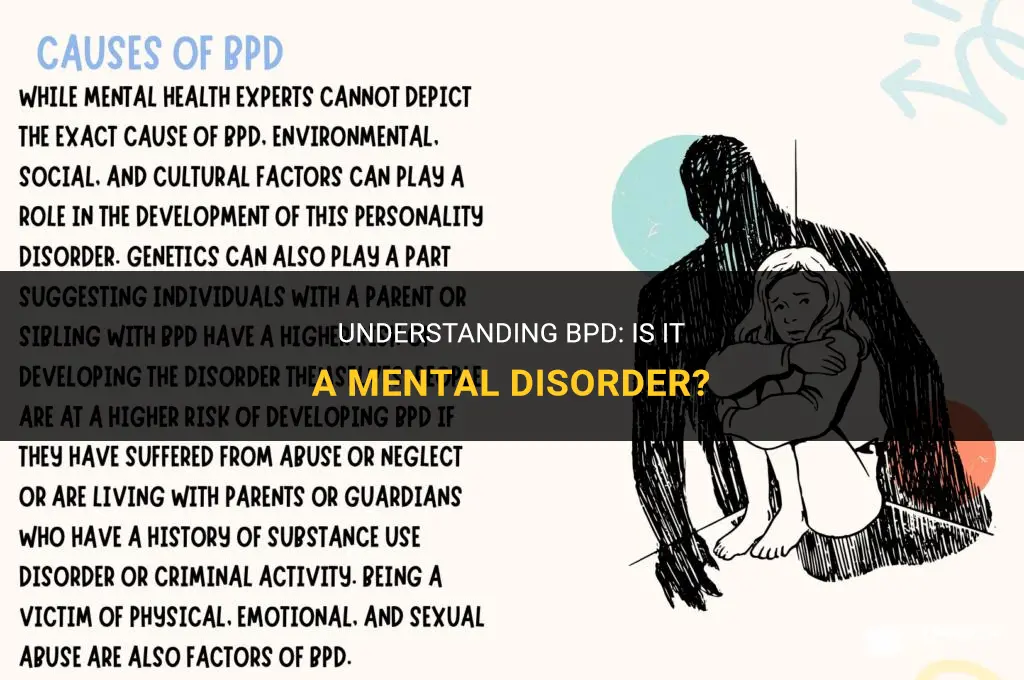
Borderline Personality Disorder (BPD) is a complex and often misunderstood mental health condition characterized by intense emotional instability, impulsive behavior, and a pervasive pattern of unstable relationships. Individuals with BPD may experience rapid mood swings, ranging from deep depression to intense anger or anxiety, often in response to minor triggers. This emotional volatility can lead to difficulties in maintaining stable employment, relationships, and a sense of self-identity. Despite its prevalence, BPD remains stigmatized, with many sufferers facing misconceptions and inadequate support. Understanding BPD as a legitimate mental disorder is crucial for promoting empathy, awareness, and access to effective treatment options.
Explore related products

$14.2 $24.95



What You'll Learn
- Definition and Diagnosis: Understanding BPD's criteria in the DSM-5 and its clinical diagnosis
- Symptoms and Behaviors: Exploring the emotional and behavioral patterns characteristic of BPD
- Causes and Risk Factors: Investigating the genetic, environmental, and psychological factors contributing to BPD
- Treatment Options: Discussing therapeutic approaches, medications, and support systems for managing BPD
- Stigma and Misconceptions: Addressing common myths and the societal impact of BPD stigma

Definition and Diagnosis: Understanding BPD's criteria in the DSM-5 and its clinical diagnosis
The Diagnostic and Statistical Manual of Mental Disorders, Fifth Edition (DSM-5) provides a comprehensive framework for the diagnosis of mental health conditions, including Borderline Personality Disorder (BPD). According to the DSM-5, BPD is characterized by a pervasive pattern of instability in interpersonal relationships, self-image, and emotions, beginning by early adulthood and present in a variety of contexts.
To diagnose BPD, mental health professionals look for specific criteria outlined in the DSM-5. These criteria include:
- Frantic efforts to avoid real or imagined abandonment.
- A pattern of unstable and intense interpersonal relationships characterized by alternating between extremes of idealization and devaluation.
- Identity disturbance: markedly and persistently unstable self-image or sense of self.
- Impulsivity in at least two areas that are potentially self-damaging (e.g., spending, sex, substance abuse, reckless driving, binge eating).
- Recurrent suicidal behavior, gestures, or threats, or self-mutilating behavior.
- Emotional instability due to a marked reactivity of mood (e.g., intense episodic dysphoria, irritability, or anxiety).
- Chronic feelings of emptiness.
- Inappropriate, intense anger or difficulty controlling anger.
Clinically, diagnosing BPD involves a thorough assessment of the individual's symptoms, history, and current circumstances. Mental health professionals use a combination of interviews, questionnaires, and observation to gather information. The diagnosis is typically made by a psychiatrist or a psychologist with expertise in personality disorders.
It's important to note that BPD is a complex disorder, and its diagnosis can be challenging. The symptoms often overlap with those of other mental health conditions, such as depression, anxiety, and post-traumatic stress disorder (PTSD). Therefore, a comprehensive evaluation is crucial to ensure an accurate diagnosis and appropriate treatment plan.
Understanding the Most Debilitating Mental Health Conditions
You may want to see also
Explore related products




Symptoms and Behaviors: Exploring the emotional and behavioral patterns characteristic of BPD
Individuals with Borderline Personality Disorder (BPD) often exhibit a range of emotional and behavioral patterns that can significantly impact their daily lives and relationships. One of the hallmark symptoms is emotional dysregulation, characterized by intense and rapidly shifting emotions. This can manifest as sudden outbursts of anger, deep feelings of sadness or emptiness, and a pervasive sense of anxiety or fear. These emotional fluctuations can be triggered by seemingly minor events or interactions, leading to a heightened sense of reactivity and impulsivity.
Impulsive behaviors are another common feature of BPD. These can include reckless spending, substance abuse, binge eating, or risky sexual behaviors. Such actions are often driven by a desire to alleviate emotional distress or to seek stimulation, but they can also lead to further problems and regrets. Additionally, individuals with BPD may struggle with self-harm or suicidal ideation, particularly during times of intense emotional turmoil. These behaviors serve as maladaptive coping mechanisms and can result in significant physical and emotional consequences.
Interpersonal difficulties are also a key aspect of BPD. Individuals may experience intense and unstable relationships, marked by a pattern of idealization and devaluation of others. They may quickly form deep emotional connections with new people, only to later feel betrayed or abandoned when the relationship does not meet their expectations. This can lead to a cycle of conflict and reconciliation, causing distress for both the individual with BPD and their loved ones. Furthermore, individuals with BPD may struggle with a sense of identity, often feeling uncertain about their values, goals, or sense of self.
Cognitive distortions can also play a role in BPD. Individuals may experience black-and-white thinking, where they view situations or people as either entirely good or entirely bad. This can lead to a lack of nuance and flexibility in their perceptions, contributing to interpersonal conflicts and emotional dysregulation. Additionally, individuals with BPD may be prone to catastrophizing, where they anticipate the worst-case scenario in response to minor setbacks or stressors.
Treatment for BPD often involves addressing these emotional and behavioral patterns through various therapeutic approaches. Dialectical Behavior Therapy (DBT) is one such approach that has been shown to be effective in helping individuals with BPD develop skills for emotional regulation, distress tolerance, and interpersonal effectiveness. Medications may also be used to help manage symptoms, particularly in cases where co-occurring conditions such as depression or anxiety are present.
In conclusion, the emotional and behavioral patterns characteristic of BPD can be complex and challenging, but with the right treatment and support, individuals can learn to manage their symptoms and improve their overall quality of life. It is essential to approach treatment with a comprehensive understanding of the disorder and a commitment to addressing the unique needs of each individual.
Exploring the Mental Health of King George: A Historical Analysis
You may want to see also
Explore related products





Causes and Risk Factors: Investigating the genetic, environmental, and psychological factors contributing to BPD
Borderline Personality Disorder (BPD) is a complex mental health condition that arises from a combination of genetic, environmental, and psychological factors. Research indicates that individuals with a family history of BPD are at a higher risk of developing the disorder, suggesting a genetic predisposition. Studies have identified specific genes, such as those involved in the regulation of serotonin and dopamine, that may contribute to the development of BPD. However, genetic factors alone do not account for the entirety of the disorder's etiology.
Environmental factors also play a significant role in the development of BPD. Adverse childhood experiences, such as physical or emotional abuse, neglect, or trauma, have been linked to an increased risk of developing the disorder. These experiences can lead to long-lasting changes in brain structure and function, particularly in areas responsible for emotional regulation and impulse control. Additionally, individuals who have experienced significant stress or trauma in adulthood may also be at risk of developing BPD.
Psychological factors, such as cognitive and emotional vulnerabilities, can also contribute to the development of BPD. Individuals with BPD often struggle with emotional dysregulation, which can lead to intense mood swings and impulsive behaviors. They may also have difficulties with cognitive flexibility, which can make it challenging to adapt to changing circumstances. These psychological factors can interact with genetic and environmental factors to create a perfect storm that increases the risk of developing BPD.
It is important to note that BPD is not caused by any single factor, but rather by a complex interplay of genetic, environmental, and psychological influences. Understanding these factors can help clinicians develop more effective treatment strategies and interventions to help individuals manage their symptoms and improve their quality of life.
Exploring the Possibilities: Can Mental Disorders Be Cured?
You may want to see also
Explore related products



Treatment Options: Discussing therapeutic approaches, medications, and support systems for managing BPD
Dialectical Behavior Therapy (DBT) is a cornerstone in the treatment of Borderline Personality Disorder (BPD). Developed by Dr. Marsha Linehan, DBT combines cognitive-behavioral techniques with mindfulness practices to help individuals manage emotional dysregulation, self-harm behaviors, and interpersonal difficulties. The therapy is structured around four core modules: mindfulness, distress tolerance, emotion regulation, and interpersonal effectiveness. Each module provides specific skills and strategies that individuals can apply in their daily lives to improve their emotional well-being and relationships.
Medication can also play a crucial role in managing BPD symptoms. While there is no single medication specifically approved for BPD, various psychiatric drugs may be prescribed to target specific symptoms. For instance, mood stabilizers like lithium or valproate can help regulate emotional swings, while antidepressants may be used to address co-occurring depression. Antipsychotic medications might be prescribed to manage severe emotional dysregulation or dissociation. It is essential for individuals to work closely with their healthcare provider to find the most effective medication regimen, as responses to drugs can vary widely.
In addition to DBT and medication, support systems are vital for individuals with BPD. Peer support groups, family therapy, and online communities can provide a sense of connection and understanding, reducing feelings of isolation and stigma. These support systems can also offer practical advice and encouragement, helping individuals navigate the challenges of managing BPD in their daily lives. Furthermore, integrating holistic approaches such as yoga, meditation, and art therapy can complement traditional treatments, promoting overall well-being and stress reduction.
When considering treatment options for BPD, it is important to recognize that each individual's journey is unique. What works for one person may not work for another, and a combination of approaches is often necessary to achieve optimal results. A comprehensive treatment plan should be tailored to the individual's specific needs and goals, taking into account their personal preferences, strengths, and challenges. By working collaboratively with healthcare providers and support networks, individuals with BPD can develop the skills and strategies needed to manage their symptoms and improve their quality of life.
Aging and Mental Health: Do Disorders Intensify Over Time?
You may want to see also
Explore related products


$16.19 $19.99


Stigma and Misconceptions: Addressing common myths and the societal impact of BPD stigma
Stigma and misconceptions surrounding Borderline Personality Disorder (BPD) significantly impact individuals diagnosed with the condition and hinder their access to effective treatment and support. One common myth is that people with BPD are inherently manipulative or attention-seeking. This misconception stems from a misunderstanding of the disorder's symptoms, such as intense emotional responses and a fear of abandonment, which can lead to behaviors that may be perceived as manipulative. However, these behaviors are often a coping mechanism for dealing with overwhelming emotions and a deep-seated fear of being alone.
Another prevalent myth is that BPD is not a "real" mental disorder, but rather a character flaw or a result of poor parenting. This misconception undermines the validity of the disorder and dismisses the very real struggles that individuals with BPD face. BPD is a recognized mental health condition with specific diagnostic criteria, and it is essential to acknowledge its legitimacy to provide appropriate support and treatment.
The societal impact of BPD stigma is far-reaching, affecting not only individuals with the disorder but also their families and communities. Stigma can lead to social isolation, discrimination, and a lack of understanding from others, which can exacerbate the symptoms of BPD and make it more challenging for individuals to seek help. Furthermore, stigma can influence the way healthcare professionals perceive and treat individuals with BPD, potentially leading to inadequate care and a lack of empathy.
Addressing these myths and misconceptions is crucial in reducing the stigma associated with BPD. Education and awareness campaigns can help dispel these myths and promote a better understanding of the disorder. By fostering a more compassionate and informed society, we can create an environment where individuals with BPD feel supported and encouraged to seek the help they need.
In conclusion, stigma and misconceptions surrounding BPD have a profound impact on individuals and society as a whole. By addressing these myths and promoting a better understanding of the disorder, we can work towards reducing the stigma and creating a more supportive and inclusive environment for those affected by BPD.
Unraveling the Complexity: Phobias and Their Place in Mental Health
You may want to see also
Frequently asked questions
Yes, Borderline Personality Disorder (BPD) is classified as a mental disorder. It is characterized by difficulties in regulating emotions, impulsive behaviors, and unstable relationships.
The main symptoms of BPD include intense emotional swings, impulsivity, self-harming behaviors, fear of abandonment, and unstable interpersonal relationships. Individuals with BPD may also experience dissociation and have a distorted sense of self.
BPD is typically diagnosed by a mental health professional through a combination of clinical interviews, psychological assessments, and sometimes input from family members or friends. The Diagnostic and Statistical Manual of Mental Disorders (DSM-5) provides specific criteria that must be met for a diagnosis of BPD.
Treatments for BPD include psychotherapy, such as Dialectical Behavior Therapy (DBT) and Cognitive Behavioral Therapy (CBT), as well as medication to manage symptoms. In some cases, hospitalization may be necessary to ensure safety. Therapeutic approaches often focus on helping individuals with BPD develop emotional regulation skills and improve their relationships.