Ava Ramirez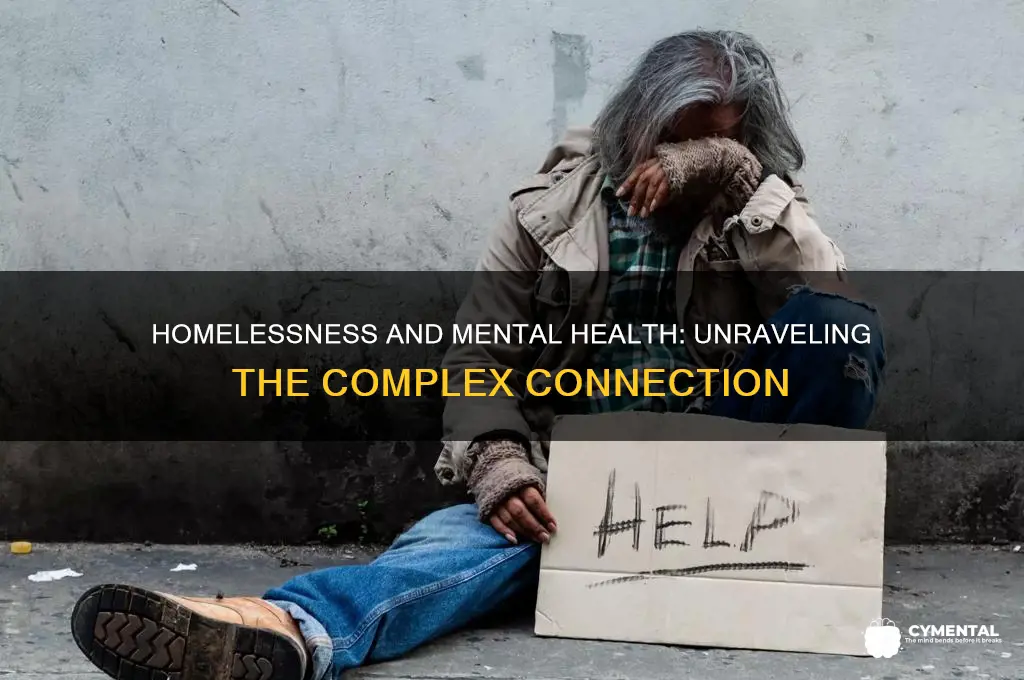
Homelessness and mental health are deeply interconnected issues, often forming a complex cycle that exacerbates both conditions. While not all individuals experiencing homelessness have mental health disorders, a significant portion face challenges such as depression, anxiety, schizophrenia, or post-traumatic stress disorder (PTSD). These conditions can both contribute to and result from homelessness, as the stress of living without stable housing can worsen mental health, while pre-existing mental health issues may hinder an individual’s ability to maintain employment or housing. Additionally, systemic barriers, lack of access to affordable healthcare, and societal stigma further complicate efforts to address this intersection. Understanding whether homelessness is inherently a mental health issue requires examining the broader social, economic, and structural factors that perpetuate both crises.
| Characteristics | Values |
|---|---|
| Prevalence of Mental Illness Among Homeless | Approximately 20-25% of the homeless population in the United States lives with a serious mental health condition (e.g., schizophrenia, bipolar disorder, major depression), compared to about 4% of the general population (Source: National Alliance to End Homelessness, 2023). |
| Substance Use Disorders | Over 50% of homeless individuals with mental illness also struggle with substance use disorders, often as a coping mechanism (Source: Substance Abuse and Mental Health Services Administration, 2022). |
| Trauma and Homelessness | 70% of homeless individuals report experiencing trauma, which significantly increases the risk of developing mental health issues (Source: National Coalition for the Homeless, 2023). |
| Access to Mental Health Services | Only 30-40% of homeless individuals with mental illness receive adequate treatment due to barriers like lack of insurance, stigma, and limited availability of services (Source: U.S. Department of Housing and Urban Development, 2023). |
| Housing as a Solution | Permanent supportive housing reduces psychiatric symptoms and hospitalizations by up to 50% among homeless individuals with mental illness (Source: Journal of the American Medical Association, 2022). |
| Homelessness as a Consequence | Mental illness is a significant risk factor for homelessness, with untreated conditions often leading to job loss, social isolation, and housing instability (Source: National Alliance on Mental Illness, 2023). |
| Dual Diagnosis | Over 60% of homeless individuals with mental illness have a co-occurring substance use disorder, complicating treatment and recovery (Source: National Institute of Mental Health, 2023). |
| Impact on Physical Health | Homeless individuals with mental illness are 3-4 times more likely to experience chronic physical health conditions, further exacerbating their situation (Source: Centers for Disease Control and Prevention, 2023). |
| Stigma and Discrimination | Stigma surrounding mental illness and homelessness often prevents individuals from seeking help and accessing resources (Source: World Health Organization, 2023). |
| Cost of Inaction | The annual cost of untreated mental illness among the homeless population exceeds $50 billion in healthcare, criminal justice, and emergency services (Source: Economic Roundtable, 2023). |
Explore related products


$6.99 $25.87


What You'll Learn

Impact of Trauma on Homelessness
Trauma is a silent architect of homelessness, often laying the foundation long before individuals find themselves without shelter. Studies show that a staggering 70% of homeless individuals report experiencing significant trauma, such as childhood abuse, domestic violence, or combat exposure. This isn’t mere coincidence; trauma disrupts emotional regulation, erodes social support networks, and fosters maladaptive coping mechanisms like substance abuse, all of which increase the risk of housing instability. For example, a 2018 survey found that homeless veterans with PTSD were twice as likely to cycle in and out of shelters compared to those without trauma histories. The brain’s response to chronic stress, particularly in the amygdala and prefrontal cortex, can impair decision-making and problem-solving—critical skills for maintaining employment and housing.
Consider the case of a 32-year-old woman who became homeless after fleeing an abusive relationship. Her trauma didn’t end with her escape; it manifested as severe anxiety and flashbacks, making it impossible for her to hold a job or trust potential landlords. This example illustrates how trauma doesn’t just precede homelessness—it perpetuates it. Without targeted interventions like trauma-informed care, which integrates safety, trust, and empowerment into treatment, individuals like her remain trapped in a cycle of instability. Practical steps for providers include screening for trauma during intake, offering evidence-based therapies like Cognitive Processing Therapy (CPT), and creating environments that minimize re-traumatization, such as avoiding confrontational interactions or triggering stimuli.
To break the trauma-homelessness link, policymakers and advocates must prioritize prevention and early intervention. Schools, for instance, can implement trauma-sensitive practices for at-risk youth, such as peer support groups or mindfulness programs, to build resilience before crises escalate. For adults, housing-first models that provide stable shelter without preconditions (like sobriety) offer a critical first step, but they must be paired with accessible mental health services. A 2021 study found that homeless individuals who received consistent trauma therapy reduced their shelter stays by an average of 40%. Funding for such programs isn’t just a moral imperative—it’s cost-effective, as chronic homelessness drains public resources through emergency room visits and law enforcement involvement.
Finally, addressing trauma in homelessness requires a shift in perspective. Instead of viewing homelessness as a personal failure, it must be understood as a systemic issue rooted in unaddressed trauma. Communities can take actionable steps, such as training first responders in trauma-informed de-escalation techniques or establishing safe spaces for survivors of violence. For individuals, self-care strategies like journaling, grounding exercises, or joining support groups can help manage trauma symptoms while navigating homelessness. The takeaway is clear: treating trauma isn’t just about healing the past—it’s about building a future where housing isn’t a privilege but a right.
Understanding Down Syndrome: Mental Health Aspects and Support Strategies
You may want to see also
Explore related products


Mental Health Stigma and Access to Care
Homelessness and mental health are deeply intertwined, yet stigma often erects barriers to care that could alleviate both. Stereotypes of homelessness as a personal failure or moral shortcoming overshadow the reality that severe mental illness is a significant risk factor for becoming unhoused. Schizophrenia, bipolar disorder, and major depression, for instance, are disproportionately prevalent among homeless populations, with rates up to 15 times higher than in the general public. Despite this, societal attitudes frequently label individuals as "choosing" homelessness, ignoring the complex interplay of mental health challenges, systemic failures, and socioeconomic factors.
Consider the practical implications of stigma on access to care. A person experiencing psychosis on the street is less likely to seek help due to fear of judgment or past negative encounters with healthcare systems. Mental health services often require stable housing, identification, or insurance—resources many unhoused individuals lack. Even when services are available, the design of care models rarely accommodates the unique needs of this population. For example, traditional therapy sessions assume a private, quiet space, which is unattainable for someone living in a shelter or on the street. This mismatch perpetuates a cycle where mental health deteriorates further, making it harder to escape homelessness.
To dismantle these barriers, a multi-faceted approach is essential. First, destigmatizing campaigns must reframe homelessness as a public health issue, not a personal defect. Education initiatives can highlight the bidirectional relationship between mental illness and housing instability, fostering empathy and understanding. Second, healthcare systems need to adopt low-threshold models, such as mobile clinics or outreach programs, that meet individuals where they are—literally and figuratively. Integrating mental health services into shelters or offering drop-in counseling without preconditions can increase accessibility. Third, policy changes should prioritize housing-first initiatives, which provide stable housing without requiring sobriety or treatment compliance, allowing individuals to address mental health issues on their own terms.
A cautionary note: while increasing access to care is critical, it must be paired with culturally competent, trauma-informed practices. Many unhoused individuals have experienced systemic neglect or abuse, making trust a fragile commodity. Providers must approach care with humility, avoiding paternalistic attitudes and involving clients in decision-making. Additionally, addressing stigma requires not just changing minds but also challenging institutional biases. Funding for mental health services must be equitable, and policies must ensure that care is not contingent on housing status or ability to pay.
In conclusion, stigma is not just an attitude—it’s a structural barrier that limits access to care for homeless individuals with mental health needs. By reframing homelessness as a health issue, redesigning care models, and prioritizing equity, society can begin to untangle the knot of stigma and provide meaningful support. The goal is not just to treat mental illness but to restore dignity and agency, recognizing that housing and health are inseparable rights.
Supporting Employee Mental Health: Strategies for Compassionate Workplace Leadership
You may want to see also
Explore related products


Substance Abuse and Dual Diagnosis
Substance abuse and homelessness often form a vicious cycle, with each exacerbating the other. For individuals experiencing homelessness, the stress of unstable living conditions, lack of access to basic needs, and social isolation can drive them to use drugs or alcohol as a coping mechanism. Conversely, substance abuse can lead to job loss, strained relationships, and financial instability, ultimately resulting in homelessness. This bidirectional relationship highlights the complexity of addressing homelessness without considering the role of addiction.
Consider the case of dual diagnosis, where individuals face both a substance use disorder and a co-occurring mental health condition, such as depression, anxiety, or schizophrenia. Approximately 25-50% of homeless individuals struggle with dual diagnosis, according to the Substance Abuse and Mental Health Services Administration (SAMHSA). This overlap complicates treatment, as both conditions must be addressed simultaneously for effective recovery. For instance, a person with schizophrenia who self-medicates with methamphetamine requires integrated care that targets both their psychosis and addiction. Failure to treat one condition often leads to relapse in the other, perpetuating the cycle of homelessness.
Treating dual diagnosis in homeless populations demands a tailored approach. Harm reduction strategies, such as needle exchange programs and managed alcohol programs, can mitigate immediate health risks while building trust with individuals who may be wary of traditional treatment. Medication-assisted treatment (MAT), like methadone or buprenorphine for opioid addiction, has shown promise but requires consistent access, a challenge for those without stable housing. Pairing MAT with psychotherapy, such as cognitive-behavioral therapy (CBT), can address underlying mental health issues and teach coping skills. Housing First models, which prioritize providing stable housing before addressing addiction or mental health, have also proven effective by reducing the chaos that often fuels substance abuse.
A critical caution: stigmatizing homeless individuals with substance use disorders as "choosing" their situation undermines efforts to help them. Addiction is a chronic brain disorder, not a moral failing, and recovery requires compassion, resources, and systemic support. For example, a 30-year-old with a history of trauma-induced PTSD and heroin addiction needs trauma-informed care, not judgment. Practical tips for caregivers include offering low-barrier access to services, using non-confrontational communication, and connecting individuals with peer support groups, where shared experiences foster hope and accountability.
In conclusion, addressing substance abuse and dual diagnosis within homelessness requires a multifaceted strategy that combines medical treatment, housing solutions, and empathy. By breaking down silos between mental health, addiction, and homelessness services, communities can create pathways to recovery that honor the dignity and complexity of each individual’s journey. Without this integrated approach, the cycle of homelessness and addiction will persist, leaving thousands trapped in a system ill-equipped to meet their needs.
Breaking the Silence: Overcoming Isolation in Mental Health Struggles
You may want to see also
Explore related products





Housing as a Health Intervention
Homelessness exacerbates mental health issues, creating a cycle where instability deepens conditions like depression, anxiety, and PTSD. Housing as a health intervention disrupts this cycle by providing stability, safety, and a foundation for recovery. Research shows that individuals with stable housing are more likely to engage in mental health treatment and experience symptom reduction. For example, the Housing First model, which prioritizes permanent housing without preconditions like sobriety, has demonstrated significant improvements in mental health outcomes for chronically homeless individuals.
Implementing housing as a health intervention requires a multi-faceted approach. First, secure affordable housing options through partnerships with local governments, nonprofits, and private developers. Second, integrate mental health services into housing programs, offering on-site counseling, medication management, and crisis intervention. Third, provide wraparound supports such as case management, life skills training, and access to employment resources. For instance, a study in Seattle found that combining housing with intensive case management reduced psychiatric hospitalizations by 79% among participants.
Critics argue that housing alone cannot solve complex mental health issues, but evidence suggests otherwise. Stable housing acts as a "dosage" of security, reducing stress and enabling individuals to focus on their mental well-being. A 2019 meta-analysis revealed that housed individuals were 30% more likely to adhere to psychiatric medication regimens compared to those experiencing homelessness. Practical tips for providers include conducting regular mental health screenings, fostering a trauma-informed environment, and ensuring staff are trained in de-escalation techniques.
Comparatively, traditional approaches that condition housing on treatment compliance often fail because they overlook the immediate need for stability. Housing First, in contrast, addresses the root problem of homelessness first, allowing mental health interventions to follow more effectively. For example, in Finland, this approach reduced homelessness by 40% over a decade, with marked improvements in mental health metrics. This model underscores the importance of viewing housing not as a reward but as a fundamental right and health necessity.
To scale housing as a health intervention, policymakers must allocate funding for supportive housing initiatives and incentivize cross-sector collaboration. Healthcare systems should integrate housing assessments into routine care, identifying at-risk individuals early. For instance, hospitals could screen patients for housing instability and connect them to resources before discharge, reducing readmission rates. Ultimately, treating housing as a prescription for mental health transforms lives by offering not just shelter, but a chance at sustained recovery.
Understanding the Prevalence of Mental Health Issues in Society
You may want to see also
Explore related products



Policy Gaps in Mental Health Support
Homelessness and mental health are deeply intertwined, yet policy responses often fail to address this nexus effectively. One glaring gap is the lack of integrated care models that simultaneously tackle housing instability and mental health needs. For instance, Housing First programs, which prioritize providing stable housing without preconditions, have shown success in reducing homelessness. However, these initiatives often lack embedded mental health services, leaving individuals without the ongoing support needed to manage conditions like schizophrenia or severe depression. Without such integration, housing solutions remain Band-Aid fixes rather than transformative interventions.
Another critical policy gap lies in the underfunding of community-based mental health services. Many homeless individuals face barriers accessing care due to fragmented systems, long wait times, and a shortage of providers trained in trauma-informed care. For example, a 2020 study found that only 30% of homeless shelters in urban areas had partnerships with mental health providers. This disconnect forces individuals to navigate complex systems while dealing with acute stress, often leading to disengagement from services altogether. Policymakers must prioritize funding for mobile crisis units, peer support programs, and low-threshold access points to bridge this gap.
A third oversight is the failure to address the unique needs of specific demographics within the homeless population. Youth, veterans, and women experiencing homelessness often face distinct mental health challenges, yet policies rarely tailor solutions to these groups. For instance, LGBTQ+ youth are overrepresented in homeless populations and are at higher risk for depression and anxiety, yet few programs offer culturally competent mental health support. Similarly, female-headed households experiencing homelessness often face trauma-related mental health issues, yet shelters rarely provide on-site counseling or trauma recovery programs. Targeted policies that account for these differences could significantly improve outcomes.
Finally, there is a systemic lack of accountability in measuring the effectiveness of mental health interventions for homeless populations. Policies often focus on short-term metrics, such as the number of individuals housed, rather than long-term mental health stability or quality of life. Without robust data collection and evaluation frameworks, it’s impossible to identify what works and what doesn’t. Implementing standardized outcome measures, such as symptom reduction or hospitalization rates, could help policymakers refine approaches and allocate resources more effectively. Closing these gaps requires not just funding but a fundamental shift in how we conceptualize and address the intersection of homelessness and mental health.
Empowering Compassion: Practical Ways to Support Mental Health Struggles
You may want to see also
Frequently asked questions
While mental health issues are a significant factor for some individuals experiencing homelessness, they are not the sole cause. Homelessness is often the result of a complex interplay of factors, including poverty, lack of affordable housing, unemployment, systemic inequalities, and personal crises.
Studies show that a higher proportion of homeless individuals experience mental health issues compared to the general population, but not all homeless people have mental health disorders. Factors like trauma, substance abuse, and lack of access to care can exacerbate mental health challenges among this population.
Addressing mental health is crucial for many individuals experiencing homelessness, but it is not a standalone solution. Comprehensive approaches, including affordable housing, income support, healthcare access, and social services, are necessary to effectively address homelessness and its underlying causes.