Harper Lewis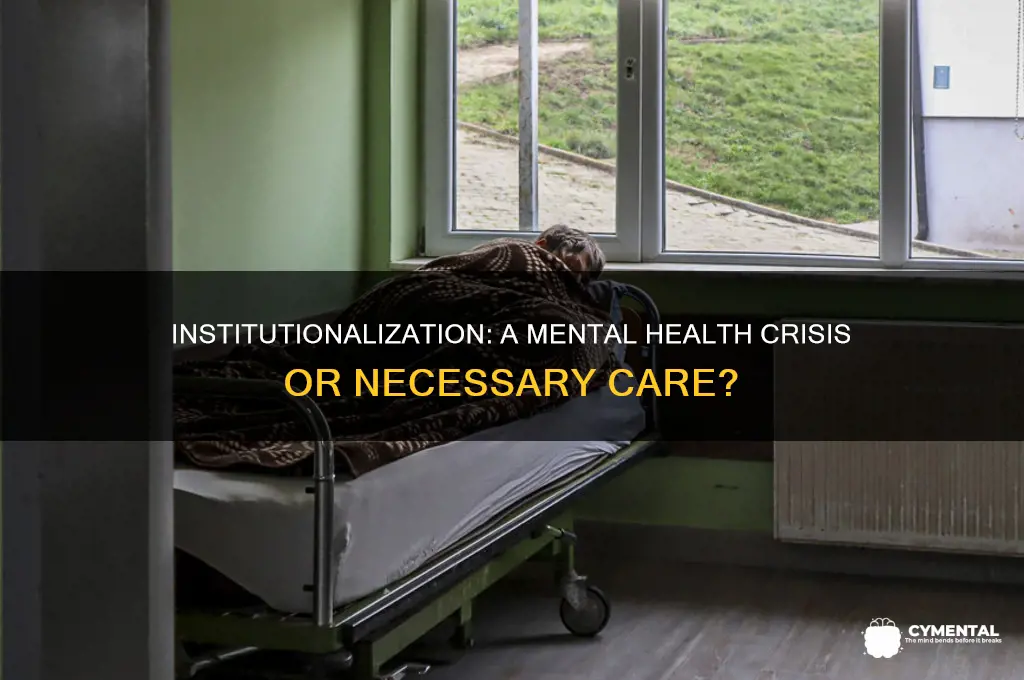
Institutionalization, the practice of confining individuals with mental health conditions in long-term care facilities, raises critical questions about its impact on mental well-being. While historically viewed as a solution for managing severe mental illness, it has increasingly been scrutinized for its potential to exacerbate psychological distress, foster dependency, and strip individuals of autonomy. Critics argue that prolonged institutionalization can lead to social isolation, loss of identity, and a decline in functioning, while proponents contend that structured environments may provide stability for those with complex needs. This debate underscores the need to examine whether institutionalization itself becomes a mental health issue, perpetuating harm rather than promoting recovery.
| Characteristics | Values |
|---|---|
| Definition | Institutionalization refers to the long-term confinement or placement of individuals in facilities like psychiatric hospitals, nursing homes, or correctional institutions. |
| Impact on Mental Health | Can lead to psychological distress, including depression, anxiety, and feelings of helplessness. |
| Social Withdrawal | Individuals may experience social isolation, loss of community connections, and reduced social skills. |
| Loss of Autonomy | Residents often face restrictions on personal choices, leading to a sense of powerlessness and decreased self-esteem. |
| Institutional Syndrome | Prolonged institutionalization can result in apathy, dependency, and difficulty adapting to life outside the institution. |
| Stigma and Discrimination | Institutionalized individuals may face societal stigma, affecting their self-perception and reintegration into society. |
| Trauma and Abuse | In some cases, institutions have been associated with physical, emotional, or sexual abuse, exacerbating mental health issues. |
| Lack of Personalized Care | Large institutions may struggle to provide individualized treatment, impacting recovery and well-being. |
| Deinstitutionalization Movement | A shift towards community-based care aims to reduce institutionalization, promoting integration and personalized support. |
| Alternative Approaches | Emphasis on outpatient services, supported housing, and community mental health teams to prevent or reduce institutional stays. |
| Human Rights Concerns | Long-term institutionalization raises ethical questions regarding freedom, dignity, and the right to live in the community. |
| Reintegration Challenges | Individuals leaving institutions may struggle with independent living, employment, and rebuilding social networks. |
| Cultural and Regional Variations | The extent and nature of institutionalization vary globally, influenced by cultural attitudes, healthcare systems, and resources. |
| Prevention and Early Intervention | Focus on early mental health support and community-based services to prevent the need for institutionalization. |
| Research and Advocacy | Ongoing research highlights the negative effects of institutionalization, advocating for reform and alternative care models. |
Explore related products


$26.95 $32.99


What You'll Learn
- Impact of long-term institutionalization on mental health recovery and social reintegration
- Alternatives to institutionalization: community-based mental health care models
- Human rights violations in mental health institutions: ethical concerns
- Institutionalization vs. deinstitutionalization: historical shifts in mental health policy
- Effects of institutional environments on patient autonomy and psychological well-being

Impact of long-term institutionalization on mental health recovery and social reintegration
Long-term institutionalization often strips individuals of autonomy, a critical factor in mental health recovery. Within institutional settings, daily routines, interactions, and decisions are frequently dictated by staff, leaving residents with minimal control over their lives. This loss of agency can exacerbate feelings of helplessness and dependency, which are antithetical to the empowerment needed for recovery. For example, a study published in the *Journal of Psychiatric and Mental Health Nursing* found that patients who had greater control over their treatment plans reported higher levels of self-efficacy and improved symptom management compared to those in highly structured, restrictive environments. To mitigate this, mental health professionals should prioritize shared decision-making models, even within institutional settings, allowing individuals to participate in shaping their care plans.
The social isolation inherent in long-term institutionalization poses another significant barrier to recovery and reintegration. Institutional environments often limit opportunities for meaningful social interaction outside of the facility, leading to a disconnect from community networks. This isolation can erode social skills and confidence, making the transition back into society daunting. A 2018 report by the World Health Organization highlighted that individuals who maintained community ties during treatment had better long-term outcomes than those who were completely removed from their social contexts. To address this, institutions should incorporate community-based programs, such as day passes or supported employment initiatives, to help individuals gradually rebuild social connections and practice real-world skills.
The physical environment of long-term institutions can also hinder mental health recovery. Overcrowded facilities, lack of privacy, and exposure to high-stress situations can perpetuate trauma and anxiety. For instance, a study in *The Lancet Psychiatry* revealed that patients in institutions with poor living conditions were twice as likely to experience symptom relapse compared to those in home-like settings. Institutions must prioritize creating therapeutic environments that mimic home settings, with private spaces, natural light, and access to outdoor areas. Additionally, incorporating trauma-informed care practices can help reduce triggers and promote a sense of safety.
Finally, the stigma associated with institutionalization can severely impact social reintegration. Society often views individuals with a history of institutionalization as "damaged" or "unpredictable," which can lead to discrimination and exclusion. This stigma is compounded when institutions fail to prepare individuals for life outside their walls. A practical solution is to implement pre-discharge programs that focus on stigma reduction, such as peer support groups or public awareness campaigns. Institutions should also collaborate with community organizations to provide ongoing support post-discharge, ensuring a smoother transition and reducing the risk of re-institutionalization. By addressing these challenges, long-term institutionalization can shift from being a barrier to becoming a stepping stone toward recovery and reintegration.
Healing Minds: Effective Strategies to Overcome Mental Health Challenges
You may want to see also
Explore related products


Alternatives to institutionalization: community-based mental health care models
Institutionalization, while historically a cornerstone of mental health care, increasingly faces scrutiny for its potential to dehumanize and isolate individuals. Community-based mental health care models emerge as a compelling alternative, prioritizing integration, autonomy, and personalized support. These models shift care from confined settings to familiar environments, fostering recovery through social connections and everyday life engagement.
Consider the Assertive Community Treatment (ACT) model, a team-based approach delivering comprehensive services to individuals with severe mental illness. ACT teams, typically comprising psychiatrists, nurses, social workers, and peer specialists, provide 24/7 support, medication management, and skills training in the client’s home or community. Studies show ACT reduces hospitalization rates by up to 50%, improves symptom management, and enhances quality of life. For instance, a 2019 meta-analysis in *Psychiatric Services* found ACT participants experienced fewer psychiatric admissions and greater housing stability compared to traditional care recipients.
Another innovative model is Housing First, which prioritizes providing stable housing without preconditions like sobriety or treatment compliance. This approach, coupled with wraparound mental health services, has proven effective for chronically homeless individuals with mental illness. In Finland, Housing First reduced homelessness by 35% between 2008 and 2019, while in the U.S., programs like Pathways Housing First in Washington State report 85% housing retention rates after one year. These successes underscore the importance of addressing basic needs as a foundation for mental health recovery.
Implementing community-based care requires careful planning. Key steps include training multidisciplinary teams, securing sustainable funding, and fostering collaboration between healthcare providers, social services, and local governments. Cautions include avoiding overburdening families without adequate support and ensuring equitable access for marginalized populations. For example, culturally tailored programs, like those developed for Indigenous communities in Canada, improve engagement by incorporating traditional practices and language.
In conclusion, community-based mental health care models offer a humane, effective alternative to institutionalization. By embedding care in everyday life, these approaches empower individuals, reduce stigma, and promote long-term recovery. As systems evolve, prioritizing flexibility, collaboration, and client-centered care will be essential to realizing their full potential.
Understanding Transgender Identities: Mental Health Perspectives and Societal Misconceptions
You may want to see also
Explore related products




Human rights violations in mental health institutions: ethical concerns
Institutionalization, while intended to provide care and treatment for individuals with mental health issues, often becomes a breeding ground for human rights violations. These violations manifest in various forms, from physical and psychological abuse to neglect and the denial of basic freedoms. Patients in mental health institutions are particularly vulnerable due to the power imbalance between them and the authorities overseeing their care. This vulnerability is exacerbated by societal stigma, which often leads to their voices being silenced or ignored. The ethical concerns surrounding these violations demand urgent attention, as they undermine the very purpose of mental health care: to heal and protect.
Consider the practice of forced treatment, a common issue in many institutions. While some argue it is necessary for patients who lack insight into their condition, it frequently crosses ethical boundaries. For instance, the administration of high doses of antipsychotic medications without informed consent can lead to severe side effects, such as tardive dyskinesia, a neurological disorder causing involuntary movements. Similarly, the use of physical restraints or seclusion as a means of control not only dehumanizes patients but also inflicts psychological trauma. These practices, often justified as "therapeutic," raise questions about the balance between patient autonomy and the duty of care.
Another critical ethical concern is the lack of oversight and accountability within mental health institutions. Reports of abuse, including physical assault and sexual violence, are alarmingly common yet rarely addressed. For example, a 2019 investigation into a state-run facility in the United States revealed systemic neglect, with patients left in unsanitary conditions for extended periods. Such cases highlight the failure of regulatory bodies to enforce standards of care and protect patients’ rights. Without robust monitoring mechanisms, institutions become isolated environments where violations thrive unchecked, perpetuating a cycle of harm.
The dehumanization of patients in mental health institutions also extends to their treatment as second-class citizens, stripped of their dignity and agency. Simple rights, such as the freedom to communicate with loved ones or make decisions about their daily lives, are often denied. For instance, patients may be prohibited from using personal electronic devices or receiving visitors, isolating them further from the outside world. This isolation not only hinders their recovery but also reinforces their marginalization. Ethical care must prioritize the restoration of patients’ autonomy and their reintegration into society, rather than perpetuating their exclusion.
Addressing these human rights violations requires a multifaceted approach. First, policymakers must strengthen legal frameworks to protect the rights of individuals in mental health institutions, ensuring that practices like forced treatment are subject to strict scrutiny. Second, institutions should adopt person-centered care models that respect patients’ autonomy and involve them in decision-making processes. Third, independent oversight bodies must conduct regular inspections to hold facilities accountable for their actions. Finally, public awareness campaigns can challenge the stigma surrounding mental health, fostering a culture of empathy and advocacy. By taking these steps, we can transform mental health institutions into spaces that uphold human rights and promote genuine healing.
Empowering Strategies to Overcome Mental Health Challenges and Thrive
You may want to see also
Explore related products



$6.79 $14.99

$14.15 $20


Institutionalization vs. deinstitutionalization: historical shifts in mental health policy
The 19th and early 20th centuries saw the rise of institutionalization as the primary approach to mental health care. Large asylums were built to house individuals with mental illnesses, often under the guise of providing treatment and protection. However, these institutions quickly became overcrowded, underfunded, and notorious for their poor conditions. Patients were frequently subjected to inhumane treatments, including physical restraint, isolation, and experimental procedures. The asylum system, while initially intended to offer refuge, evolved into a mechanism of social control, segregating those deemed "different" from society. This era highlights the dangers of a one-size-fits-all approach to mental health, where institutionalization often exacerbated rather than alleviated suffering.
By the mid-20th century, a paradigm shift began to take place, driven by growing criticism of institutionalization and advancements in psychiatric treatments. Deinstitutionalization emerged as a policy response, aiming to move mental health care from large, isolated facilities into community-based settings. This shift was fueled by the development of antipsychotic medications, which allowed for more effective management of symptoms outside of institutional walls. Advocates argued that community care would provide more personalized treatment, foster social integration, and reduce the stigma associated with mental illness. However, the implementation of deinstitutionalization was often rushed and underfunded, leading to unintended consequences. Many patients were released without adequate support systems, resulting in homelessness, incarceration, and a lack of access to necessary care.
The comparison between institutionalization and deinstitutionalization reveals a complex interplay of intentions and outcomes. Institutionalization, while providing a structured environment, often stripped individuals of their autonomy and dignity. Deinstitutionalization, on the other hand, sought to restore autonomy but sometimes left individuals vulnerable in the absence of robust community resources. For example, in the United States, the closure of state hospitals in the 1960s and 1970s led to a significant increase in the number of people with mental illnesses in jails and prisons, a phenomenon often referred to as "transinstitutionalization." This underscores the need for a balanced approach that combines the stability of institutional care with the flexibility and inclusivity of community-based services.
To navigate the challenges of institutionalization and deinstitutionalization, policymakers and practitioners must prioritize individualized care and comprehensive support systems. For instance, integrating mental health services into primary care settings can improve access and reduce stigma. Additionally, investing in housing programs, vocational training, and peer support networks can help individuals thrive in community settings. A practical tip for mental health professionals is to involve patients and their families in treatment planning, ensuring that care aligns with their unique needs and preferences. By learning from historical shifts, we can build a mental health system that avoids the pitfalls of both extremes, offering both safety and freedom to those it serves.
Mentors' Role in Mental Health: Support, Growth, and Resilience
You may want to see also
Explore related products


Effects of institutional environments on patient autonomy and psychological well-being
Institutional environments, while designed to provide care and treatment, often inadvertently strip patients of their autonomy, a critical component of psychological well-being. The structured routines, rigid rules, and limited decision-making opportunities within institutions can lead to a sense of powerlessness. For instance, patients may have little control over their daily schedules, including when they eat, sleep, or engage in activities. This lack of autonomy can exacerbate feelings of helplessness, particularly in individuals already struggling with mental health issues. Studies show that perceived control over one’s life is a significant predictor of recovery in mental health patients. When this control is diminished, patients may experience increased anxiety, depression, and a decline in self-efficacy, hindering their ability to reintegrate into society post-discharge.
Consider the case of long-term psychiatric wards, where patients often face prolonged stays due to the severity of their conditions. In such settings, the institutional environment can become a double-edged sword. While it provides safety and medical oversight, it may also foster dependency. Patients who spend years in these facilities can lose confidence in their ability to manage daily life independently. For example, a 45-year-old patient with schizophrenia, institutionalized for over a decade, may struggle with basic tasks like budgeting or using public transportation upon discharge. This dependency not only undermines autonomy but also perpetuates the very conditions the institution aims to treat, creating a cycle of reliance on the system.
To mitigate these effects, institutions must adopt practices that prioritize patient autonomy. One effective strategy is the implementation of shared decision-making models, where patients are actively involved in their treatment plans. For instance, allowing patients to choose between different therapy options or decide on their daily activity schedules can restore a sense of control. Additionally, transitional programs that gradually reintroduce patients to community living can help rebuild independence. A study published in the *Journal of Psychiatric Rehabilitation* found that patients who participated in such programs showed significant improvements in autonomy and psychological well-being compared to those in traditional institutional settings.
However, it’s crucial to balance autonomy with safety, especially in acute care settings. For example, a patient experiencing a severe psychotic episode may not be in a state to make informed decisions about their care. In such cases, institutions must exercise caution, ensuring that interventions are both therapeutic and respectful of the patient’s dignity. Staff training in trauma-informed care and patient-centered communication can help strike this balance. For instance, nurses trained in motivational interviewing can empower patients to express their preferences while guiding them toward safe and effective choices.
Ultimately, the effects of institutional environments on patient autonomy and psychological well-being are profound and multifaceted. While institutions play a vital role in mental health care, their design and practices must evolve to prioritize empowerment over control. By fostering autonomy through shared decision-making, transitional programs, and compassionate care, institutions can become catalysts for recovery rather than barriers to it. Patients deserve not just treatment but the opportunity to reclaim their lives, one decision at a time.
Is IBS a Mental Health Issue? Unraveling the Gut-Brain Connection
You may want to see also
Frequently asked questions
Institutionalization is not a mental health issue in itself, but it can lead to or exacerbate mental health problems due to factors like isolation, loss of autonomy, and lack of social stimulation.
Yes, prolonged institutionalization can cause psychological harm, including depression, anxiety, and institutional syndrome, which involves apathy, dependency, and difficulty reintegrating into society.
No, institutionalization is not always necessary. Many individuals with severe mental health conditions can thrive in community-based settings with proper support, treatment, and resources.
Institutionalization can hinder recovery by limiting personal growth, reducing access to community support, and fostering dependency on institutional structures rather than promoting independence.
Yes, alternatives include outpatient therapy, community mental health programs, supported housing, peer support groups, and integrated care models that focus on individualized treatment in less restrictive environments.